Saturday, March 29, 2025

Blobfish overcomes notoriety as ‘world’s ugliest animal’ to win New Zealand’s ‘fish of the year’

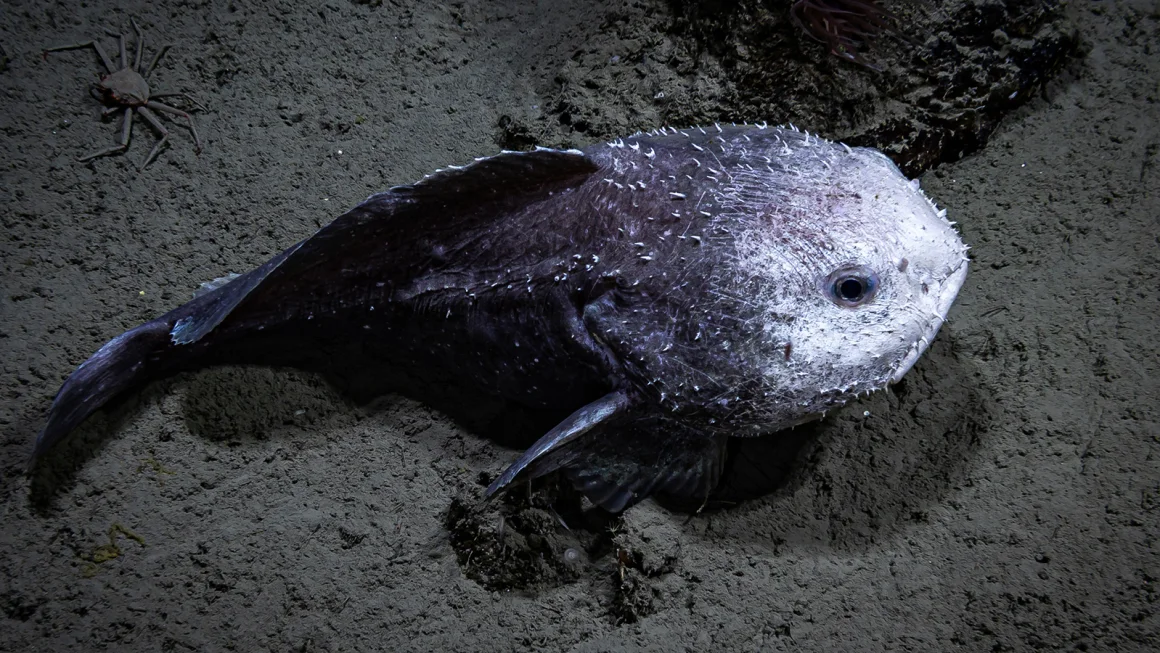
The blobfish, voted New Zealand's fish of the year, lives on the sea bed.
NOAA Ocean Exploration

From CNN by Lianne Koliri
 
It has been a dramatic change of fortunes for the blobfish.
Back in 2013, the gelatinous sea creature was declared the world’s ugliest animal.

But now it has been voted New Zealand’s “fish of the year” in a competition aimed at raising awareness of the country’s marine life and its fragile ecosystem.

Organized by the Mountains to Sea Conservation Trust, the annual event seeks to familiarize New Zealanders with the wide variety of fish living in the country’s fresh and sea water environments.

Quick facts about this gelatinous deep sea creature! 
The blobfish (Psychrolutes marcidus, Mr. Blobby)! Blobfish facts! Family Psychrolutidae. 
Commonly mistaken for the blob sculpin (Psychrolutes phrictus) and named the world's ugliest animal 2013. 
Psychrolutes microporos, Australian sculpin. 
They even make an appearance in Animal Crossing. 
See what the blobfish looks like underwater and learn what's inside the blobfish.
 
According to the U.S. National Oceanic and Atmospheric Administration (NOAA), blobfish – which grow to about 12 inches (30 centimeters) long – “look like a big, blobby tadpole, just a mass of pale, jelly-like flesh with puffy, loose skin, a big nose and beady, staring eyes.”

They are found mainly off the coast of southeastern Australia and Tasmania and usually reside at depths of 2,000 to 4,000 feet (600 to 1,200 meters).

Votes were submitted on the website of the not-for-profit trust for just over two weeks this month, with the polls closing on March 16.
A total of 5,583 votes were cast in all. 
The blobfish, which is considered vulnerable, emerged victorious, beating its nearest rival – the orange roughy – by almost 300 votes.
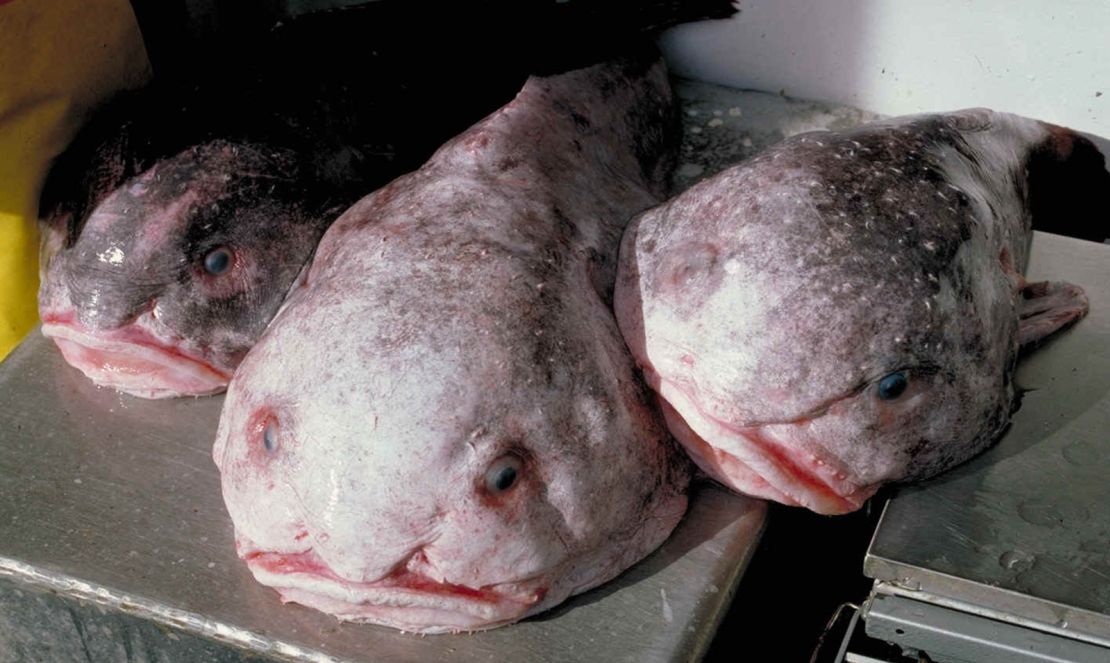

Blobfish are said to take on their so-called "ugly" appearance once they are removed from the water because they don't have strong bones or thick muscles to keep their shape.
It is the water pressure that maintains their relatively normal appearance in the depths of the sea. NOAA/Alaska Fisheries Science Center

According to the trust’s announcement of the news, the orange roughy looked set for victory until its uglier rival won the backing of New Zealand radio network More FM.

Sarah Gandy and Paul Flynn, hosts of the station’s Drive show, said: “We and the people of New Zealand had had enough of other fish getting all the headlines. The blobfish had been sitting patiently on the ocean floor, mouth open waiting for the next mollusc to come through to eat. He has been bullied his whole life and we thought, ‘stuff this, it’s time for the blobfish to have his moment in the sun’, and what a glorious moment it is!”


Blob Sculpin Sightings | Nautilus Live
 
Kim Jones, co-director of the trust, said it was “a battle of two quirky deep sea critters, with the blobfish’s unconventional beauty helping get voters over the line.”

Speaking ahead of the event, Jones explained the idea behind the initiative: “Many of our freshwater and marine fish are found nowhere else in the world. With climate change and land use patterns putting significant strain on our waterways, many of our fish are at risk of disappearing forever.”

Links :

Friday, March 28, 2025

IMO asks nations to stop jamming GPS, citing risk to shipping

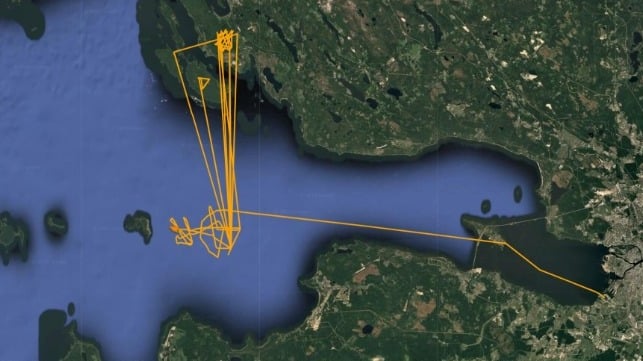
In May 2024, ships and ground stations in S Baltic Sea has been hit by at least 6 extensive GPS/GNSS-interference sessions, covering surface and ground. Potentially much more serious than the jamming of planes, because our critical infrastructure depends on GPS-time. 
source : @auonsson
 
Three UN agencies have called for action to halt jamming and spoofing operations, which are most often associated with nation-state activity in the Baltic, Black Sea, Strait of Hormuz, South China Sea and Western Pacific.

In a joint statement, the International Telecommunication Union (ITU), the International Civil Aviation Organization (ICAO), and International Maritime Organization (IMO) expressed "grave concern" about the impact of jamming and called on unnamed UN member states to "urgently enhance their protection of a critical radio-frequency band."

The jamming occurs in assigned frequency bands used by radio navigation satellite services, like GPS and Galileo.

Previous research in the Baltic has documented that some observed jamming capabilities exceed commercial grade equipment, and can fool ship GNSS receivers into delivering inaccurate position readings - inaccurate enough to cause a casualty if the false reading went undetected by the crew.
 
Meghna Princess' AIS trackline shows clear indications of GPS spoofing, including relocation onto land (Pole Star)

At least one accident, the grounding of the Meghna Princess in the Baltic last year, has been attributed to GPS jamming.


The sinking of two tankers, VOLGONEFT 212 & VOLGONEFT 239, is a reminder that ships operating through Kerch are subject to GPS jamming by Russian forces.

"The safety of seafarers and shipping relies on the resilience of systems to support safe navigation and communication.
Interference with Global Navigation Satellite Systems poses a serious risk to shipping activities, which could cause collisions and grounding.
I urge all Member States to act to protect these critical systems," said IMO Secretary General Arsenio Dominguez.

IMO Maritime Safety Committee has previously urged member states to "minimize interference coming from their territory," or at least issue warning notices to shipping about any planned time periods and areas affected by "known interferences."

Satellite signal jamming also affects airborne navigation, often at different times and locations than surface-level GNSS jamming, indicating different settings, techniques or equipment for high-altitude effects.

Some of the most effective sources of intentional interference may be space-based, according to Professor Todd Humphreys of the University of Texas.
Chinese and Russian satellite-based electronic warfare systems may be able to imitate GPS and Galileo from orbit, creating disruption by sending false signals when desired, he said at a panel last year. 

Links :

Thursday, March 27, 2025

China’s new deep-sea weapon: How dangerous is its cable-cutting tech?

The device has been developed by the China Ship Scientific Research Centre (CSSRC) and its affiliated State Key Laboratory of Deep-sea Manned Vehicles.
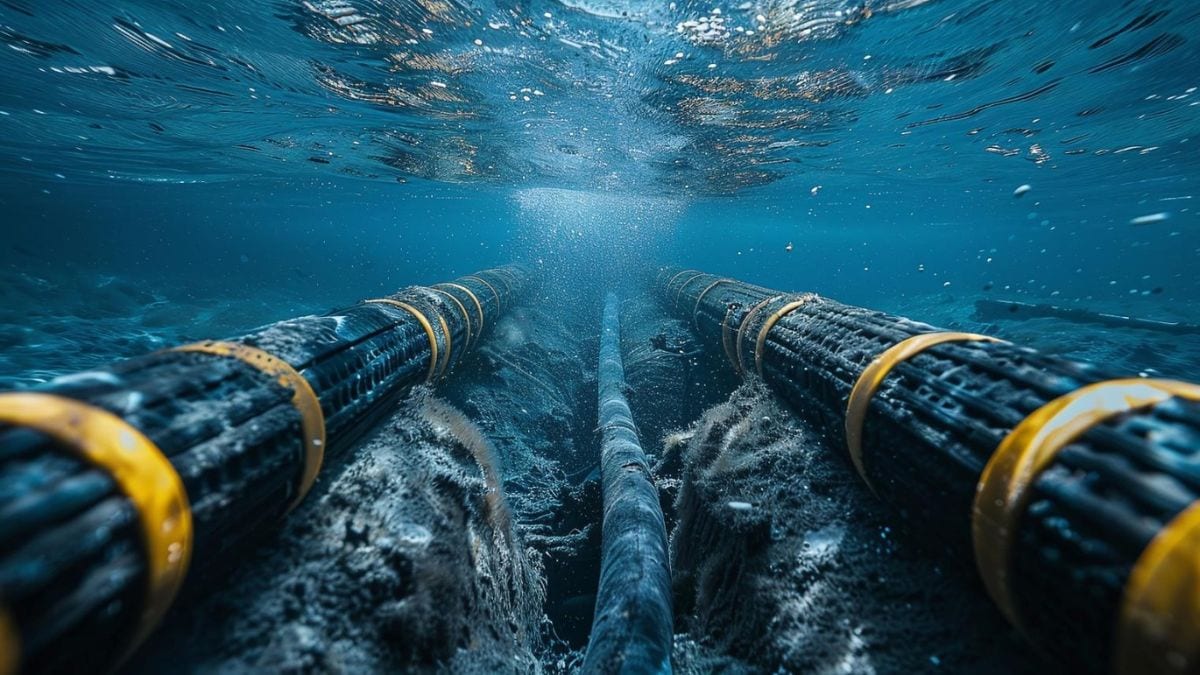
Representational Image/Australian National University

From FP Explainers

China has developed a compact deep-sea device capable of cutting armoured undersea cables at depths of 4,000 metres — twice the operational depth of existing subsea communication infrastructure.
The tool, featuring a 150 mm diamond-coated grinding wheel spinning at 1,600 rpm, was designed for integration with China’s advanced submersibles


China has unveiled a deep-sea cable-cutting device capable of slicing through the world’s most fortified underwater communication and power cables at unprecedented depths.
 
 
The development has raised concerns over the security of global undersea infrastructure, as such cables carry 95 per cent of global data transmission and support critical military and civilian operations.

Developed by the China Ship Scientific Research Centre (CSSRC) and the State Key Laboratory of Deep-Sea Manned Vehicles, the device is designed to be integrated with China’s advanced crewed and uncrewed submersibles, such as the Fendouzhe (Striver) and the Haidou series.

This is the first time any nation has officially disclosed possession of such a technology, marking a significant development in deep-sea operations with both civilian and military implications.
 
An illustration shows a test of China’s cable-cutting device.
Image credit: China Ship Scientific Research Centre
 
Why the deep-sea cable cutting technology is unique

The new device is capable of cutting cables at depths of up to 4,000 metres (13,123 feet), which is twice the maximum operational range of existing undersea communication infrastructure.

Traditional cable-cutting methods have long struggled with the challenge of slicing through steel-reinforced cables.

To address this, the Chinese team, led by engineer Hu Haolong, developed a 150 mm (six-inch) diamond-coated grinding wheel that spins at 1,600 rpm — generating enough force to shatter steel while minimising disturbance to surrounding marine sediment.

These details were published in a peer-reviewed paper published in Chinese-language journal Mechanical Engineer on February 24, according to the South China Morning Post (SCMP).

The tool is powered by a one-kilowatt motor with an 8:1 gear reducer, balancing torque and efficiency.
However, prolonged use at such depths may lead to overheating, presenting a potential limitation.

The cutting device is enclosed in a titanium alloy shell with oil-compensated seals to prevent implosion under the intense water pressure found at 4,000 metres.

The design allows for sustained operation in extreme conditions where water pressure exceeds 400 atmospheres.
Operated by robotic arms in near-zero visibility, the device uses advanced positioning technology to ensure precision alignment during cutting operations.
Advertisement

What China’s cable-cutting tool means for defence

While officially developed for civilian applications such as salvage operations and seabed mining, the tool’s dual-use nature has sparked concerns in global security circles.
The ability to disrupt strategic subsea cables could provide Beijing with a powerful tool in geopolitical conflicts.

One of the most concerning scenarios involves the potential targeting of undersea cables near Guam, a key hub in the US Indo-Pacific strategy.
Guam hosts over a dozen fiber-optic cables serving both military and civilian clients, including Google.

The ability to sever these lines from stealthy unmanned platforms without surfacing could significantly impact global communications and military readiness during a crisis.

Retired US Air Force Colonel Raymond Powell, the founder of the maritime transparency project SeaLight at Stanford University, has warned that China is expanding its “already vast grey zone toolkit.”
Powell told The Diplomat, “China continues to expand its already vast grey zone toolkit, having long ago calculated that its willingness to blur the lines between peace and hostilities provides it with an asymmetric advantage.”
He further noted, “Cable and pipeline sabotage is more than mere harassment.
It is a reminder that Beijing has the ability to cause far more damage to its enemies, should it choose to do so.”

Beijing’s growing capabilities in deep-sea operations are also drawing comparisons with Russia’s alleged involvement in undersea sabotage activities.

There have been 11 reported incidents of underwater cable damage in the Baltic Sea since 2023, fuelling speculation that both China and Russia may be engaging in coordinated grey-zone warfare tactics.

Taiwan, in particular, has seen a spike in suspected Chinese cable sabotage.
In February 2025, Taiwanese authorities seized a Togo-flagged cargo ship, the Hong Tai 58, crewed by Chinese workers, after it was linked to the severing of an undersea telecom cable, reported The Telegraph.

Taiwan’s government has reported five such cases this year, compared to three in both 2023 and 2024, reflecting an increasing trend in suspected attacks on subsea infrastructure.
 

Why this development is important

China now operates the world’s largest fleet of crewed and uncrewed submersibles, positioning itself as a dominant force in undersea operations.
Last month, construction began on a 2,000-metre-deep underwater “space station” in the South China Sea.

Designed to accommodate at least six people for extended month-long missions, the facility is expected to bolster China’s presence in contested waters.

Meanwhile, the US deep-sea fleet has been struggling to keep pace, with aging vessels limiting America’s ability to counter China’s expanding maritime capabilities.

Japan’s only crewed submersible, the Shinkai 6500, is also nearing retirement without a planned successor, reported SCMP.

Hu’s research team insists that the cable-cutting device is intended for marine resource development rather than military applications.
In the journal they wrote, “Nations are now compelled to redirect their resource exploitation focus towards the seas.
The 21st century is the century of the oceans.
Enhancing marine resource development capabilities, advancing the blue economy and building China into a maritime powerhouse constitute critical components of realising the Chinese dream.”
 
Links :

Wednesday, March 26, 2025

Uninhabited ocean speck fuels debate on shipping’s false flags

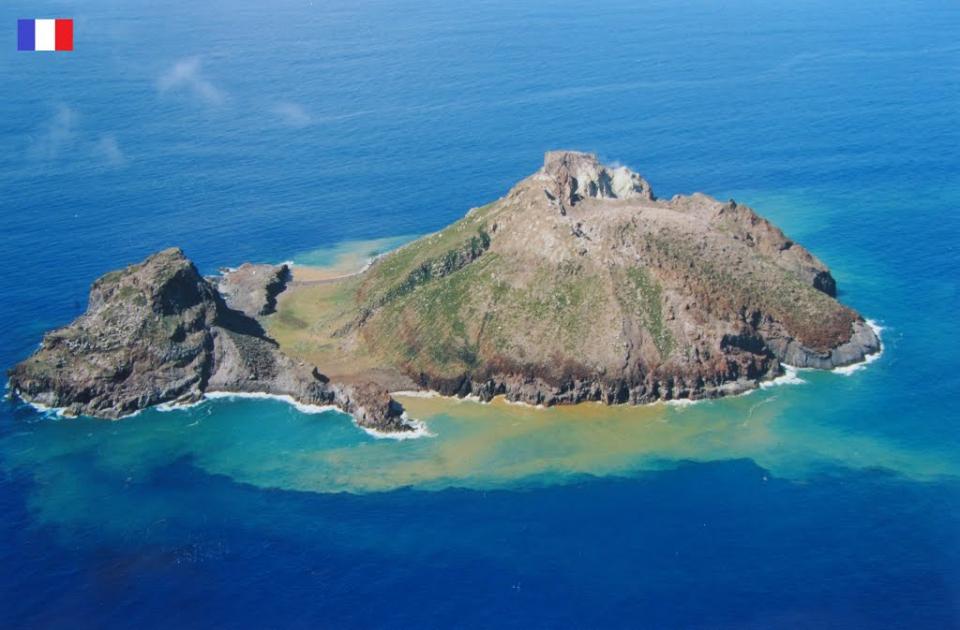
Mathew Island east of New Caledonia as seen in 2012
image : wikimapia

The issue of false flags continues to grow and promises to take center stage in an upcoming meeting of the IMO Legal Committee scheduled for the last week of April.
Citing the dangers and the required steps, France and the Netherlands submitted proposals which are drawing attention as they highlighted two previously unheard-of registries.

France’s note to the IMO Secretariat calls out the “Maritime Administration of Matthew Island” citing it as the latest example of fraudulent registries.
It has sent everyone scurrying to the Internet and reference sources to answer the question: 
where is Matthew Island?


Matthew island with the GeoGarage platform (UKHO nautical raster chart)
 
Turns out it is an uninhabited island in the southern Pacific east of New Caledonia.
France claims it as its territory, but Vanuatu has sought to challenge the rights saying it belongs to the indigenous people of its country.
It does not much matter, because it is a volcanic outcropping and most sources note the size of the island changes due to volcanic and ocean activity.

The Netherlands at the same time is warning of another fraudulent registry posing as the registry of Sint Maarten calling itself the MSTA Registry operated by International Maritime Registries & Regulatory.
Sint Maarten is the Dutch side of the Caribbean Island shared with the French who call it Saint Martin.
While it is a popular cruise ship destination, the papers to the IMO assert that no one has been authorized to operate this registry.

The submission highlights the lack of transparency in both of these operations a point that they contend is common among these false flag operations.
They note these two websites have very similar interfaces.

Shaddy operators emerging to operate so-called international registries is nothing new.
 
Saint Martin in the GeoGarage platform (SHOM nautical raster chart)
 
Guyana at the end of 2024 highlighted that five tankers sanctioned by the U.S.were falsely displaying Guyana as their registry.
 
Despite the government of Guyana warning the IMO about the operation of what it claimed is a fraudulent registry under the domain name www.imsag.org, the IMO has warned in a circular that the registry continues operating notwithstanding the termination of the contract between the Maritime Administration Department of Guyana and the Aryavart Corporation, its subsidiaries Nautilus Register and the International Maritime Safety Agency for Guyana (IMSAG), including issuing of fraudulent certificates of registration and authorising recognised organisations.
 
The authorities noted that the country has a closed registry only available to residents and none of the ships qualified.

 The IMO had previously said over 100 ships were showing in databases with false flags.
As the shadow fleet of tankers grew to serve the Russian oil trade, as well as Iran, the number is thought to have increased dramatically.
The UK in a submission to the IMO’s Legal Committee cited over 230 examples while some reports say it is now over 270 ships.

Source: International Maritime Registries & Regulatory Inc
 
As part of the lead-up to the Legal Committee meeting, France and the Netherlands outlined a series of steps to continue the crackdown on false flags.
In their submission they acknowledge “every state whether coastal or landlocked has the right to sail ships flying its flag on the high seas,” but they note there must be better records and transparency.
They note there are various obligations of flag states and that communications are required among flag authorities or their managers, especially in the event of an accident or inspection.

They are calling for the IMO to require states to set conditions for registry in their national law.
The IMO they said should use digital tools to confirm the authenticity of the registration certificate and enhance the procedures for the allocation of IMO numbers.

Liberia which uses an international manager for its flag also submitted a paper for the upcoming meeting.
It supports the proposals previously submitted to the IMO while offering some suggested improvements for the effective use of resources and the enforcement of available tools.

 Check of tankers looking at Chinese waters in the north. 
As you can see,  eight 'dark fleet' tankers can be identified, of which six are flying flags from fraudulent registries of Guinea, Guyana and Curacao.
Another three are sanctioned. 
One of these has been deflagged by Panama but falsely signalling its still with the registry.
Two are flagged with Gambia, the latest refuge for 'dark fleet' shipping.
Class and insurance, even when known, is invalidated for all tankers using a fraudulent registry. Irrespective of sanctions, these elderly, poorly maintained unflagged ships represent a risk to the environment, maritime safety and imperil crew welfare.
 
The IMO started its latest efforts to step up the crackdown in 2019.
At the time it outlined steps including the creation of the first database to track vessels under UN Security Council sanctions.

Links :

Tuesday, March 25, 2025

High-energy cosmic neutrino detected under Mediterranean Sea

Researchers conduct final inspections on a neutrino Detection Unit (DU), rolled up over the Launcher Vehicle Module, aboard a research vessel to the seafloor in the Mediterranean Sea in this undated handout image released on February 12, 2025.
Paschal Coyle/Handout via REUTERS

From Reuters by Will Dunham in Washington; Editing by Daniel Wallis
  • Detection was made 3,450 meters (2.1 miles) underwater
  • Scientists try to determine where neutrino originated
  • Studying neutrinos have provide new insight in astronomy
Using an observatory under construction deep beneath the Mediterranean Sea near Sicily, scientists have detected a ghostly subatomic particle called a neutrino boasting record-breaking energy in another important step toward understanding some of the universe's most cataclysmic events.
 
A shockingly powerful neutrino that ripped through a new particle detector in the Mediterranean Sea has taken physicists by surprise, and could be a first tantalising glimpse into some of the universe’s most cataclysmic events, such as supermassive black holes merging.
 
The researchers, part of the KM3NeT (Cubic Kilometre Neutrino Telescope) Collaboration, believe the neutrino came from beyond the Milky Way galaxy.
They identified 12 supermassive black holes actively guzzling surrounding matter at the center of distant galaxies as possible origination points, though the neutrino may have arisen from some other source.

A neutrino Detection Unit (DU), rolled up over a launcher vehicle module which is installed on a DU base anchor, prepared for deployment on the seafloor is seen in the Mediterranean Sea in this undated handout image released on February 12, 2025.
Paschal Coyle/Handout via REUTERS
 
KM3NeT comprises two large neutrino detectors at the bottom of the Mediterranean.
One called ARCA - 3,450 meters (2.1 miles) deep near Sicily - is designed to find high-energy neutrinos.
One called ORCA - 2,450 meters (1.5 miles) deep near Provence, France - is designed to detect low-energy neutrinos.
The newly described "ultra-high energy" neutrino, detected by ARCA in February 2023, was measured at about 120 quadrillion electronvolts, a unit of energy.
It was 30 times more energetic than any other neutrino detected to date, a quadrillion times more energetic than particles of light called photons and 10,000 times more energetic than particles made by the world's largest and most powerful particle accelerator, the Large Hadron Collider near Geneva.


"It's in a completely unexplored region of energy," said physicist Paschal Coyle of the Marseille Particle Physics Centre (CPPM) in France, one of the leaders of the research published on Wednesday in the journal Nature, opens new tab.
"The energy of this neutrino is exceptional," added physicist Aart Heijboer of the Nikhef National Institute for Subatomic Physics in the Netherlands, another of the researchers.
Neutrinos offer scientists a different way to study the cosmos, not based on electromagnetic radiation - light.
Many aspects of the universe are indecipherable using light alone.
Neutrinos are electrically neutral, undisturbed by even the strongest magnetic field, and rarely interact with matter.
As neutrinos travel through space, they pass unimpeded through matter - stars, planets or anything else.
Out of the water and onto the recovery vessel wow we got a cute little pot of dolphins it wasn't just one or two now here on your screen we can see dolphins.


The KM3NeT Digital Optical Module (DOM) attached to Vertical Electro-Optical Cable (VEOC), which supplies power and enables data transmission via fiber connection, part of research to detect neutrinos, is seen during a recovery operation in the Mediterranean Sea in this undated handout image released on February 12, 2025. 
Paschal Coyle/Handout via REUTERS

That makes them "cosmic messengers" because scientists can trace them back to their source, either within the Milky Way or across galaxies, and thus learn about some of the most energetic processes in the cosmos.
"Neutrinos are ghost particles. They travel through walls, all the way through the Earth, and all the way from the edge of the universe," Coyle said.
"Neutrinos have zero charge, zero size, almost zero mass and almost zero interaction.
They are the closest thing to nothing one can imagine, but nevertheless they are key to fully understanding the universe."
Other high-energy cosmic messengers zipping through space are not as reliable.
For instance, the path of cosmic rays gets bent by magnetic fields, so they cannot be traced back to their place of origination.
Detecting neutrinos is not simple, requiring large observatories located deep underwater or in ice.
These mediums offer an expansive and transparent volume where a passing neutrino may interact with a particle, producing a flash of light called Cherenkov radiation.

A reconstruction of the KM3-230213A event, seen from the side and the top.
 
The researchers concluded that the one spotted at ARCA - which was a type of neutrino called a muon - was of cosmic origin based on its horizontal trajectory and the fact that it had traversed through about 140 km (87 miles) of rock and seawater before reaching the detector.
The KM3NeT detectors are still under construction and have not yet reached their full capabilities.
Neutrinos are produced through various astrophysical processes at various energy levels.
For instance, low-energy neutrinos are born in nuclear fusion processes inside stars.

High-energy neutrinos arise from particle collisions occurring in violent events such as a black hole greedily eating infalling matter or bursts of gamma rays during the explosive deaths of stars.
They also can be produced by interactions between high-energy cosmic rays and the universe's background radiation.
The study of neutrinos is still in its formative stages.
"So why it matters? It's basically just trying to understand what is going on in the cosmos," Heijboer said.

Links :