Thursday, September 17, 2026

The deepest dive ever made in American Waters


From World Atlas 
 
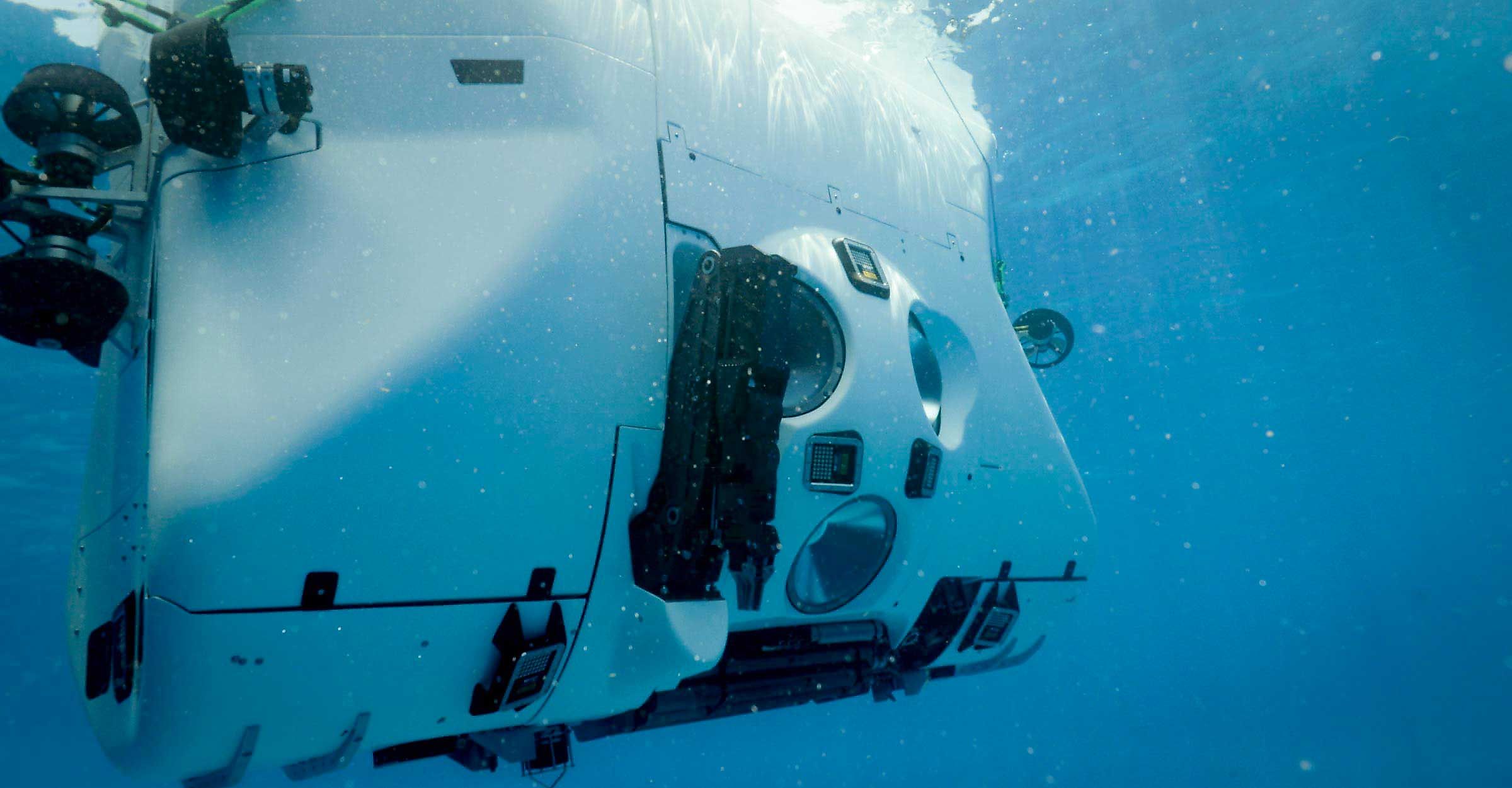
On May 7, 2019, Victor Vescovo and marine scientist Alan Jamieson descended into Sirena Deep aboard the submersible Limiting Factor.
The dive reached 10,714 meters, or 35,151 feet, inside the U.S. Exclusive Economic Zone associated with Guam.
Vescovo piloted the vehicle and Jamieson served as chief scientist.
They spent 176 minutes on the seafloor, filming, surveying, and collecting material.
Federal Mariana Trench management documents identify Sirena Deep as the deepest feature in the U.S.-associated Trench Unit.
The site sits far beyond Guam's 12-nautical-mile territorial sea.
For a science paper, the precise description is "deepest documented crewed dive within the U.S.
Exclusive Economic Zone." 
 
Sirena Deep Reached 35,151 Feet 
 
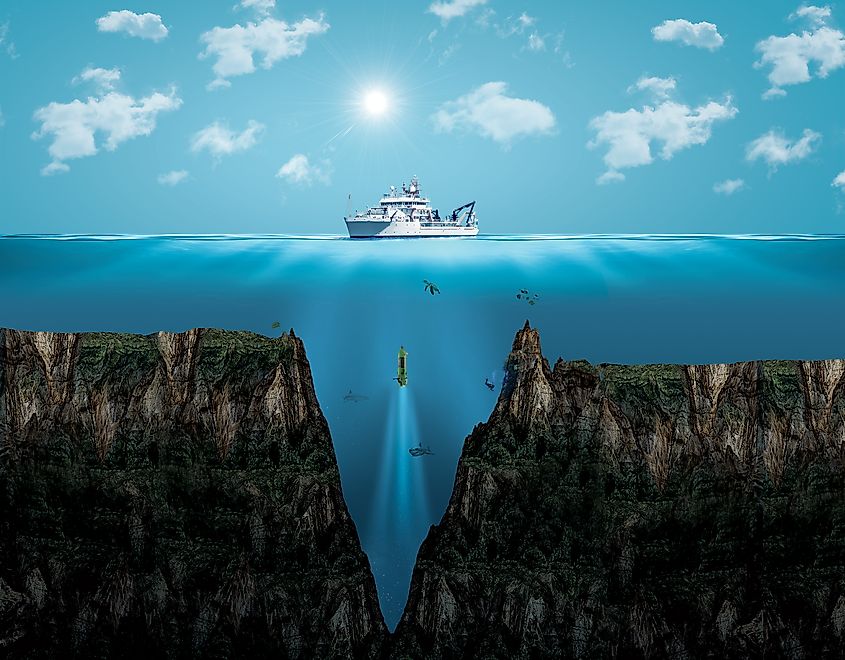
Illustration of the Mariana Trench, home to Sirena Deep, in the western Pacific.

The Five Deeps Expedition reached Sirena Deep during its Mariana Trench campaign in May 2019.
Expedition records give the May 7 descent a depth of 10,714 meters, with an uncertainty of about 10 meters.
The submersible carried Vescovo and Jamieson to the trench floor, where they remained for 176 minutes.
Their work began after a descent lasting several hours through the western Pacific water column.

The crew recorded video, examined rock exposures, searched for biological activity, and recovered samples.
Federal monument records later repeated the 35,151-foot depth and documented the first crewed descent to the site.
One recovered specimen was described as mantle-derived rock collected from the western slope of the Mariana Trench.
Expedition accounts also record geological and biological observations made during the bottom period.
The May 7 dive was the fifth Mariana mission conducted by Limiting Factor during that campaign.

Sirena Deep Sits Inside The U.S. EEZ 
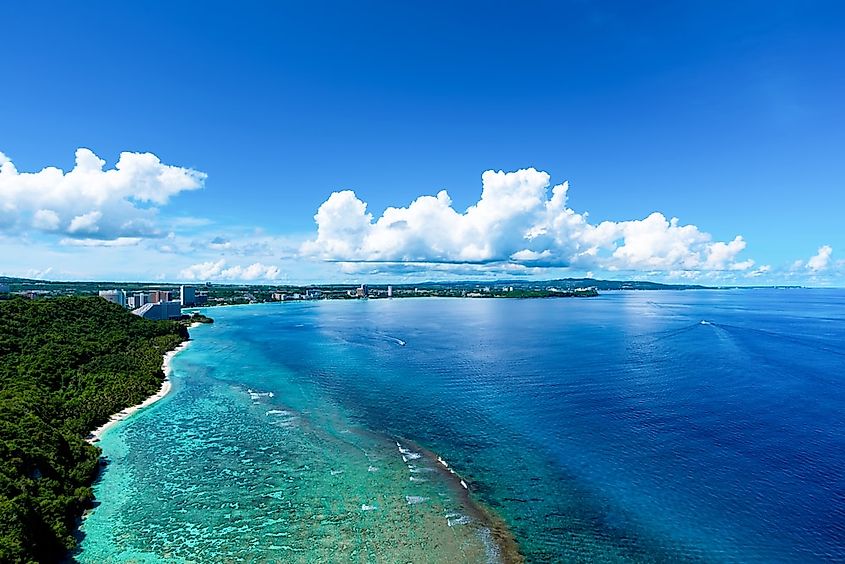
 
 
The shoreline of Guam, the U.S. territory whose Exclusive Economic Zone contains Sirena Deep.

Sirena Deep lies south of Guam near 12 degrees north latitude and 144 degrees east longitude.
NOAA places it within the Mariana Trench Monument's Trench Unit, which follows U.S.
maritime boundaries around Guam and the Northern Mariana Islands.
An Exclusive Economic Zone can extend up to 200 nautical miles from a coastal baseline.
The United States exercises defined resource rights and jurisdiction within that zone.
Guam's territorial sea extends 12 nautical miles from its baseline.
Sirena Deep lies well offshore, inside the EEZ linked to Guam.
Federal management maps place the trench unit within those limits and identify Sirena Deep as its deepest feature.
The phrase "American waters" can cover several legal maritime zones.
In this case, "within the U.S. Exclusive Economic Zone" identifies the jurisdiction precisely.

Limiting Factor Was Engineered For 11,000 Meters 
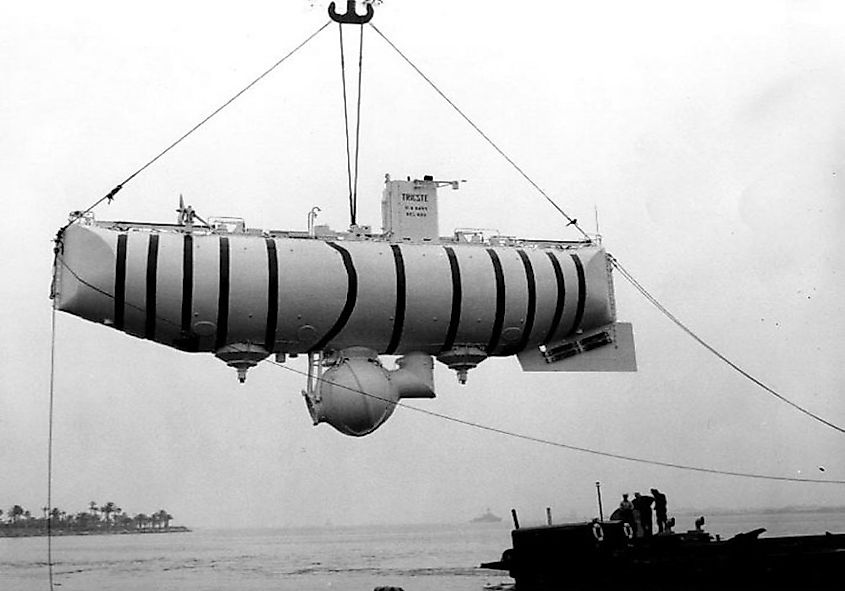
 
 
The bathyscaphe Trieste, an earlier crewed submersible built for extreme ocean depths.

Limiting Factor is a two-person Triton 36000/2 submersible rated to 11,000 meters.
Its pressure hull is a titanium-alloy sphere with walls 90 millimeters thick.
Triton states that the sphere was machined to 99.933 percent of a true sphere.
The crew sits inside that compact metal pressure vessel during the entire descent.

A spherical hull spreads external pressure around the crew compartment.
The vehicle was pressure-tested to the equivalent of 14,000 meters.
Triton lists its normal endurance at 16 hours and its maximum operating depth at full ocean depth.
The design also uses syntactic foam for buoyancy.

High-definition cameras, wide-angle cameras, exterior lights, navigation equipment, and sampling systems are built into the submersible.
The equipment supported 176 minutes of work on the Sirena Deep floor.
Limiting Factor completed repeated hadal dives during the Five Deeps Expedition, using the same crew sphere across several ocean basins.

HOW FAR DOWN THE WATER GOES The deepest oceanic trenches on Earth
 
Pressure At The Bottom Approaches 108 Megapascals
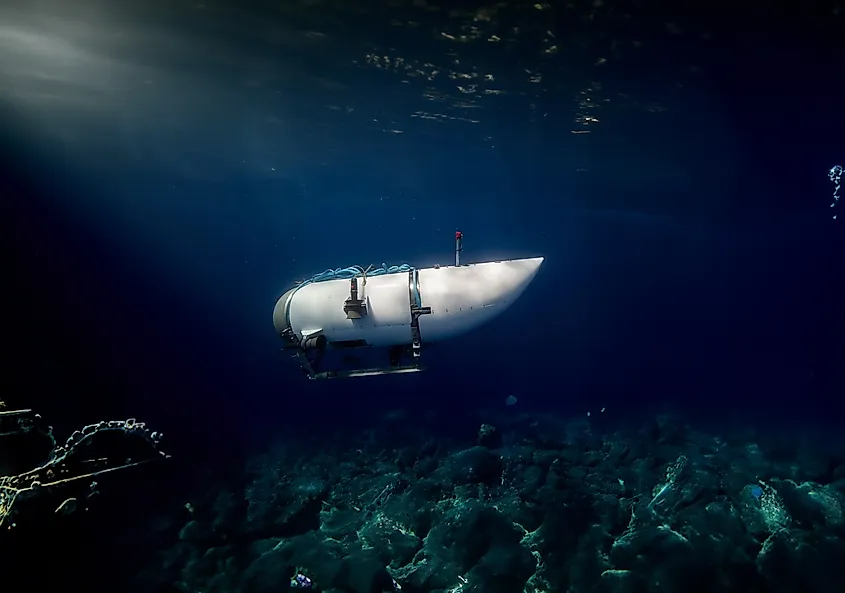
 
 
A submersible in deep water, where hull design must withstand crushing pressure.

At 10,714 meters, the water column places immense force on a submersible hull.
A basic hydrostatic calculation using seawater density near 1,025 kilograms per cubic meter gives about 108 megapascals.
NOAA commonly describes pressure in the deepest Mariana Trench as roughly a thousand times atmospheric pressure at sea level.
The pressure acts over every exposed part of the vehicle, including viewports, penetrations, joints, and external equipment.

Precise depth estimates use pressure readings alongside water compressibility, temperature, salinity, local gravity, tides, and atmospheric pressure.
Sonar measurements also depend on the speed of sound through seawater.
Small uncertainties in those variables can move a calculated depth by several meters.
The reported Sirena Deep figure carries an uncertainty of about ±10 meters.
Full-ocean-depth expeditions calibrate their instruments carefully because a few meters can alter a published extreme-depth measurement.

Mantle Rock At The Southern Mariana Trench 
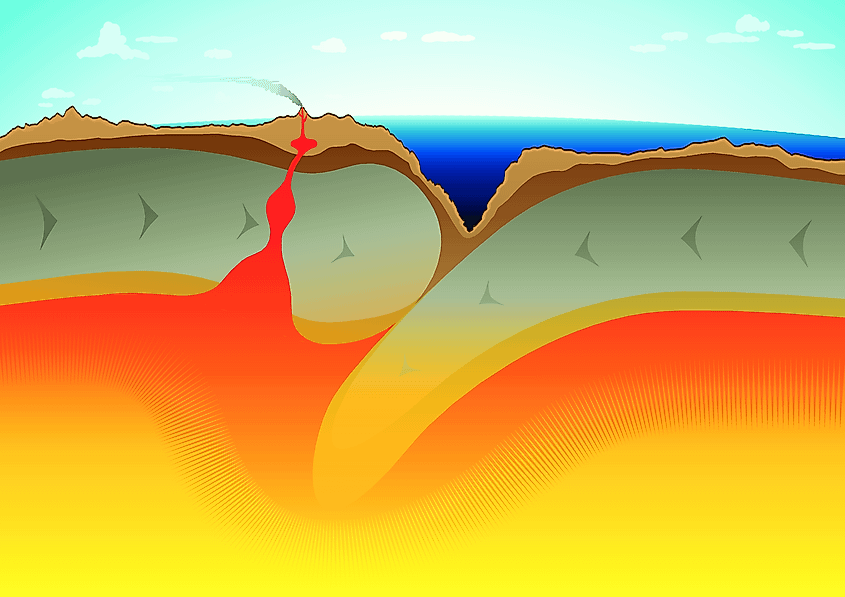
 
Diagram of a subduction zone, the tectonic setting that shapes the southern Mariana Trench.

Sirena Deep occupies the southern Mariana subduction system, where the Pacific Plate bends beneath the Mariana region.
The trench floor there is cut by major faults and steep slopes.
NOAA locates Sirena Deep near the meeting point of the trench axis and the East Santa Rosa Bank Fault.
A 2020 Deep-Sea Research Part I study examined rock and imagery collected near 10,677 meters.
Researchers documented ultramafic rock altered by serpentinization, a water-rock reaction involving mantle minerals such as olivine.
Earlier work in the southern Mariana forearc also recovered strongly serpentinized peridotite.
Geologists studying these samples can examine material associated with the upper mantle and deep crustal processes.
During the 2019 crewed descent, Vescovo and Jamieson collected material from the western slope.
Federal management documents later recorded a mantle-derived specimen among the recovered samples.

Microbial Material Has Been Found Near 10,677 Meters 
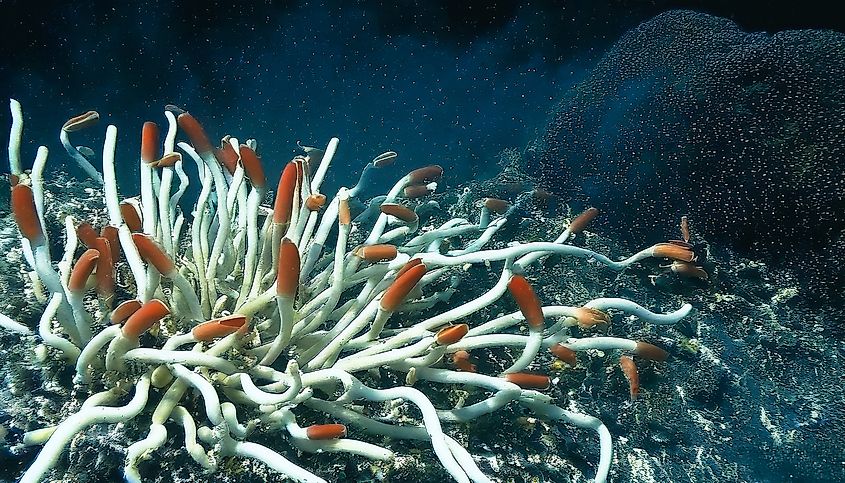
 
Giant tube worms clustered around a deep-sea hydrothermal vent in the Mariana Trench.

A 2012 lander deployment at Sirena Deep photographed filament-like material on exposed rock and talus near 10,677 meters.
Researchers analyzed the images and samples in a 2020 peer-reviewed study.
The material occurred on rock surfaces in permanent darkness, cold water, and hadal pressure.

The authors interpreted the filaments as a possible microbial mat.
They also documented serpentinized ultramafic rock at the site.
Serpentinization can generate chemical compounds that some microorganisms use as energy sources.
The authors kept the biological identification tentative because direct sampling at this depth remains difficult.

Other Mariana Trench studies have documented hadal amphipods and distinctive microbial communities under similar pressure.
Research on Hirondellea gigas found specialized microbial associations in animals collected within the trench system.
Specimens examined in that work came from the Sirena and Challenger areas of the Mariana Trench.

Challenger Deep Falls In Micronesian Waters 
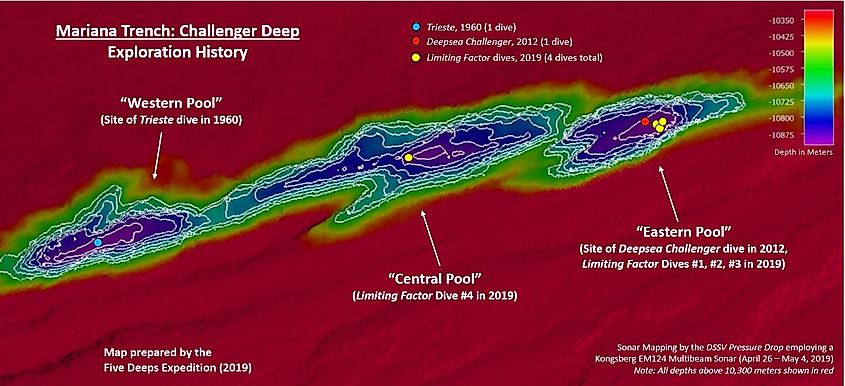
 
Sonar map of the Challenger Deep with annotated dive history.
Editorial credit: Vlvescovo, CC BY-SA 4.0, via Wikimedia Commons.

Challenger Deep contains the lowest measured seafloor in the Mariana Trench.
A NOAA-affiliated study reported 10,935 meters, with a 95 percent confidence interval of ±6 meters.
The site lies roughly 300 kilometers southwest of Guam.
NOAA research places it within waters of the Federated States of Micronesia.
The United States and Micronesia established a formal maritime boundary in this part of the western Pacific, defining the neighboring maritime zones.

Vescovo descended to Challenger Deep during the Five Deeps Expedition and completed a separate full-ocean-depth mission there.
Sirena Deep sits within the U.S. EEZ associated with Guam.
The reported depth difference between the two sites is about 221 meters.
Their maritime locations place the 10,714-meter Sirena descent in the U.S.-jurisdiction record.

The Puerto Rico Trench Came First 
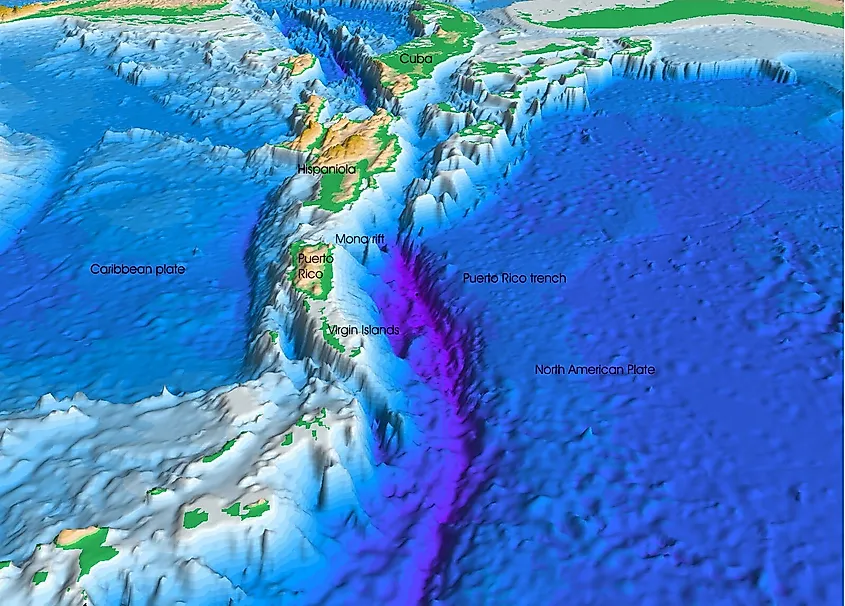
 
Diagram showing the Puerto Rico Trench, the deepest part of the Atlantic Ocean.

Vescovo completed an earlier U.S.-associated hadal dive on December 19, 2018, in the Puerto Rico Trench.
Limiting Factor reached a verified depth of 8,375.1 meters during the first major descent of the Five Deeps Expedition.
The mission was the first crewed visit to the deepest point of the Atlantic Ocean.
U.S.
Geological Survey mapping places major portions of the trench inside the U.S.
Exclusive Economic Zone north of Puerto Rico.
The dive put the new submersible through a complete hadal mission several months before the Mariana campaign.
Limiting Factor later entered deep sites in the Southern, Indian, Pacific, and Arctic oceans during the same expedition.
Sirena Deep reached 10,714 meters in May 2019.
Expedition documents preserve both depths and dates in the mission chronology. 
 
Links :

Wednesday, September 16, 2026

Rough weather, real risk: what 8,300 ship accidents reveal


CHIRP Maritime analysis of 16 years of SAFETY4SEA incident reports shows how weather conditions influence maritime risk

Every sailor has a story about storms.
But how much of the risk at sea is actually linked to weather?

To explore this question, CHIRP Maritime examined 16 years of accident reports published by SAFETY4SEA, mapping more than 8,300 incidents worldwide between 2010 and 2026 and matching each one with the weather recorded at that location on the day of the incident.

CHIRP Maritime works with the University of Leeds MSc Business Analytics and Decision Sciences course and annually sponsors one or more graduates to analyse maritime incident data.
For this study, graduate Rakib Hossain analysed incident reports published on the SAFETY4SEA website.

The key test was simple: each accident day was compared with conditions at the same location one and two weeks before and after the incident.
The waters and season remained broadly the same; what changed was the weather.
Five findings stand out.

Rough weather genuinely raises the risk.
Accidents were 62% more likely to occur on rough days than on calm days at the same location.
When wave heights exceeded 2.5 metres, the risk more than doubled.
 
Accidents were markedly more likely on rough-weather days – and likeliest of all in heavy seas / 
Image Credit: CHIRP Maritime

Yet most accidents happen in ordinary conditions.
The typical accident day saw gusts of just 38 km/h, while severe storms featured in fewer than 2% of cases.
Crews may successfully avoid the worst weather, but more routine rough conditions can still catch ships out.

Weather picks its targets.
Ships left adrift or disabled encountered rough weather on almost one in four accident days, with sinkings and groundings close behind.
Fires and collisions showed little change, suggesting that weather plays a much smaller role in these incidents.
 
Rough weather hits disabled ships, sinkings and groundings hardest; fires and collisions barely respond. / Image Credit: CHIRP Maritime

Cargo ships feel it most. Dry-cargo vessels — including bulk carriers, container ships and general cargo ships — were 84% more likely to experience an accident on rough days, representing the clearest ship-type effect.
Passenger ships showed the largest increase overall, although this was based on fewer cases, while tankers showed comparatively little change.Dry-cargo ships show the clearest weather effect; the passenger-ship rise is striking but rests on fewer cases. / Image Credit: CHIRP Maritime

The reports broadly reflect the recorded conditions.
When an article attributed an incident to weather, the meteorological records usually supported that assessment.
In storm-force gusts, seven in ten reports referred to weather as a factor, compared with around one in three during light winds.
 
Weather gets blamed more often as the measured wind gets stronger — the reports track reality. / Image Credit: CHIRP Maritime

The message is clear: weather is not the whole story when it comes to maritime accidents, but it represents a real and measurable part of the risk – particularly during winter, in heavy seas and for vessels carrying the world’s dry cargo. 
 
Links :

Tuesday, September 15, 2026

Super El Niño could have unexpected effect on UK winter


A winter storm batters England’s south coast in January 2025
Mark Passmore/Alamy

From New Scientist by Madeleine Cuff

An El Niño is usually expected to herald a cold end to winter in the UK – but this year could be different

The unprecedented El Niño gathering strength in the Pacific Ocean could upend forecasts for UK weather this winter, bringing continuously wet, stormy conditions until spring.
El Niño is a natural climate phase that happens when easterly trade winds weaken, allowing the warm water they had piled up in the western Pacific to wash back across the central and eastern Pacific.
This swathe of warm water heats the atmosphere and weakens the winds further in a feedback loop.
The phenomenon’s impact on the weather in the UK and north-western Europe is notoriously tricky to predict, because weather patterns in this region are strongly affected by weather phenomena in the North Atlantic.

Under an El Niño event of normal intensity, the UK is more likely to experience wetter, windier, stormier weather in the late autumn and early winter, potentially followed by a colder, drier end to winter.

However, the sheer size of the current El Niño – already one of the largest on record and still intensifying – could mean that the end of winter and start of spring continue to be wet and stormy, says Adam Scaife at the Met Office, the UK’s national weather service, who leads the agency’s long-range forecasting.
“We found that the big events show a slightly different response over the Atlantic,” he says.
El Niños usually increase the likelihood of cold easterly winds prevailing over the UK during late winter.
But a very strong El Niño may reverse that trend, leading to prevailing westerlies late in the season.
The weather under those conditions is “still cold, but it’s not extreme”, he says.
Scaife first reported this effect of strong El Niños in a 2006 research paper he co-wrote with Thomas Toniazzo, now at NORCE Research in Norway.
The study assessed the weather in the North Atlantic during El Niño years and found that very strong El Niños produced this mild and wet pattern in late winter.

 
The El Niño in 1997-1998, for example, was one of the most powerful on record.
It saw high pressure developing in the North Atlantic to the west of the UK over the late winter, leading to westerly prevailing winds that blew milder, wetter, stormier air over the UK and northern Europe.
The same pattern appeared in the 2015-2016 El Niño, when the UK had one of its mildest and wettest winters on record.
“We think that’s a real effect [of strong El Niños],” says Scaife.
“We’re looking for that at the end of this winter.”
A prolonged wet and stormy winter could saturate soils and make parts of the UK more susceptible to severe flooding.
But it would also offer an opportunity to replenish reservoirs and groundwater after an exceptionally dry summer.

However, Scaife warns it is very difficult to tease apart the effect of a strong El Niño compared with that of a standard-strength one, in part because there are only a few very strong events in the historical record for which we have good data.

El Niños – and their opposite pattern, La Niñas – also vary hugely from year to year and decade to decade, so it can be fiendishly difficult to separate out a signal from the noise in the system.
What’s more, it is very difficult to predict weather patterns months in advance, and there is still huge uncertainty over what late winter will hold for the UK.
This week, the World Meteorological Organisation (WMO) warned that the El Niño is still intensifying in the tropical Pacific and is set to be the largest on record, fuelling drought, floods and extreme temperatures around the world.
In most cases, a stronger El Niño brings more pronounced impacts globally, such as severe drought in Australia, the Amazon and Indonesia, and heavy rain in parts of South America, East Africa and the southern US.
The pattern is likely to peak in November, but will persist until at least February 2027, the WMO said, bringing extreme impacts that will last well into next year.
 
Links :

Monday, September 14, 2026

The world’s biggest carbon sink may start emitting CO2 after net zero

Storms in the Southern Ocean help to remove carbon dioxide from the atmosphere
Hemis/Alamy
 
From New Scientist by Alec Luhn

If the carbon dioxide in the atmosphere declines, the Southern Ocean is likely to begin emitting more carbon than it absorbs, prolonging global warming

The Southern Ocean draws down more carbon than any other single region, absorbing about 10 per cent of human emissions.
But if the world reaches net-zero emissions and carbon dioxide concentrations fall, it will start releasing CO2 into the atmosphere.
This massive release of carbon will prolong global warming for centuries, even if humanity artificially removes gigantic amounts of CO2 from the atmosphere, a study has found.
The results show how difficult it will be to reverse climate change, even as countries place ever-larger hopes on carbon dioxide removal.
“That impact can sustain much, much longer than we expected,” says Yechul Shin at Seoul National University in South Korea.
“Let’s say we try to reduce the CO2… this sink-to-source transition in the Southern Ocean still acts as an obstacle to reduce the atmospheric CO2 concentration.”

The notoriously strong winds around the “roaring forties” and “furious fifties” latitudes of the southern hemisphere stir up waves and encourage the water to absorb CO2.
The water cools and sinks, storing that carbon away in the deep ocean for centuries or millennia.
This carbon uptake has been increasing as humanity pumps ever more greenhouse gas into the atmosphere, creating a higher concentration of CO2 in the air than in the surface water.
But if the atmospheric CO2 concentration begins falling, that ratio will flip, and the Southern Ocean will start releasing rather than absorbing CO2.
“It’s like you’re constantly pressing a piston into the ocean,” says Nicolas Gruber at ETH Zurich in Switzerland, who wasn’t involved in the study.
“If you pull the piston up again, then the CO2 comes back out.”

The researchers modelled a scenario in which the world reaches net zero in 2125 and the concentration of atmospheric CO2 starts to gradually decline from 700 parts per million.
They also modelled one in which humanity drastically decreases atmospheric CO2 after net zero through carbon dioxide removal, a range of approaches ranging from widespread tree planting to machines that filter CO2 out of the air.
In both scenarios, the Southern Ocean goes from absorbing about 3 grams of carbon per square metre per year now to emitting 8 to 9 grams of carbon per square metre by the year 2400.
Under both scenarios, atmospheric CO2 is projected to fall, but this decline gradually levels off after 2200 as the Southern Ocean emits more CO2.
In the carbon-removal scenario, atmospheric CO2 actually rises again for 50 years before levelling off at 425 parts per million – roughly the current concentration.
Without carbon removal, it levels off at 590 ppm.

The scenarios aren’t necessarily realistic, though.
Many countries, including the UK and members of the European Union, aim to reach net zero as soon as 2050.
Moreover, the amount of carbon dioxide removal remains minuscule compared with emissions, which are still increasing.
But regardless of when humanity reaches net zero, the ocean as a whole is likely to become a net source of CO2 as it begins releasing all the carbon that major sinks like the Southern Ocean stored, according to Alberto Naveira Garabato at the University of Southampton, UK.
“Anything that changes in terms of the way the ocean interacts with the atmosphere could be like adding a massive country to the world’s carbon budget,” he says.
While scientists largely expect the Southern Ocean to begin emitting CO2 at some point, the new research finds that two major feedbacks may amplify this release, says Gruber.
The first is driven by the enormous amount of heat that the Southern Ocean transfers to the depths alongside the carbon.
Warm water can hold less gas.
So, as that stored heat gradually returns to the surface, the Southern Ocean will lose more CO2, just like a glass of warm soda loses its fizz more rapidly than a glass of cold soda.

The second feedback is essentially an increase in ocean acidification.
Many of the plankton in the Southern Ocean form alkaline shells of calcium carbonate.
When they die and sink, they transfer alkalinity to the deep ocean.
But as the surface water warms, it will become less dense.
As a result, it will mix less with cold, dense and more-alkaline deep water.
With less alkalinity returning to the surface, less CO2 – which is slightly acidic – will be absorbed by the ocean.
The sooner humanity reaches net zero and stops heating the Southern Ocean, the less CO2 these waters will ultimately emit, says Shin.
This month, the UN said the world will fail to meet the Paris Agreement goal of keeping global warming below 1.5°C and should instead focus on ways to reduce global temperatures later on, including through carbon removal.
But the new study shows this may be harder to do than we expect, says Gruber.
“It’s like crashing a car into the wall, and then you back up the car.
It’s not the same car any more,” he says.
“We can’t just simply take out CO2.
There are consequences, and some of these consequences are long-lasting.”

Links :

Sunday, September 13, 2026

250 days alone against the ocean: The Israeli taking on one of the world's toughest challenges

For Daniel Pinsky, the road to the Golden Globe Race 2026 begins here — in the cold, unstable waters of the North Atlantic, where dreams are tested long before the gun goes.
This is not the image most people imagine… 
Not just sunsets, trade winds, and quiet oceans. 
This is the other side. Soaked in a survival suit. Sleeping on the cabin floor to stay in place. 
Watching every gust, every shift, every movement of the sea. Alone. 
As the wind builds and the boat heels hard under sudden squalls, the reality sets in: fatigue, cold, and isolation are constant companions — and mistakes are not an option. 
This is preparation. This is commitment. This is the price of standing on the start line of the world’s most demanding solo race. 
From chaos to calm, from fear to focus — every mile sailed now is a step closer to Les Sables d’Olonne… and to the challenge ahead.
 
From The Jerusalem Post by Meital Sharabi
 
No GPS, no stopovers and no outside help: Daniel Pinsky begins the Golden Globe Race in September, chasing a dream while representing Israel.

In less than two months, Daniel Pinsky will cut himself off from the rest of the world.

For approximately 250 days, he will sail solo around the globe with no GPS, no internet, no stopovers, and no outside assistance. Just him, an 11-meter sailboat, paper charts, a sextant, and endless oceans.

On September 6, he will stand at the starting line of the Golden Globe Race - one of the world's toughest sailing competitions - and become the first Israeli ever to take on this extraordinary challenge.

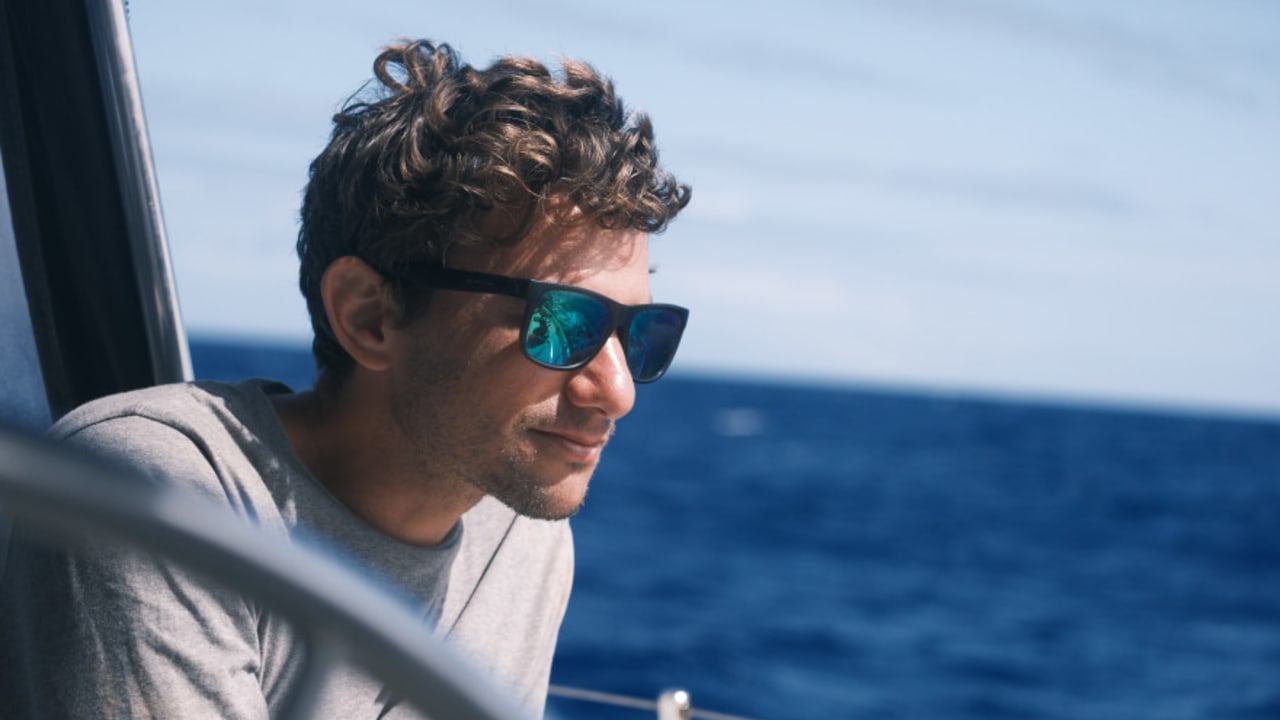
Daniel Pinsky.
(photo credit: Courtesy of those photographed)
 
Just before embarking on the journey of a lifetime, he spoke about the storms that nearly cost him his life, his fears about loneliness, and the deeper meaning he has found in this voyage.
Daniel Pinsky
Age: 35
Marital status: Single
Profession: Mechanical Engineering Technician
Residence: Lives aboard his sailboat at Herzliya Marina. He grew up in Ariel and, at the age of 14, enrolled at the Israeli Naval Officers School in Acre, where he fell in love with the sea.
 
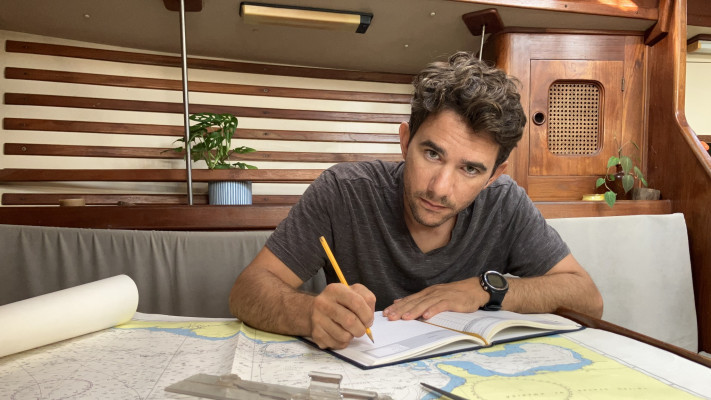
Daniel Pinsky and the charts that will guide him throughout the race. (credit: Daniel Pinsky)
"At 23, I Bought a Boat and Moved Onboard"


Where did your love affair with the sea begin?

"At 14, I transferred to the Naval Officers School in Acre, and that's really where everything started. Later, I served in the Israeli Navy, and while I was a student, I worked at the port. My entire life has revolved around the sea in one way or another.
"When I was 23, I bought my first sailboat and moved aboard it at Herzliya Marina. Even back then, I knew that one day I'd fulfill my dream of sailing around the world."
Today, Pinsky is in France, completing the final preparations before the Golden Globe Race begins on September 6.
"This Race Takes Us Back to 1968"

What makes this race so unique?


"The first race took place in 1968, when the British newspaper The Sunday Times offered a prize to anyone who could sail solo around the world in a yacht. Ever since, the race has recreated the sailing conditions of that era.
"That means no GPS, no digital displays, no smartphones, no electronic navigation systems - just traditional navigation, paper charts, and a great deal of experience."

What does the course look like?

"The race starts in Les Sables-d'Olonne on France's Atlantic coast. From there, we sail south through the Atlantic Ocean, round the Cape of Good Hope, continue beneath Australia and New Zealand, cross the Southern Ocean, round Cape Horn at the southern tip of South America, and then head north across the Atlantic back to the finish line in France."
 
Daniel Pinsky. Food supplies are one of the challenges of the voyage. (credit: Daniel Pinsky)
No Stopovers. No Rescue. No Help.


Throughout the race, competitors are prohibited from receiving any outside assistance.
"You can't stop along the way. You can't receive food, fuel, spare parts, or even weather information. Any outside assistance results in immediate disqualification."
Even the onboard equipment is strictly regulated.
"GPS devices, digital watches, and smartphones are prohibited. Even e-books aren't allowed. If I want to read, I have to bring printed books. If I want to listen to music, I'll use a radio cassette player."

What about the boats themselves?
 
"They have to be older production models built before the end of the 1980s, no longer than 36 feet, and of traditional design. The whole idea is to face the ocean almost exactly as sailors did more than half a century ago."
 
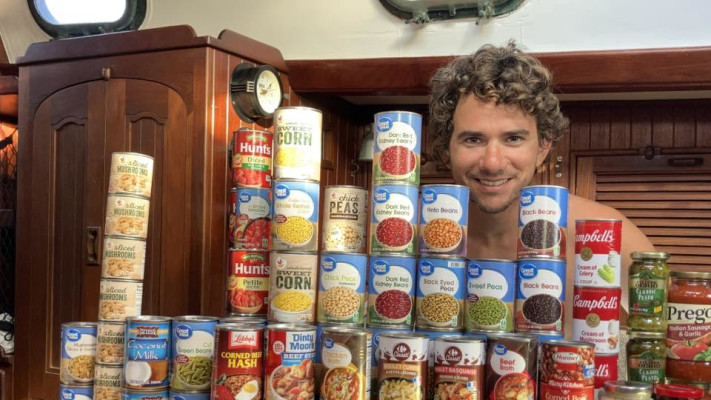
Canned food is a major part of his diet. (credit: Daniel Pinsky)
"I'm Setting Off With My Entire Life Packed Onto the Boat"


Competitors must load their boats with enough equipment and provisions to last seven to ten months.
"If I forget something, I'm in trouble. There's no way to replace it along the route."

At least you can fish, right?


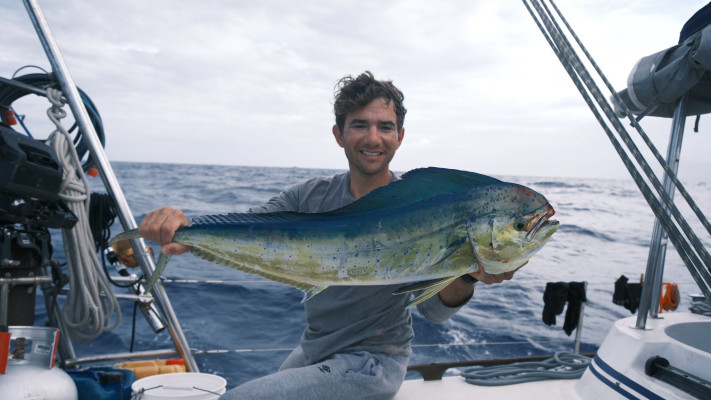
"Yes - and if I'm lucky, I'll enjoy fresh fish. But I'm not counting on it. Everything I'll need for the voyage is already onboard."
According to Pinsky, finishing times depend on weather conditions and the sailor's performance.
"The fastest sailors finish in around 210 days, while others take more than 320. I expect to spend roughly 250 days at sea."
 
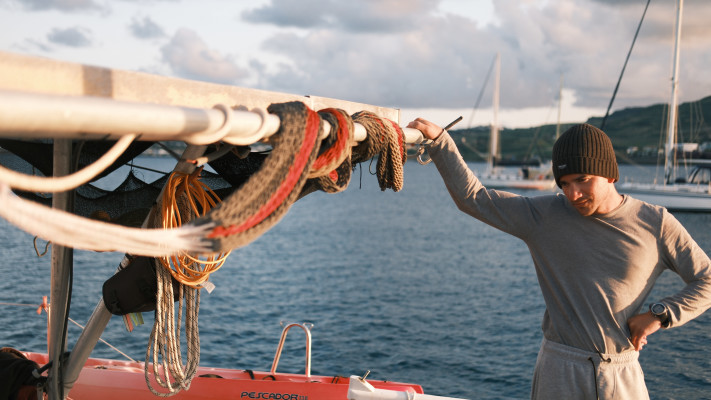
Preparing for the voyage is a critical part of the challenge. (credit: Daniel Pinsky)
"Suddenly, I Realized It Was My Time"


When did you decide to take on this challenge?

"I'd known about this race for years and followed it with great excitement. I admired the people who dared to participate, but I never thought I was truly ready. I felt I didn't have enough knowledge or experience.
"About ten months ago, everything suddenly clicked. I realized this was my moment. From the second I made the decision, I threw myself into preparing to reach the starting line."

For the past five years, the sea has been his home.

He left Israel with his former partner, crossed both the Mediterranean and the Atlantic, sailed throughout the Caribbean, and spent time living in Panama. Later, he returned to Europe aboard the same boat, completing his second Atlantic crossing.
"It's not like I suddenly decided to jump into the deep end. Everything I've done over the past several years has been preparation for this moment."
"Storms Are Terrifying, But Loneliness May Be Even More Dangerous"

What scares you more - the sea or the loneliness?

"The storms are more frightening in terms of immediate danger. When you're battling the sea, you're in survival mode. You don't have time to think about whether you're cold or in pain - you simply do whatever it takes to stay alive.
"But loneliness is the challenge I still don't know how I'll respond to. You can fall into depression or lose motivation. Everyone deals with it differently."
During his most recent preparation voyage, which lasted 39 days, he already experienced some difficult moments.
"There were days when I didn't feel like doing anything, but I always managed to pull myself out of it. This time, though, the journey will last many times longer."
"There Is No Room for Mistakes in the Southern Ocean"

What's the worst-case scenario?

"The sea has unimaginable power. I'm alone on a small boat, and I have no real way of defeating it. One violent storm can sink the boat."
His greatest concern is finding himself in distress in the middle of the Southern Ocean, hundreds or even thousands of kilometers from land.
"Out there, helicopters can't reach you. Even if a ship changes course to rescue you, it could take days. If you end up in the freezing water, it only takes a few minutes to die from hypothermia."
Despite the race's strict rules, safety remains a top priority.
"The boat carries a life raft, satellite phones, emergency beacons, and tracking transmitters. In an emergency, I can call for help."
 
 
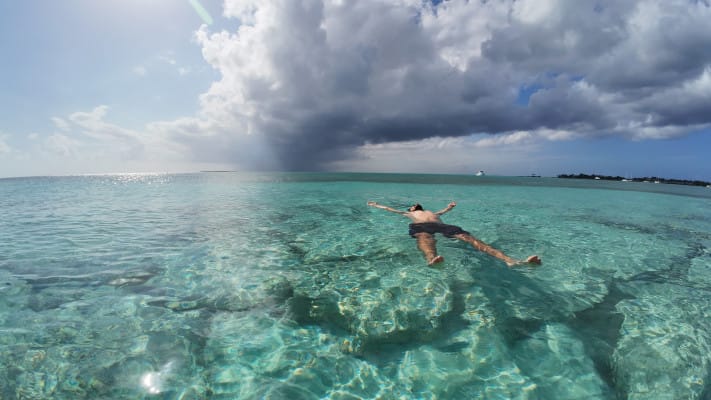
The ocean waters are Daniel's natural shower during the voyage. (credit: Daniel Pinsky)
"I Thought I Wasn't Going to Survive"


Even after years at sea, one experience still haunts him.

It happened last November, shortly after purchasing the boat he will race.
"I knew I had to leave the United States before winter arrived. If I'd stayed, I'd have been trapped by storms that would prevent me from heading south."
Instead, the weather caught him first.
"I sailed into the worst storm I've ever experienced. Winds reached 60 knots, and the waves were around 10 meters high. When your deck sits barely a meter above the water, every wave looks like a skyscraper."
For 18 straight hours, he had to steer manually.
"The autopilot simply couldn't handle the load. I couldn't let go of the helm for even a second because if the boat turned the wrong way, one wave could have rolled it over."
During those 18 hours, he didn't eat, sleep, or even go to the bathroom.
"I was freezing. I was completely exhausted. There were moments when I truly didn't know if I'd survive."
Eventually, realizing he had no strength left, he took one final measure.
"I went below deck, sealed everything shut, lay down beneath the table, and surrounded myself with cushions and gear, hoping that if the boat rolled over, I wouldn't be thrown around. I simply waited for the storm to pass."
Even after the wind dies down, he explains, the ocean doesn't calm immediately.
"It can take another day or two before the waves settle. All you can do is wait and hope the boat holds together."

Navigating Like Sailors Did Centuries Ago

One of the race's greatest challenges is navigation.
Unlike most modern sailors, Pinsky will have no GPS or electronic navigation systems.

How do you navigate without GPS for eight months?

"Using a sextant, paper charts, and a lot of calculations. The sextant is an astronomical navigation instrument that sailors have relied on for centuries. It allows you to determine your position using the sun, moon, and stars. Every observation is done manually, then you calculate your position and plot it on a paper chart."
Alongside the sextant, he'll rely on a mechanical log that measures the boat's speed and distance through the water using a small propeller towed behind the vessel.
"Even on cloudy days, when you can't see the sun or stars, there are still ways to keep navigating."
According to him, the boat typically covers between 120 and 140 nautical miles per day - roughly 240 kilometers - provided the wind cooperates.
 
 
The voyage is expected to last around 250 days. (credit: Daniel Pinsky)
"The Fatigue Isn't Just From Lack of Sleep"


One of the race's less talked-about challenges is relentless exhaustion.
"You can't sleep through the night. You sleep in short intervals because you constantly need to check your surroundings and make sure the boat hasn't changed course."
But, he says, fatigue isn't caused only by sleep deprivation.
"You spend months living in a damp environment. The skin on your hands and feet begins to peel, every task requires physical effort, you're constantly raising and lowering sails, cooking, repairing equipment. Your body gradually wears down."

Why "Exodus"?

Pinsky named his boat Exodus, and the choice was no coincidence.
"The name is associated with the biblical Exodus - a journey into the unknown that transforms those who undertake it. I feel this race will do the same. The person who starts on September 6 and the one who crosses the finish line will be two very different people."
For him, the name carries an additional layer of meaning.
"I feel as though the boat carries part of our people's story with it, and that gives me strength."
"I Want Israel to Be Seen in Other Contexts Too"
Pinsky is entering the race privately, without significant government or commercial backing. But in his eyes, he represents more than himself.
"I want this journey to become something bigger than my personal dream. If I can get people back home to follow the voyage and be inspired by it, then I've accomplished something."
On a national level, he believes the mission carries another message.
"I want Israel to appear in the world through positive stories as well - not only in the context of wars and crises."
 
Daniel's official registration for the race. (credit: Daniel Pinsky)
"My Mother Nearly Fainted"


How did your family react?

"Honestly? My mother would be delighted if I gave up the whole idea. When I told her I was planning to enter the race, she nearly fainted. For weeks, she tried to convince me to abandon the plan."
Communication with home will also be extremely limited.
Along the route, there are only two designated points where he will be allowed to hand letters or memory cards to the race organizers, who will then forward them to his family. Other than that, he will have almost no contact with the outside world for months.

A Dream That Costs a Fortune


Taking part in the race is also a major financial undertaking.
"My budget is around €150,000. A large portion of that goes toward mandatory safety equipment required by the organizers - satellite phones, emergency beacons, backup systems, and survival gear."
Some competitors, he says, benefit from major sponsors and full support teams, but he is working with a relatively modest budget.
"I'm doing the best I can with what I have."

What's Next After the Finish Line?

When asked where he sees himself in ten years, Pinsky's answer comes as no surprise.
"I still have plenty of dreams. One of them is to sail a yacht to Antarctica and navigate among the icebergs."
But there's another dream as well.
"I hope that in ten years I'll have a family - and that the next time I head out to sea, I won't be sailing alone."