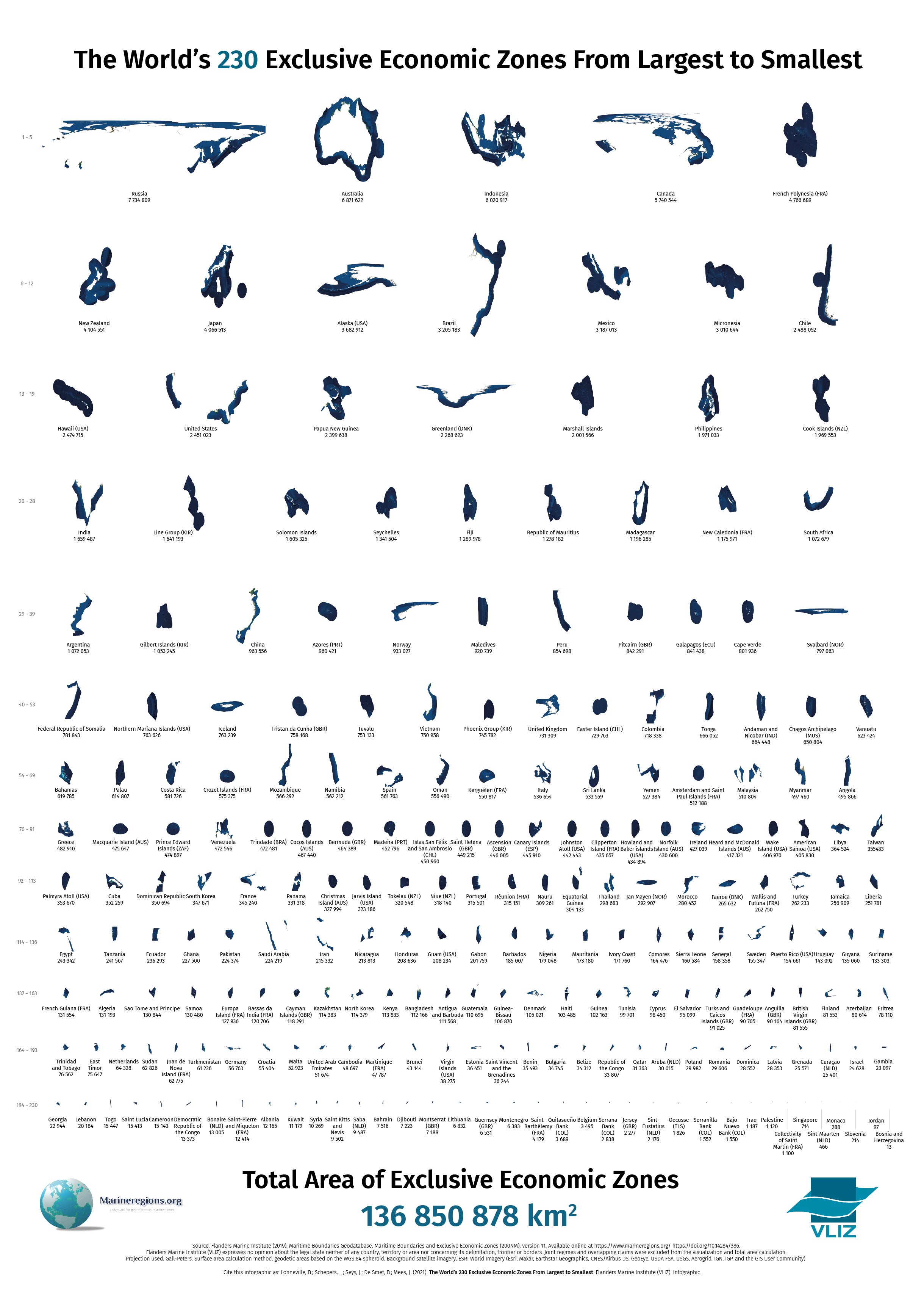
World’s EEZs ordered from Largest to Smallest - a powerful & unique view on sea areas.
Saturday, April 1, 2023
Friday, March 31, 2023
Oil tankers without ice-class protection could soon start shuttling on Northern Sea Route
Russian oil companies are desperately looking for new markets.
Nuclear icebreaker operator Rosatom now offers Lukoil and Gazprom Neft escort across icy Arctic waters to Asia.
From Barnets Observer by Atle Staalesen
The two companies that produce many million tons of oil at Arctic fields might soon start to send shiploads to Asian buyers across the Northern Sea Route.
According to Rosatom, the nuclear power company that manages Russia’s fleet of nuclear icebreakers, there is a significant potential in oil shipments on the Arctic route.
Negotiations with the oil companies are already taking place, Rosatom representative Sergei Chemko confirmed in a meeting in the Federation Council this week.
The two companies that produce many million tons of oil at Arctic fields might soon start to send shiploads to Asian buyers across the Northern Sea Route.
According to Rosatom, the nuclear power company that manages Russia’s fleet of nuclear icebreakers, there is a significant potential in oil shipments on the Arctic route.
Negotiations with the oil companies are already taking place, Rosatom representative Sergei Chemko confirmed in a meeting in the Federation Council this week.
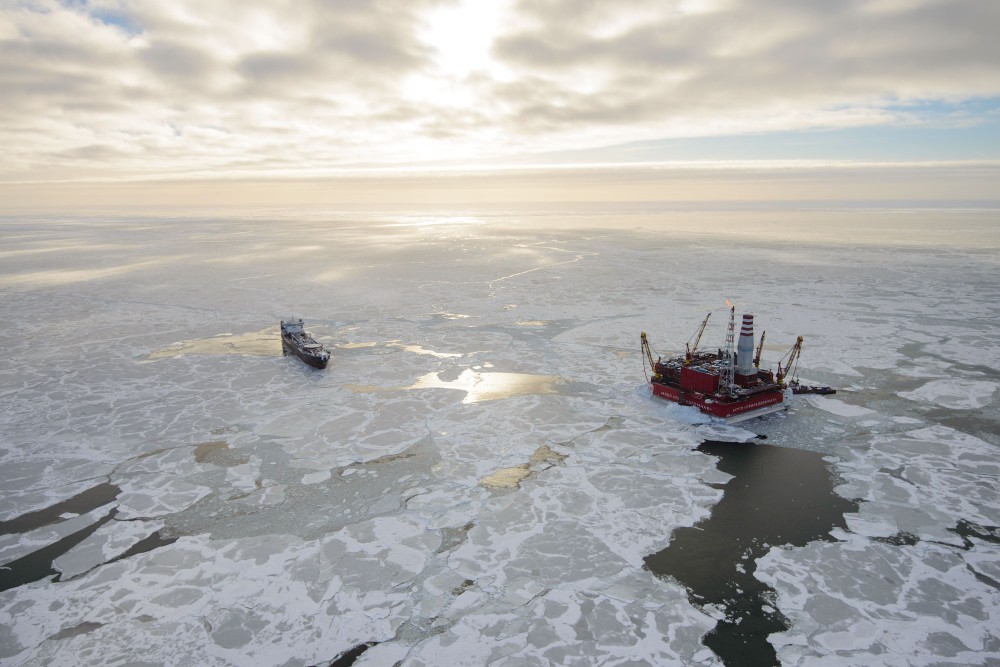
He believes oil from Lukoil’s Varandei terminal and Gazprom Neft’s Prirazlomnoye project could be sent across the route to the Asia-Pacific region in the period of the year without massive sea-ice, Interfax reports.
In summer and fall, the shipments can be made without ice-class tankers, Chemko argued.
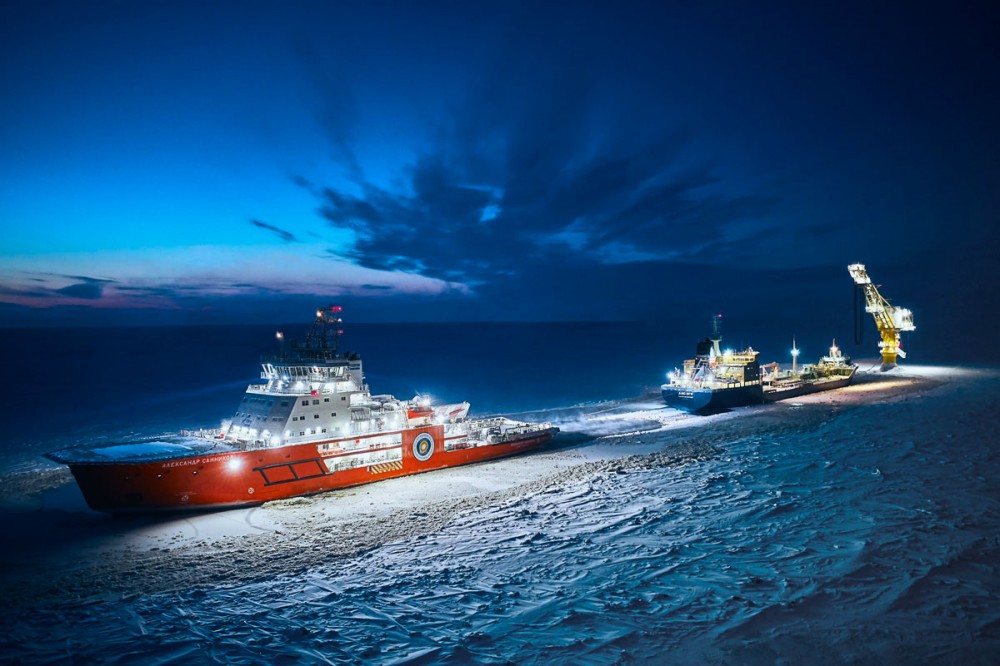
“Unfortunately, we do not yet have large-size tankers with ice-class and therefore we offer our colleagues use of ordinary tankers with a guaranteed level of security, with escort of our icebreakers in the summer- fall season,” he explained.
In summer and fall, the shipments can be made without ice-class tankers, Chemko argued.
“Unfortunately, we do not yet have large-size tankers with ice-class and therefore we offer our colleagues use of ordinary tankers with a guaranteed level of security, with escort of our icebreakers in the summer- fall season,” he explained.
Big logistical operations are surrounding Gazprom Neft’s year-round shipments of oil from the Novy Port field in Yamal. Today, the oil is shipped to a reloading facility in the Kola Bay. Photo: Gazprom Neft
Russia produces a significant share of its oil in far northern regions.
According to Gazprom Neft, Arctic fields today account for more than 30 percent of its total production. In 2020, production at the company’s Novy Port project increased five percent to a total of 14,89 million tons, and the offshore project Prirazlomnoye delivered 3,27 million tons, an increase of three percent year-on-year.
In addition comes oil from Lukoil’s Varandey terminal, expected to reach more than 6 million tons in 2022.
It is far from the first time that oil tankers sail on the Northern Sea Route.
In October last year, the 257 meter long oil tanker Vasily Dinkov made it across the route to the Chinese port of Rizhao.
The voyage tool place shortly before the EU introduced its oil ban on Russia.
The Commission’s 6th package of sanctions, adopted in June last year, prohibits all purchase, import or transfer of crude oil and certain petroleum products from Russia to the EU.
Russian companies today sell oil to China, India and other so-called “friendly countries” with a great discount.
According to Member of the Federation Council Konstantin Dolgov, Russia is able to overcome the troubles created by the sanctions.
“The current geopolitical situation triggers difficulties in resolving certain issues, but it is not sufficiently critical for a review of our general development plans,” he said during this week’s Council meeting devoted to the Northern Sea Route.
In 2023, shipments on the route is estimated to reach 33,12 million tons, he said.
The sea-ice across the Russian Arctic has over the past decade undergone a dramatic shrink. Nevertheless, ice remains a major challenge for ships operating in the area even during summer and fall.
In November 2021, more than 20 ships got stuck in the remote area following a quick and early freeze of the waters.
Links :
- ABC news : Moscow is betting big on its Arctic shipping route as the costs of invading Ukraine continue to mount
- High North News : Norway Sees Greatest Increase in Arctic Shipping Traffic
- MarineInsight : Russia And India Discuss Development Of Northern Sea Shipping Route
- GeoGarage blog :Map shortcomings could hinder Northern Sea Route growth / The warmest ever winter on the Northern Sea Route / Container ship crosses Arctic route for first time in history ... / The future of the Arctic economy / Arctic shipping passage 'still decades away' / Arctic sea routes open as ice melts / SCF Baltica tanker completed the Northern Sea Route / Ships to sail directly over the north pole by 2050, scientists ... / Russian tanker sails through Arctic without icebreaker for ... / Chinese shipper on path to 'normalize' polar shipping / As Arctic ice vanishes, new shipping routes open / Polar powers: Russia's bid for supremacy in the Arctic Ocean / Why the Arctic is not the next' South China Sea / Oblique icebreaker gives better access to Arctic waters / The world map of the future might be vertical / Polar code agreed to prevent Arctic environmental disasters / These maps show the epic quest for a Northwest Passage / Arctic headache for ship insurers as routes open up / Arctic Ocean: history and now / Arctic satellite image of the week : Russia discovers a new ...
Thursday, March 30, 2023
Seaweed is having its moment in the sun

From NYT by Somini Sengupta
It’s being reimagined as a plastic substitute, even as cattle feed.
But can seaweed thrive in a warming world?
For centuries, it’s been treasured in kitchens in Asia and neglected almost everywhere else: Those glistening ribbons of seaweed that bend and bloom in cold ocean waves.
Today, seaweed is suddenly a hot global commodity.
It’s attracting new money and new purpose in all kinds of new places because of its potential to help tame some of the hazards of the modern age, not least climate change.
In London, a start-up is making a plastic substitute out of seaweed.
In Australia and Hawaii, others are racing to grow seaweed that, when fed to livestock, can cut methane from cow burps.
Researchers are studying just how much carbon dioxide can be sequestered by seaweed farms, as investors eye them as a new source of carbon credits for polluters to offset their greenhouse gas emissions.
And in South Korea, one of the most established seaweed growing countries in the world, farmers are struggling to keep up with growing export demand.

Chang W.Lee/The New York Times

What was mainly a relatively small Asian industry is now coveted by the West.
Far beyond South Korea, new farms have cropped up in Maine, the Faroe Islands, Australia, even the North Sea.
Globally, seaweed production has grown by nearly 75 percent in the past decade.
The focus is moving far beyond its traditional use in cuisine.
But even as its champions see it as a miracle crop for a hotter planet, others worry that the zeal to farm the ocean could replicate some of the same damages of farming on land.
Much is unknown about how seaweed farms, particularly those far offshore, can affect marine ecosystems.
“Seaweed protagonists believe seaweed is a cure to everything, that seaweed is a magical panacea for climate problems,” said David Koweek, chief scientist for Ocean Visions, a consortium of research organizations studying ocean-based interventions for the climate crisis.
“Seaweed antagonists think seaweed is completely overhyped.”
There’s another problem.
Seaweed is itself feeling the impact of climate change, particularly in Asia.
“The water is way too hot,” said Sung-kil Shin, a third-generation seaweed farmer, as he pulled his boat into harbor one morning on Soando Island, just south of the South Korean mainland, where seaweed has long been foraged and farmed.
‘Plastic’ from seaweed
Pierre Paslier once made a living by designing plastic packages for cosmetics.
It felt to him like “leasing out my brain to a big plastic polluter.”
He wanted out.
He wanted to create packaging that would come from nature and disappear into nature, quickly.
With a friend from graduate school, Rodrigo García González, he created a company called NotPla, short for “not plastic.”
A biodegradable “plastic” membrane at NotPla’s operation in Hackney, London.
Ellie Smith for The New York Times
From an East London warehouse, they designed an edible sachet of water, made of seaweed and other plant extracts: To drink the water you simply pop the sachet in your mouth.
They designed another one that can hold ketchup and a third for cosmetics.
They also began making a seaweed-based coating for takeout cardboard boxes.
Just Eat, a food delivery app in Britain, began using it for some of its orders, including at the European women’s soccer finals in July at Wembley Stadium.
It’s still niche.
The seaweed coating, designed for home composting bins, is considerably more expensive than the plastic coating now used on most takeout boxes made of paper.
But Mr. Paslier is looking to the future.
The European Union has a new law restricting single-use plastic.
A global plastics treaty is under negotiation.
“Seaweed is not going to replace all plastic, but seaweed combined with other things can tackle single use plastic,” he said.
“We are barely scratching the surface.”
Foragers from the past
In the gray light of dawn, Soon-ok Goh, a slight 71-year-old, swam soundlessly in the shallow waters of Gijang, on the southern coast of South Korea.
Her feet were sheathed in yellow flippers, her thin, small frame in a wetsuit.
She surfaced above water for a few seconds, took a long breath that sounded almost like a whistle in the quiet of the morning, then dived down again, yellow flippers upturned.
Ms. Goh is among the last practitioners of a vanishing trade.
Since the end of the 7th century, women like her have foraged for wild seaweed, along with other seafood, in the chilly waters around the Korean Peninsula.
This morning, a tiny pink-handled knife in hand, she snipped shiny green-brown ribbons of kelp called miyeok.
She plucked sea snails clinging to rocks, two kinds of sea cucumbers, a handful of kelp-devouring sea urchins.
All went into her sack.
In the gray light of dawn, Soon-ok Goh, a slight 71-year-old, swam soundlessly in the shallow waters of Gijang, on the southern coast of South Korea.
Her feet were sheathed in yellow flippers, her thin, small frame in a wetsuit.
She surfaced above water for a few seconds, took a long breath that sounded almost like a whistle in the quiet of the morning, then dived down again, yellow flippers upturned.
Ms. Goh is among the last practitioners of a vanishing trade.
Since the end of the 7th century, women like her have foraged for wild seaweed, along with other seafood, in the chilly waters around the Korean Peninsula.
This morning, a tiny pink-handled knife in hand, she snipped shiny green-brown ribbons of kelp called miyeok.
She plucked sea snails clinging to rocks, two kinds of sea cucumbers, a handful of kelp-devouring sea urchins.
All went into her sack.

She has been diving since she was 9 years old.


With demand rising, old practices are getting pushed in the past
Chang W. Lee/The New York Times
Her grandmother taught her the trade, Ms. Goh said, which is known as haenyeo, or the “sea women.”
She has been diving since she was 9 years old.
“People who do this kind of work are disappearing,” she said.
“When I’m done, no one will do it.”
With demand rising, old practices are getting pushed into the past.
What role seaweed plays in your life depends on where you’re from.
For Alaska’s Indigenous people, seaweed has been a source of sustenance for generations.
The Irish and Welsh have used it to make pudding.
Japanese soup stock is made of kelp.
Seaweed extracts also help millions of people worldwide keep their teeth clean; it’s been used to make toothpaste for years.
In Korea, bordered by water on three sides, 20 different species of seaweed have been recorded.
It is central to cuisine and culture.
In a Seoul restaurant, many varieties on the menu.
After childbirth, mothers are served a soup made of miyeok, iron-rich and brown, and children are served it on their birthdays to honor mothers.
Dried, salted sheets of gim are eaten as snacks or dusted over cookies.
Wispy tendrils of maesaengi are tucked into a steamy breakfast porridge that’s believed to be a hangover cure.
In decades past, when there was no money to buy rice, you could go to the sea and find seaweed, said Hye Kyung Jeong, a food historian at Hoseo University in Seoul.
“Seaweed helped people survive during famines,” she said.
This is not the first time seaweed has helped avert a crisis.
Slimy arms race
The new frontier for seaweed production lies beyond Asia.
Steve Meller, an Australian-American businessman in Australia, grows seaweed in giant glass tanks on land.
Specifically, a red seaweed native to the waters around Australia called asparagopsis, which beef and dairy companies are eyeing as a way to meet their climate goals.
A sprinkle of asparagopsis in cattle feed can cut methane from their burps by between 82 and 98 percent, according to several independent studies.
“The race is on, I suppose, to get the world’s first commercial supply,” Mr. Meller said.
“The demand is off-the-roof scale.”

Chang W. Lee/The New York Times

Chang W.Lee/The New York Times
His company, named CH4 Global, after methane’s chemical formula, is competing to bring asparagopsis to the mouths of cows.
A manager examined the crop recently.
Cattle burps are a major source of methane, a potent greenhouse gas.
A farmer at an Australian feedlot with a handful of seaweed supplement.
At least two other Australian start-ups, Sea Forest and Rumin8, are in the seaweed-for-cattle race.
So are Symbrosia and Blue Ocean Barns, both in Hawaii.
Fonterra, a New Zealand dairy producer, has begun commercial trials of the seaweed supplement, and Ben and Jerry’s is planning its own trials soon.
The global dairy giant Danone has invested in an asparagopsis start-up.
Whether seaweed can make a dent in cattle methane remains unclear.
In the United States, there’s another hurdle to overcome: regulatory approval.
Nevertheless, it could be key to the beef and dairy industry's ability to meet climate goals.
Emissions from food systems alone, mainly meat and dairy, could raise the global average temperature by 1 degree Celsius by the end of the century, blowing past the threshold of relatively safe global warming, researchers have said.
Climate pressures
Seabirds dive and squawk around the fishing port in Soando, an island off the southern tip of South Korea, as Mr.Shin’s boat pulls in with the morning’s harvest.
Mr. Shin, 44, has plied these waters for 20 years and has seen climate change upend his trade.
He grows a red kelp species called pyropia, which favors cold water during its growing season.
So he has been going further and further from shore in search of chilly waves.
Mr. Shin’s crew harvesting seaweed recently.
By mid-April, Mr. Shin says, the water isn’t as cold as Pyropia likes.
His yield has suffered.
“People want more seaweed these days,” he said.
“But there’s no more seaweed.”
Since 1968, the waters where Mr. Shin farms have warmed by 1.4 degrees Celsius, slightly higher than the global average.
That’s why South Korean scientists are racing to breed strains that can thrive in warmer waters.
Seaweed farms are a far cry from the rows of corn and wheat that make up monoculture farming on land.
But even as they signify new opportunities, they present ecological risks, many of them unknown.
They could block sunlight to creatures who need it below.
They could scatter plastic buoys in the sea, which already suffers from too much plastic.
They could leave their plant detritus on the seafloor, altering the marine ecosystem.
“It needs to be carried out with a great deal of care,” said Scott Spillias, a doctoral student in economics who studies marine systems at the University of Queensland.
“We shouldn’t expect seaweed to save us.”
Links :
- GeoGarage blog :The plans for giant seaweed farms in European waters / Seaweed: The food and fuel of the future? / Climate change: Can an enormous seaweed farm help curb it? / By cultivating seaweed, indigenous communities restore ... / Why waves of seaweed have been smothering Caribbean ... / Ever heard of ocean forests? They're larger than the Amazon ...
Wednesday, March 29, 2023
China to up its deep-sea mining efforts
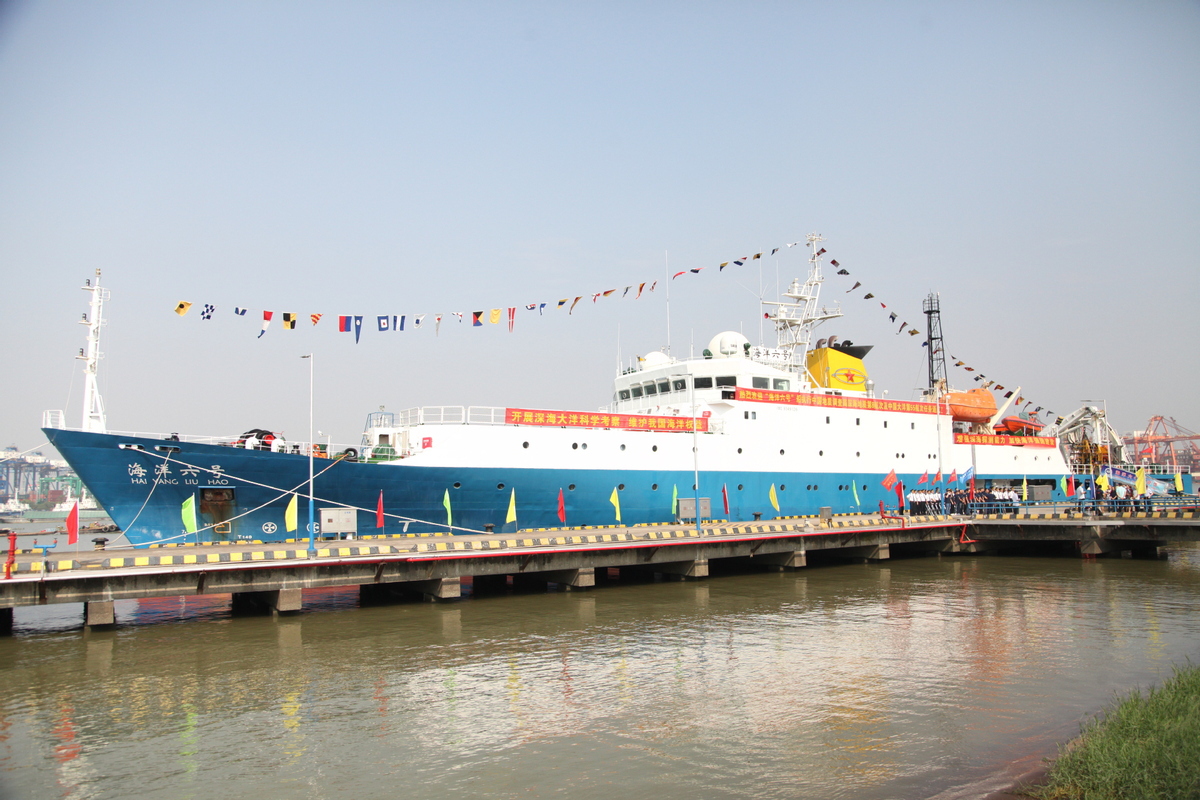
Chinese scientific research ship Haiyang 6 returns to Guangzhou, Guangdong province, after completing its deep sea exploration on Oct 23, 2019.[Photo/Xinhua]
China will pay more attention to the research and development of techniques and equipment used for deep-sea mining, according to a senior researcher in the country's shipbuilding industry.
"Deep-sea mining has become a new frontier of international competition on science, technology, resources and industries, because there are a lot of polymetallic nodules on ocean floors that contain rich concentrations of nickel, copper, manganese and cobalt that are essential to the renewable energy industry," said Ye Cong, deputy director of the China Ship Scientific Research Center in Jiangsu province's Wuxi.
"A large proportion of the metals I mentioned, which are extensively used at Chinese factories, needs to be imported.
Mining them from seabed will help us reduce the heavy reliance on foreign suppliers," said Ye, who is a member of the 14th National Committee of the Chinese People's Political Consultative Conference.
Internationally, some Western nations have owned key technologies and the capability of manufacturing major hardware required in deep-sea mining and at least one company has launched experimental commercial mining operations expected to retrieve thousands of metric tons of ores each day.
However, China lags behind in terms of knowledge, technology and hardware, which highlights the importance of government attention and investment.
"We are facing several difficulties and challenges.
First, it is hard to bring the ores from a depth of several thousands of meters.
We need a reliable, powerful system consisting of pumps and tubes that can bring the mixture of seawater and extracted ores to ships" he explained.
"Second, we must thoroughly study the possible impact on deep-sea ecosystems and make sure that our solution can protect the marine environment and biodiversity.
Also we need to figure out an economical, sustainable approach to mine from ocean floors otherwise we will not be able to afford it."
Ye's center is a subsidiary of the State-owned conglomerate China State Shipbuilding Corp and is known for its deep-sea submersibles like the Jiaolong, or Sea Dragon, and Shenhai Yongshi, or Deep-Sea Warrior.
According to him, previous scientific dives by the Jiaolong and Shenhai Yongshi have enabled researchers to carry out some preparatory work for deep-sea mining.
Hu Zhen, a senior researcher at the Wuxi center and also a 14th CPPCC National Committee member, said that exploration and development of oceans have become a significant topic of science and technology, and are closely related to safeguarding a nation's marine interests and its international status.
He urged the government to speed up its review and approval procedures for major deep-sea hardware's research and development and also accelerate the implementation of the deep-sea station project.
Ye and Hu were speaking on the sidelines of the first session of the 14th CPPCC National Committee, which closed in Beijing on Saturday.
Links :
- EJFoundation : How the rush to deep-sea mining threatens people and our planet
- The Guardian : Deep-sea mining for rare metals will destroy ecosystems, say scientists / Row erupts over deep-sea mining as world races to finalise vital regulations
- The Verge : The race for more battery materials could cause ‘irreversible’ damage under the sea
- Greenpeace : Greenpeace confronts deep sea mining expedition in the Pacific Ocean
- NYTimes : A Rush to Mine the Deep Sea Is Underway. It Must Be Stopped
- BBC : The looming threat of deep-sea mining
- Climate Home News : High Seas Treaty exempts deep-sea mining from stricter environmental rules
- Wired : The Mining Industry’s Next Frontier Is Deep, Deep Under the Sea
- Mining : China to step up deep sea mining efforts / Diving for Metals: Visualizing Deep Sea Mining
- Politico : The uncharted waters of deep-sea mining
- The Hill : China’s maritime strategy: To own the oceans by adverse possession
- GeoGarage blog : Is deep-sea mining a cure for the climate crisis or a curse? / Deep-sea mining to turn oceans into 'new industrial frontier' / Deep-sea mining could start in two years after Pacific ... / Race to the bottom: the disastrous blindfolded rush to mine ... / Mining the deep ocean will soon begin / The secret on the ocean floor : deep-sea mining / Renewables' deep-sea mining conundrum / Electric car future may depend on deep sea mining / Will ocean seabed mining delay the discovery of potential ... / How will China's submersibles help us explore the ocean ... / Deep sea mining licences issued
Subscribe to:
Posts (Atom)