Saturday, August 23, 2025

Image of the week : bowhead whale


In 2007, Alaskan Inupiat hunters made an extraordinary discovery.
Buried deep in the neck of a Bowhead whale was something unexpected:
A century-old harpoon fragment, a deadly relic from the 1800s.
It wasn’t just any harpoon.
It was a bomb lance, an explosive projectile used in 19th-century whaling manufactured in New Bedford, Massachusetts, sometime between 1885 and 1895.
This weapon was designed to detonate inside a whale’s body.
Yet somehow, this whale had survived.
When biologists examined the fragment, they confirmed the whale had been struck more than 100 years earlier.
At the time of its death, it was estimated to be at least 115 years old. Until then, scientists believed Bowhead whales lived around 60 to 70 years.
This discovery doubled that assumption, offering living proof that these Arctic giants can endure for over a century….
 
Links :

Friday, August 22, 2025

The Pisan Chart, the first nautical chart of the Mediterranean: a masterpiece of ancient cartography


From FinestresullArte by Noemi Capoccia

A revolutionary object was born in the 13th century: the Pisan Chart, the first complete nautical chart of the Mediterranean.
The result of sailors' experience rather than theoretical erudition, it marks the beginning of a new era in European geographic representation and navigation.

In the panorama of medieval cartography, the birth of the firstportulan chart of the Mediterranean marked a momentous turning point in the way geographic space was conceived and represented, and between the 13th and 14th centuries, a new tool made its appearance in the hands of European mariners: the portulan chart.
This is a profoundly different product than a simple evolution of the Ptolemaic maps already in use.
But what do we mean, first of all, by the term Ptolemaic map?
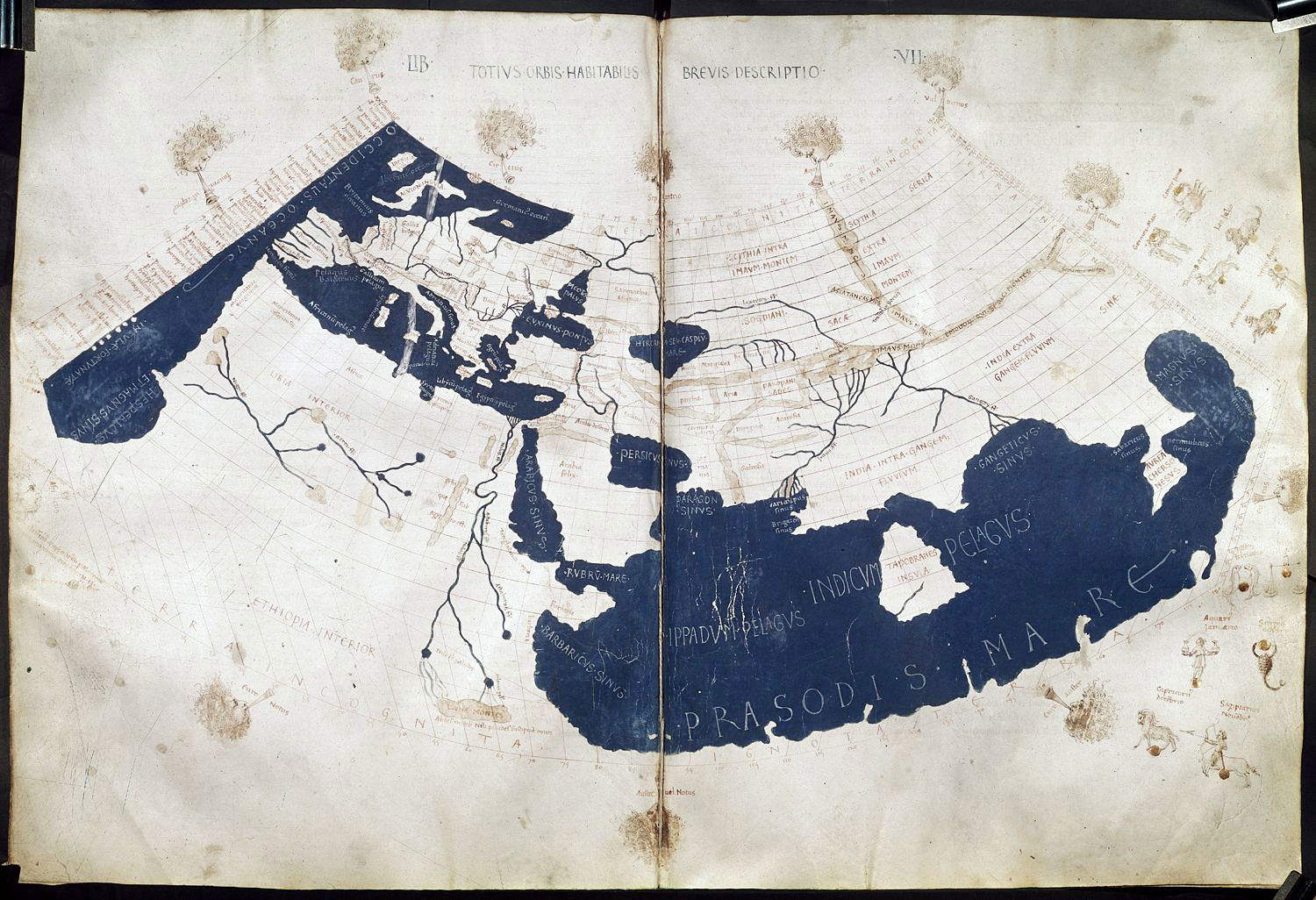
Ptolemy’s planisphere is a representation of the world as it was thought to be known and depicted in the second century CE by the West.
The map is based on descriptions in the Geographia of the Egyptian geographer and astrologer Claudius Ptolemy, a work compiled around 150 AD.
Although no original maps have ever come down to us, the text of the Geographiahas thousands of geographic references accompanied by coordinates, thanks to which cartographers, after the rediscovery of the manuscript around 1300, were able to reconstruct the worldview represented by the author.

Well, the portolan chart is quite different: in fact, it is based on empirical observation and the practical knowledge of sailors.
Unlike medieval mappae mundi, which had a symbolic and theological function, portolan maps were practical tools, intended foreveryday use by sailors.
Coastlines are drawn in great detail, and ports, inlets, and useful navigational landmarks are highlighted.
The interior of the continents, however, is often left blank or occupied by marginal decorations.
The focus of the representation is thus the sea, crisscrossed by a dense network of lines indicating the main routes according to the winds of the 32-point rose.

Thus, nautical charts reflected the geographical knowledge of the time and were practical aids to navigation, particularly with the spread of the compass between the 12th and 13th centuries.
The reference grid was based on a radiocentric wind rose, with sixteen major points and as many minor roses arranged around it.
The rhombuses drawn from each rose indicated the directions of the winds, in black for main winds, green for intermediate winds, and red for minor winds.
The charts did not include any geometric projections: meridians and parallels were not considered because this was navigation that we could call flat.
What does this mean?
Simply that the earth’s sphericity was ignored.
Map of the world made in the mid-15th century, based on the manuscripts of Ptolemy’s Geography.
It represents the first Ptolemaic projection, called a modified conic.

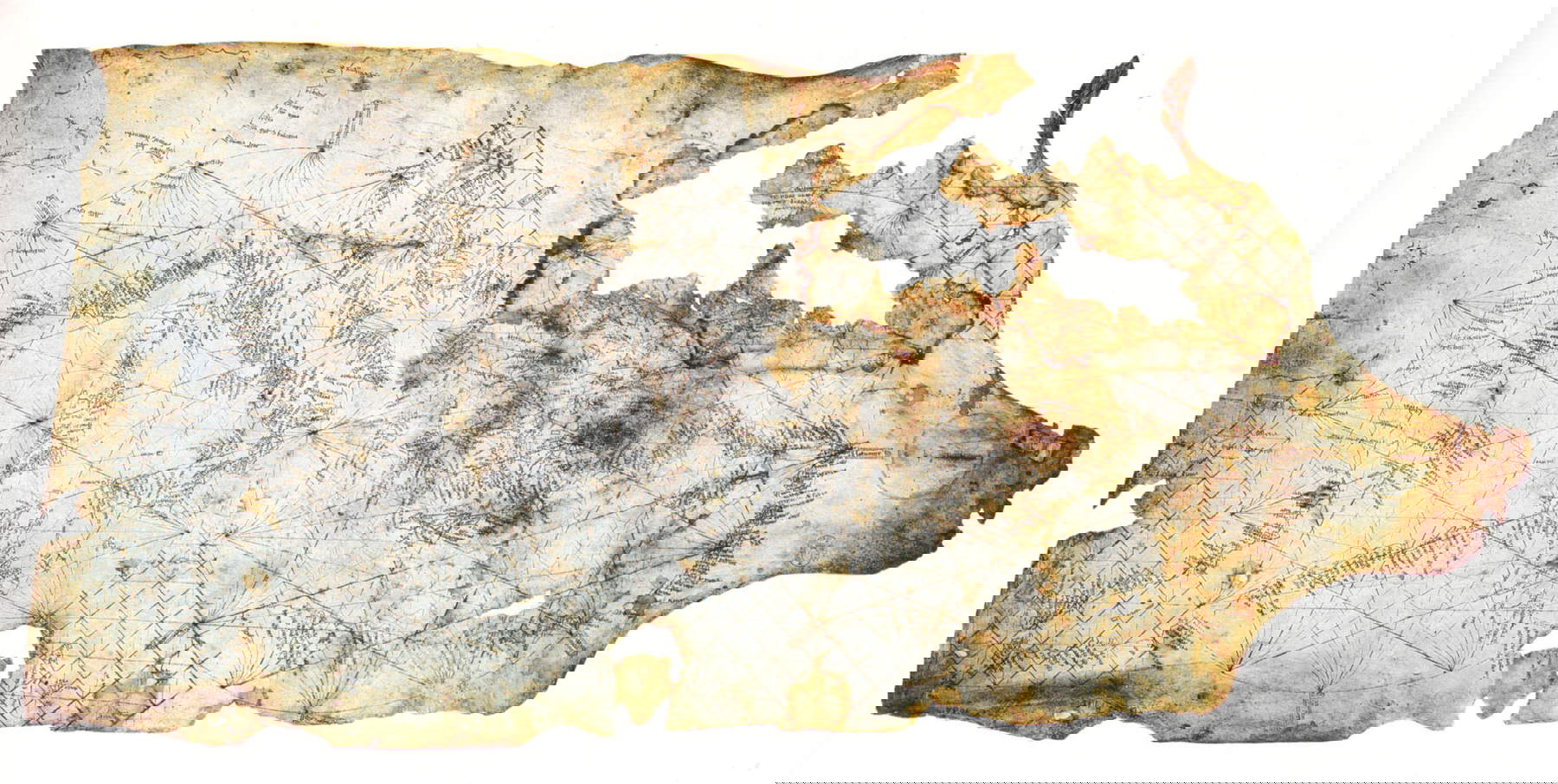
This includes the creation of the oldest nautical map of the Mediterranean that has come down to us in its entirety: the Pisan Map, dating from the late 13th century and currently housed at the Bibliothèque Nationale de France in Paris.
It is in fact an anonymous work attributed with certainty to the Genoese milieu, which, in addition to its high graphic accuracy, is especially striking for the abundance of place names along the coast, a feature that will be preserved almost unchanged even in the charts of the 14th century.
The richness of the coastline is contrasted by the almost total absence of names in the inland areas.

The Tyrrhenian side of the map, particularly the Calabrian section, has a higher toponymic density than the Ionian, a clear sign of the lesser importance of the ports on the Ionian.
At the same time, the distribution confirms the Genoese origin of the map, as it reflects the familiarity of the Republic of Genoa with the Tyrrhenian basin, over which it exercised a more pronounced dominance.

TheCharter shows routes based on cardinal winds, distances and a precise scale, features that make it one of the earliest cartographic representations made to scale since ancient times.
We also know that maps predating the Pisan Map, such as Greco-Roman astronomical maps, were not designed for navigation and were completely unknown in medieval Europe.
Moreover, the use of rulers and compasses (also called dividers) was essential in both the making and interpretation of the map, which required at least an elementary knowledge of arithmetic.
Thus, the entire Mediterranean and the Atlantic up to Cape St. Vincent is represented in the Pisan chart.
Later, as Italian navigation became more interested in the north, all charts expanded to include with greater accuracy the English Channel, Flanders, the North Sea, and parts of Scotland.

The chart’s eight-pointed wind rose was later expanded to a division into sixty-four directions.
The names of the eight main winds were retained in Italian, while combinations derived from them were used for the additional fifty-six directions.
Anonymous, Carta Pisana (13th cent.; Paris, Bibliothèque Nationale de France)

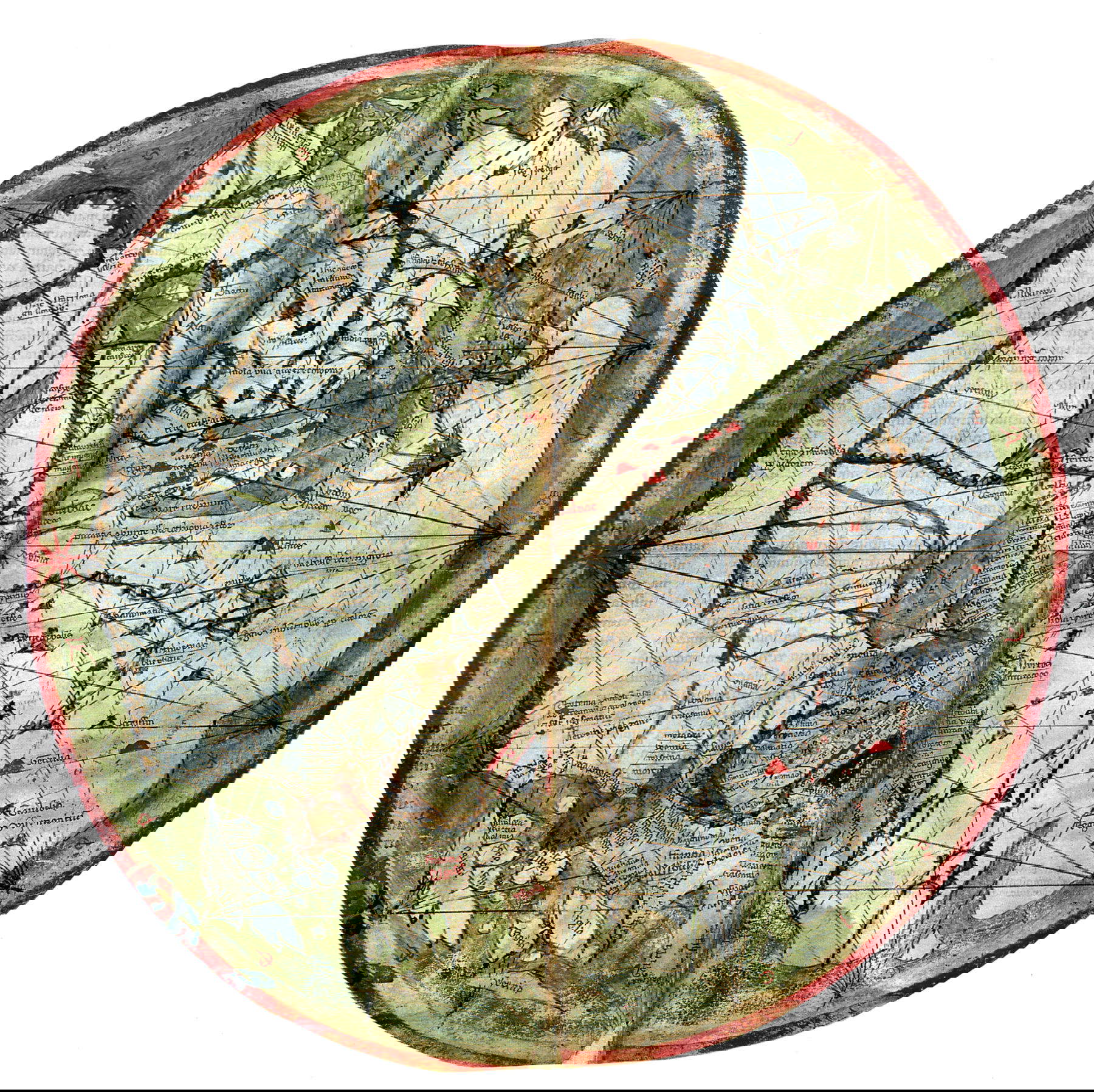
During the 14th century, the figure of Petrus Vesconte, a Genoese cartographer active in Venice, marked a considerable evolution in cartographic production, making it more articulate and technically advanced.
He is the first known author to sign his own maps and to introduce important innovations, such as the modular representation of coastlines and the systematic use of the wind rose and course lines.
He is also credited with the oldest dated nautical charts known to date.

The first, made in 1311 and now preserved at theState Archives in Florence, bears the inscription Petrus Vesconte de Janua fecit ista carta anno domini MCCCXI and depicts the eastern Mediterranean.
Two years later, in 1313, he produced an atlas consisting of six charts covering the entire Mediterranean basin and the Atlantic coasts of Europe as far as the British Isles and Holland.
Between 1313 and 1320 he produced four more similar atlases, all dated from Venice, the city where he operated at least in the final phase of his career and where he most likely helped introduce or perfect the art of nautical cartography.

Vesconte is also credited with the charts appended to Marin Sanudo’s Liber secretorum fidelium Crucis, a work of which there are about ten known codices, including a planisphere of particular note.
The identification with a Perrinus Vesconte, author of maps dated between 1321 and 1327, which could correspond to the same person or to a distinct cartographer, remains uncertain.Peter Vesconte, Map of the World (1320)

During the 15th century then, the tradition inaugurated by Vesconte continued and was strengthened with new figures.
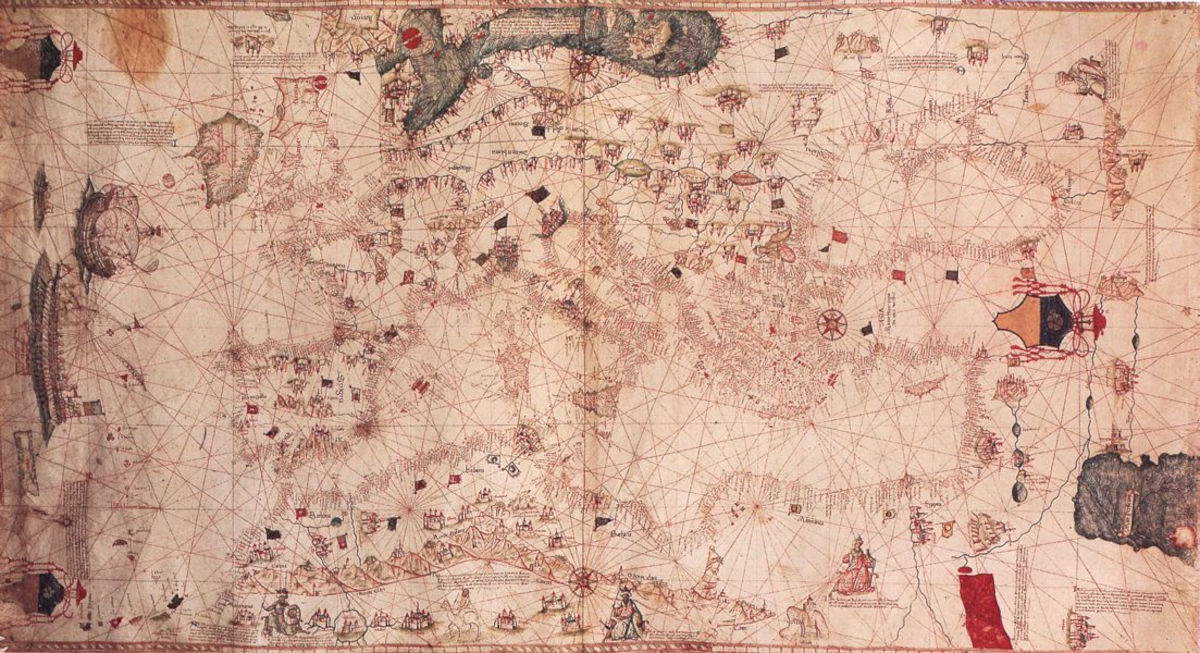
Grazioso Benincasa, a native of Ancona and member of a noble family, was the most active and well-known Italian cartographer of the century.
Born around 1400, he was in all likelihood also an expert navigator, accustomed to traversing the Mediterranean and accurately recording all the information useful for running a ship.
His earliest work, a portolano (a navigation manual) devoid of charts but rich in coastal descriptions, covers the eastern shores of the Adriatic to the Black Sea.
Although incomplete, the text, now preserved in manuscript in the Ancona Municipal Library, is particularly important because of the value of the personal observations it contains.
The dates given in the manuscript indicate a redaction between 1435 and 1445.

Benincasa also made numerous nautical charts and atlases, about twenty-five of them known, produced later than the pilot book: the earliest dated document is dated 1461, now in theState Archives of Florence, while the last is dated 1482, preserved in the University Library of Bologna; some specimens bear no date.
He drew his maps both in his hometown and in Genoa and Venice.
Active for at least fifty years, Benincasa was a major contributor to the nautical cartography of the time.
His maps stand out for their originality and offer valuable insight into the geographical outlook prevalent among Italian navigators on the eve of the great discoveries.

Grazioso Benincasa, Nautical Chart of the Mediterranean (15th cent.).

Returning to nautical charts, cartographic historian Tony Campbell, author of the 1987 chapter Portolan Charts from the Late Thirteenth Century to 1500 in the first volume of The History of Cartography, a volume edited by J.
B.
Harley and David Woodward, indicates that charts were not constructed on the basis of geometric projections, but through direct measurements of course and distance collected by generations of navigators.
Their spread coincides with the period of maximum development of trade routes in the Mediterranean.
Genoa, Venice, Pisa, Barcelona, Marseilles: the great maritime powers equipped themselves with cartographic workshops and commissioned increasingly complex atlases.
The nautical chart thus became not only a technical tool but also a strategic asset, to be protected and transmitted with care.

In material terms, charts were instead made on sheep’s vellum, an expensive medium but resistant to moisture and handling.
The ink used varied according to function: black for coastlines, red for important place names, and gold or blue for decorative elements.
Port names were written in the cartographer’s vernacular language, but there was no lack of linguistic contamination reflecting the cosmopolitanism of the seas.

The first portolan charts thus represent a turning point in the history of cartography.
No other map, in their own time, succeeded in rendering the geographical contours of the Mediterranean with equal fidelity.
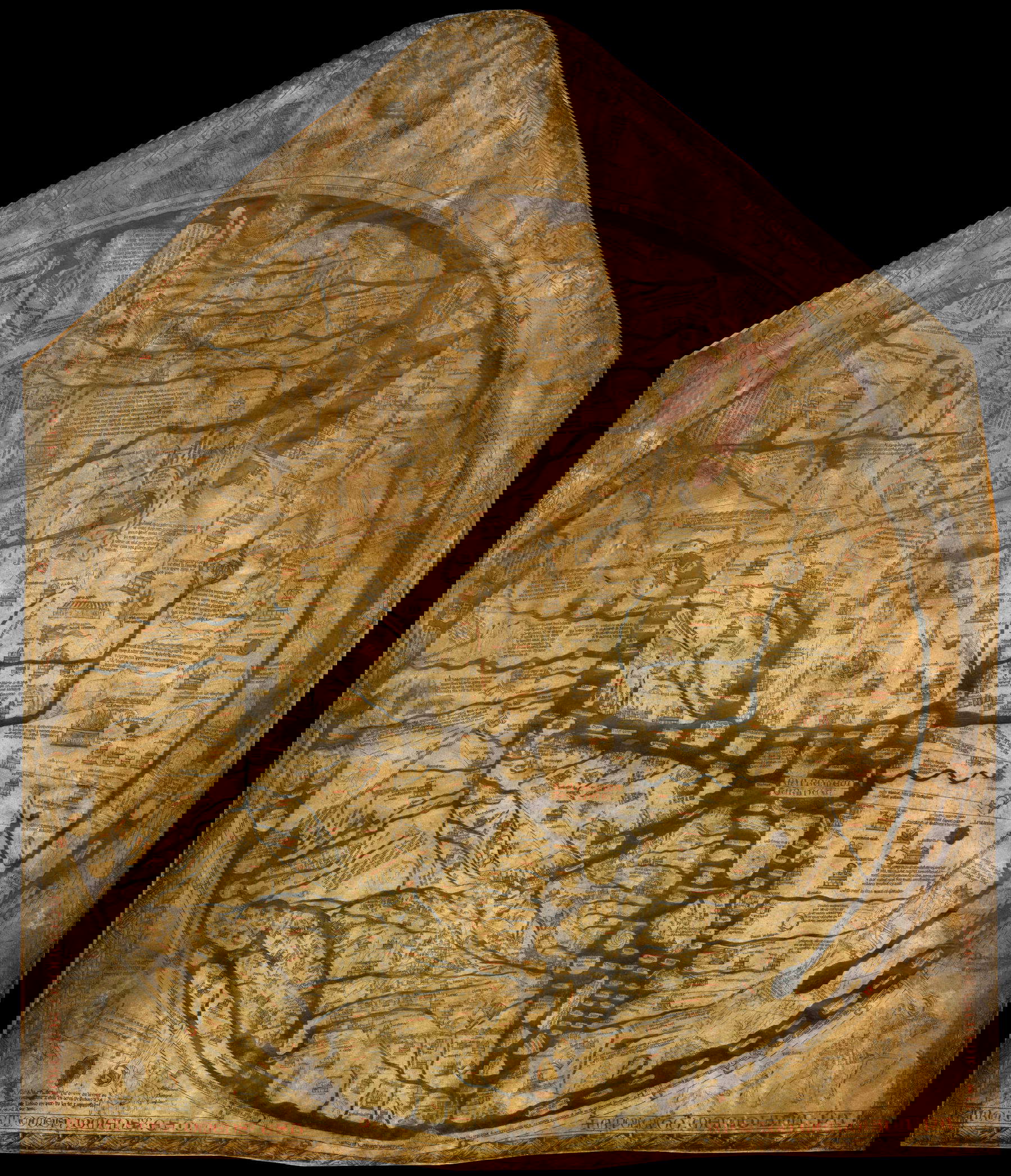
Even in the earliest surviving specimens, the shape of the Mediterranean and Black Sea basins is strikingly close to reality, a result that contrasts sharply with the symbolic and distorted representations of coeval maps, such as the HerefordMap, painted around 1300 by Richard of Haldingham.
 
 
Richard of Haldingham, Map of Hereford (c.
1300; sheet of vellum, 159 x 134 cm)


Beyond that, the maps are most notable for their direct connection to the concrete world.
They were intended to meet practical needs, particularly those of navigators.
Intended for skilled hands and sea voyages, they were instruments designed for orientation, calculating distances, and following routes.
Elements such as the compass and scale, rarely found in maps designed for scholars or courts, became indispensable here.
Commerce, more than theory, guided the cartographers’ hand.

Already remarkable for accuracy from the earliest versions, portolan charts continued to be refined: new coastal locations were inserted, names updated, routes adapted.
As long as they retained their practical function, they continued to improve.
But with the loss of their centrality in the world of navigation, beginning in the second half of the sixteenth century, a gradual decline can be observed, both in the accuracy of outlines and in the quality of place names.

In any case, the charts also had another fundamental merit: they were among the few to graphically document the explorations that preceded and accompanied the Renaissance.
At a time when the geography of the world was changing rapidly, the portolan charts presented a concrete and up-to-date reference.
They were not objects intended for luxury or celebration.
As everyday tools, they served and then disappeared.
Yet in their operation, they made essential contributions to medieval life.
And if some still shine today for their illuminated decorations, the real legacy lies in the extraordinary formal consistency maintained by the simpler ones, which for more than two centuries have been able to hand down, almost intact, the faithful image of the known coasts.

Thursday, August 21, 2025

UK bans export of historic charts and chronometer to protect heritage

 
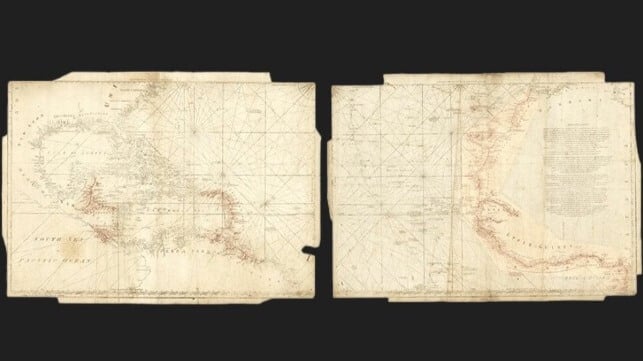
The chart collection is said to be one of the finest examples in the UK (Arts Council England)

From Martime Executive

The United Kingdom is taking action to preserve its rich maritime history by stopping a collection of nautical charts, including some that were drawn by famed British navigator and explorer Captain James Cook, from leaving the country.
The UK government placed an export bar, temporarily stopping the sale of the collection of nautical charts dating back to the late 18th and 19th centuries.
The charts and a collection of other artifacts are currently owned by the historic archive of Imray Laurie Norie & Wilson Ltd and are up for sale, valued at £6 million ($8 million).

In placing the export bar, the government is hoping to allow time for a UK museum or institution to acquire the collection.
It said this would ensure the extraordinary collection that forms part of Britain’s historic rise to a maritime superpower continues to be preserved in the country.
The goal is to ensure they remain an important source of knowledge relating to the country’s commercial chart making at its prime.

The collection spans over 200 working charts, rare maritime atlases in their original “blueback” bindings, and unique artifacts, including a copper plate for an original chart by explorer Cook.
Captain Cook is credited with drawing some of the charts that were printed using copper plate etchings, and which guided his navigation in his three important voyages of exploration to the Pacific and Southern Oceans.


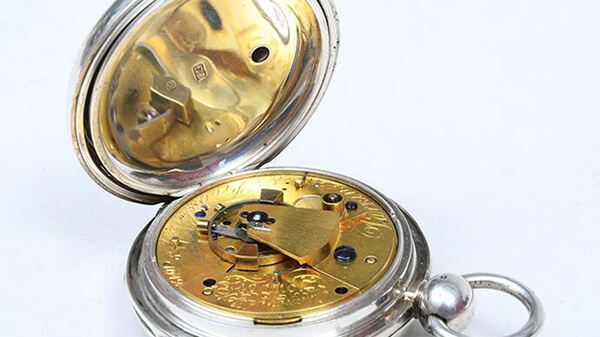
Pocket chronometer that travelled on the second voyage of HMS Beagle from 1831 to 1836
(Arts Council England)

Currently under the custody of Imray, the charts form the largest surviving archive documenting the work of early commercial chart-making.
Apart from the nautical charts, it also includes a chair believed to have been used by Lord Nelson, the British naval commander who became a national hero for his naval victories against the French during the Napoleonic Wars.

“This extraordinary collection helps us better understand Britain’s transformation into a global maritime power,” said Sir Chris Bryant, Arts Minister.
“I hope that a museum or institution can come forward to help secure this collection for future generations so that researchers and the public can learn about this crucial chapter in British history.”
 
This Chart of the Indian and Pacific Oceans, compiled chiefly from Documents deposited in the Hydrographic Office of the British Admiralty is respectfully dedicated to Adm. Sir. F. Beaufort
 
Imray has a history dating back to 1904, having been established when three chart publishing firms merged.
Each of the founding companies had a long history going back to the mid-1700s when merchant ships filled the London docklands.
The early cartographers, nautical instrument makers, and pilot book publishers worked alongside ships’ captains and crew to produce charts that would be supplied to mariners around the world.

Putting a temporary sale of the nautical charts comes just a month after the UK government also put an export ban on another maritime navigation treasure that is also a key piece of the nation’s history.
Last month, the government stopped the sale of a , carrying Charles Darwin.
The expedition is credited with playing a role in the development of Darwin’s evolutionary theory, having provided him with observations and collections that led to his groundbreaking ideas on evolution by natural selection.
The chronometer is valued at £200,000 ($268,810).

The UK government imposed the two export bans based on the recommendation of the Reviewing Committee on the Export of Works of Art and Objects of Cultural Interest.
Its role is advising on whether a cultural object intended for export is a national treasure.
 
Links :

Tuesday, August 19, 2025

The plan to turn the Caribbean’s glut of Sargassum into biofuel

PHOTOGRAPH: ELIZABETH RUIZ/AFP VIA GETTY IMAGES

From Wired by Edith Gonzalez Cruz


With record-breaking quantities of the seaweed set to hit Mexico’s beaches, experts propose converting it into biogas and construction materials, as well as using it to underwrite carbon credits.

IN THE CARIBBEAN, summer is supposed to be the season of sun, sand, and crystal clear waters—for decades, Mexican vacation destinations like Cancun, Cozumel, and Tulum have been synonymous with paradise.
But then the sargassum began to arrive.
For the past 15 years, large quantities of this brownish-colored seaweed have been invading beaches around the Gulf of Mexico every summer, its arrival from the open seas coinciding with high tourism seasons.

Forecasts from the Optical Oceanography Laboratory at the University of South Florida indicate this summer could be the worst on record, with up to 400,000 tons of sargassum predicted to wash up on Mexican coasts.
As well as covering up the sand and spoiling the appearance of the country’s pristine beaches, the seaweed releases gases as it decomposes—toxic hydrogen sulfide, as well as the greenhouse gases methane and carbon dioxide.

A study by the Inter-American Development Bank estimates that sargassum drives down local GDP by 11.6 percent in Quintana Roo, the coastal state home to the tourist hot spots of Cancun and Playa del Carmen.
The Mexican hotel sector says that it costs them more than $100 million a year to clear sargassum from beaches.

Exactly what’s causing so much seaweed to flood the Caribbean remains a debated topic.
Experts have pointed to warmer ocean waters, ever increasing amounts of agricultural fertilizer flowing into the ocean, and changes to ocean currents as potential culprits.
But the definitive cause of these algal blooms has yet to be pinned down.

For engineer Miguel Ángel Aké Madera, an expert in nonconventional energies, washed up sargassum needs to be processed in large quantities to stop it being a problem—and in his view, this can be achieved by using it to make biofuel.

Sargassum (Sargassum natans and Sargassum fluitans) is a macroalgae that spends its entire life cycle floating on the ocean surface.PHOTOGRAPH: RODRIGO ARANGUA/AFP VIA GETTY IMAGES

“By processing 500 tons of sargassum, 20,000 cubic meters of biogas is obtained,” says Aké Madera, who is the founder and director of Nopalimex, a Mexican company pioneering generating gas and electricity from biomass and farming waste.
A cubic meter of biogas can provide the same amount of energy as a liter of gasoline.
“An average gas station in Mexico sells between 20,000 and 25,000 liters of fuel daily,” he says.
“500 tons of sargassum daily could satisfy an equivalent demand.”

Esteban Amaro, director of the Quintana Roo Sargassum Monitoring Network, agrees that fuel is the best product to focus on.
Processing the seaweed into other consumer products is possible, but inadvisable given that the health risks of doing so have not yet been sufficiently studied.
“I believe that sargassum’s purpose is to produce energy, because when it decomposes, it releases many heavy metals such as arsenic, lead, and cadmium,” Amaro says.
“Therefore it is better to produce biofuels or biogas than everyday products like clothing or shoes.”

A Potential Source of Carbon Credits

In the race to dispose of sargassum, there is another viable product—Sargapanel, a construction material developed by researchers at the National Autonomous University of Mexico (UNAM).
These panels use between 60 and 70 kilos of wet sargassum per piece and offer several advantages compared to conventional paneling: The material is around 33 percent more flexible, has greater resistance to impact, and is a fire retardant.
In addition, no chemical additives are used in its production, so it can be recycled: Once its life cycle is over, it can be shredded and reintegrated into the production line.

“With this project, not only do we contribute to reducing the problem … we also generate profits from carbon credits.
For every 5 tons of wet sargassum, a carbon credit is generated, and each credit is worth between $10 and $30,” says Miriam Estévez González, head of the group that developed Sargapanel at UNAM’s Center for Applied Physics and Advanced Technology (CFATA) in Juriquilla, Querétaro.

Estévez estimates that if 4,000 tons of dry sargassum were processed into paneling each year, this would generate an annual profit of between $80,000 and $240,000 as well as absorbing the equivalent of 8,000 tons of CO2.
“Making a comparison, we would be removing from circulation about a thousand cars,” she says.

CFATA scientists, in collaboration with academics from other UNAM departments, have also developed several other products, among them Sargabox—cardboard packaging boxes that are also fire-resistant—as well as filters that can be used to remove contaminants from water, including microplastics.

“In the case of Sargapanel, we already have the necessary scientific studies and a registered and scalable utility model that is fully competitive, and we are approaching some companies that are leaders in construction materials,” says Estévez.

On February 28, the governor of the state of Quintana Roo, Mara Lezama Espinosa, announced the formation of the Sargasso Comprehensive Sanitation and Circular Economy Center, whose aim is to shift the macroalgae from being considered a pollution problem toward it being used as an economic and environmental resource.
If processed into long-lasting physical products, sargassum can lock away the carbon it draws from the environment to grow; if turned into a biofuel, it can avoid some fossil fuel emissions.

The center will mainly promote using sargassum to produce biogas and organic fertilizers—replacements for products that usually result in greenhouse gases being released when made and used.
The center will then sell carbon credits off the back of these emissions reductions.

“There are European countries that cultivate algae to generate energy, but it is different, because they sow it specifically in the sea so that it can develop there and then they can process it.
In our case, it is an algae that is caused by natural issues, by the increase of the temperature of the seas, by the effect of climate change due to the irrational use we make of our waste that we dump into the sea,” says Aké Madera.
“All this biomass develops in enormous quantities that end up in the Caribbean.”

The Dominican Republic, Jamaica, Guadeloupe, Martinique, and Dominica have developed successful pilot projects for using sargassum for biogas production, but none have done so on a large scale.
“They are waiting to see what Mexico does,” says Aké Madera.

Although the center is still under development, two potential sites have been identified in Cancun for its installation.
The government of Quintana Roo plans to combine its work with that of wastewater treatment plants, which will produce a blend of sewage and microbes known as “activated sludge” that can be used to make biogas when there aren’t massive quantities of sargassum available.

What if the Sargassum Disappears?

One of the main limitations of Mexico’s proposed sargassum industry is the question of whether such large quantities of the seaweed will always be available.

“There will be atypical years, like the last one, in which little sargassum arrived, due to changes in ocean currents, but it will continue to arrive, if not in Mexico, then in many parts of the Caribbean,” says Estévez.
“We have to learn to be with it and give it a real and efficient use.”

For Aké Madera, sargassum, like many other types of biomass, can be used to generate heat energy, electricity, or vehicle biofuel, depending on the processor’s priority.
He also doesn’t see a risk in pushing ahead with plans for a sargassum industry.
“If at any moment sargassum stops arriving, we can replace it with nopal,” a type of cactus.
Aké Madera is the owner of several biofuel patents, among them ones for processing nopal and sargassum, and another, a work in progress, that involves tequila vinasse, a byproduct of producing the popular spirit.


A worker removes sargassum from the shore of Playa del Carmen beach in the state of Quintana Roo, Mexico, in June 2025.
PHOTOGRAPH: ELIZABETH RUIZ/AFP VIA GETTY IMAGES

For now, sargassum appears to be here to stay.
Scientific forecasts point to ocean temperatures increasing every year, which creates the ideal breeding ground for the macroalgae, though increasingly research is pointing towards ocean current changes also being a key driver behind seaweed overrunning the Caribbean, and predicting how these might shift in the future is difficult.

“The year with the most sargassum in the Mexican Caribbean area was 2018, with 22 million metric tons—that is, what was floating in the entire Atlantic Ocean, from Africa to the Gulf of Mexico and the Caribbean,” says Amaro.
“However, records of the University of South Florida, published in May, already indicate 37.5 million tons [is present in the water this year], and in June we surely reached 50 million metric tons.”

Of this floating sargassum, approximately 1 percent reaches the beaches of Quintana Roo, but this is enough to disrupt tourism across wide range of destinations.
Among the worst-affected beaches are those of Tulum, Playa del Carmen, Puerto Morelos, Bacalar, Cancun, Cozumel, Isla Mujeres, Mahahual, and Chetumal.
Destinations in the north of the peninsula are also affected, but to a lesser extent.

For Amaro, sargassum is the biggest environmental issue facing Mexico, as it poses economic, social, environmental, and health problems.
Despite this, he says, it’s also important to recognize that when it is in the sea, in smaller quantities, the seaweed forms an important part of the local marine ecosystem.
“Many fish larvae, invertebrates, commercially important fish, and other species such as whales and sharks develop there, depending on the shade of the sargassum and its production of food in the early stages of their life cycles.”

In the future, some sargassum could be harvested from the sea before it hits Mexico’s beaches.
On June 9, the Mexican Institute for Sustainable Fisheries and Aquaculture Research proposed classifying the algae as a fishery product and listing it in the country’s National Fisheries Charter, which would allow it to be harvested and marketed.
As part of this proposal, the institute sent a research vessel out to sea to sample and analyze floating sargassum, the water it lives in, and the species it supports.
Ultimately, the institute said in a statement, this knowledge could one day “enable its identification and capture on the high seas, before it reaches the beaches.”
 
Links :

Monday, August 18, 2025

The global race to protect undersea Internet cables: a review of recent developments

 
From Pulse by Christian Bueger

Welcome to Turbulent Seas, my new newsletter that provides deep dives on global maritime security developments based on academic research and travels to global ocean events.
I'm Christian Bueger, professor at the University of Copenhagen, research fellow at United Nations Institute for Disarmament Research (UNIDIR) and author of 'Understanding Maritime Security'.

In this edition, I investigate recent developments in the protection of subsea data cables.
The global cable system is the critical infrastructure of digital life, yet, its protection has become a feature of the maritime security agenda only recently.
I became passionate about cable protection in 2020, and here I review recent global and regional initiatives.
Not all of them are productive.

The Hidden Network Beneath Our Seas

If you send an email, prompt an AI, or book a flight, it is highly likely that your request travels through a subsea data cable using optical fiber technology.
The majority of data exchanges use terrestrial networks, yet the moment a service or data center on a different continent is involved, your request will depend on maritime connections.
Almost 1.5 million kilometers of submarine fiber optic cables—comprising more than 400 active systems—lie hidden under the waves at the bottom of the Earth's oceans to provide this connectivity.
While satellite internet is expanding, it cannot handle the world's total internet traffic, which equals filling up about 6 billion smartphone storage capacities every year.
 
When Cables Break: From Accidents to Attacks

Like other industrial infrastructures, the global subsea data cable system is also prone to failure.
Submarine cables break all the time—on average, two to four break somewhere in the world every week, with fishing and anchoring incidents accounting for 86% of the cable faults.
Most network operators use redundancy to prevent service disruptions, and most of the time such breaks go unnoticed.

If you live in a remote place, like an island, that might look different.
In October 2022, two cables connecting the remote Shetland Islands, situated 100 miles off Scotland's northern coast, were cut, leaving citizens without cash machines or mobile phone connections for days until services were restored.
The incident affected the island's population of about 23,000 people and required police to declare a major incident with additional emergency services deployed to the islands.

While this is an extreme case, ensuring fast repair, resilience and redundancy in the system is important to cope with accidents.
Yet, cables have come into focus for other reasons.
There is growing suspicion that cables are deliberately damaged as part of broader inter-state contestations.
Most directly this has been observed in the Baltic Sea, where following the Russian full-scale invasion of Ukraine and heightening tensions between Russia and NATO, a series of cable connections were damaged in 2023 and 2024.
While it was not possible to fully establish whether the incidents were the result of very poor seamanship, or deliberate attacks of sabotage, they clearly established the vulnerabilities of cable systems.
 
From Nord Stream to Global Awareness

The September 2022 explosions of the Nord Stream pipelines were the catalysts of such concerns.
In that case, it was quickly established that the pipelines were deliberately sabotaged.
It became clear that underwater infrastructure - pipelines and cables - are a potential target of malign actors.
Since then, critical maritime infrastructure protection has become a major new domain on the maritime security agenda.

Reported incidents occurring off Taiwan attributed to Chinese vessels demonstrated that such risks are not limited to the Baltic Sea.
Another type of incident occurred in the Red Sea and further strengthened the need to place cable protection high on the maritime security agenda.
In 2024 the MV Rubymar was attacked by Houthi forces operating from Yemen.
Fire broke out, and the crew was evacuated.
The vessel drifted for weeks, and its anchor cut crucial cables connecting Europe, Africa and Asia.
This case demonstrated how armed conflict at sea threatens the arteries of digital life.
 
Regional Responses: NATO, EU, and Beyond

The growing awareness of the vulnerability of cables has led to a substantial response on regional and global levels.

In Europe, NATO and the European Union have launched extensive initiatives.
NATO was proactive. It established a network of security officials, experts and industry representatives to develop common policies and protocols, to enhance information sharing and develop the trust needed for cooperative incident responses.
A new coordination cell based at the NATO Maritime Command supports member states through information sharing, analysis and operational coordination.
As a reaction to the cable cuts in December 2024 in the Baltic Sea, NATO launched a dedicated naval operation, known as Baltic Sentry, in the region.
Germany opened a new NATO headquarters for the Baltic Sea to strengthen future naval operations and deterrence.

Given its nature, NATO's response was military, while the EU has aimed at tackling the issue more comprehensively.
It incorporated cable protection in the EU Maritime Security Strategy of 2023, installed an expert body to review how existing EU policies, including in broader Critical Infrastructure Protection can be used, and launched in spring 2025 a comprehensive Action Plan for Cable Security, which includes provisions for global cable diplomacy.
As part of its Ocean Pact announced in summer 2025, the EU is developing a massive drone surveillance network to better monitor European waters.

Other regional organizations likewise have started to develop frameworks for enhanced cable protection.
The Indian Ocean Commission, which was arguably the first to develop a regional cable protection approach by agreeing on a joint framework for the Western Indian Ocean already in November 2021, is conducting a comprehensive update of its approach to cable protection with results expected for 2026.
Its main coordination center - the Regional Center for Operational Coordination based in Seychelles - started to monitor suspicious activities in cable locations.

In Southeast Asia, the key maritime security information sharing mechanism - the Information Fusion Center based in Singapore - is tracking suspicious activities and offers a coordination mechanism.
The Association of Southeast Asian Nations (ASEAN) is expected to develop a cable protection framework, and a major workshop to be held in Singapore in September (organized by NUS Centre for International Law) this year is expected to provide the first input for it.

Global Coordination Efforts

On a global level, the United Nations General Assembly has called for many years through its annual resolution on Oceans and the Law of the Sea for more awareness of cable security and protection.
International lawyers have long proposed that the issue could be addressed through a new implementation treaty of UNCLOS, which is an idea that has recently gained new momentum, including through the publication of a draft treaty text by Raul Pedrozo.
This is however unlikely to become reality any time soon.

In November 2024, the International Telecommunication Union (ITU) and the International Cable Protection Committee (ICPC) established the International Advisory Body for Submarine Cable Resilience to strengthen the protection of global undersea cable infrastructure.
The Advisory Body's 40 members include ministers, heads of regulatory authorities, industry executives, and senior experts on the operations of telecommunication cables, but lacks a strong maritime security focus.


The advisory body will address ways to improve cable maintenance, prevent damage from natural hazards and accidental human activities, ensure faster recovery times after disruptions, increase redundancy and promote sustainable practices in the industry.
The body will meet at least two times a year.
It held its first virtual meeting in December 2024 and a physical meeting in spring 2025 in the format of a Submarine Cable Resilience Summit in Abuja, Nigeria.
 
The Challenge of Too Much Attention

Accompanying these activities is an almost overwhelming array of workshops and panels around the globe where cable protection is either a new feature or the exclusive focus.
As someone analyzing cable protection since 2020, I can personally attest to that proliferation as my inbox is frequently flooded with invitations and requests.

This new attention is a double-edged sword.
On one side, more awareness of the strategic importance is a good thing, yet on the other, there is a risk overplaying the threat, and as colleagues in the cable industry frequently argue, not all the activities are actually productive.

A key problem is that there remains a lack of understanding of how the cables actually function, how the industry is organized and how different sources of international law, including the United Nations Convention on the Law of the Sea (UNCLOS), can be interpreted for operations.

The ambiguous language of 'hybrid threats' and 'greyzone warfare', employed by security officials and academics alike, is also not helping.
While I have been guilty of adopting such terminology myself, I have come to the conclusion that they hide more than they illuminate and we need more precise language to grasp what is happening with what strategic effect.

Seven Key Measures for Cable Protection

In many ways it is by now also clear what must be done.
This is to the degree that we already joked at a workshop held in Copenhagen in 2023 that we could easily play a form of bingo with the recommendations frequently mentioned. 
The commonly emphasized measures include: 
  • establishing clear lines of communication between everyone involved in a cable, that is the different state agencies with regulatory capacity and security roles in countries that are connected by the cable, but also the industries involved in laying, operating and maintaining it;
  • common information sharing systems and protocols among security agencies tasked with cable protection to identify suspicious activities and respond quickly to incidents;
  • enhanced maritime surveillance to attribute any incident to a vessel and potential perpetrators;
  • agreements and transparency regarding how the international law of the sea (including UNCLOS and IMO conventions) is interpreted in cable protection;
  • investments in cable resilience and repair;
  • common understandings of who pays for what in cable protection (consumers, tax payers, or shareholders);
  • strategic signaling and deterrence towards any adversaries that have declared intent to deliberately damage cable connections in peace time.

The Path Forward: From Workshops to Operations

More workshops and gatherings certainly will help to strengthen trust, and enhance knowledge and understanding of the cable system and realistic assessments of the risks and costs linked to protecting it.
 
On a regional level, it is time that the initiatives become more effective and focus on operations and exercises.

On a global level, the ICPC/ITU process is a productive new pathway.
It will be difficult and time consuming to establish a major agreement and whether the process has the necessary political gravitas is questionable.
Other international bodies, including the International Maritime Organization or even the Security Council are arguably needed to strengthen the process.
 
Links :

Sunday, August 17, 2025

Working principles of a suction dredger

A trailing suction hopper dredger dredges loose material and soft soils such as sand, gravel, sludge or clay.
One or two suction pipes are lowered on the seabed and the drag head is trailed over the bottom.
A pump system sucks up a mixture of soil and water and discharges it in the ‘hopper’ or hold of the ship.
The fully loaded vessel sails to the unloading site, where the material is deposited on the seabed through bottom doors or reclaimed by using the rainbowing technique.
The material can also be pumped ashore through a pipeline, where it can be used for reclaiming land.

The material is sucked up by dredge pumps and discharged to a deposit area through pipelines across sea and land.
In some cases, split hopper barges moored alongside the cutter suction dredger transport the soil to the deposit area to unload it there.
While operating, cutter suction dredger are stationary dredgers.
During the dredging works, a spud is lowered in the seabed to secure the vessel.
As a result, it is kept on the same location, but by using winches and anchors, the dredger swings sideways and the cutter head cuts and removes the soil.
Many Jan De Nul cutter dredgers are self-propelled allowing them to move from location to location under their own power.
 
Links :