Saturday, August 2, 2025

The Western Indian Ocean maritime emergency contact map

download map in pdf
 
This reference tool consolidates the complex network of maritime stakeholders across the region for the first time:

• Regional Maritime Coordination Centers
• Naval Operations Centers
• Emergency Response Services
• Maritime Security Organizations
• National Maritime Authorities across the Western Indian Ocean Region

Friday, August 1, 2025

Iranian researchers elevate maritime navigation with advanced antenna design


From MaritimeTechnologyReview by Theo Clark

In a significant stride for satellite communication technology, researchers have developed a novel antenna design that promises to enhance navigation and data acquisition in challenging environments, including the maritime sector.
The study, led by Aliakbar Dastranj from the Electrical Engineering Department at Yasouj University in Iran, introduces a dual-sense circularly polarized (CP) crossed-dipole array antenna tailored for Global Navigation Satellite System (GNSS) frequency bands.
Published in the IEEE Access journal, the research presents a solution that could revolutionize precision navigation and data collection in urban, forested, and maritime settings.

So, what does this mean in plain terms?
Imagine you’re out at sea, trying to get a reliable GPS signal.
The new antenna design is like having a super-powered receiver that can pick up signals more clearly, even when there are obstacles like tall buildings, dense forests, or even the ship’s own structure causing interference.
This is achieved through a clever design that uses a single pair of dual-band linearly polarized dipole antennas (LPDAs) and an optimized double-branch line coupler (ODBLC).
The result?
A compact, cost-effective antenna that can handle both right-hand and left-hand circular polarization, significantly reducing multipath interference.

The antenna’s impressive specifications include impedance bandwidths of 44.83% for right-hand circular polarization (RHCP) and 46.30% for left-hand circular polarization (LHCP), with axial ratio bandwidths of 47.69% and 44.78%, respectively.
This translates to a broader range of frequencies the antenna can effectively operate within.
The peak gains of 7.08–7.10 dBic ensure strong signal reception, all packed into a compact form factor of 160×160×44.6 mm³.
As Dastranj explains, “The simplified feed architecture enhances manufacturability and reduces fabrication costs,” making this technology not just advanced but also practical for widespread use.

For the maritime industry, the implications are substantial.
Precision navigation is crucial for safe and efficient shipping, especially in congested or challenging environments.
Autonomous vehicles, including unmanned ships and underwater drones, rely heavily on accurate positioning data.
This new antenna design could significantly improve the reliability of GNSS signals, enhancing the performance of these technologies.
Additionally, geodetic surveying and meteorological data acquisition, both vital for maritime operations, stand to benefit from the improved signal quality and reduced multipath interference.

The commercial opportunities are equally compelling.
The simplified design and reduced fabrication costs mean that this technology could be integrated into a wide range of maritime applications without breaking the bank.
From commercial shipping to offshore oil rigs, the potential for enhanced navigation and data collection is vast.
As the maritime industry continues to embrace digital transformation, technologies like this dual-sense circularly polarized antenna could play a pivotal role in shaping the future of sea travel and operations.

In summary, the research led by Aliakbar Dastranj and published in the IEEE Access journal offers a promising advancement in antenna technology.
By improving signal reception and reducing interference, this innovation could significantly impact the maritime sector, enhancing navigation, data collection, and overall operational efficiency.
As the technology becomes more widely adopted, it has the potential to transform how we navigate and interact with the world’s oceans.

Thursday, July 31, 2025

'Ghost island' appears after underwater eruption, then vanishes into the Caspian Sea — Earth from space

 
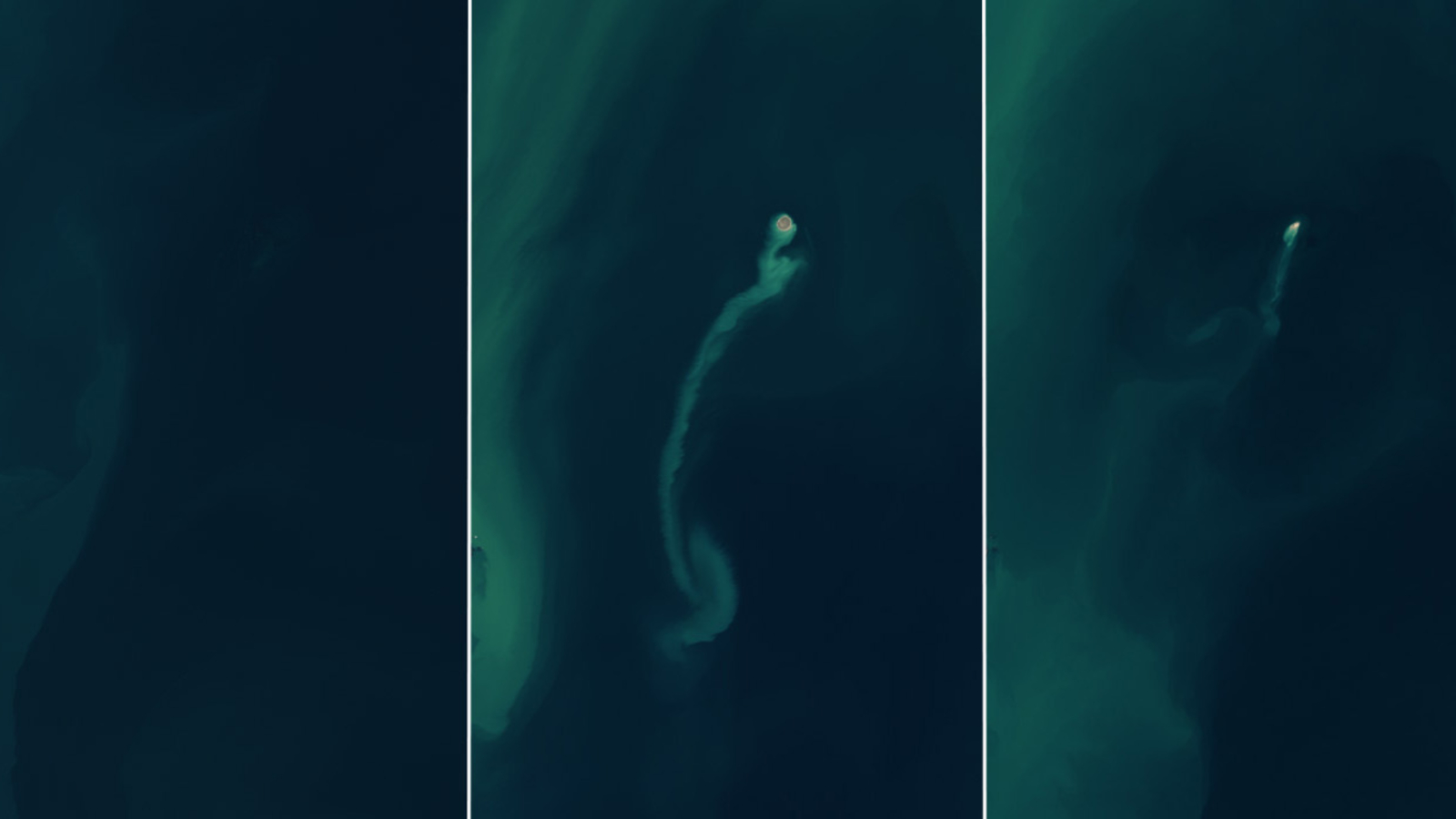
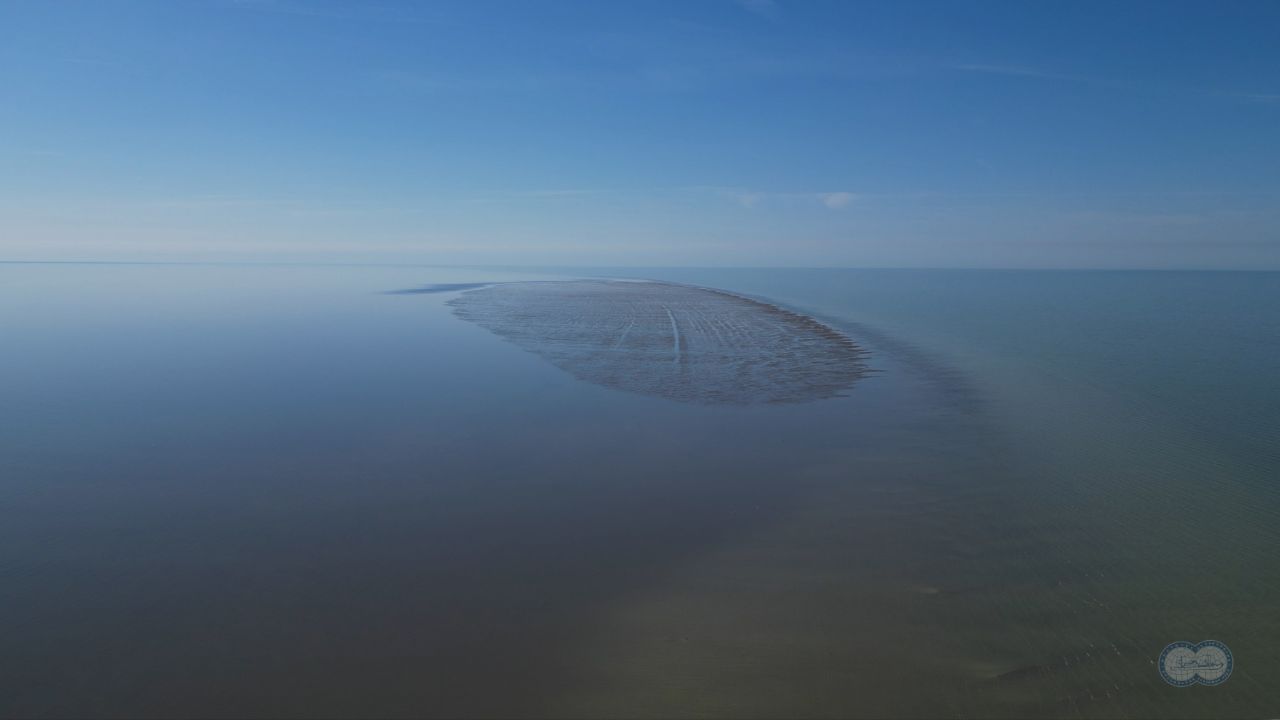
A temporary land mass appeared above an underwater mud volcano off the coast of Azerbaijan in January 2023.
By the end of 2024, it had almost completely disappeared.
(Image credit: NASA/USGS/Landsat/Wanmei Liang)

From LiveSciences by Harry Baker 

A series of photos taken between 2022 and 2024 shows the emergence and rapid disappearance of a volcanic "ghost island" off the coast of Azerbaijan. 

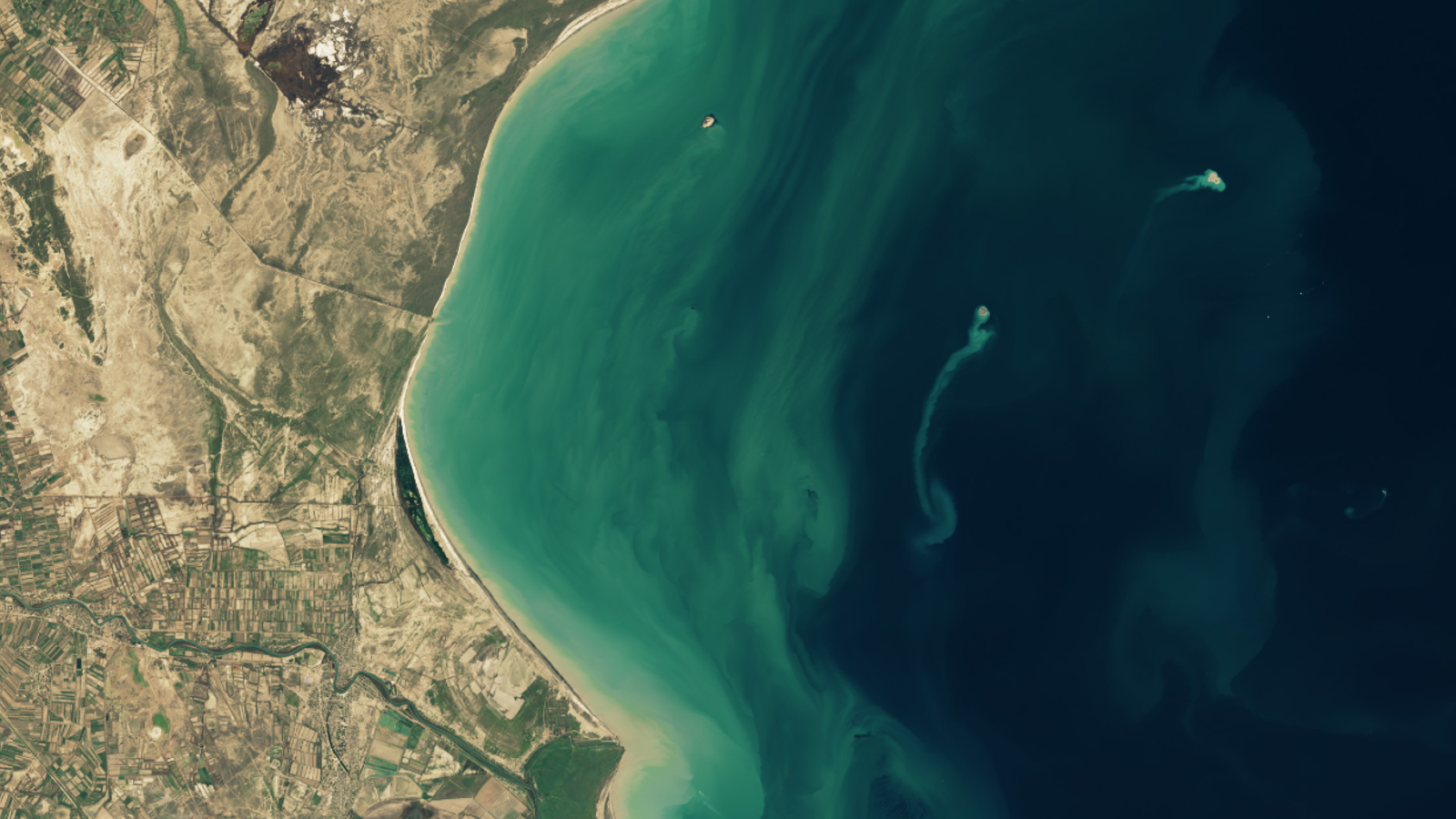
A striking series of satellite photos shows the brief lifespan of a "ghost island" that emerged and quickly disappeared in the Caspian Sea after an underwater mud volcano blew its top.

The fleeting landmass emerged at the end of January 2023 above Kumani Bank, an underwater volcano about 15 miles (24 kilometers) off the east coast of Azerbaijan.
 

By the time it was fully formed, on Feb. 4, the island measured around 1,300 feet (400 meters) across, according to NASA's Earth Observatory.

However, the island was unstable, and by the time the last photo was taken in December 2024, it had "nearly eroded away, retreating from view like an apparition," Earth Observatory representatives wrote. By now, the island has likely vanished.
 
Kumani Bank has erupted eight times since it was first discovered in 1861.
Each outburst lasted just a few days, yet all of these events resulted in at least some form of temporary island.
The strongest recorded eruption, which occurred in 1950, resulted in a 2,300-foot-wide (700 m) landmass that stood 20 feet (6 m) above sea level.

Azerbaijan is home to more than 300 mud volcanoes, including dozens that are hidden beneath the waves of the Caspian Sea. 
(Image credit: NASA/USGS/Landsat/Wanmei Liang)

Kumani Bank is a mud volcano, meaning it spews a superheated slurry of mud and water instead of lava and ash.

Azerbaijan has one of the highest concentrations of mud volcanoes anywhere on Earth, with more than 300 muddy vents on the mainland or offshore.
This is due to the country's position above a "convergence zone" where the Arabian and Eurasian tectonic plates collide, leading to increased geothermal activity.

Mud volcanoes are not as violent or destructive as other volcanoes.
However, they do contain high levels of pressurized natural gas.
This gas can be ignited by sparks from colliding rocks, leading to sporadic fiery outbursts.

An underwater mud volcano near Kumani Bank is believed to have triggered a towering inferno, several hundred feet tall, that exploded above the Caspian Sea in 2021.
 
Other volcanic "ghosts"

Normal, non-mud volcanoes can also create temporary islands when they erupt beneath the waves.

In 2015, a 0.7-square-mile (1.9 square kilometers) island emerged in the southern Pacific Ocean above the Hunga Tonga-Hunga Ha'apai volcano in Tonga.
However, it was wiped out by the same volcano in January 2022, when the underwater mountain unleashed one of the most powerful volcanic eruptions ever recorded.

Researchers later revealed that the colossal explosion likely killed never-before-seen microbe species that evolved on the isolated landmass.

In October 2023, a violent eruption off the coast of Japan's Iwo Jima island also created a temporary landmass, dubbed Niijima, or "New Island." 
It grew to be around 330 feet (100 m) wide and 66 feet (20 m) tall, and was clearly visible from space.

But in March 2024, drone footage revealed that the island had started to quickly sink into the sea, despite continued signs of volcanic activity, according to Newsweek.
 
Links :

Wednesday, July 30, 2025

Trump order puts deep sea mining on path to commercialization

Small polymetallic nodules after extraction from the seabed (TMC)

From Maritime Executive

On Thursday, President Donald Trump signed a much-anticipated executive order that will set up an American permitting process for deep sea mining in international waters, beyond the U.S. outer continental shelf.

The order directs the Commerce Department to expedite a sovereign permitting process for mining under the Deep Seabed Hard Mineral Resources Act, an obscure statute from the 1980s.
The Cold War-era law provides a pathway to unilateral resource recovery on the high seas, bypassing the UN's International Seabed Authority (ISA), which has jurisdiction under UNCLOS.

The richest areas for polymetallic nodules - the only technologically mature mining target - are far outside of U.S. Outer Continental Shelf, primarily in the Pacific between Hawaii and Mexico.
The nodules in the Clarion Clipperton Zone contain roughly 28 percent manganese; 1.3 percent nickel; 1.1 percent copper; and 0.2 percent cobalt, all strategically valuable elements.
The nodules also contain trace amounts of rare earth metals, which are critically important to defense production.

Canadian mining firm The Metals Company has a years-long interest in this region, and it worked closely with the White House in the months leading up to the announcement.
It is the only Western firm with equipment capable of performing the work in the immediate term, and is expected to apply for a U.S. mining permit, with support from Swiss contractor Allseas and Korean-built drillship Hidden Gem.The Metals Company's stock soared at 1100 hours Thursday, and was up 44 percent at closing.

ISA has taken a cautious approach to licensing, and is weighing the economic benefits against scientists' warnings of large-scale and long-lasting environmental damage.
However, the U.S. is not a signatory to UNCLOS, and the Trump administration is motivated to move quickly to "restore American dominance in offshore critical minerals and resources."

More than three dozen nations, including China, Russia, the UK, France and India, have already condemned the U.S. license plan and registered their support for the ISA. 
The ISA's secretary-general, Leticia Carvalho, implied in a statement that the order was inconsistent with UNCLOS. 
“The International Seabed Authority remains the sole body with the legal mandate to regulate activities in the area, and its legitimacy stems directly from international law,” Carvalho said.

Beyond high-seas permitting, Trump's order also directs the Department of the Interior to set up a similar permit process for the U.S. OCS (under the Outer Continental Shelf Lands Act).
The order also directs a variety of government resources towards helping private companies extract resources.
These include the possibility of federal mapping services to find minerals; funding support from federal development banks; and possible government purchasing of the minerals produced, using the National Defense Stockpile.

Federal purchasing may be an important tool to create a market. Many leading companies (including Apple) have already pledged not to buy metals from deep-sea mining for their supply chain, citing the potential environmental impact.
It is also possible that the sale of the metals may be challenged legally, according to environmental lawyer Duncan Currie, who compared unilateral high seas mining to illegal fishing.

"When a fishing vessel violates fishing regulations, it faces consequences, including not being able to unload its catch in various ports. Its catch also cannot be sold in several countries, like the US or the European Union. Similar things would apply to metals obtained in violation of UNCLOS," Currie told Dialogue Earth.

Competition for strategic seabed resources could also accelerate without a uniform set of rules. China - which already has a controversial history of UNCLOS compliance - has invested substantially in deep sea mining technology, and has a strategic interest as the world's leading producer of critical minerals.

 
A 2021 expedition by a seabed-mining company explored the viability of the practice in the Pacific Ocean.
Credit...Tamir Kalifa for The New York Times

Links :

Tuesday, July 29, 2025

Greece reveals boundaries of two marine parks in Ionian and Aegean seas


A man paddles in the waters of the Ionian Sea near Sidari settlement
on the island of Corfu, Greece July 26, 2019. 
REUTERS/Vasily Fedosenko
 
From Reuters 
 
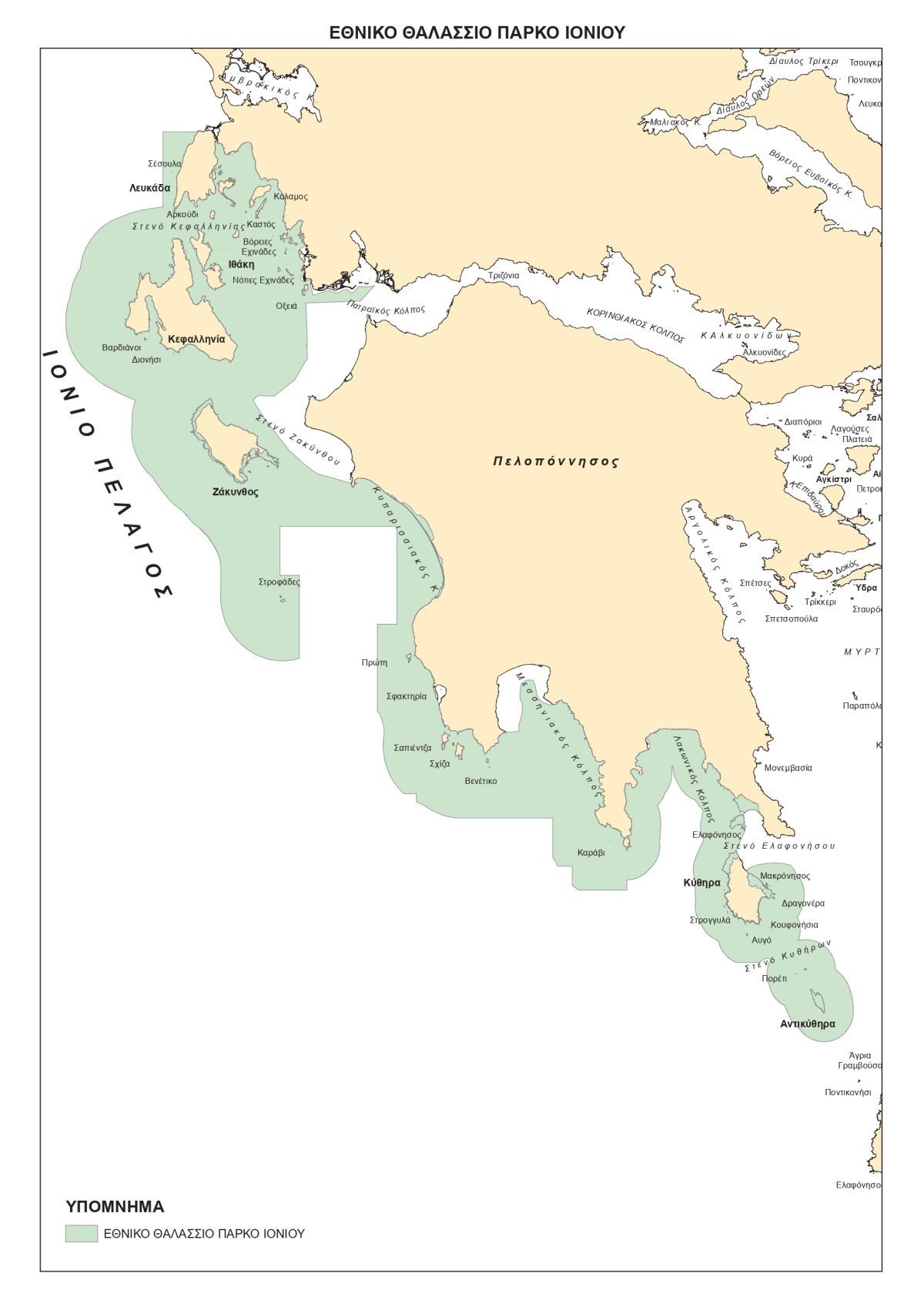
Greece revealed on Monday the boundaries of two planned marine parks in the Ionian and Aegean seas, with Prime Minister Kyriakos Mitsotakis saying they will be the largest in the Mediterranean region.
Athens wants to establish the parks, for the protection of sea mammals and turtles in the Ionian Sea and for seabirds and seals in the Aegean, this year.
Mitsotakis said they will help the country meet its global commitment to expand marine protected areas to 30% of its waters by 2030.
"They will allow us to meet the target ... way ahead of schedule," Mitsotakis said. 
"They will be vast sanctuaries for life beneath the waves," he said, adding that trawling of the sea floor will be banned inside the zones.
The environmental studies on the parks' boundaries were submitted on Monday for public consultation until September 22.
The planned Aegean Sea park has previously stirred tensions between Greece and neighbouring Turkey, with the two countries at odds over a range of issues including maritime boundaries.
Athens has said the park's boundaries are within Greece's territorial waters.

Turkey's Foreign Ministry said Greece was exploiting universal values such as environmental issues, that the parks would have no legal bearing on disputes between the neighbours in the Aegean and Mediterranean, and that Turkey will announce its own projects for marine life protection in coming days.
"Unilateral actions should be avoided in closed or semi-enclosed seas such as the Aegean and the Mediterranean," it said in a statement, adding Ankara was ready to work with Athens as a fellow Aegean coastal state to address any outstanding disputes while the NATO allies try to maintain positive sentiment.
The Aegean park, at 9,500 square kilometres, will initially expand around the southern Cyclades islands, further south from Turkey, according to the maps Greece submitted on Monday, along with the environmental studies.

The size of both parks is seen at 27,500 km2, government officials said, and Greece wants to expand them further.
When the public consultation ends, the Environment Ministry will draft two presidential decrees, which will be submitted to the Council of State by the end of October, the officials added.
 
Greece ENC coverage (HNHS)
 
The entire Ionian Sea to south Peloponnese arc, along with the southern Cyclades region — selected for the new parks — are known for their rich marine biodiversity and cultural significance.
The government emphasized that the implementation of these marine parks will take place in close collaboration with local communities, professional fishing bodies, researchers and international partners.
 
The parks will be established once the decrees are published.
 
Links :

Monday, July 28, 2025

New research: satellite imagery detects illegal fishing activity, shows strict protections work


Photo by Steve Spence, National Geographic Pristine Seas
 
The first-of-its-kind study reveals that the world’s most strongly protected marine reserves successfully curb industrial fishing activity, offering a new way to assess fishing compliance and bridge blind spots in current monitoring methods. 

New peer-reviewed research in the journal Science demonstrates the power of strict legal bans against industrial fishing in marine protected areas (MPAs).
The analysis — which combines satellite imagery and artificial intelligence technology to detect previously untraceable vessels — reveals that most of the globe’s fully and highly protected MPAs successfully deter illegal fishing. The study is the first of its kind to demonstrate that the most strictly protected marine reserves are well respected and are not simply “paper parks.”

The study, “Little-to-no industrial fishing occurs in fully and highly protected marine areas” finds that:78.5% of the 1,380 MPAs studied had no commercial fishing activity;
Of the MPAs where satellite images detected illegal fishing activity, 82% of them averaged less than 24 hours of activity per calendar year;
Strongly protected MPAs had, on average, nine times fewer fishing vessels per square kilometer than unprotected coastal areas; and
MPAs designated as strictly-protected with significant fishing activity included those in the Chagos Marine Reserve, the South Georgia and South Sandwich Islands and the Great Barrier Reef Marine Park (combined with the Great Barrier Reef Coast Marine Park), each with approximately 900 hours per year.

“Because strictly protected marine areas discourage illegal fishing, fishes are far more abundant within their boundaries, they produce more offspring, and help replenish surrounding areas,” remarked Enric Sala, one of the study’s co-authors, a National Geographic Explorer in Residence, and founder of Pristine Seas. 
 
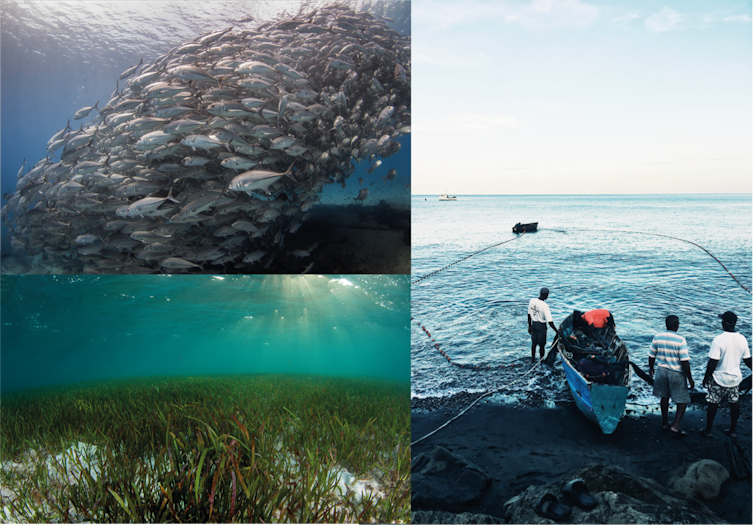
Marine protected areas enable fish populations to recover, protect carbon sink habitats such as seagrass beds, and can protect non-industrial activities such as artisanal fishing and scuba diving. 
Jeff Hester, Umeed Mistry, Hugh Whyte/Ocean Image Bank, Provided by the author
 
“In other words, the fishing industry benefits from following the rules.”

Illegal fishing poses a significant global threat, jeopardizing both the health of ocean ecosystems and the economic stability of the fishing industry. Scientific evidence shows that strictly protected MPAs restore marine life within their boundaries, improve local fishing, provide jobs and economic benefits, and build resilience against a warming ocean.
But when MPAs are minimally or lightly protected, the benefits practically disappear.

“The ocean is no longer too big to watch. With cutting-edge satellites and AI, we’re making illegal fishing visible and proving that strong marine protections work,” said Juan Mayorga, a scientist with Pristine Seas and co-author of the study.

To arrive at their conclusions, researchers analyzed five billion vessel positions from the Automatic Identification Systems (AIS), a GPS-based safety signal transmitted by many industrial fishing vessels, and paired this with satellite images generated by Synthetic Aperture Radar (SAR), which can detect vessels regardless of weather or light conditions.
 
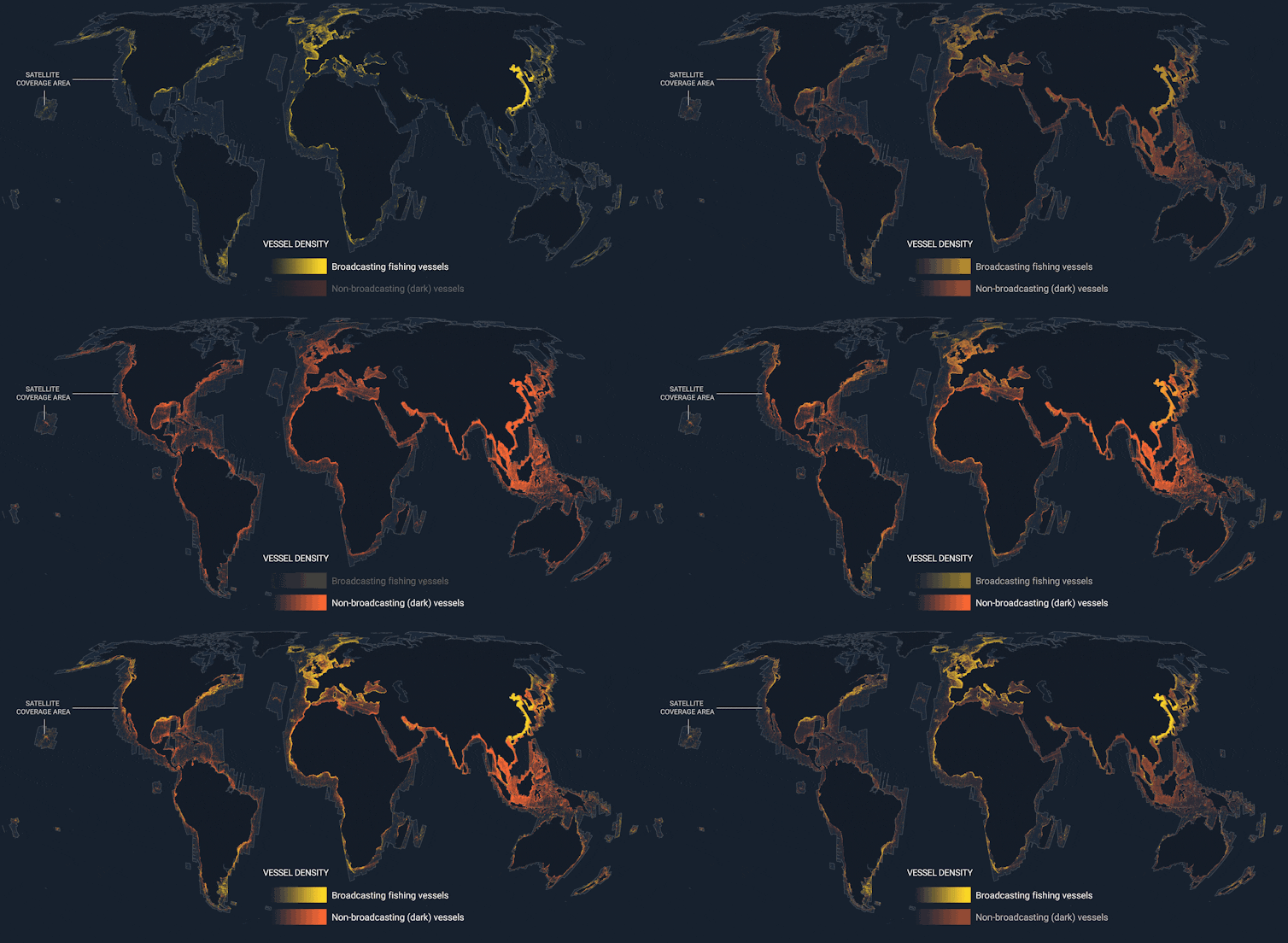
Global Fishing Watch analyzed millions of radar satellite images to determine the location of vessels that remain invisible to public surveillance systems.
On this 2022 map, vessels that publicly broadcast their GPS position via the AIS system are shown in yellow, and those that do not broadcast but have been detected via satellite imagery are shown in orange. 
Global Fishing Watch, Provided by the author

The combination of the datasets — and the use of AI models developed by Global Fishing Watch — allowed researchers to detect the majority of fishing vessels over fifteen meters long, including so-called dark vessels that do not broadcast their location and often operate to evade detection.

“No single dataset can solve the challenge of monitoring fishing activity at sea; each has its blind spots,” asserted Mayorga. 
“But when we combine them, their power emerges.
By fusing AIS tracking with satellite radar imagery and AI, we are now much closer to the full picture of human activity across the ocean.
That’s especially important in the crown jewels of the ocean — the world’s most strongly protected areas — where the stakes for enforcement and biodiversity are highest.”

Researchers found that the AIS data missed almost 90% of SAR-based fishing vessel detections within these MPAs. Inaccurate data, limited resources and the vastness of the ocean have made effectively monitoring MPAs for industrial fishing a challenge.
This groundbreaking methodology offers a powerful new way to assess fishing compliance and bridge blind spots in current monitoring methods, the authors found.

“By using satellites to track fishing vessels, countries can predict the locations of illegal activities and target patrol efforts, saving both manpower and money,” said Jennifer Raynor, the study’s lead author and a professor of natural resource economics in UW–Madison’s Department of Forest and Wildlife Ecology.

A growing body of research shows that MPAs produce spillover of fishes and invertebrates that increases the catches of species from small and sedentary (lobsters, scallops) to large and migratory (tuna).
 
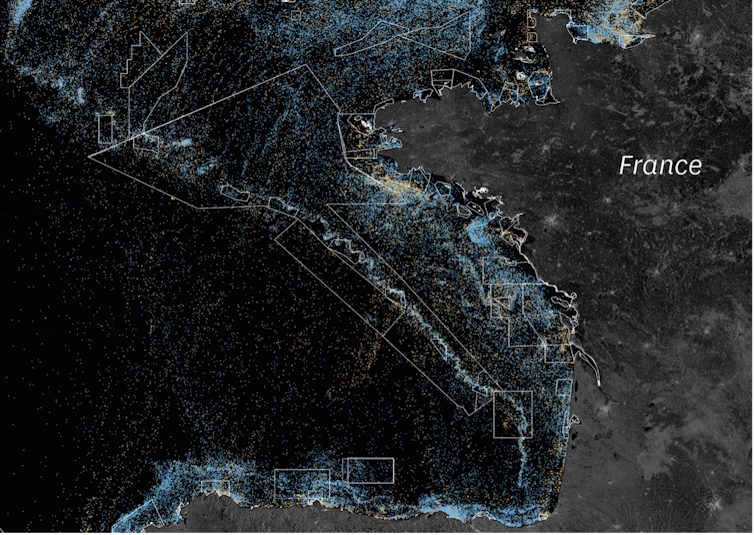
Example of industrial fishing vessels tracked by AIS (in blue) or not tracked (in beige) along the French Atlantic coast, based on data from the NGO Global Fishing Watch.
The boundaries of marine protected areas, according to the WDPA database, are shown in white. Satellite images from the Sentinel-1 program are used as the base map.
Raphael Seguin/University of Montpellier, Provided by the author

A 2024 study revealed that fishing catch per unit effort increases, on average, 12% to 18% near the boundaries of large fully protected MPAs.

“Illegal fishing takes place in areas of the ocean set aside for protection, but using satellites we have found — for the first time ever — that the level of protection determines how much risk industrial fishers are willing to take on,” Sala remarked. 
“Fully and highly marine protected areas discourage illegal fishing. The stricter the rules in place to conserve ocean areas, the more benefits nations receive — including more fish to be caught outside protected areas’ boundaries.”
 
Links :

Sunday, July 27, 2025

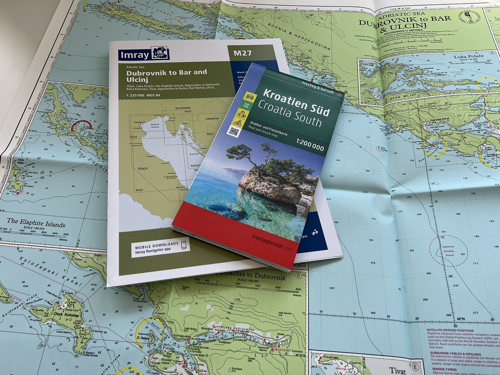
Imray and Freytag & Berndt plan joint venture to secure future of nautical charts

 
From Imray

Imray Laurie Norie & Wilson Ltd (Imray), a leading publisher of nautical information for recreational sailors, and Austrian cartographic specialist freytag & berndt (FB) have signed a letter of intent to form a joint venture.
This collaboration will ensure the continued availability and development of Imray’s renowned nautical charts and books, maintaining its trusted legacy for sailors worldwide.
 
The new joint venture, FB Imray Laurie Norie & Wilson GmbH (FB Imray), will be headquartered in Vienna.
Bookharbour (Stanfords) Ltd will continue as the main UK-based distributor of Imray charts and books.
 
Combining Imray’s proven maritime expertise with freytag & berndt’s extensive cartographic knowledge, will strengthen and expand the Imray portfolio.
The evolved organisation is set to launch in the summer, with further details to be announced in due course.
 

The focus will remain on producing high-quality nautical charts and publications under the established Imray brand, while also developing new products tailored to the needs of sailors and advancing digital navigation solutions.
 

Lucy Wilson, Managing Director of Imray, commented: "By combining our deep-rooted maritime knowledge with freytag & berndt’s cartographic abilities, we are securing the future of Imray’s nautical charts and publications while opening the door to new opportunities for development and growth. Our commitment to providing sailors with trusted, high-quality navigation resources remains at the heart of everything we do."

Carl Rauch, Managing Director of freytag & berndt, added: "With this joint venture, we are taking a big step towards becoming a global cartographic publisher. Until now, we have only been involved in predominantly land-based cartography so with this partnership we are literally filling a large blank spot in our maps. By continuing and further developing the Imray portfolio and tapping into digital opportunities, we are creating innovative solutions for navigators."

There will be no interruption in service— paper and digital charts and books will continue to be available as always, ensuring loyal customers can navigate with confidence.
 
" The plan is to continue to support Imray Digital raster chart delivery", Lucy Wilson
  
The transition to the new joint venture will be seamless, with the same trusted products and commitment to quality that sailors rely on. 
 
Further updates on the development of this venture will be shared in coming months, including details on product developments, operational plans, and key milestones as the business progresses.
Both Imray and freytag & berndt are committed to ensuring a seamless transition and customers can rest assured that their dedication to serving the maritime community remains unchanged.
 
 1935 Norie et al Folding Map and Chart of River Thames Docks, London
 
About Imray
Operating in its current guise since 1904 and still owned and run by descendants of the original founders, Imray, Laurie, Norie and Wilson Ltd is a cornerstone of nautical navigation, setting industry standards and providing sailors and maritime enthusiasts with expertly designed charts, books and guides since the mid-eighteenth century.
With an emphasis on quality and tradition, Imray’s products have helped mariners navigate seas across the globe.
Today, Imray continues to celebrate its storied past while adapting to the evolving needs of the maritime world.

About freytag & berndt : 
www.freytagberndt.com
freytag & berndt is Austria's market leader in cartography.
Headquartered in Vienna, the traditional publishing house can look back on over 250 years of experience.
The extensive range now includes around 1,500 maps and atlases, specialising in hiking and cycling maps, international road and leisure maps as well as city maps from Austria and abroad.
A team of 30 cartographers ensures that all maps are up-to-date and of high quality.
In recent years, the publishing house has also specialised in digital outdoor geodata for apps and hiking maps.
In addition to the publishing house, the company also owns a distribution centre and a travel bookshop in Vienna and the well-known Rother Bergverlag from Germany.

Links :


Discovering the strange and unusual creatures of the deep ocean

Below the ocean's surface is a mysterious world that accounts for over 95% of Earth's living space, however the deep sea remains largely unexplored.
Despite the lack of light, freezing temperatures, and scarcity of food – life exists here, in the form of the most strange and unusual creatures on Earth.