Saturday, July 26, 2025

This discovery in the Mariana Trench will transform geopolitics

Welcome to the deepest point on Earth, nearly 11,000 meters down.
No sunlight.
Crushing pressure.
It’s more alien than the surface of Mars. And we know almost nothing about it.
But now, one country is racing to explore these depths, and not just for science.
China is deploying fleets of deep-sea robots, building underwater bases, and quietly moving to claim what lies at the bottom, before anyone else can.
As the U.S. guts its ocean research programs, China is diving deeper, moving faster, and investing more aggressively than any nation in history.
So what exactly is down there?
And why is China so determined to get it first?
Watch the video to find out.  
 
 Chapters:

00:00 Intro 01:17 Photic Zone 02:20 Twilight Zone: Fading Light Below 03:29 Midnight Zone: Total Darkness 05:07 Abyssal Zone: Deceiving Mud 05:50 Marine Snow 07:05 Whale Fall 08:41 Hadal Zone: Into the Mariana Trench 11:02 Challenger Deep: Earth’s Deepest Point 13:35 China’s Deep Sea Drones 15:35 Cold Seeps & Fire Ice: Hidden Ocean Energy 17:39 Mining the Abyss: Riches vs. Ruin 20:36 China’s Underwater Base 22:04 Seafloor Cables: The New Invisible War 24:16 The Deep Sea Talent Race 25:48 What China Discovered 

In this video you'll learn: 

01:17 How deep is the Mariana Trench? 10:32 What lives at the bottom of the ocean? 11:06 What is Challenger Deep? 13:35 How does China explore the deep sea? 16:40 What is fire ice (methane hydrate)? 17:43 What are polymetallic nodules? 18:10 How does deep sea mining work? 20:48 What is China’s underwater base? 22:04 Can undersea cables be cut? 24:16 Who’s winning the ocean tech race? 

Friday, July 25, 2025

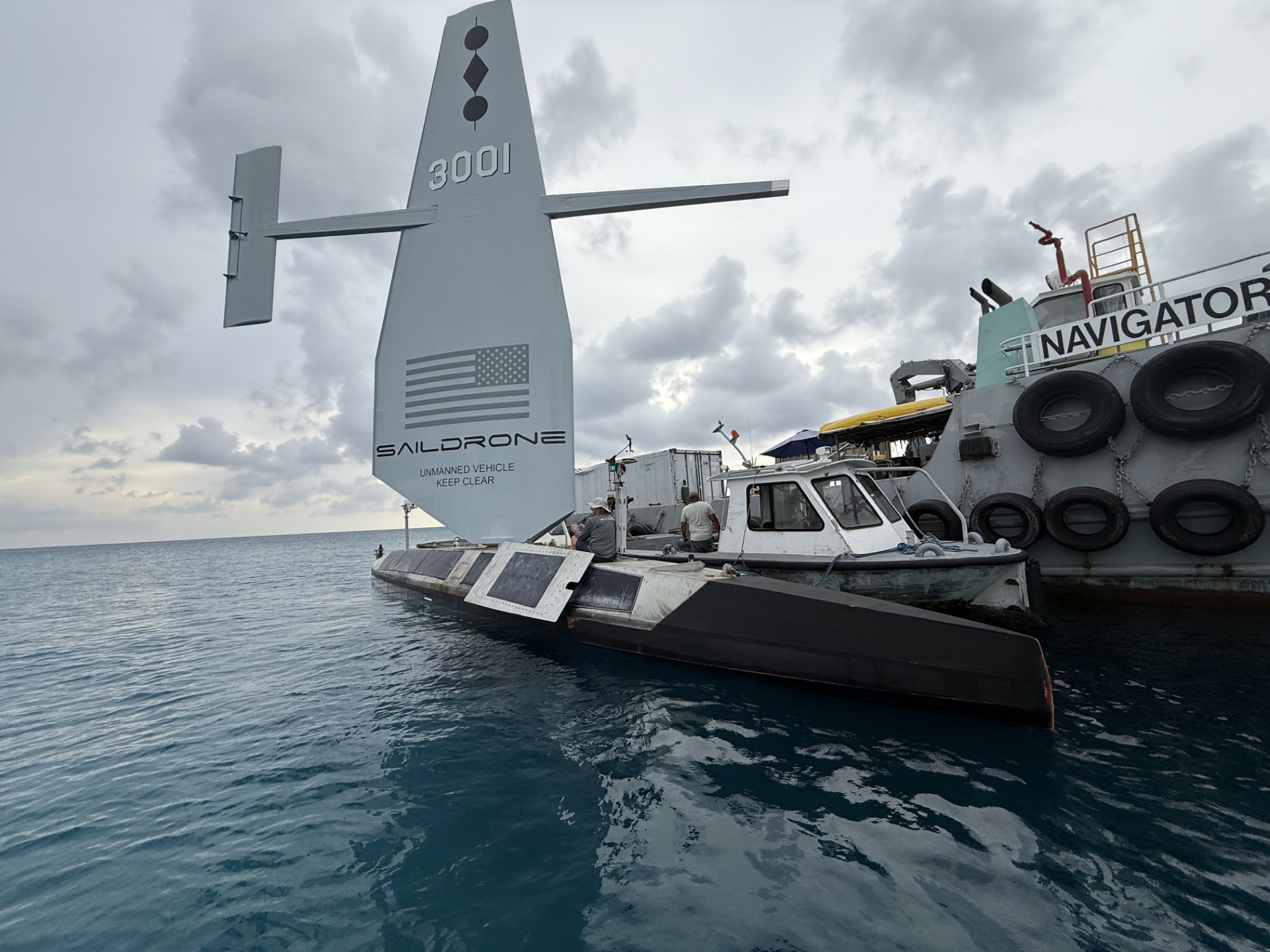
Sargassum hindering Saildrone survey of Cayman waters

Saildrone in George Town Harbour on 23 June. - Photo: Simon Boxall

From CaymanCompass by Simon Boxall

The remotely operated vessel is currently north of Little Cayman

Sargassum seaweed is hindering the autonomous vessel Saildrone, but the survey it is conducting of the waters around the Cayman Islands is still progressing.

The vessel is currently conducting operations off the north coast of Little Cayman.

Over the past few months, the vessel has been seen coming in and out of the port of George Town and while in the port, support staff have been observed scrubbing the noticeable amount of salt that has accumulated on the solar panels running along the side of the hull of the vessel.
 
 
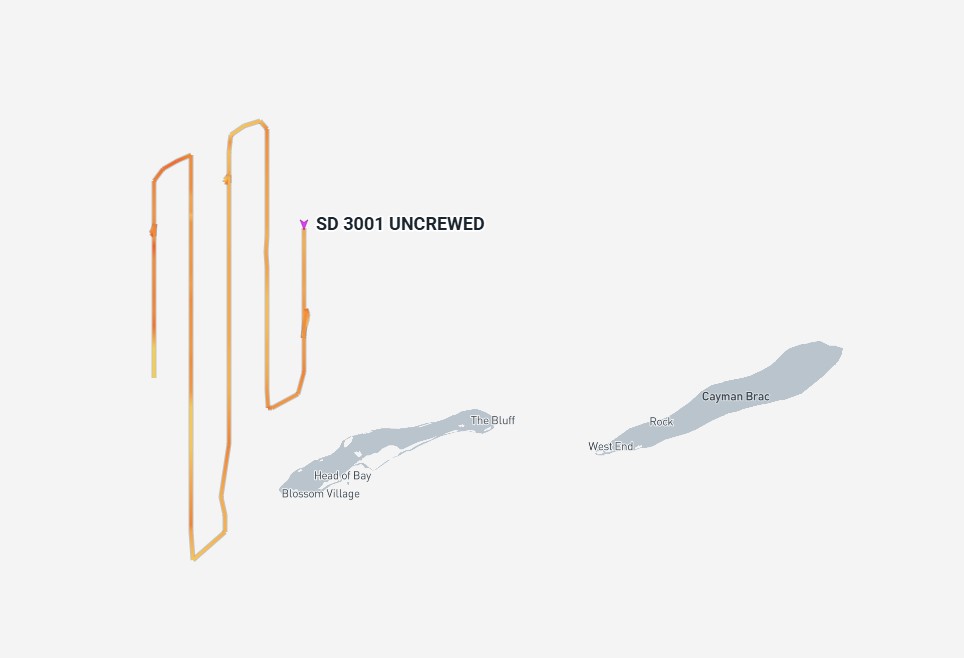
On 21 July, the Saildrone was surveying the waters north of Little Cayman. 
– Screen capture image, Marinetraffic.com

Jenn Virskus, head of marketing and communication for the company said, “The Saildrone Surveyor’s movements in and out of George Town port are part of standard maintenance and servicing events that occur during long-duration missions in complex marine environments” and that the “Saildrone platforms and integrated hardware are designed to withstand normal environmental buildup, such as salt on solar panels.”

Viskus did however acknowledge that, “exceptionally high levels of sargassum in the waters around the Cayman Islands — some of the highest on record — have influenced certain aspects of vessel operation, including routine maintenance and mission planning.”

Despite the issue with the sargassum she said, “The survey is progressing steadily, with a significant portion of the planned area already covered.”

As previously reported by the Compass, the survey covers 29,300 square nautical miles or about 80% of Cayman’s exclusive economic zone, and the data will be used to produce a high-resolution map of Cayman’s seafloor.
 
 
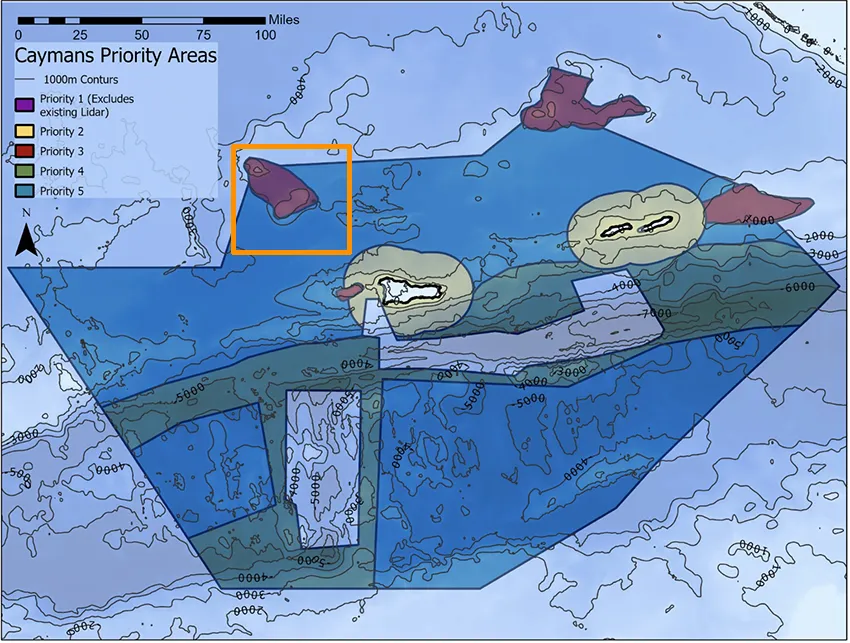
This Saildrone map shows where the company expects its Saildrone Surveyor SD-3001 to operate.

When asked if there had been any notable findings so far, such as old Spanish galleons or German U-boats, Jenn Virskus remained guarded, “While we’re not ready to announce any dramatic discoveries just yet, the data is revealing some exciting geological and ecological insights that we look forward to exploring further with local partners in the months ahead.”

Compass Media also asked if the surveying vessel was being remotely operated from outside of the Cayman Islands jurisdiction and whether the data from the maritime survey was also being held and processed outside of the Cayman Islands?

The company spokesperson said: “As with many international research and mapping projects, elements of data management and remote operations may be supported by teams or systems outside the immediate jurisdiction, which is standard practice in marine science.”

She added, “All data collected during the survey will be submitted to the United Kingdom Hydrographic Office (UKHO). As the Primary Charting Authority for the Cayman Islands, the UKHO will use the data to update nautical charts and make it accessible to other Cayman Islands government agencies and research institutions.”

The short spreading centre area southwest of Grand Cayman around Mount Dent and the Von Damm vent field and the mid-Cayman rise were already surveyed by the UKHO and are not part of the Saildrone survey.
 
Visualization of Cayman island in the GeoGarage platform (UKHO nautical raster charts)
 
This area is said to hold potentially valuable resources, including gold-rich seafloor sulphide deposits.

In an earlier company release on the Saildrone mission, the company said the mapping data it produces will be a prerequisite for exploring, exploiting or conserving Cayman’s natural resources found offshore.

“The mission will provide detailed and precise bathymetric data for the Cayman Islands, contributing to a comprehensive understanding of the seafloor topography in the region,” Saildrone wrote in a press release.
 
 
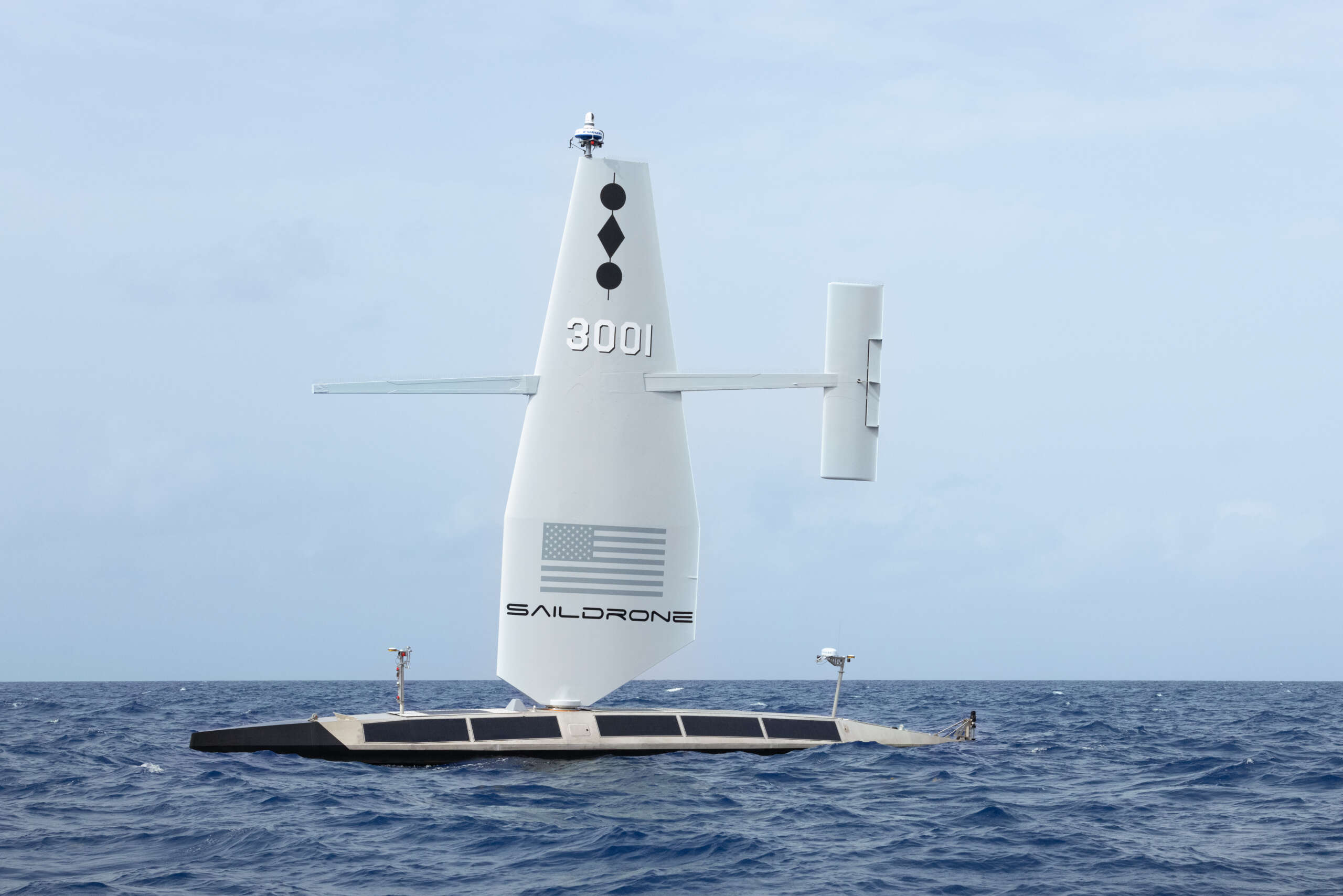
The Saildrone Surveyor SD-3001 will explore Cayman waters for about six months. 
– Photo: Saildrone

“The data collected will not only enhance maritime navigation and charting but also support scientific research, environmental conservation efforts, and marine resource management in the Cayman Islands.”

The Saildrone Surveyor SD-3001, uses “multibeam echo sounders and metocean sensors for ocean mapping and ecosystem monitoring, as well as radar, cameras, and advanced machine learning”, the company said.

The pilots also have a 360-degree view around the vessel using the Star Link network, which is how they collect data in real time.

The hydrographic survey of the waters around the Cayman Islands is being done through a philanthropic project, funded by the Cayman Islands based London & Amsterdam Trust Company Limited.
 
Links :

Thursday, July 24, 2025

Autonomous vehicle's search in Mariana Trench helps advance understanding of deep sea and its critical minerals

During the Mattingan Mariana Arc Volcanic Exploration expedition the team welcomed the Orpheus autonomous underwater vehicle (AUV) from Orpheus Ocean aboard E/V Nautilus for the very first time.
The Orpheus AUV is built to explore abyssal depths up to 6,000 meters, including being able to access the abyssal plain which has to date been virtually unexplored east of the Mariana Trench.
The vehicle can operate near or on the seafloor performing high-resolution camera surveys and is equipped to conduct water and seafloor sampling.
Check out some of the first images from the depths in this these survey areas.
The Mattingan: Mariana Arc Volcanic Exploration (NA171) expedition is exploring deep-sea areas identified by the local management and science community, including sites with signatures of active volcanism, abyssal plain habitats, and areas in and around the Monument where new data can support resource management priorities.
This expedition is supported by NOAA Ocean Exploration, the Bureau of Ocean Energy Management, and the US Geological Survey via the Ocean Exploration Cooperative Institute.

From Phys by Peter J.
Hanlon, University of Rhode Island
edited by Gaby Clark, reviewed by Andrew Zinin
 
Newly found polymetallic nodules were spotted on the seabed at 5,645 m water depth to the east of the Commonwealth of the Northern Mariana Islands by the Orpheus AUV. 
Credit: NOAA Ocean Exploration Cooperative Institute

A new autonomous underwater vehicle (AUV) imaged a previously unexplored portion of the seafloor in ultra-deep waters near the Mariana Trench.
Operationalizing this technology for the first time was part of a mission led by the Ocean Exploration Cooperative Institute (OECI), based at the University of Rhode Island's Graduate School of Oceanography, with support from the National Oceanic and Atmospheric Administration (NOAA), the Bureau of Ocean Energy Management (BOEM), and the U.S. Geological Survey (USGS).

Built by New England-based startup Orpheus Ocean, this small-footprint AUV is advancing our understanding of some of the planet's least explored regions at water depths up to 11,000 meters (6.8 miles).
OECI has worked together with NOAA, BOEM, and USGS to better understand the unique and remote areas of the deep sea.

Recently, their combined efforts have focused on environments and geological features that may contain polymetallic nodules, which are of interest to marine scientists and resource managers alike due to their unique geochemical properties.

Interest in understanding deep-ocean areas that may host marine critical mineral deposits has highlighted how little we know about these deposits and the deep sea, which is still largely unexplored.
Collecting seafloor data, observations, and samples that are necessary for understanding and managing these resources is made challenging by the extreme water depths, great distances from shore, and the cold temperatures and high pressures at the seabed.

"It is critical to collect the data that allows us to understand the distribution of deep sea mineral deposits and the unique ecosystems associated with them.
OECI is perfectly situated to collaborate with Federal agencies and the private sector to advance important deep sea technologies.
The greatest need right now is baseline data, which requires very specialized tools" says Adam Soule, University of Rhode Island Graduate School of Oceanography professor of oceanography and OECI executive director.

As part of a larger expedition to expand our knowledge of the seafloor, the OECI partnered with Orpheus Ocean to field-test their new AUV east of the Mariana Trench.
The AUV successfully completed several dives to depths exceeding 5,600 meters (3.5 miles), including imaging polymetallic nodules on the seafloor.

Orpheus technology provided the first direct observations of these sites, which were selected by USGS experts who predicted that nodules would likely be found in the area.
This expedition thus helps NOAA, USGS, and BOEM refine their understanding of the resources that they are tasked with characterizing and managing.

Ocean Exploration Trust's (OET) expedition platform Exploration Vessel Nautilus, was used for this mission and Nautilus has played a key role in mapping and exploring the U.S. Outer Continental Shelf in the Central and West Pacific Ocean in collaboration with NOAA and the OECI.

"In order to responsibly manage the deep sea and its resources, we must leverage public-private partnerships and emerging technologies to gather critical baseline information about the seafloor," said Aurora Elmore, NOAA Ocean Exploration program manager.

"The abyssal plain visited on this mission is one of the least-known areas on Earth.
The data and images compiled help us to refine our seafloor prospectivity maps.
Mission by mission, we are filling in the details of the map and building knowledge of where seafloor minerals may be found and their geologic and oceanographic setting," said Amy Gartman, lead of the USGS Global Seabed Mineral Resources Project.

A predecessor to Orpheus Ocean's AUV was originally developed by the Woods Hole Oceanographic Institution (WHOI) and NASA's Jet Propulsion Laboratory.
Orpheus Ocean, a startup company founded in 2024, aims to expand access to these unique, small-footprint robots to supercharge our ability to collect meaningful data that can ensure sound policy decisions about these unique environments.

Discover the latest in science, tech, and space with over 100,000 subscribers who rely on Phys.org for daily insights.
Sign up for our free newsletter and get updates on breakthroughs, innovations, and research that matter—daily or weekly.

"Orpheus Ocean prioritizes work with government, research institutions, and other groups dedicated to advancing science, conservation, and understanding of the deep ocean, and this expedition is a great example of that," said Jake Russell, CEO and co-founder of Orpheus Ocean.

Since its formation in 2019, OECI has been led by the University of Rhode Island's Graduate School of Oceanography in collaboration with WHOI, OET, the University of New Hampshire, and the University of Southern Mississippi.
The collective ability to develop and test new technology, partner with industry, advance ocean science, and develop the next generation blue economy workforce has been central to the success of this partnership.

"NOAA's partnership with OECI has provided a strong return on investment.
The ability to quickly mobilize assets to address national priorities, such as examining critical minerals in U.S.
waters, reflects the benefits of building a strong, collaborative foundation of resources, experience, and expertise," commented acting NOAA Ocean Exploration Director Captain Bill Mowitt.

Provided by University of Rhode Island

Links :


Wednesday, July 23, 2025

China surveys seabeds where naval rivals may one day clash


China has recently expanded its use of ocean research ships.
Three years ago, they mostly surveyed the waters close to China.Activities of Chinese research ships in 2022

But last year, more ships ventured more frequently into the Western Pacific Ocean, including areas of interest to China’s military.Activities of Chinese research ships in 2024

From NYTimes by Chris Buckley / Graphics by Agnes Chang

Chinese research ships are studying the seas for science and resources, but the data they gather could also be useful in a conflict with Taiwan or the United States. 

China has entered a new era of ocean exploration. Its top leader, Xi Jinping, has pushed to make China a maritime power — with a world-class navy, the largest deep-sea fishing fleet, and an interest in extracting minerals from the seabed.
He wants China’s research abilities to match those ambitions.

China’s scientific research ships are ranging farther and probing deeper, gathering information that could expand understanding of marine life and the impact of climate change.
But their findings could also serve China’s naval interests, including how it might deploy its submarines in the Pacific or try to track stealthier American ones.

Over time, the growing research fleet could give Beijing a powerful advantage in maritime competition with the United States.

“It is striking to see the rapidity with which China is catching up, at least in terms of scale,” said Bruce Jones, a senior fellow at the Brookings Institution who is studying China’s ocean research effort.
China, he added, is “really making a play for the deep seabed as a kind of strategic space where they can lead.”

The Chinese research vessel Xiang Yang Hong 6.
China State-owned Assets Supervision and Administration Commission of the State Council

The ships have been studying waters that China’s navy considers strategically vital, including off Taiwan’s east coast and about 250 miles east and west of Guam, according to ship position data provided by Starboard Maritime Intelligence, a company with offices in New Zealand and Washington.

The ships made passes in parallel lines or in a tight grid, precise patterns that experts said suggested a methodical effort to collect information about the seabed that could, among other things, support military operations.

The New York Times identified these and other trends by looking at the Starboard data and reviewing dozens of technical reports and studies by scientists aboard the ships.

The Xiang Yang Hong 6, which is equipped with sonar and deep-sea sampling equipment, and five other Chinese research ships made 25 passes in parallel lines through the waters off Taiwan’s east coast last year, the Starboard data showed.
During the same period, Chinese vessels also traveled far from home to survey the waters around Guam, and resumed work east of the U.S. territory as recently as last month.

The Xiang Yang Hong 6 scanned the seabed east and west of Guam, a U.S. territory that hosts American military forces.
It surveyed an area larger than the United Kingdom.Activities of Xiang Yang Hong 6 in 2024

It also sailed in straight lines up and down the east coast of Taiwan, the self-ruled island that China wants to absorb.

Some of the research ships, such as the Tansuo No. 1, carry manned submersibles that Chinese media reports say can travel as deep as six miles below the surface.
Many are equipped with advanced sonar to scan the ocean floor, along with buoys that transmit data about sea conditions.
China is also deploying sea drones and underwater gliders from some ships.

China, like other big seagoing countries, operates military ships that conduct ocean surveys.
But most of its research ships are civilian, run by government agencies, universities and institutes, which attract less scrutiny than navy ships, allowing China to operate more freely in sensitive waters.

Tansuo 1 is equipped for deep-sea exploration
Sources: Chinese Academy of Sciences, Scripps Institution of Oceanography

Surveying the Front Line of a Potential Conflict

Last February, a Chinese research ship named the Da Yang Hao sailed along Taiwan’s east coast, tracing a series of parallel lines over five days.

In the months that followed, five other Chinese research ships, including the Xiang Yang Hong 6, returned to the area, following similar routes.
They often moved at slow speeds, typically 8 to 10 miles an hour, ideal for mapping undersea features using sonar and other techniques, a science known as bathymetry.

Five ships collectively covered a broad area off of Taiwan’s east coast
Note: Data from Jan. 1, 2024 through Dec. 31, 2024.

Some ships edged close to Taiwan’s 12-nautical-mile territorial sea boundary, but did not appear to cross the line, meaning the Taiwanese government could do little to object.

But the potential military payoff from their research seemed clear.

“The big takeaway for me is: It appears that China is trying to collect bathymetric data on that part of the ocean without appearing like it is conducting a bathymetric survey,” said Ryan D. Martinson, an assistant professor and expert on Chinese research ships at the U.S. Naval War College, who was speaking in a personal capacity.

Taiwan’s eastern coast is home to key air and naval bases, and if war broke out, the Chinese navy would try to seize control of the nearby seas.

That area of the Pacific is shaped by the Kuroshio Current, which brings relatively warm, salty waters from the Equator northward, along Taiwan’s east coast.
Off northeast Taiwan, the current meets a steep underwater shelf, creating conditions that complicate submarine navigation, several experts said.
Chinese military researchers wrote in a study in 2010 that understanding the current would help China “better conceal ourselves and attack our enemies.”

J. Michael Dahm, a former U.S. Navy intelligence officer who is now a lecturer at George Washington University, described deep waters as “almost like a parfait dessert” in which temperature and salinity vary by layers, affecting how sound moves through the water.

“Having all of that data might help tell you that this is a good place for a submarine to hide or this is a bad place for a submarine,” Mr. Dahm said.

The information collected could also help China decide where to lay undersea mines and make steps toward a longer term goal of “detecting submarines at a distance,” said Tom Stefanick, a submarine expert at the Brookings Institution.
Officials in Taiwan have reported finding Chinese monitoring buoys off the island’s east coast, devices that may be part of an effort to gather useful information.

Surveying Near Guam, a U.S. Military Hub

Starting early last year, Chinese ships began surveying the seas near Guam, which hosts American bombers, submarines, marines and radar systems.
The Xiang Yang Hong 6 and other ships sailed back and forth, creating a dense grid of lines a mile apart.
“The tracks are so tightly packed, and all this was done in one year. Clearly, they were doing a bathymetric survey,” said Sen Jan, a professor of oceanography at National Taiwan University, referring to the mapping of the seafloor.

One possible reason for the surveys off Guam is mineral exploration. A Chinese ocean mining association has registered with the International Seabed Authority to search some areas east of Guam. But the waters west of Guam where Chinese ships surveyed “are not considered priority areas for mineral exploration. So these surveys may have been conducted for other purposes,” said Christopher Kelley, a retired marine researcher at the University of Hawaii.

Several naval experts said surveys off Guam would also help the Chinese military better navigate the area with submarines. The Chinese research ships could also help locate American undersea cables and submarine detection technology, said Bryan Clark, a former U.S. Navy submarine officer who is now a senior fellow at Hudson Institute.

“You can see how the Chinese might be trying to find locations where they can send out their submarines before conflict and have them hide out,” Mr. Clark said. From there, he added, they may be able to “pop up and attack U.S. forces or hold U.S. forces at risk.”

Growing Regional Worries

Under international law, civilian research ships are allowed to operate in international waters, and even in other countries’ exclusive economic zones, provided they seek permission.

But China’s growing use of these scientific ships has raised alarm throughout the Asia-Pacific region. (Beijing, for its part, has bristled at U.S. Navy-operated ocean surveillance ships near the Chinese coast.)

“China’s expanding maritime reach deserves close scrutiny, especially its ‘research’ vessels that map seabeds, deploy sensors and pave the way for submarine operations,” Jennifer Parker, a former Australian naval officer who is now an expert associate at the National Security College of Australian National University, wrote in an email. But, she added, “each voyage must be judged on evidence.”

In May, the Philippines sent a coast guard ship and an aircraft to track a Chinese research ship that Manila said was illegally operating in the Philippines’s exclusive economic zone.
In March, a Chinese research ship sailing off southern Australia drew the government’s attention. Vietnam has also protested Chinese marine survey activities inside its exclusive economic zone.

“It’s hard for us to view this situation as normal,” Kuan Bi-ling, the minister of Taiwan’s Ocean Affairs Council, said in an interview, referring to China’s research ships and ocean monitoring equipment near Taiwan.

Despite the concerns, China’s research efforts continue.
Last month, the Xiang Yang Hong 1 and Xiang Yang Hong 5 arrived in seas east of Guam and resumed moving in grid-like patterns, methodically scanning what lies beneath.

Amy Chang Chien contributed reporting.

Map sources: Starboard Maritime Intelligence; Spire Global; Flanders Marine Institute; the University of Hawaii and the National Oceanic and Atmospheric Administration; Natural Earth.

Note: Graphics in this story use the automatic identification systems (AIS) position data of 49 active Chinese research vessels from Jan. 1 through Dec. 31 in both 2022 and 2024 to estimate ship paths. The ships were identified using ship registration and activity data, Chinese state media reports, government websites and academic publications. Ships do not always transmit information and may transmit incorrect information.

Chris Buckley, the chief China correspondent for The Times, reports on China and Taiwan from Taipei, focused on politics, social change and security and military issues.

Tuesday, July 22, 2025

University of Miami researcher develops AI model to track early signs of hurricane formation


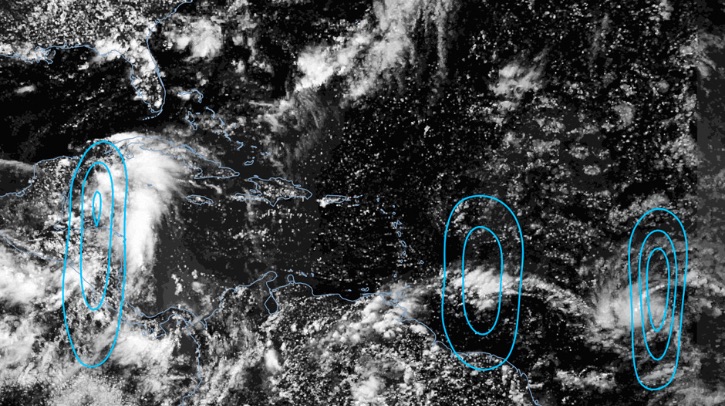
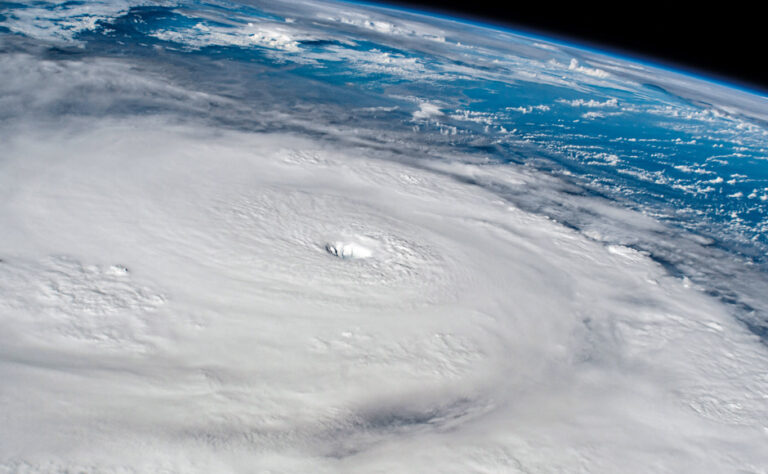
This satellite image shows three tropical waves in the Atlantic on June 28, 2024.
The wave to the far right developed into Hurricane Beryl, which became the earliest Category 5 Atlantic hurricane on record.
Credit: NOAA

From MeteorologicalTechInt by Elizabeth Baker

Will Downs, a PhD student at the University of Miami Rosenstiel School of Marine, Atmospheric and Earth Science, has created an AI model that identifies and tracks tropical easterly waves that can develop into powerful hurricanes as they travel across the Atlantic Ocean.

“Often originating off the coast of Africa, tropical easterly waves are clusters of clouds and wind that can span several hundred miles.
They pass through the Caribbean Sea every few days during the summer and fall, and most of them fizzle out over time, with maximum impacts being localized rainfall and gusty winds,” Downs explained.
“But some of these waves develop into tropical storms and hurricanes, such as Ian did in 2022.
About 70% of Atlantic tropical cyclones originate from tropical easterly waves.”

Creating the AI model

To create the AI-based model, Downs mined historical weather data compiled by meteorologists at the National Hurricane Center’s Tropical Analysis and Forecast Branch (TAFB).
That data included the locations of tropical easterly waves in the Caribbean Sea over the past several decades.

He then combined those historical observations with reanalysis data of past weather and climate conditions, training his AI model to accurately detect not only tropical easterly waves but also important weather phenomena such as the intertropical convergence zone and the monsoon trough in the tropical North Atlantic and eastern North Pacific oceans.

Aidan Mahoney, a PhD student in atmospheric sciences at the Rosenstiel School who interns at the National Hurricane Center through NOAA’s Pathways Program, assisted Downs in understanding tropical wave analysis and supplying him with historical TAFB data.
 
 Hurricane Beryl developed from a tropical wave that moved off the coast of Africa in late June of 2024.
Credit: NASA


“My supporting role in this collaboration actually started with a chance conversation about tropical wave analysis at TAFB,” Mahoney said.
“Early on, Will knew he wanted to train the tracker on TAFB analyzed tropical wave positions.
He came to me with a quick question about TAFB analysis techniques that turned into the first of many long discussions about the complexities of tropical wave analysis and dynamics.
And Will developed an expert understanding of the training data and the TAFB analyzed positions, which allowed him to create the best possible version of the tracker.”

A National Science Foundation grant as well as a Provost’s Fellowship in Interdisciplinary Computing helped make Downs’s machine learning (ML) model possible.

He has spent the past two years developing and testing it, achieving accurate results.
This year, forecasters at the National Hurricane Center have internal access to Downs’ wave tracker in real time.

“It has captured the waves where they seem to be going, and it’s not generating many false results either,” said Sharan Majumdar, a professor of atmospheric sciences at the Rosenstiel School and Downs’ advisor.
“The robust dataset being produced by Downs’ model will help researchers to more effectively study the behavior of these waves on a spectrum ranging from weak clusters of clouds to developing tropical cyclones.”

Machine learning in forecasting

“AI models are essentially augmenting the current physical models,” Majumdar said.
“The AI models for metrics such as the hurricane track and other atmospheric metrics that are on the larger scales have done very well, and they are even showing more skill than the physical models.
But there are many things like hurricane intensity and severe thunderstorms, for example, where the physics-based models are still probably superior.
One will have to train the AI models with information from the physical models, so there’s a symbiotic relationship between the two.”

“My AI model provides more flexibility because it can detect different patterns and detect different strengths and types of tropical waves using its many built-in layers,” Downs said.
“But in the scope of overall storm forecasts, there’s still a lot more we have to learn.”

In related news, a group of researchers, including several at Penn State University, recently developed an AI-powered computational model to streamline flood prediction in the continental USA.
Read the full story here

Monday, July 21, 2025

Autonomous ships will be a reality long before the industry is ready

Demonstration tests of fully autonomous navigation for all six of the project’s vessels have now been completed in 2022.
The project now needs to accelerate further the resolution of technological issues identified through these tests, in areas including berthing and unberthing, stable telecommunications environments, and image recognition and learning using artificial intelligence, as well as legal issues related to the practical implementation of fully autonomous ship navigation.
The Nippon Foundation will analyze the results of this series of demonstration tests and use the strengths of each consortium to carry out further technological development, with the aim of practical implementation by 2025.
 
For years, shipping’s relationship with autonomy has been one of cautious optimism, mixed with deep scepticism.
We’ve talked about autonomous ships as if they were distant sci-fi, something for the 2040s – after the technology matures, after the IMO agrees on every word of the autonomy rulebook, after shipowners cautiously test the waters with small-scale pilots…

This mindset is dangerously outdated, writes Orca AI CEO and Co-founder Yarden Gross.

The reality is this: autonomous ships are not coming – they’re already here.
The first generation of AI-powered autonomous capabilities is already operational on commercial vessels today.
Classification societies are certifying autonomous operational support systems.
Regulators, rather than holding the industry back, are actively asking operators and technology developers to push faster, provide real-world evidence and help draft regulations on the fly.

The safe, comfortable consensus – that autonomy is a distant future – is no longer fit for purpose.
Ships will sail autonomously long before the industry feels ready.
And that’s exactly what needs to happen if shipping wants to remain competitive, safe and sustainable in a world that expects faster results than ever before.

Explore how autonomous vessels are set to revolutionize supply chains through advanced technologies like AI and machine learning.
Discover the potential for enhanced efficiency, safety, and significant cost savings as these cutting-edge ships automate navigation and cargo management.
Learn about the challenges and benefits of this emerging technology, and see how it could reshape the maritime industry. 
OUTLINE: 00:00:00: Are We Ready for Ships Without Sailors? 00:01:09: All Hail the Clever Clogs Tech! 00:02:06: How These Robo-Ships Steer Themselves 00:03:18: The Magic of Automated Operations 00:04:16: Cargo Gets a High-Tech Makeover 00:05:19: Why Bother, You Ask? The Perks of a Robot Armada on the Waves 00:06:46: How Robo-Ships Will Change Global Trade 00:07:55: Kicking Human Error to the Curb 00:09:03: What's Next on the Horizon? The Unmanned, Unstoppable Future of Shipping
 
 
THE INDUSTRY’S BIGGEST MYTH

This is it: “We’ll wait until it’s perfect.”

One of the most dangerous assumptions in the maritime tech community is that autonomy will arrive fully formed, tied up in a neat regulatory package and only when every risk has been meticulously solved.

That’s not how technological revolutions work.
And it’s certainly not how autonomy will take hold in shipping.

Autonomy will not arrive because the IMO declares it so.
It will force its way in, driven by the real-world economics of crew shortages, safety demands and tigthtening emissions targets that no human-operated fleet can meet at scale.

Autonomy is already financially viable.
The first incremental systems – like digital watchkeeping and AI-powered collision avoidance – are onboard today, reducing fatigue, improving safety and providing immediate ROI.
I acknowledge the technology isn’t perfect – but waiting for perfection in an industry built on tight margins and relentless schedules is simply unrealistic.
That is nothing new in shipping!

AUTONOMY IS ALREADY OUTPACING THE REGULATORS

We all love to complain that regulation is the great bottleneck.
The truth is that the regulatory process can’t keep up with technology anymore — and it shouldn’t even try.

Autonomous systems are improving with every single voyage, feeding real-time operational data back into smarter algorithms.
Meanwhile, the IMO is still debating voluntary guidelines, and the full MASS code won’t be mandatory until 2032.

If shipping waits for regulatory certainty, it will hand over the future to technology-first disruptors who are willing to move faster.
Autonomy is becoming a competitive differentiator, and waiting for global consensus is a luxury that agile players simply won’t entertain.

AI AT SEA DOESN’T NEED TO BE PERFECT – IT JUST NEEDS TO BE BETTER THAN US AT CERTAIN THINGS

Let’s face a hard truth: the status quo is unsafe.
Fatigued crews, complex navigation environments and over-reliance on human lookouts combined with aging fleets operating with outdated technology – this is not a system worth defending.

Autonomous systems don’t need to achieve some fictional benchmark of flawless performance.
They only need to outperform human crews in specific scenarios on their worst day – and that is a low bar in today’s risk-laden shipping environment.

We’ve already reached the point where AI-enhanced watchkeeping is demonstrably safer and more reliable than a distracted, sleep-deprived OOW or in extreme weather and low visibility conditions.
Why would we wait to deploy technology that can save lives and prevent accidents today?

FULL AUTONOMY? FORGET IT — LET’S TALK HYBRID INTELLIGENCE

The obsession with ‘fully unmanned ships’ has also been a distraction.
The real future is hybrid intelligence – human and AI systems working together, each doing what they do best.
Humans bring creativity, flexibility and ethical judgment.
AI brings tireless vigilance, data analysis at scale and real-time predictive insights.

The phased approach – where ships dynamically shift between different levels of autonomy based on context – is the real revolution, and it’s happening already.
Ships today are gathering data, learning from every near-miss and self-improving at fleet scale.

SEAFARERS SHOULD FEAR STAGNATION, NOT AUTONOMY

If there’s one message the industry needs to hear, it’s this: autonomy is not coming to replace seafarers – it’s coming to complement them and to give a brighter future to our industry.
I truly believe this.

No young budding talents want to join an industry defined by exhaustion, isolation and outdated technology.
Autonomy can transform shipping into a high-tech career, where seafarers become data analysts, systems supervisors and AI partners, rather than lookouts staring at the horizon for hours on end.

Countries like Japan already see this — their MEGURI2040 initiative is using autonomy as a talent magnet to attract the next generation of digitally native seafarers.
If we fail to follow that lead, shipping will not just lose the race for autonomy – it will lose an entire generation of enthusiastic youngsters.

READY OR NOT, HERE IT COMES


The safe conversation – that autonomy is decades away, and we’ll adopt it when we’re ready – is a lie shipping can no longer afford.

Autonomy is not waiting for consensus.
It’s happening now, driven by economic necessity, technological readiness and regulatory pragmatism.
The ships equipped with autonomous capabilities today are not pilots or experiments – they are the early majority and they are already delivering value.

The only real question is whether shipping’s leaders will seize the advantage – or cling to a status quo that is already sinking beneath them.
 
Links :