From SailorShop by Christopher DoyleUpdated March 2026 with current pricing, the FB Imray joint venture and new guidance on chart storage.
Choosing the right chart matters.
You trust your charts to keep you safe on passage, and with two well-known names to choose from, it's worth understanding what each offers before you buy.
We're a family-run nautical bookshop with over 10 years' experience and a Master Mariner at the helm, so we've spent a lot of time with both Admiralty and Imray charts.
This article sets out the differences in format, pricing, coverage and practicality so you can make an informed choice.
Both publishers draw on the same official hydrographic survey data, so the underlying information is equally authoritative.
The differences are in how each brand presents that data, who it's designed for and how it's packaged.
Admiralty Charts
Admiralty charts are produced by the UK Hydrographic Office (UKHO), an executive agency of the Ministry of Defence.
They're the standard for merchant navy and Royal Navy vessels worldwide, but they're also widely used by leisure sailors who value the traditional format and the international standards behind the cartography.
All Admiralty charts are now print-on-demand.
Every chart is printed from the UKHO's latest digital files with all permanent corrections applied.
You won't need to sit down with a stack of retrospective corrections before you can use the chart, which is a genuine advantage over pre-printed alternatives.
Admiralty has two product lines for paper charts:
Standard Nautical Charts are large-format charts with worldwide coverage, used by commercial ships and leisure sailors alike.
They cover everything from ocean passages to harbour approaches, and for less-charted waters or longer offshore passages they may be the only option in paper.
Priced at £49.50 each.
Small Craft Charts are designed for small boat coastal navigation around the UK and Ireland.
They use data from the Standard Nautical Charts at scales suited to inshore and coastal sailing
Both Admiralty Small Craft Charts and Imray charts are recognised by the MCA for use on coded vessels and fishing vessels up to 24 metres.
Priced from £17.80 each, with significant discounts for bulk orders.
A to-scale comparison of both Admiralty chart formats.
Admiralty charts: pros and cons
ProsConsFollow international hydrographic standards, trusted worldwide Standard Nautical Charts are expensive (£49.50 each) and physically large
Global coverage (Standard Nautical Charts) Not water resistant
Print-on-demand means every chart arrives with all permanent corrections applied Can appear cluttered to some users, especially at smaller scales
Available at a range of scales, from ocean overview to harbour approach Small Craft Charts cover UK and Ireland only. For further afield you'll need Imray or Standard Nautical Charts
Pick and choose individual charts rather than buying a fixed pack Small Craft Charts are sold as individual sheets with no wallet or folder.
You'll need to think about storage
No retrospective corrections to apply No supplementary information printed on the chart itself. Supporting data (tidal curves, tidal streams) is in a separate document on the Admiralty website
Admiralty Small Craft Charts
If you're sailing around the UK and Ireland, Admiralty Small Craft Charts are well worth considering. Each chart is printed to order from the UKHO's latest digital files, so you always get the current edition with all permanent corrections applied.
The printed chart area is A2, though the paper itself is slightly larger.
The UKHO draws on data from its Standard Nautical Charts to produce these at scales suited to coastal and inshore navigation.
Weekly
Notices to Mariners are available online for free, so you can check for safety-critical changes between purchases.
Each folio area also has a
supporting document on the Admiralty website with chart notes, distress and safety communications information, tidal curves and tidal stream tables relating to the tidal diamonds on the charts.
Small Craft Chart pricing
Small Craft Charts are £17.80 each, but there are stepped discounts for bulk orders that make a real difference.
Buy 5 to 9 charts and the price drops to £11.57 each.
Buy 10 to 14 and it's £6.23 each.
Order 15 or more and the price falls to just £4.45 per chart.
This creates some interesting maths.
Five charts (£57.85) cost less than four (£71.20).
And 16 charts at £4.45 each (£71.20) cost the same as four at full price.
If you're buying more than three or four charts, it's worth counting up and seeing whether the next discount tier saves you money.
A note on storage
Admiralty Small Craft Charts used to come in plastic folio wallets, but that's no longer the case.
Each chart is now sold individually and ships rolled in a cardboard tube (we bundle multiple charts into the same tube where possible).
The paper is slightly larger than the printed chart area, so you may want to trim it if you're fitting charts into a wallet or folder.
Some sailors keep their charts rolled.
Others fold them or trim them to fit an A2 wallet.
There's no single right answer, and it's worth thinking about what suits your chart table and storage space before you order.
It's a less tidy arrangement than Imray's wallet system, but the fact that every chart arrives with all permanent corrections already applied is a real practical benefit.
We should count ourselves lucky that paper charts are still being produced at all.
Imray Charts
Imray, Laurie, Norie & Wilson has been publishing charts since the constituent firms merged in 1904, though the individual companies trace their roots back to the mid-1700s, when they served merchant ships from the City of London.
For most of the past century, Imray has focused on the leisure sailor, and their charts reflect that: clear, practical and packed with the kind of information you actually want when you're planning a coastal passage or entering an unfamiliar harbour.
In late 2024, Imray announced it would stop printing paper charts after the 2025 season.
The news sent a ripple through the sailing world.
But in April 2025, Austrian cartographic publisher freytag & berndt stepped in, forming a joint venture called FB Imray to continue production.
FB Imray commenced operations from Vienna later that year with Imray's former managing director Lucy Wilson as Editor-in-Chief.
The MCA has formally recognised FB Imray as a Private Chart Producer, and the charts continue to be produced to the same standards.
Imray paper charts are very much still available.
Like Admiralty, Imray charts are based on official hydrographic survey data licensed from national hydrographic offices.
Their strength is in how they present it.
The result is charts designed from the start for coastal and offshore cruising rather than commercial shipping.
What sets Imray charts apart
Imray single charts are printed on Pretex paper, which is coated for water resistance and folds well without cracking.
Each chart folds to roughly A4 size and comes in a plastic wallet with a separate sheet showing the symbols and abbreviations used on Imray charts.
Storage is straightforward: wallet back in the chart table, job done.
Imray make excellent use of the available space.
Areas that would otherwise be blank are filled with harbour plans, tidal information and local contact details.
A single Imray chart can effectively do the job of several Admiralty charts at different scales, which means fewer charts to carry on board.
You don't need to buy separate Admiralty harbour approach charts for anchorages you might visit.
The trade-off is that the harbour plans are naturally smaller than a dedicated chart at that scale, but for most leisure purposes they give you what you need.
This matters more than it used to. Most leisure sailors now have a plotter or chart app handling primary navigation.
Paper charts have increasingly become the backup, the passage planning surface, the thing you reach for when you want to see the bigger picture or when the electronics go dark.
Imray charts suit that role well.
A single sheet gives you passage-level coverage and harbour approach plans, so you're carrying fewer charts and still covered for the areas you're likely to need.
For sailors who want paper charts that complement their electronic navigation rather than duplicate it, Imray's approach makes a lot of sense.
Imray chart seriesImray offers individual charts in several series, plus chart packs covering wider areas. All single charts fold to roughly A4 and come in a plastic wallet.
- SeriesCoverageSize (mm)C Series North West Europe 787 x 1118
- Y Series UK rivers, estuaries and coastal areas 640 x 900 or A2 (small format)
- M Series Mediterranean Sea 640 x 900
- A/B/D Series Caribbean 640 x 900
- E Series Atlantic Islands 640 x 900
- G Series Ionian and Aegean Seas 640 x 900
- 2000 Series (Chart Packs) NW European waters, Brittany, Mediterranean Spain A2
The Y Series comes in two formats. Some Y charts (Y16, Y17, Y18, Y23 and others) are 640 x 900mm. Others (Y44, Y47, Y48 and others) are the smaller A2 format and replicate individual sheets from the chart packs.
Some Y charts are also available laminated.
Imray's
C Series single charts cover North West Europe.
Bear in mind these are large charts (787 x 1118mm unfolded), so check they suit your chart table.
Imray's M Series single charts cover the Mediterranean Sea
Imray charts: pros and cons
ProsConsClear layout designed for the leisure sailor Each chart covers a lot of ground, so the harbour plans are smaller than a dedicated chart at that scale
Single charts are water resistant (Pretex paper)
The colour scheme takes getting used to if you've trained on Admiralty-style charts, such as the RYA training charts
Harbour plans, tidal data and local information packed onto each sheet, reducing the number of charts you need to carry Not print-on-demand, so you'll likely need to apply corrections on receipt
Single charts fold to A4 and come in plastic wallets.
Neat and easy to store Some users find the packed-in extras make the chart feel busy
Chart Packs include a voucher for the Imray Navigator app (single charts do not)
Some find the Pretex paper less suited to pencil work and harder to read under red light. A 2B pencil works much better than a standard HB
Symbols and abbreviations guide included with each chart C Series charts are large (787 x 1118mm) when unfolded
How Imray keeps charts current
Imray charts are not print-on-demand.
When there are significant changes to a charted area, or a substantial number of corrections have built up, Imray publishes a new edition.
Between editions, they release reprints that incorporate all corrections applied to that date.
Imray Chart Packs vs Admiralty Small Craft Charts
Imray Chart Pack coverageMany sailors are drawn to the convenience of chart packs or folios.
A ready-made set of charts for a given area saves time and takes the guesswork out of which charts you need.
They're particularly useful for waters you sail regularly or for trips where you're not sure which harbours you'll end up in overnight.
Both Imray and Admiralty offer good options here, though they work differently.
One of Imray's chart packsFeatureImray Chart PacksAdmiralty Small Craft ChartsFormat A selection of A2 charts covering a specific region, packaged in a plastic wallet.
Available loose-leaf (£59.95) or spiral-bound (£64.95) Individual A2 charts (on slightly larger paper) that you choose and combine to build your own folio.
We also sell
bundled sets matching the old folio areas
Choice Pre-made packs. You buy all the charts for the selected area Pick and choose.
Buy only the charts you need
Water resistance Not water resistant Not water resistant
Packaging and storage Plastic wallet included No wallet.
Charts arrive rolled in a cardboard tube.
You'll need to arrange your own storage on board
Coverage UK and Ireland coastal waters, the Southern North Sea and Mediterranean Spain UK and Ireland coastal waters
Corrections May require retrospective corrections on receipt.
Correction notices can be downloaded from the Imray website Print-on-demand, so every chart arrives with all permanent corrections applied.
No retrospective corrections needed
Supplementary data Harbour plans, tidal data and waypoints printed on the charts themselves Tidal curves and tidal stream tables in a separate supporting document on the Admiralty website
Digital Chart Packs include a voucher for the Imray Navigator app No digital download included
Cost £59.95 (loose-leaf) or £64.95 (spiral-bound) £17.80 per chart, with stepped discounts: £11.57 each for 5-9 charts, £6.23 for 10-14, and £4.45 for 15 or more
A note on Imray Chart Pack coverage: the packs cover many popular UK cruising areas (the Solent, Kent and Sussex, Dorset and Devon, the Firth of Clyde, and others), but there are gaps.
There are no chart packs for the south coast of Ireland, the north east coast of England or much of Scotland.
For those areas, you'll need individual Imray C Series charts or Admiralty Small Craft Charts.
Colours
Colours matter more than you might expect when choosing charts.
Ask any group of sailors which brand they prefer and the colour scheme will almost certainly come up.
Admiralty charts follow the international colour standard used by hydrographic offices worldwide.
Deep water is white, shallows are blue, land is a buff colour and drying areas are green.
The white background gives a clean surface for pencil work and makes chart detail easy to read.
When you encounter colour on an Admiralty chart, it means something important about the depth or nature of the seabed.
If you've taken an RYA course, the
training charts will have looked very similar.
Imray aren't bound by the international standards and have chosen a scheme that feels more intuitive if you're used to land-based maps.
Green land, golden beaches and deep blue sea.
It looks attractive and makes immediate visual sense, though it can take a while to adjust if you've trained on Admiralty-style charts.
Some users find the darker colours harder to read under red cockpit lighting at night.
Choosing the Right Chart
The choice between Admiralty and Imray comes down to where you sail, how you navigate and what you prefer to work with.
Where you're sailing.
Both publishers cover UK and Ireland well, though the formats and coverage patterns differ.
Imray Chart Packs don't cover every stretch of the coast, so check before you assume
For the Mediterranean, Caribbean and Atlantic Islands, Imray's single chart series are hard to beat.
For international voyages or less-charted areas, Admiralty Standard Nautical Charts offer the widest global coverage, though at a higher cost and larger format.
How you navigate.
If you're primarily using a plotter or chart app and want paper charts as a backup and planning tool, Imray's all-in-one approach (passage charts with harbour plans and tidal data on the same sheet) means fewer charts on board.
With Admiralty you'd typically buy charts at a range of scales for the same area, which gives you more detail but more to carry and store.
Neither approach is wrong.
It depends on how you use paper charts and what role they play alongside your electronics.
Personal preference.
Some of this just comes down to what you're used to.
If you learned on Admiralty-style charts, you might find Imray's colour scheme unfamiliar.
If you picked up an Imray chart first, the layout and harbour plans might feel more natural.
There's nothing wrong with using a combination of both, and plenty of sailors do.
Whichever you choose, make sure you also have a good
pilot book, a current
almanac and decent
chartwork instruments to go with them.
Imray charts in the GeoGarage platform,
used in navigation mobile apps :
Weather4D iOS, SailGrib Android, NavimetriX multiplatform, Squid iOS
Frequently Asked Questions
Are Imray paper charts still being printed?
Yes.
In late 2024, Imray announced plans to stop producing paper charts, but in April 2025 Austrian publisher freytag & berndt formed a joint venture (FB Imray) to continue production. Imray charts are still available and still being updated.
We stock the full range.
Are Imray charts as accurate as Admiralty?
Both are based on the same official hydrographic survey data, so the underlying information is equally authoritative.
The difference is in presentation.
Admiralty charts follow strict international standards and are available at a range of scales, so you can get very detailed coverage of a specific area.
Imray charts are designed for the leisure sailor, with carefully selected detail and useful extras like harbour plans and tidal information printed on the chart.
Each chart covers more ground, so there are compromises on the scale of individual harbour plans, but for most coastal sailing the level of detail is more than adequate.
Do I need paper charts for sailing in the UK?
For commercial vessels under 24 metres, the MCA now has a framework (SV-ECS) that allows approved electronic chart systems to replace paper charts, though compliant equipment is still limited and may not suit every budget.
For leisure sailors, there is no legal requirement to carry paper charts.
That said, they remain an important part of good seamanship.
Electronics can and do fail, and a paper chart on the table is still the best way to see the full picture when you're planning a passage or working out your options.
What's the difference between Admiralty Standard and Small Craft Charts?
Standard Nautical Charts are large-format charts with worldwide coverage, used by commercial ships and leisure sailors alike.
They cost £49.50 each. Small Craft Charts cover UK and Ireland waters at scales suited to small boat coastal navigation.
The printed chart area is A2, on slightly larger paper.
They start at £17.80 each, with bulk discounts available.
How much do nautical charts cost?
Admiralty Standard Nautical Charts are £49.50 each.
Admiralty Small Craft Charts start at £17.80 each, dropping to as low as £4.45 per chart if you buy 15 or more. Imray single charts vary by series.
Imray Chart Packs are £59.95 for loose-leaf or £64.95 for spiral-bound.
We offer free shipping on all orders over £50.
Which charts do I need for the Solent?
For the Solent, you have good options from both publishers.
The Imray
2200 Solent Chart Pack covers the area well in a single pack and includes a voucher for the Imray Navigator app.
Links :

 Bleached coral is visible in 2023 at the Flower Garden Banks National Marine Sanctuary, off the coast of Galveston, Texas, in the Gulf of Mexico.











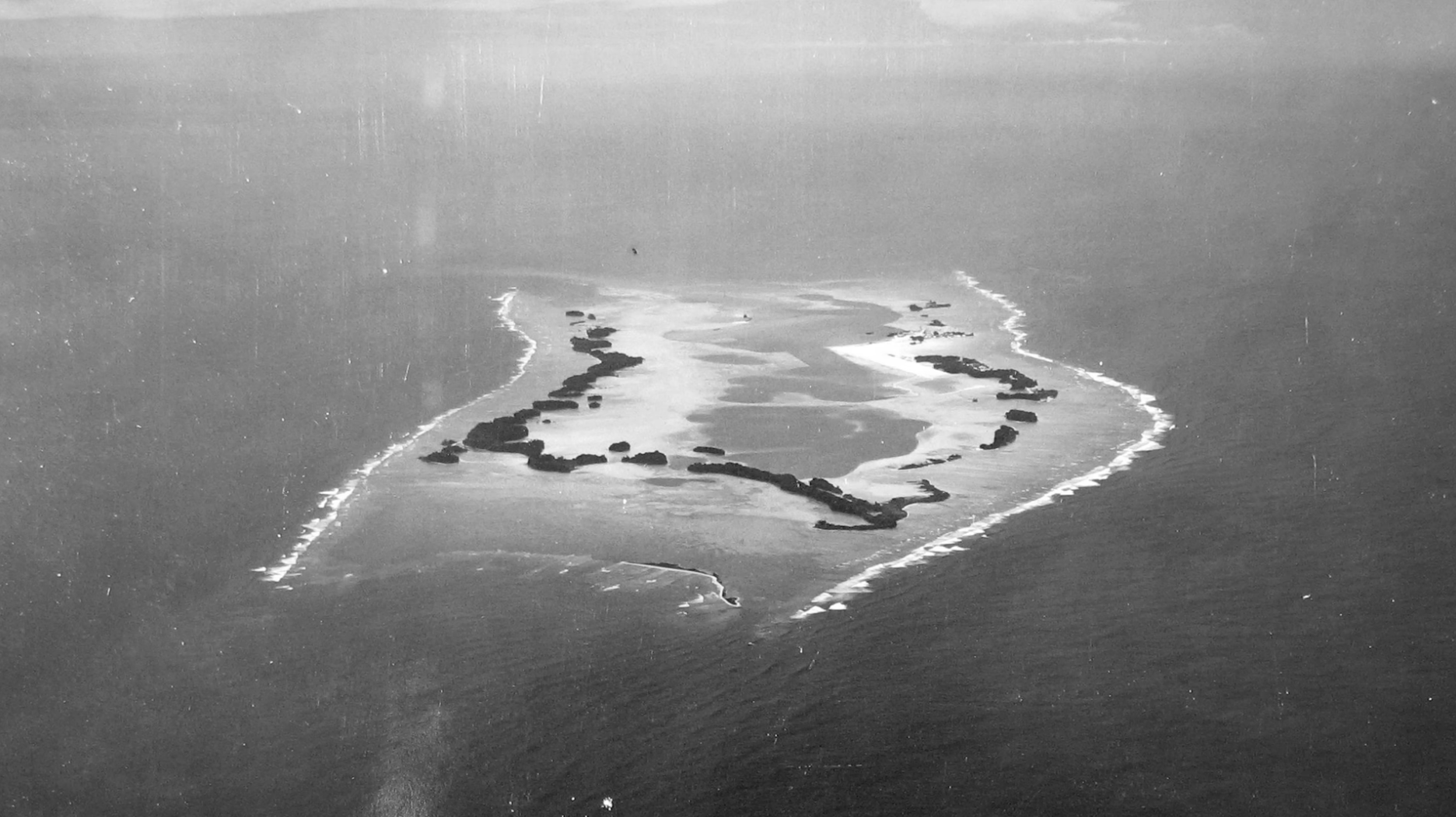 Palmyra Atoll, as seen during its time as a naval base during WWII.YouTube

