Sentinel-2, Landsat-8, SNPP-VIIRS, MODIS Terra & Aqua, Himawari-8, GOES,... satellites.
courtesy of Iban Amestoy
see FlickR

From History by Madison Horne


Hurley’s photographs, captured on heavy glass negatives, were originally intended as documents of the expedition’s pioneering scientific research.
But after the Endurance met its unlucky fate, they recorded something even more extraordinary: the epic survival of 28 men amid extreme physical hardship and mental stress.
 The wake of the Endurance through young ice during Ernest Shackleton's ill-fated Imperial Trans-Antarctic Expedition, c. 1915.


He even set up a darkroom in the ship—no small feat.
As he wrote in his journal: “Darkroom work rendered extremely difficult by the low temperatures it being minus 13 [degrees] C outside. The temperature in the darkroom, near the engine room, is just above freezing. Washing [plates] is troublesome, as the tank must be kept warm or the plates become [enclosed] in an ice block... Development is a source of annoyance to the fingers, which split and crack around the nails in a painful manner.”


Links :



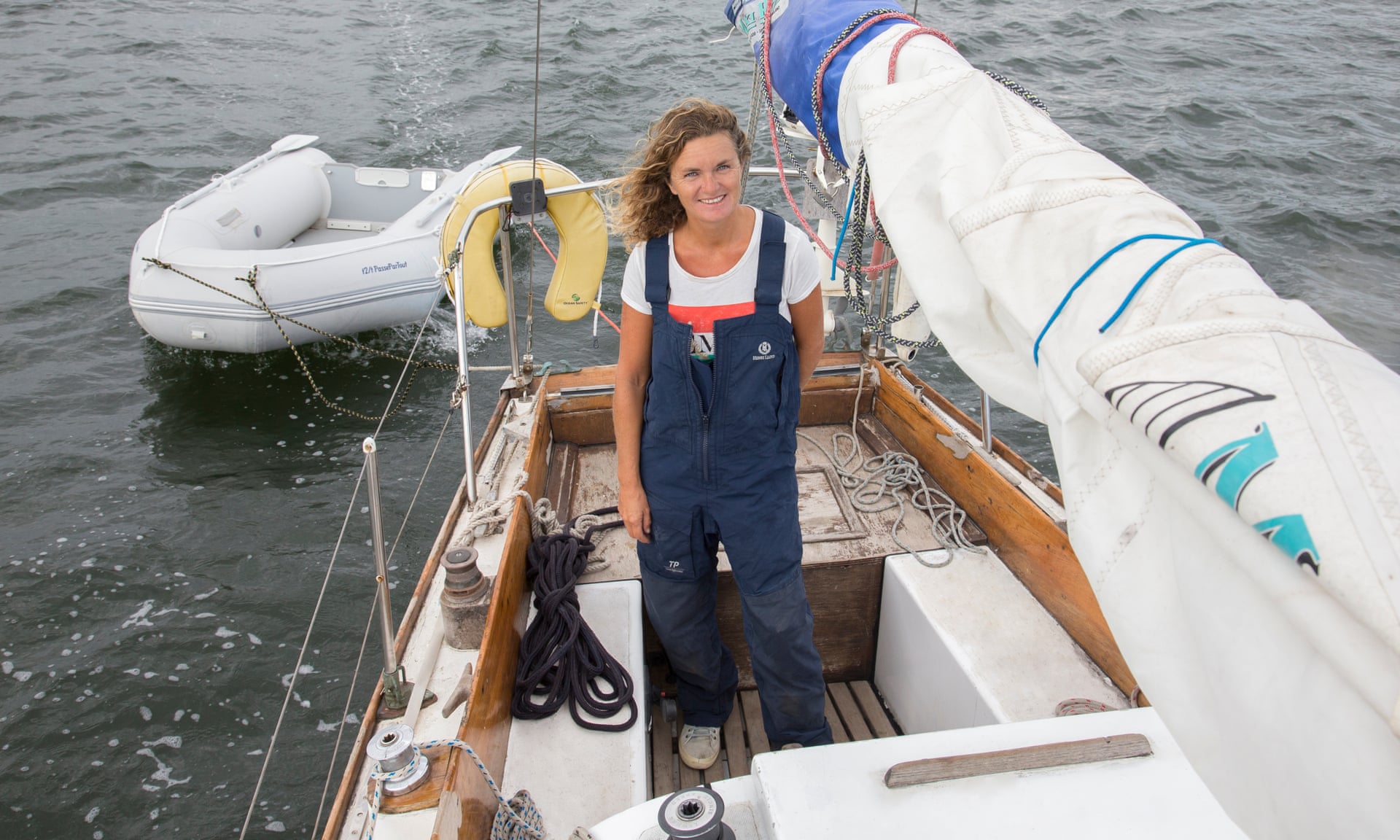
After a miserable 2014, I knew I had to make more time for myself – and my beloved boat
I don’t make resolutions.
But one year I made an exception.
It was 1 January 2015.
It was the only nod to self-improvement I have ever made – and it changed the course of my life.
Very seriously, I resolved to have more fun.
I had been inspired by the American folk legend Woody Guthrie, whose 1943 resolutions had come to light, a list full of such gems as “dream good” and “dance better”.
Yes, I thought.
Focus on what brings you joy – if that isn’t improvement, I don’t know what is.
(I would humbly suggest this is even more pertinent as the cruel joke that is 2020 comes to a close.)
I had had a tough year, having taken on a difficult project on top of a demanding full-time job and spent the months leading up to Christmas working so hard I barely slept.
When I did sleep, I dreamed of the ocean (unsurprisingly, given I was writing a book about sea nomads in my spare time).
The stupid thing, though, was that I hadn’t been in the sea – where I am happiest – once that summer.
I had my beloved little boat, Isean, in Brighton; my job was in London.
I would usually spend whatever free time I had there, swimming, fishing, floating around.
This year I hadn’t been to see her once.
Sunny weekends were spent indoors working; the summer passed without me really noticing it.
And I had been miserable.
Having more fun was, for me, always going to mean having more fun with Isean – but that required effort.
I sailed, but I wasn’t a confident sailor.
I would go out on calm days in Brighton, where there are few hazards and not much need for knowledge of navigation or tides.
I dreamed of sailing Isean properly – maybe crossing the Channel to France, an exciting but distant goal.
In the meantime, I dreamed of being confident enough to leave the marina overnight, to make passage plans, to go out to anchor in beautiful quiet bays – to really have fun with my boat.
Over the remainder of that winter, I kept to my resolution.
In January, as it froze outside, I sat in the warmth, having geeky fun with charts, practising navigation, measuring distances and tidal ranges, dreaming of where it could take me.
It took me west.
I remember so clearly the day my friend and I set off from Brighton.
It was mid-March 2015, cold, drizzly, misty.
I made the classic mistake of underestimating how long it would take, setting off late, sailing too slow.
By the time we reached Littlehampton, we were fighting against strong tides, wondering whether we would clear the sandbar to get into the harbour.
We did – just.
I will never forget my excitement and pride.
At a restaurant later, I wanted to tell everyone that I had sailed there, as if it had been an epic journey (it was a mere 15 nautical miles).
I carried on after that, couldn’t turn back, took Isean to the hardest place I could think of to learn: the Solent, with its mighty tides, strong winds, shifting sandbanks, ships, ferries, hovercrafts.
“So you want to go somewhere stressful to sail?” my friend asked.
It will be fun, I reasoned.
I didn’t turn back.
I kept going west, to Land’s End, Cornwall, then south.
I am writing from a desolate anchorage in Greece.
I quit my job and ran off to live at sea.
This morning, I was underwater, scraping barnacles from my hull, a school of curious sea bream following me.
It is not everyone’s idea of fun, but it is more than I ever thought possible.

