Monday, December 8, 2025

Research center will enable 6 people to live 6,560 feet underwater for 30 days


From Earth by Jordan Joseph

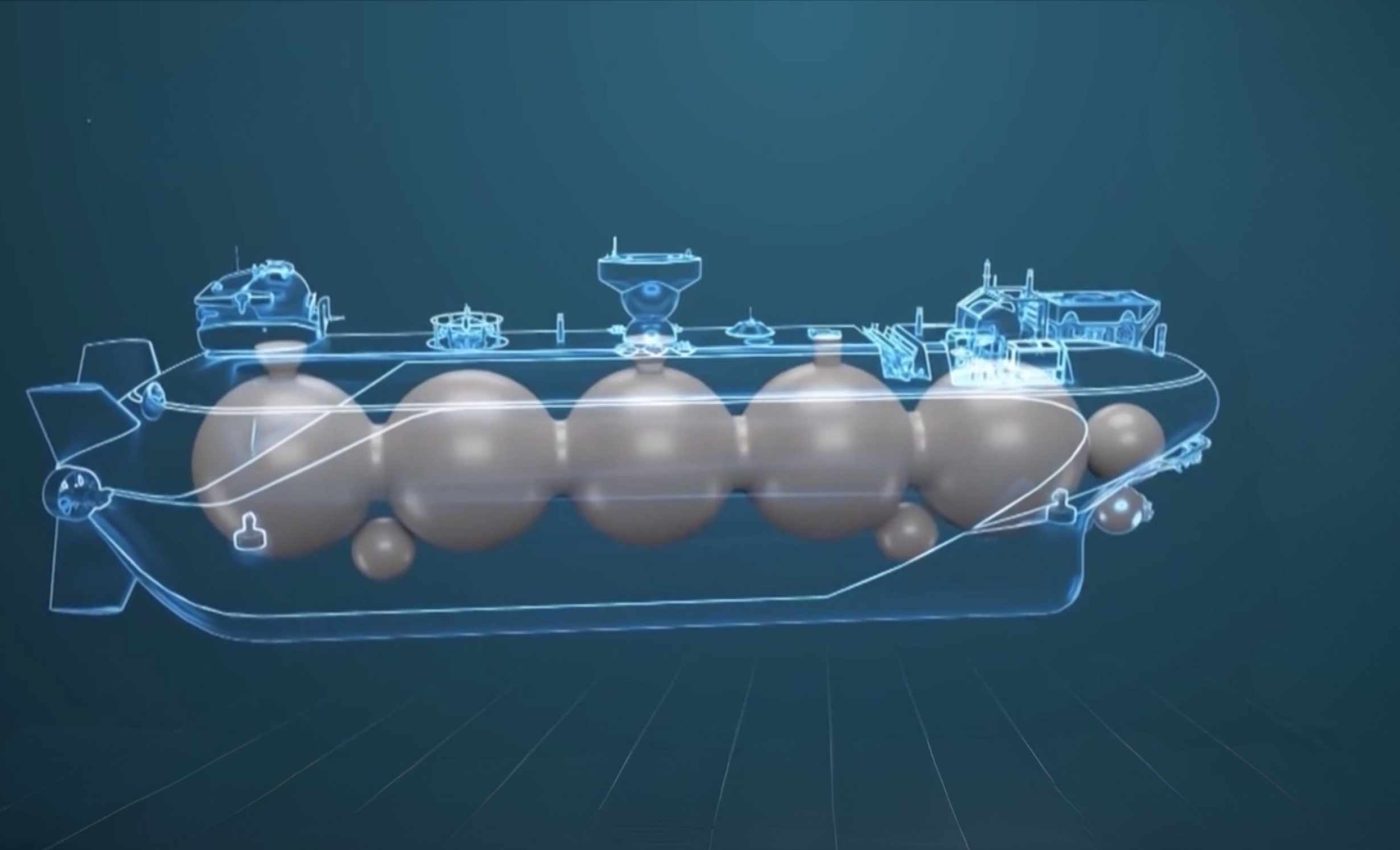
China has begun building an underwater research center in Guangzhou that pairs a crewed seafloor lab with a land-based simulator.
Their plan focuses on long stays in the deep ocean so scientists can watch natural changes unfold in real time.

At a depth near 6,560 feet, the mission profile allows a six person crew to remain underwater for up to 30 days.
That single figure hints at what this project is really about, time.
 
Why cold seeps matter

A cold seep, seafloor lab – where methane and other gases leak and feed microbes – is the project’s core target.
These places host food webs that run on chemistry rather than sunlight.

These oases run on chemosynthesis, the process where organisms use chemical energy to make food. That pathway fuels tube worms, mussels, and a menagerie of microbes.

The work is led by Li Chaolun at the South China Sea Institute of Oceanology (SCSIO).
His research centers on deep sea ecology and environmental change.

Scientists also watch hydrate, a methane rich ice-like solid that forms under pressure and cold temperatures.
It occurs in seafloor sediments and often neighbors cold seeps.

How the seafloor lab will work


Crews will run in situ, in the original place under natural conditions, experiments inside a pressure safe habitat.
They will monitor chemistry and biology with cameras, mass spectrometers, and samplers that never leave the deep.

The design links the seafloor lab to a land simulator, which mirrors key conditions topside.
This pairing lets teams replay the same events under controlled settings without waiting for the next expedition.

“This is a project designed to deepen our understanding of deep sea science through the study of cold seep systems in the South China Sea,” said Chaolun. 
He described an internationally open program built to answer environmental and biological questions that require time at depth.

China’s teams have already practiced long watchkeeping with a corrosion resistant observation platform deployed in a South China Sea cold seep for 1,070 cumulative days.

That experience showed the value of continuous video and chemical data for tracking slow shifts in deep habitats.

What scientists hope to learn

Researchers hope to place more compact chemical sensors on future missions that can stay in place for months.

These tools could track changes in methane, oxygen, and minerals with better accuracy than current hardware allows.

Teams are also considering robotic helpers that can operate near the habitat and extend its reach.
Those machines would handle tasks that require long hours outside the structure, giving crews more time for analysis.

The first task is to map how methane moves from the seafloor into the water and who eats it along the way. That includes methanotrophs, bacteria that gain energy by consuming methane and shaping carbon flow.

Researchers also want to watch community shifts after small, natural pulses of gas or mineral rich fluids. With people on site, experiments can start within minutes rather than days.

Another goal is to test how seep chemistry influences nitrogen and sulfur cycling across time.
Those results can sharpen models that predict when and where bursts of activity will appear.

Expanding future research paths

Scientists plan to link the new observations with long term data from earlier survey lines to see how seep activity changes across wider regions.

They hope the combined record will give them a clearer sense of how deep seachemistry shifts over months and years.

Teams also want to test new tools that can sample fragile microbes without disturbing their structure. These trials could guide the design of future probes for other deep habitats.

Life support at these depths must manage hydrostatic pressure, pressure from the weight of overlying water.
Every seal, hatch, and cable path faces stress that would crush ordinary hardware.

Teams will also manage confined living and limited emergency options.
Redundant systems and strict checklists are the quiet heroes that make a month underwater both possible and safe.

Why this seafloor lab matters

Better instruments, tougher materials, and reliable data links proven here can improve offshore work in energy, cables, and environmental monitoring.

The same sensors that track methane could check leaks or verify cleanup.

The facility also creates a training pipeline for engineers, biologists, and pilots who will shape the next decade of ocean work.

The wider public gains clear, long form observations that turn distant deep sea life into measurable evidence.
 
Links :

Sunday, December 7, 2025

GEBCO 2025 : Seabed 2030 announces millions of square kilometers of new seafloor data

New version of GEBCO bathymetric grid available to download
Mapped seafloor is shown in blue, with red indicating new bathymetric data added in the last year. (Image credit: Seabed 2030)
 
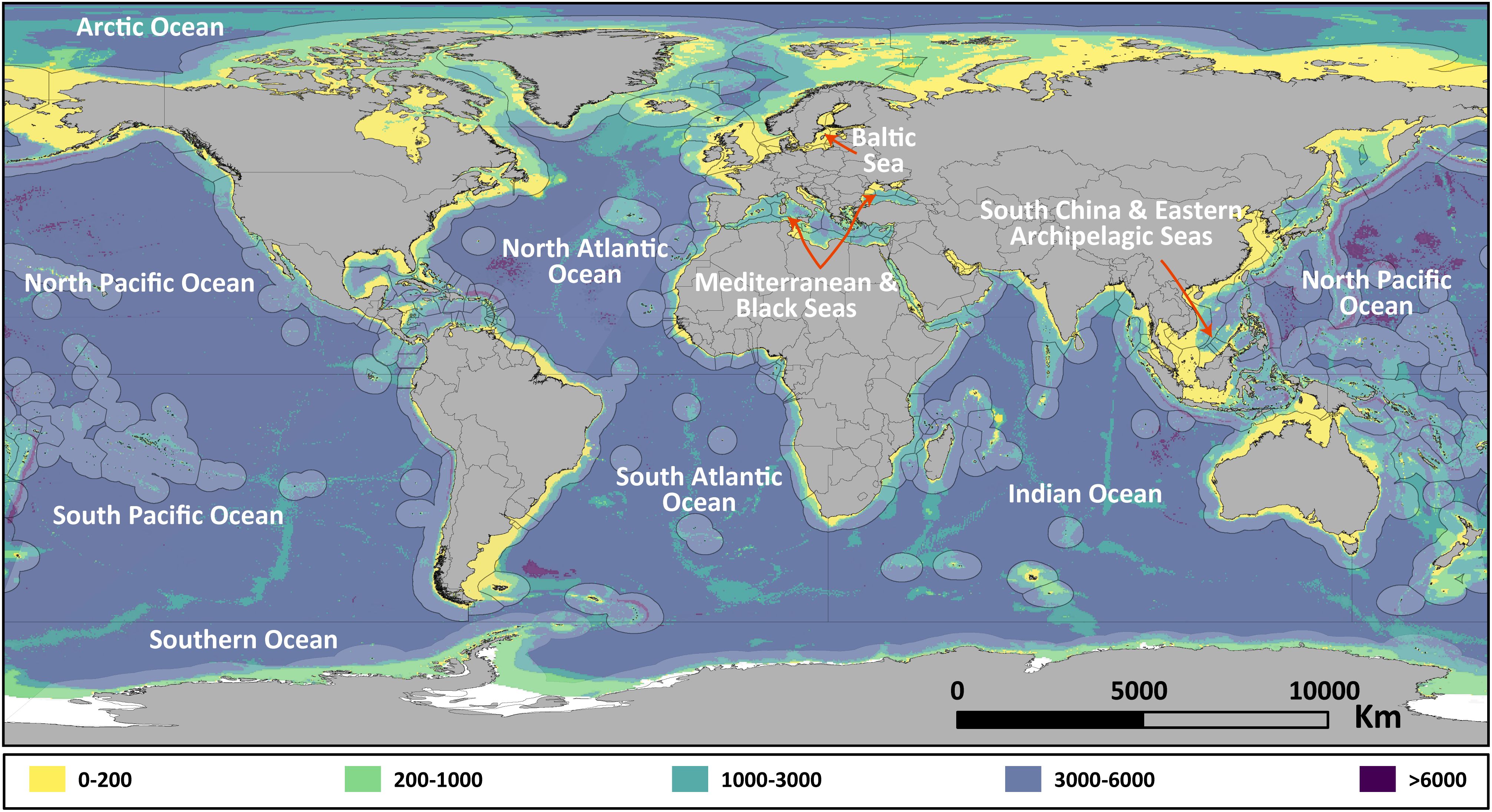
Distribution of different depth zones within the world ocean and seas and EEZ. The EEZ analysed this study includes all the area between a state’s coastline (delineated as zero depth based GEBCO_2024 bathymetry grid) and the outer limit of the corresponding EEZ.
Territorial claims by sovereign states in the Southern Ocean are not considered EEZ.
The depth zones are based on GEBCO_2024 bathymetry grid.
 
 
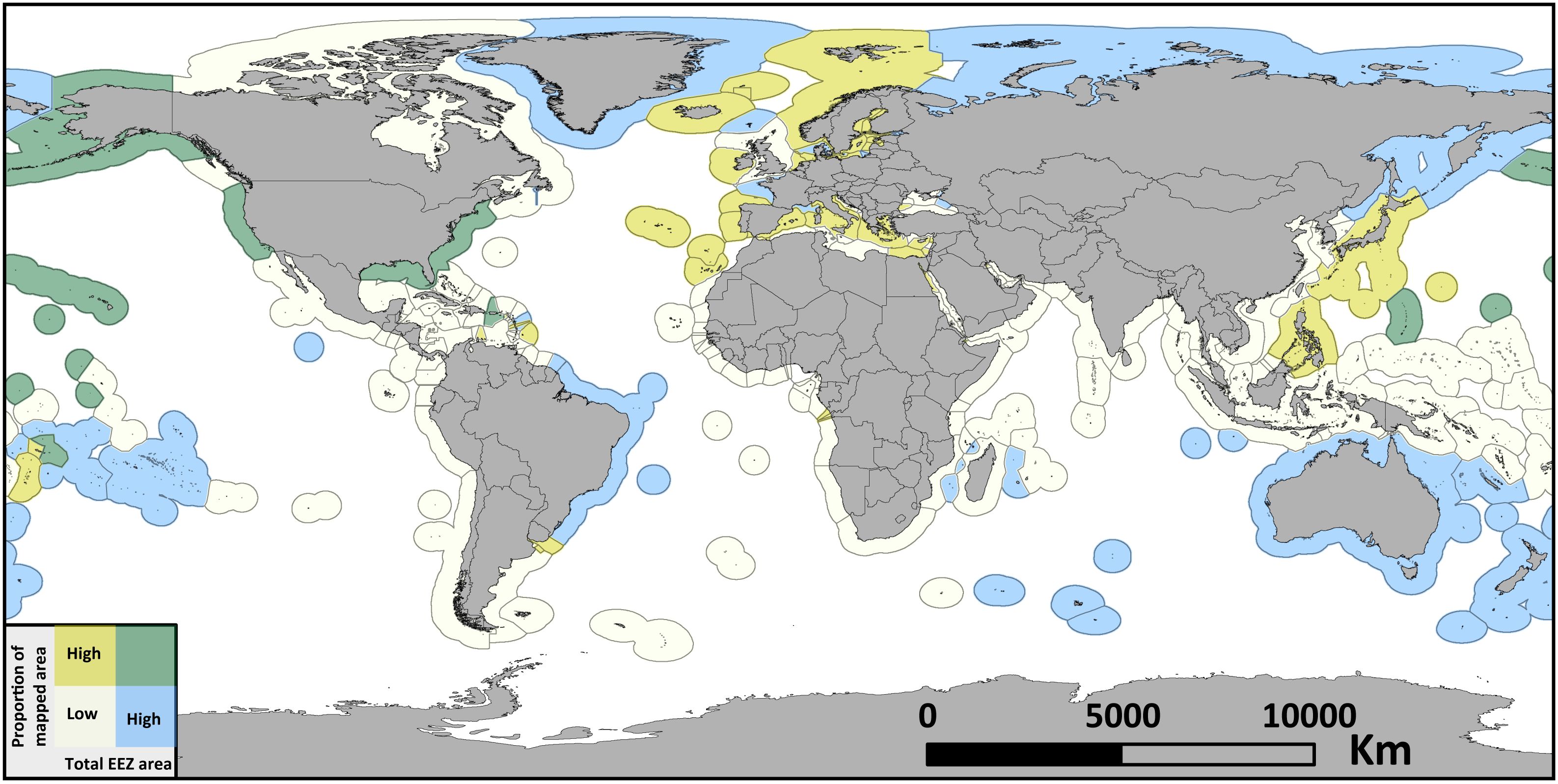
Bivariate map showing the proportion of total area mapped by direct method and total area of Exclusive Economic Zone (EEZ) for each nation.
Both the total EEZ area and proportion of mapping is classified by equal interval method.


Saturday, December 6, 2025

Friday, December 5, 2025

Octopuses use their arms to sense and respond to microbiomes on the seafloor

  
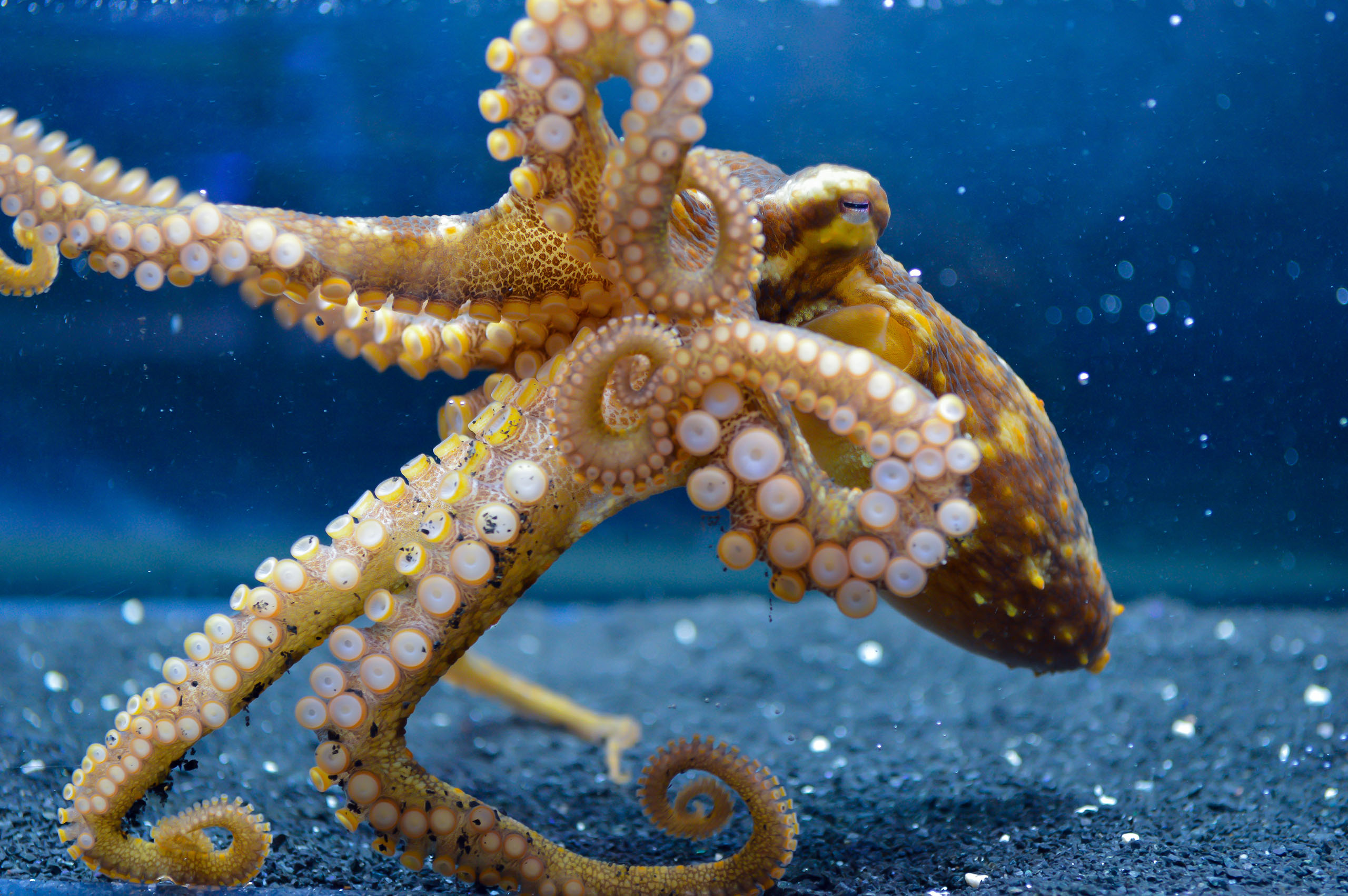
The California two-spot octopus (Octopus bimaculoides).
Photo by Anik Grearson.
 
From Mongabay by Pepper St. Clair

Octopus suckers can sense and react to microbiomes in their environment.
Distinct microbial populations on objects relevant to the octopus’s survival, like eggs and prey, inform the animal’s behavior.
Scientists found that in response to different microbial signals, chemotactile receptors trigger reflexive responses in octopus suckers and arms.

From the beginning of life on Earth, microbes, small but influential single-celled organisms, have shaped the environment that animals must adapt to in order to survive.
Distinct microbial populations, known as microbiomes, inhabit nearly every surface on Earth.
Now scientists have found that octopuses can detect signals from the microbiomes they encounter, revealing one of the ways these cephalopods navigate their environment.

Humans can also detect signs of microbial activity, such as when we smell that meat has gone bad or milk has spoiled.
But we can’t sense those microbes by touch.
Octopuses, on the other hand, touch and taste the world with their arms, which collectively have more neurons than their central brain. Those arms are also lined with chemotactile receptors, which enable them to reflexively react to specific chemical signals from microbiomes as they explore their environment, according to research published recently in Cell.

Microbes have long been known to influence internal animal development, disease, and digestion.
To explore whether the microbiomes in our environment also shape external animal behavior, a team led by biologist Rebecka Sepela, a postdoctoral fellow at Harvard University in Cambridge, Massachusetts, chose as their subject the octopus — an animal that does a lot of exploring by touch.

“There’s a huge interest in this right now.
From human biology to animal biology, from agriculture to medicine,” said Spencer Nyholm, an invertebrate zoologist and microbiologist at the University of Connecticut, who was not involved in the study.
“We are surrounded by microbes, and they’re critically important for our health.”

 
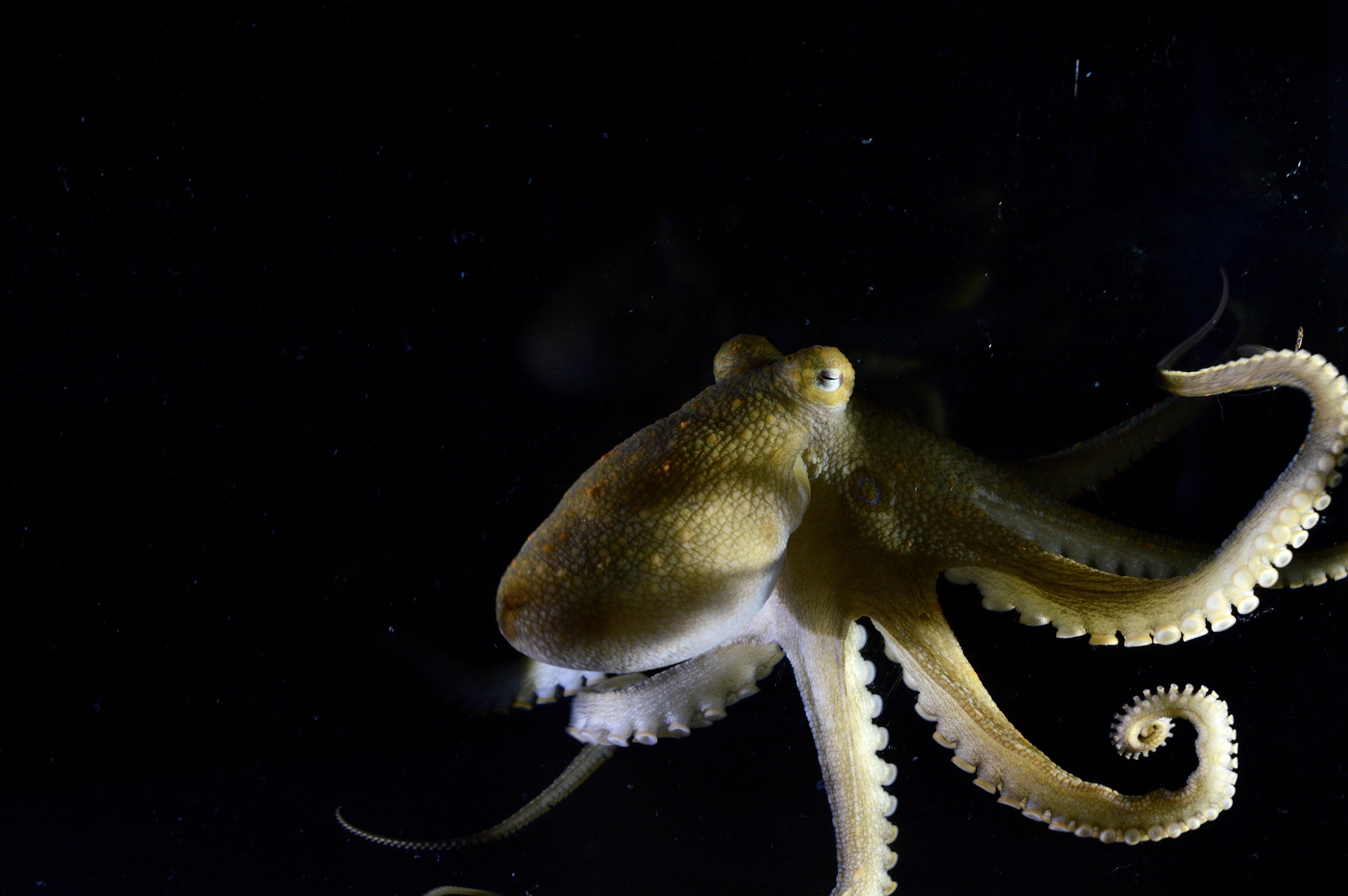
The California two-spot octopus (Octopus bimaculoides).
Photo by Anik Grearson.


Sepela and her team exposed brooding California two-spot octopuses (Octopus bimaculoides) to microbes found on seafloor surfaces that the animals would likely encounter in their environment.
The scientists made fake octopus eggs out of a nontoxic gel derived from algae and loaded them with a molecule derived from bacteria that the researchers collected from octopus eggs that had been ejected from a clutch.
The octopus mothers rejected those fake eggs much quicker than fake eggs that were not treated with the molecule.

The scientists also isolated a molecule from the microbiome of decaying crabs to see how the octopus would respond to it.
The animals quickly dismissed plastic toy crabs doused in the molecule, exactly as they would react to an actual decaying crab.
When the team gave the octopuses the same plastic crabs without the decaying crab molecule, the octopuses grabbed and held on to them as if they were typical prey.

The results confirm that octopuses can detect and respond to microbial signals, which makes sense given their habitat, Sepela said.
“It’s living on a seafloor world that is completely coated in microbes,” she said.
“Most of the octopus’s body is dedicated towards arms that it uses to taste and touch every surface that it comes into contact with.”

When exposed to the microbial signals, individual octopus suckers reacted reflexively, such as retracting from or adhering to the surface where the molecule was detected.
These reactions were made possible by chemotactile receptors in the cells of octopus suckers that initiate a physiological response when they bind to specific molecules.
One of the receptors the team studied, called CRT1, is “especially sticky,” Sepela said.
“It detects a lot of different molecules.”
 
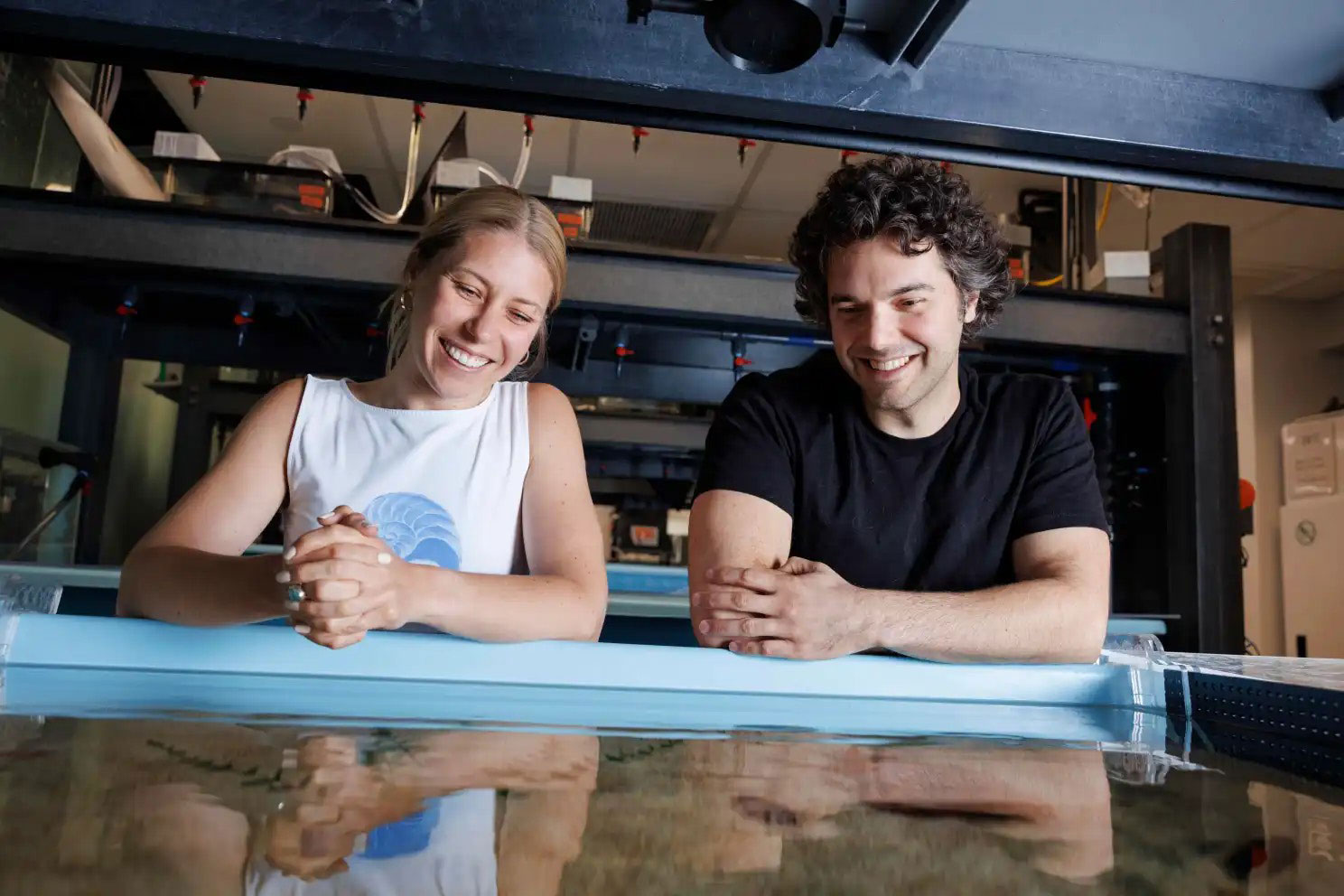
First author Rebecka Sepela and co-author Nicholas Bellono looking at a saltwater tank where octopus behavior is observed.
Photo by Niles Singer.

The findings are impressive but also important, Nyholm said.
The world is “a microbial sea,” and an animal’s ability to understand the microbiomes around it is critical not only for the individual or its species, but for the whole ecosystem, he said.

By studying the octopus’s insight into the microbial world, we can understand how microbes communicate with animal cells, Sepela said.
“I think it’s just really cool to think about how connected we are with a world that we can’t even see.”
 
Links :

Thursday, December 4, 2025

Giant 115-foot (35-meter) waves observed from space


Credit: ESA 
 
From Techno-Science by Cédric Depond
Source: Proceedings of the National Academy of Sciences

Observation satellites now offer an unprecedented view of ocean movements.
They allow for precise tracking of the trajectory of waves generated by distant storms, long after the winds that formed them have dissipated.
This ability to trace wave energy over thousands of kilometers provides information to better understand the impact of storms on shorelines, even distant ones.

The SWOT satellite mission, the result of an international collaboration, provided crucial data in December 2024.
By capturing ocean surface topography with unprecedented accuracy, the instrument enabled the quantification of the height and wavelength of swells generated by an exceptional storm in the North Pacific.

These direct observations fill a gap, as existing numerical models had until then relied on few concrete measurements for the most intense events.
The analysis of this information was the subject of a publication in Proceedings of the National Academy of Sciences.

The meteorological phenomenon and its oceanic footprint

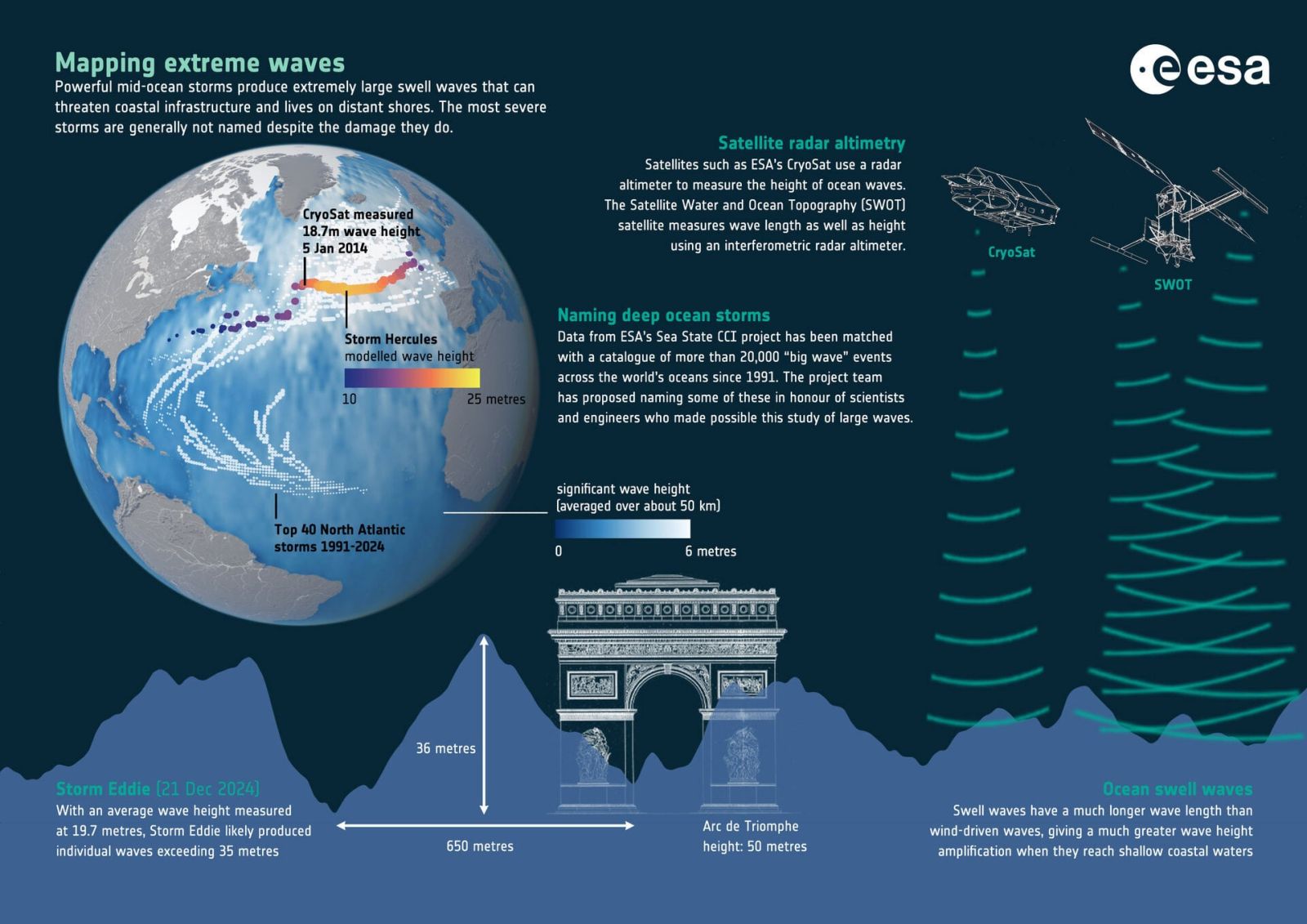
The storm, identified as Eddie, produced a wave field of remarkable magnitude.
Measurements indicate a significant wave height reaching 64.6 feet (19.7 meters).
Some individual waves were even estimated to have crests exceeding 115 feet (35 meters).
These values place this event among the most powerful of the last three decades, rivaling the Hercules storm of 2014 in the Atlantic.

The particularity of this low-pressure system lies in the distance traveled by its energy.
The swells it generated crossed the Pacific, passed through the Drake Passage at the tip of South America, and continued their journey into the tropical Atlantic.
This journey of nearly 15,000 miles (24,000 kilometers) demonstrates the ocean's ability to transport a driving force over intercontinental distances, long after the winds that gave it birth have dissipated.

The energy contained in these long waves manifested spectacularly on the coasts of Hawaii and California.
The power of the swells allowed for the holding of surfing competitions requiring exceptional conditions, such as the Eddie Aikau Big Wave Invitational.
Beyond this spectacle, these breaking waves provided scientists with a tangible demonstration of energy propagation over long distances, validating satellite observations with observable physical manifestations.

Major developments in sea state modeling 
 
The data collected by the SWOT satellite led to a significant revision of the physical understanding of wave energy.
Previous models, which predicted a distribution of energy across a broad spectrum of wavelengths, seemed to overestimate the importance of the longest waves.
The precise analysis of the spectra revealed that the majority of the power was actually concentrated in a limited number of dominant waves, characteristic of the storm itself.

This discovery fundamentally changes the assessment of risk associated with distant swells.
The analogy proposed by researchers compares this energy to that of a boxer relying on the power of a few precise punches rather than a succession of less intense impacts.
This concentration of energy in the main waves explains their ability to retain erosive and destructive potential after thousands of kilometers of travel.

The implications for coastal forecasting and infrastructure design are major.
A better quantification of the actual energy transported by swells allows for the refinement of construction standards for dikes, ports, and offshore structures.
The scientific community now has an unprecedented validation tool to improve the accuracy of models used to anticipate the impact of extreme storms on coastlines, including those not directly hit by weather systems.

Links :