Saturday, March 20, 2021

36th America's Cup : Emirates Team New Zeeland wins 36th America’s Cup


Day 6 race 9
An astounding battle of tacking and gybing

From AmericaCup

Today had a very different feel. Today was the first day that the America’s Cup could be won.
Today was the chance for the Italians to redress the balance after a day in which they had lost two races after winning the starts and maintaining their advantage for the first few legs.
Today was the day that Emirates Team New Zealand could take another step towards winning the Cup.
Emirates Team New Zealand entered cleanly across Luna Rossa Prada Pirelli who took their time to gybe around and head out to the right-hand side of the pre-start zone.
The Kiwis were first to get there, gybing around while the Italians tacked before diving back down to the Kiwis.
Plenty of weaving followed as both boats tried to slow down on their approach to the start line.
With the greater wind speeds the pre-start zone was feeling smaller.

The start was even, both on starboard but a big big gap between the two as they charged out to the left-hand boundary at 30 knots.
A critical tack was coming – could Luna Rossa get up to the Kiwis and cast dirty air on them?

The Italians’ height mode was working as they eventually forced the Kiwis to tack off while they headed for the right-hand lay line for the top gate who had to put in two tacks to get around the top gate plus.
As they came together the Kiwis dipped the Italians’ transom to take the right hand mark of Gate 1, while Luna Rossa took the left hand mark, leading by just a second.
As the pair split on the downwind leg the Kiwis seemed to get a better gust of breeze and manged to cross in front of the Italians when they came back together a lead change followed.
Now they had swapped sides, gone to the full width of the course and were about to come back at each other for another cross.
This time it was the Italians who were in front, another lead change. By the bottom gate a perfectly executed gybe by the Italians protected their position and forced the Kiwis to follow them through Gate 2.

As the second beat continued the battle remained close but by the top at Gate 3 the Italians had protected their lead once again.

The same was true of Leg 4 with yet more close racing. At the bottom Luna Rossa LR rounded the right-hand mark of Gate 4 and were 3 seconds ahead as Emirates Team New Zealand took the left-hand mark.
The Italians had released their cover on the Kiwis, although they retained the starboard tack advantage. 
When they came back together Luna Rossa was still ahead.

But the big change came towards the top of Leg 5 when the pair came together once again.
Now it was the turn of the Kiwis to come back in on starboard.
But Luna Rossa were just ahead as they crossed and tacked in front of the Kiwis forcing the defenders to tack back to the right-hand side of the course. Was this another risk? 
The Italians would be on port tack when they came back.

But there was trouble in store as the breeze shifted right, benefitting the Kiwis.
By the time the pair came back for Gate 5 Team New Zealand had taken the lead, rounding the left-hand mark ahead by 18 seconds.

One leg to the finish with a distance of 400 m between the pair, this was a big distance to make up for the Italians with so little runway left.As Emirates Team New Zealand came into the finish they had taken Race 9 by 29 seconds in the closing stages of the race.
A dramatic and closely fought race to place Emirates Team New Zealand within just one win to take the 36th America’s Cup.

Max Sirena, Skipper & Team Director:
"Possibly one of the best races we have seen in the last 15 years of the America's Cup. The guys did really well controlling at the start, we kept them behind for four legs without ever giving up. After all, we are in the final against a very strong team and I am very proud of the guys on the water and the whole team, because today they raced an amazing race. Obviously we are very disappointed with the outcome, but we are still alive and tomorrow we will go on the water to fight and we will give everything. It's not over yet."

Francesco Bruni, Helmsman:
"It's a hard one to digest. We raced flawlessly until they overtook us: we had to decide whether to defend the left or go right, and in hindsight it probably was the wrong choice. It was very hard to keep them behind, they definitely had an extra gear because whenever we tried to stretch our lead we couldn't shake them off and as soon as we gave them some space they just set off. We don't feel too much remorse because the race was conducted very well, but we don't plan to give up and we will continue to do what we need to do, analyzing where we can improve to get back on the water geared up to go win."

Vasco Vascotto, Afterguard:
"The race was really difficult with tricky wind conditions. I believe the boys raced incredibly well, and Team New Zealand was forced to adapt to our choices. We led the game, and gave a great show of match racing, not only at the start but also throughout the course. This is our mindset, and tomorrow we will keep on racing with this same attitude."

Friday, March 19, 2021

New Zealand (Linz) update in the GeoGarage platform

3 nautical raster charts updated

Bottom trawling releases as much carbon as air travel, landmark study finds

 
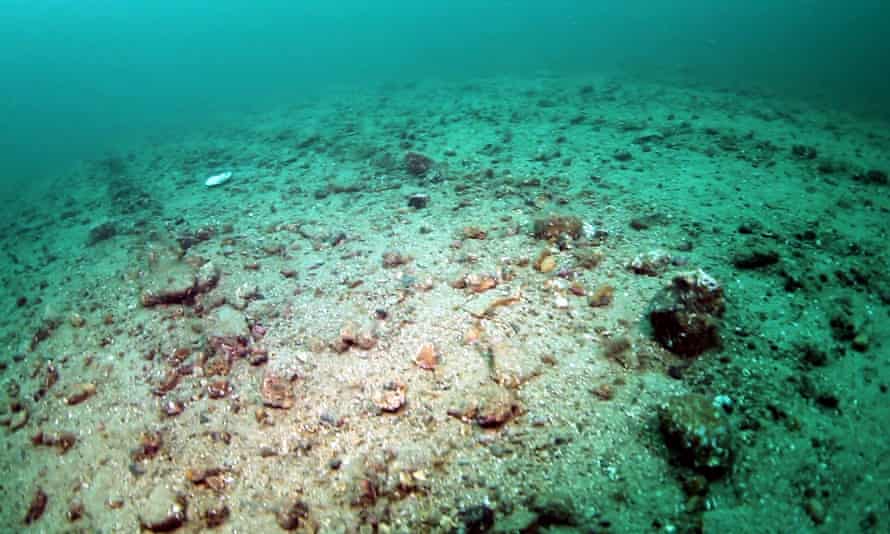
An area of seabed damaged by trawling. Bottom trawling by fishing boats pumps out 1 gigaton of carbon every year.
Photograph: Marine Conservation Society/PA

From The Guardian by Karen McVeigh

Dragging heavy nets across seabed disturbs marine sediments, world’s largest carbon sink, scientists report

Fishing boats that trawl the ocean floor release as much carbon dioxide as the entire aviation industry, according to a groundbreaking study.

 Bottom trawling, a widespread practice in which heavy nets are dragged along the seabed, pumps out 1 gigaton of carbon every year, says the study written by 26 marine biologists, climate experts and economists and published in Nature on Wednesday.

The carbon is released from the seabed sediment into the water, and can increase ocean acidification, as well as adversely affecting productivity and biodiversity, the study said. Marine sediments are the largest pool of carbon storage in the world.
The report – Protecting the global ocean for biodiversity, food and climate – is the first study to show the climate impacts of trawling globally.
It also provides a blueprint outlining which areas of the ocean should be protected to safeguard marine life, boost seafood production and reduce climate emissions.

Only 7% of the ocean is under some kind of protection.
The scientists argue that, by identifying strategic areas for stewardship – for example, regions with large-scale industrial fishing and major economic exclusion zones or marine territories – nations could reap “significant benefits” for climate, food and biodiversity.
Protecting “strategic” ocean areas could produce 8m tonnes of seafood, they say.
Humanity and the economy benefit from a healthier oceanDr Enric Sala, scientist

“Ocean life has been declining worldwide because of overfishing, habitat destruction and climate change,” said Dr Enric Sala, explorer-in-residence at the National Geographic Society and lead author of the paper.
 “In this study, we’ve pioneered a new way to identify the places that – if strongly protected – will boost food production and safeguard marine life, all while reducing carbon emissions.
“It’s clear that humanity and the economy will benefit from a healthier ocean. And we can realise those benefits quickly if countries work together to protect at least 30% of the ocean by 2030.”

The scientists identified marine areas where species and ecosystems face the greatest threats from human activities.
They developed an algorithm to identify regions where safeguarding would deliver the greatest benefits across three goals: biodiversity protection, seafood production and climate mitigation. They then mapped these to create a practical “blueprint” that governments can use, depending on their priorities.

The top 10 countries with the most carbon emissions from bottom trawling, and therefore the most to gain, were China, Russia, Italy, UK, Denmark, France, the Netherlands, Norway, Croatia and Spain.

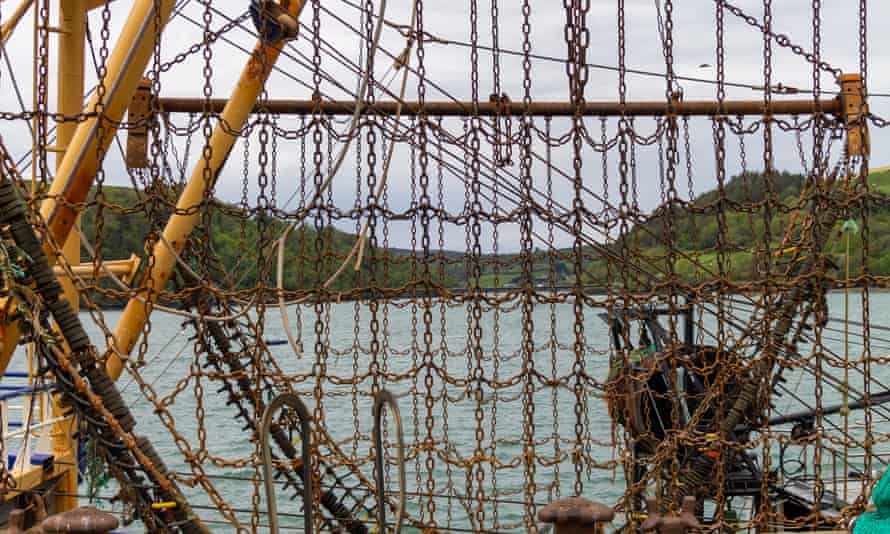
Beam trawlers’ heavy chains are dragged along the seabed, releasing carbon into the seawater.
Photograph: aphperspective/Alamy

The analysis shows that the world must protect a minimum of 30% of the ocean in order to provide multiple benefits.
The scientists say their results lend credence to the ambition of protecting at least 30% of the ocean by 2030, which is part of the target adopted by a coalition of 50 countries this year to slow the destruction of the natural world. 
 
Zac Goldsmith, the UK minister for Pacific and the environment, described the paper as “an important contribution to the science on ocean protection and highlights the need for countries to work together to protect at least 30% of the global ocean by 2030”.
He said the UK was playing a leading role in a global ocean alliance supporting this target and promised: “We will do all we can to deliver it at the UN biodiversity conference in China.


“There is no single best solution to save marine life and obtain these other benefits. The solution depends on what society – or a given country – cares about, and our study provides a new way to integrate these preferences and find effective conservation strategies,” said Dr Juan S Mayorga, a report co-author and a marine data scientist with the Environmental Market Solutions Lab at the University of California, Santa Barbara and Pristine Seas at the National Geographic Society.
One notable priority for conservation is Antarctica, which has little protectionDr David Mouillot, co-author

The study calculates that eliminating 90% of the present risk of carbon disturbance due to bottom trawling would require protecting only about 4% of the ocean, mostly within national waters.

Dr David Mouillot, a report co-author and a professor at the Université de Montpellier in France, said: “One notable priority for conservation is Antarctica, which currently has little protection, but is projected to host many vulnerable species in the near future due to climate change.”

The study estimated the emissions at between 0.6 and 1.5 gigatons of carbon dioxide a year, or an average of 1 gigaton annually. Aviation emissions of carbon dioxide in 2019 were 918m tons.

The UN’s biodiversity conference, Cop15, which is to be held in Kunming, China, this year, is expected to produce a global agreement for nature, building on the targets already set by some nations to protect at least 30% of the ocean by 2030. 
 
Links :

Thursday, March 18, 2021

What happens to oil spilled in oceans? Oil in the Ocean photooxides within hours to days, new study finds

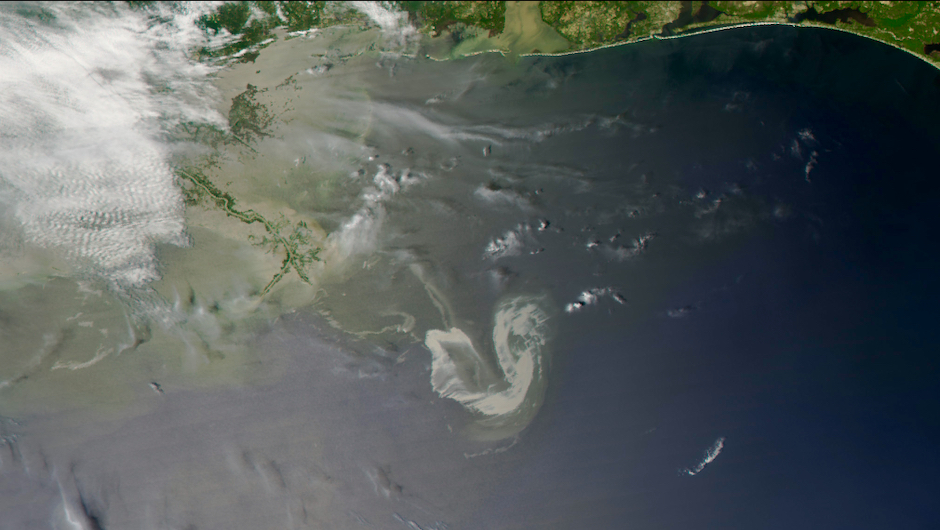
Satellite image taken on May 9, 2010 of the Deepwater Horizon oil spill site in the Gulf of Mexico. Credit: MODIS on NASA's AQUA satellite, 9 May 2010 @ 190848 UTC.
Downlink and processed at the UM Rosenstiel School's Center for Southeastern Tropical Advanced Remote Sensing (CSTARS)

From Miami University by Diana Udel

Study provides new details on the fate of spilled oil in the marine environment, effectiveness of chemical dispersants 

A new study lead by scientists at the University of Miami (UM) Rosenstiel School of Marine and Atmospheric Science demonstrates that under realistic environmental conditions oil drifting in the ocean after the DWH oil spill photooxidized into persistent compounds within hours to days, instead over long periods of time as was thought during the 2010 Deepwater Horizon oil spill.

This is the first model results to support the new paradigm of photooxidation that emerged from laboratory research.
 

After an oil spill, oil droplets on the ocean surface can be transformed by a weathering process known as photooxidation, which results in the degradation of crude oil from exposure to light and oxygen into new by-products over time.
Tar, a by-product of this weathering process, can remain in coastal areas for decades after a spill.
Despite the significant consequences of this weathering pathway, photooxidation was not taken into account in oil spill models or the oil budget calculations during the Deepwater Horizon spill.

The UM Rosenstiel School research team developed the first oil-spill model algorithm that tracks the dose of solar radiation oil droplets receive as they rise from the deep sea and are transported at the ocean surface.
The authors found that the weathering of oil droplets by solar light occurred within hours to days, and that roughly 75 percent of the photooxidation during the Deepwater Horizon oil spill occurred on the same areas where chemical dispersants were sprayed from aircraft.
Photooxidized oil is known to reduce the effectiveness of aerial dispersants. 
 

“Understanding the timing and location of this weathering process is highly consequential. said Claire Paris, a UM Rosenstiel School faculty and senior author of the study. 
“It helps directing efforts and resources on fresh oil while avoiding stressing the environment with chemical dispersants on oil that cannot be dispersed.”

“Photooxidized compounds like tar persist longer in the environment, so modeling the likelihood of photooxidation is critically important not only for guiding first response decisions during an oil spill and restoration efforts afterwards, but it also needs to be taken into account on risk assessments before exploration activities” added Ana Carolina Vaz, assistant scientist at UM’s Cooperative Institute for Marine and Atmospheric Studies and lead author of the study.

The study, titled “A Coupled Lagrangian-Earth System Model for Predicting Oil Photooxidation,” was published online on Feb 19, 2021 in the journal Frontiers in Marine Science. 
The authors of the paper include: Ana Carolina Vaz, Claire Beatrix Paris and Robin Faillettaz.

The study was supported by the Gulf of Mexico Research Initiative (GoMRI): C-IMAGE III (Center for the Integrated Modeling and Analysis of the Gulf Ecosystem) and RECOVER 2 (Relationship of Effects of Cardiac Outcomes in fish for Validation of Ecological Risk).


Wednesday, March 17, 2021

Stormy seas ahead: confidence in the cruise industry has plummeted due to COVID-19


From The Conversation by Jennifer Holland

The cruise industry has weathered many storms, including fairly regular brushes with disease.
Outbreaks of norovirus, H1N1 and measles have all happened in the not too distant past.
Despite this, a cruise has traditionally been regarded as a safe holiday – the kind where you don’t have to worry about a thing.

COVID-19 has changed this.
Cruise ships were a hotbed of transmission during the early stages of the pandemic, particularly the Diamond Princess, which was quarantined for six weeks in Japan in spring 2020.
It had over 700 confirmed cases, and for a period was the world’s leading COVID-19 hotspot after China.
Coverage of this and other ships’ outbreaks has taken its toll.

Research that I conducted with colleagues in Australia shows that the pandemic has changed how people think of cruise holidays.
We surveyed over 600 people in the UK and Australia, both cruisers and non-cruisers, to ask them about their willingness to cruise and future travel intentions, to explore how COVID-19 has affected perceptions of travel and cruise risks.

Nearly 45% of interviewees had less belief than before the pandemic that cruise lines are transparent and honest about safety or health issues.
Respondents were also fearful of going on a cruise, with 47% saying they don’t trust cruise lines to look after them if something goes wrong.
This is staggering for an industry that depends on repeat customers.

We further found that 67% of people are less willing to cruise as a result of the pandemic, while 69% said they feel less positive about cruising now.
What’s most surprising is that even repeat cruisers said they feel nervous about cruising as a result of the pandemic, with this emotion coming up repeatedly in the survey’s open-ended questions.
This is a gamechanger.
Until now, loyal cruisers have always come back, with previous disease outbreaks having little impact.

What went wrong?

When the pandemic began, cruise ships immediately suffered high infection rates among passengers and crew.
During the first wave, thousands were stranded onboard ships as they were held in quarantine or refused entry to ports as borders closed.
By the end of April 2020, over 50 cruise ships had confirmed cases of COVID-19 and at least 65 deaths had occurred among passengers and crew.

Confined living conditions on cruise ships mean that disease outbreaks aren’t uncommon.
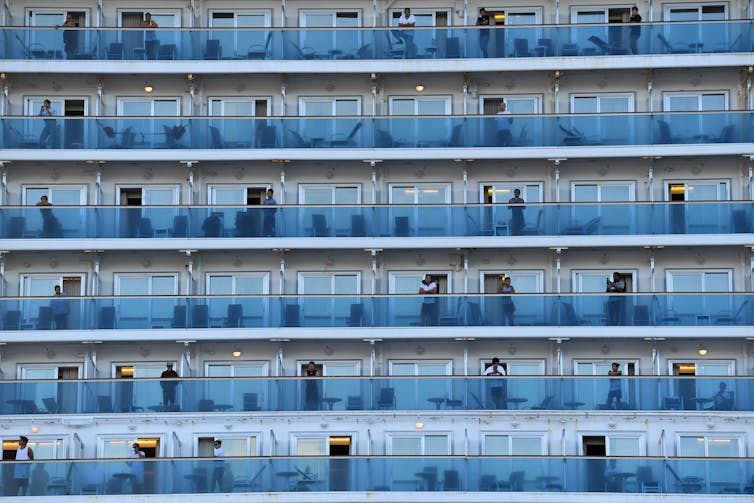
Dean Lewins/EPA-EFE

The story of one ship – the Ruby Princess – gained particular attention.
Its passengers were allowed to disembark in Sydney in mid-March, with a number carrying the virus.
The ship would go on to be linked to more than 900 COVID-19 cases and 28 deaths.
The state of New South Wales later launched a public inquiry into the ship’s outbreak and found that the state’s ministry of health made a number of serious errors in allowing passengers to get off.

It didn’t take long for cruises to be depicted as places of danger and infection, particularly in Australia.
Lots of information about COVID-19 on cruise ships was published, especially about the Ruby Princess, grabbing the public’s attention.
Undoubtedly, this amplified people’s perceptions of risk around cruise holidays.
Our study found that the many stories on COVID-19 also reminded the public of previous illnesses and outbreaks onboard cruise ships.

Given the high intensity of media interest in Australia, we weren’t surprised to find that perceived risks were higher there compared with the UK, with willingness to cruise lower.
This suggests that there could be regional differences in how difficult it is for the industry to recover after the pandemic.
What happens next?

Most respondents in the study said they would wait until it was safe to cruise again – and there’s probably a long way to go on changing the current perception of cruise ships as giant incubators of disease.
It’s doubtful pent-up demand from loyal cruisers will be enough to fill cruise ships to capacity – which is critical for long-term economic viability – and so financial uncertainty grows.

The pandemic has been catastrophic for the industry so far, with financial losses of US$50 billion (£36 billion), 1.17 million job losses, 18 cruise ships sold or scrapped and at least three cruise lines stopping trading.
Before the pandemic, a new cruise ship was built every 47 days, and off the back of the industry’s robust growth over the past two decades another 19 ships are due to enter operation in 2021, despite demand very likely to have fallen.

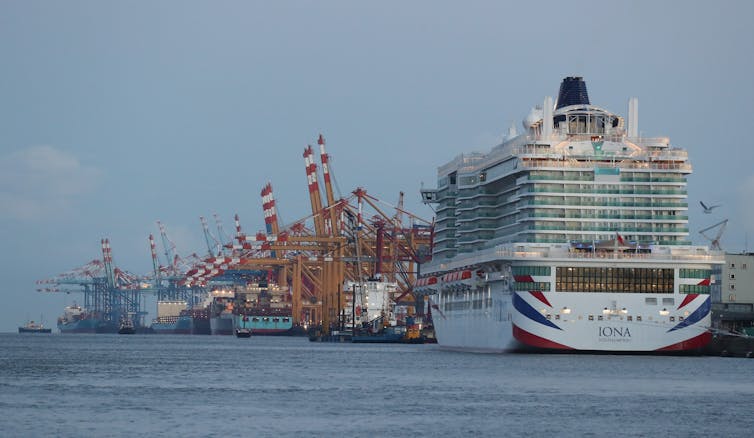
Brand new ships, such as P&O Cruises’ Iona, were built according to past demand and will enter service in a tough market.
Focke Strangmann

To recover, the industry will need to address people’s perceptions of risk, which our research shows have heightened.
Risk perception has a significant influence on holiday decision-making, and it will be even more critical post-COVID.

In the wake of the pandemic, would-be cruisers will need to think about health protocols, outbreak prevention plans, onboard sanitation procedures, social distancing measures and health screenings.
Also, they’ll need to consider the implications of potential outbreaks during the cruise.
These could result in being quarantined in their cabin, needing to access healthcare, or even the cruise being terminated.

All of this creates uncertainty, which adds to perceptions of risk.
The industry will need to provide reassuring answers on all of these points to entice holidaymakers back onboard.
Cruise companies will also need to convince customers that they are trustworthy and accountable, given the concerns about honesty and transparency raised by our research.

Overall, the sector has been devastated by the pandemic.
Possibly no other area of tourism has been as widely affected.
A return to the robust growth enjoyed previously is unlikely for many years, if ever.
But for there to be any chance of this happening, the industry must understand how the pandemic has affected people’s perceptions of cruises and address their concerns.
 
Links :