Saturday, May 4, 2024
Nautical chart of Boston harbor (1775)
Friday, May 3, 2024
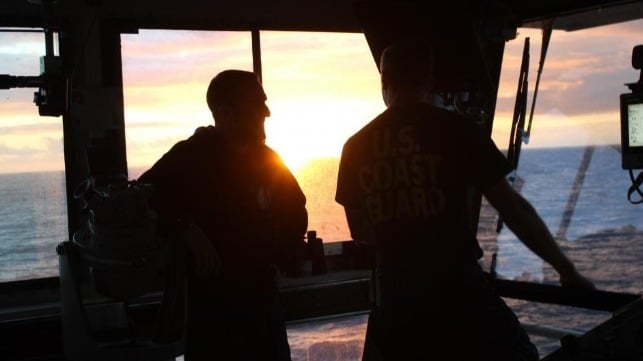
Proud seafarers have strong doubts about the safety of autonomy

Moreover, the greater the professional commitment and pride of the bridge officers, the less confidence they have in automation increasing safety at sea.
Professional pride and commitment are often deeply ingrained in seafarers, and for many, the job is more of a way of life.
New technologies will bring about major changes in the work of bridge officers, who have the ultimate responsibility on board Norwegian vessels.
However, there is strong skepticism, almost mistrust, that increased automation and autonomous (meaning self-driving) ships will contribute positively to safety,” says Asbjørn Lein Aalberg, a PhD candidate at NTNU’s Department of Industrial Economics and Technology Management and SINTEF Digital.
The study ‘Pride and mistrust? The association between maritime bridge crew officers’ professional commitment and trust in autonomy’ was recently published in the WMU Journal of Maritime Affairs.
The research was conducted in collaboration with the Norwegian Maritime Authority and Safetec.
This is probably the largest survey in this field to date, both nationally and internationally.
Aalberg believes that in order for operations to be as safe as possible, employees are needed who know how to control and monitor this automation.
We need their engagement, willingness and interest to ensure that the technology and systems being developed are fit for purpose,” says the researcher.
Few women in the sample
Aalberg has taken a closer look at the answers given by captains and
navigators on board.
Collectively, this group consists of 1789 Norwegian
and 227 international bridge officers of all ages, with everything from
0 to more than 26 years of experience.
Women constitute only 11 percent
of Norwegian seafarers, and only 2.4 per cent of the participants in
this survey.
“This probably reflects the fact that there are even fewer women among the people working on the ship’s bridge,” says Aalberg. Among other things, the bridge officers were asked about:
- Their thoughts and feelings about the automation of work tasks
- Their confidence in autonomous technology
- Their professional commitment and pride
- Their own management work related to safety
Seafarers with an extreme sense of duty
Aalberg says that bridge officers are very proud of their work and exhibit what he would call a rather extreme sense of duty to their own profession.
“This pride may lead to additional mistrust when faced with radical
changes.
In fact, we found that those who take the greatest pride in
their profession are most sceptical about technological developments,”
says the researcher.
Another finding that he finds quite alarming is this: among the bridge officers who take the greatest pride in their profession, it is the younger ones who have the least faith in autonomy.
“When envisioning their future career, maybe they feel like they have more to lose,” says Aalberg.
One of the oldest professions in the world
This area has seen little research, and Aalberg says we don’t
currently know enough about why seafarers exhibit such strong mistrust.
One reason for this is that there are currently not many autonomous
ships, and they are a hot topic of speculation and debate.
It is
therefore important to emphasize that different points of view may be
based on rumors, vague impressions and unfounded notions of what the
changes will entail.
It is also often the case that autonomous vessels are spoken
positively about by individuals who are relative newcomers to the
maritime industry.
The survey indicates that this could spark
uncertainty among seafarers, both in terms of the motives and intentions
behind autonomy.
“Despite the fact that there seems to be a great need for seafarers
in the future, some people may be afraid of losing their jobs.
But I
think the skepticism is more about the changes being made to the nature
of their work.
For example, there would be a great deal of uncertainty
among captains if the position were to lose its independence.
We must
not forget that the maritime profession has a very long tradition, where
a captain’s authority and control have always been strong,” Aalberg
says.
Researcher Asbjørn Lein Aalberg hopes authorities can use the
research results in dialogue with shipping companies and technology
providers.
He says that these different groups should include seafarers
when developing new concepts and technological solutions.
Professional discretion
The PhD candidate has also interviewed 31 Norwegian seafarers on
board highly automated Norwegian passenger ferries about
their confidence in the advanced automated systems that have been
installed.
This study gives some hints about what it takes for bridge
officers to trust advanced technology.
Among other things, it relates to
their lack of trust in the machines’ ability to demonstrate true
‘seamanship’ and exercise professional discretion in traffic.
In
addition, the interviewees did not believe that the machines will manage
emergency situations well enough.
All in all, they believe that people
are best suited to making decisions in complicated situations.
“The reason they still trust autopilots and similar systems is that they themselves have control and the option to turn them on or off as and when they see fit,” Aalberg says.
The shipping company and technology developers have also had a very long and ultimately successful development process that he believes is needed to satisfy proud seafarers.
However, all the informants were skeptical about the impending changes and expressed concern that increased automation would compromise safety at sea.
Autopilot is ok, autonomy is not
The studies show that bridge officers make a clear distinction
between automation and autonomy.
Automation involves machines taking
over some of their tasks, while autonomy, taken to its ultimate
conclusion, means unmanned ships.
Aalberg provides a nuanced perspective on the development.
“Many researchers argue that humans will play a crucial role in
human-automation collaboration, even on autonomous ships.
Previously,
there was more talk about removing people altogether, to put it
bluntly,” says the researcher.
Seafarers must be consulted
He hopes the authorities can use the results of the research in
dialogue with shipping companies and technology providers.
He says they
should include seafarers when developing new concepts and technological
solutions.
“They have to make, and talk about, innovations in such a way that it sparks interest instead of skepticism,” he says.
He also believes that projects involving technological development should openly share real results from testing in order to provide a nuanced perspective of what seafarers may see as as being overly idealized.
“We also know that seafarers gain trust in advanced technology by
trying the technology themselves.
Keynote speakers or even colleagues
talking about the systems is simply not enough.
They want to try them
themselves and see if the automation makes the same choices that they
would have made, so perhaps the development process should be structured
accordingly,” Aalberg says.
Thursday, May 2, 2024
There’s something very fishy about the global seafood supply
Fábio Nascimento for The Outlaw Ocean Project
From Time by Ian Urbina
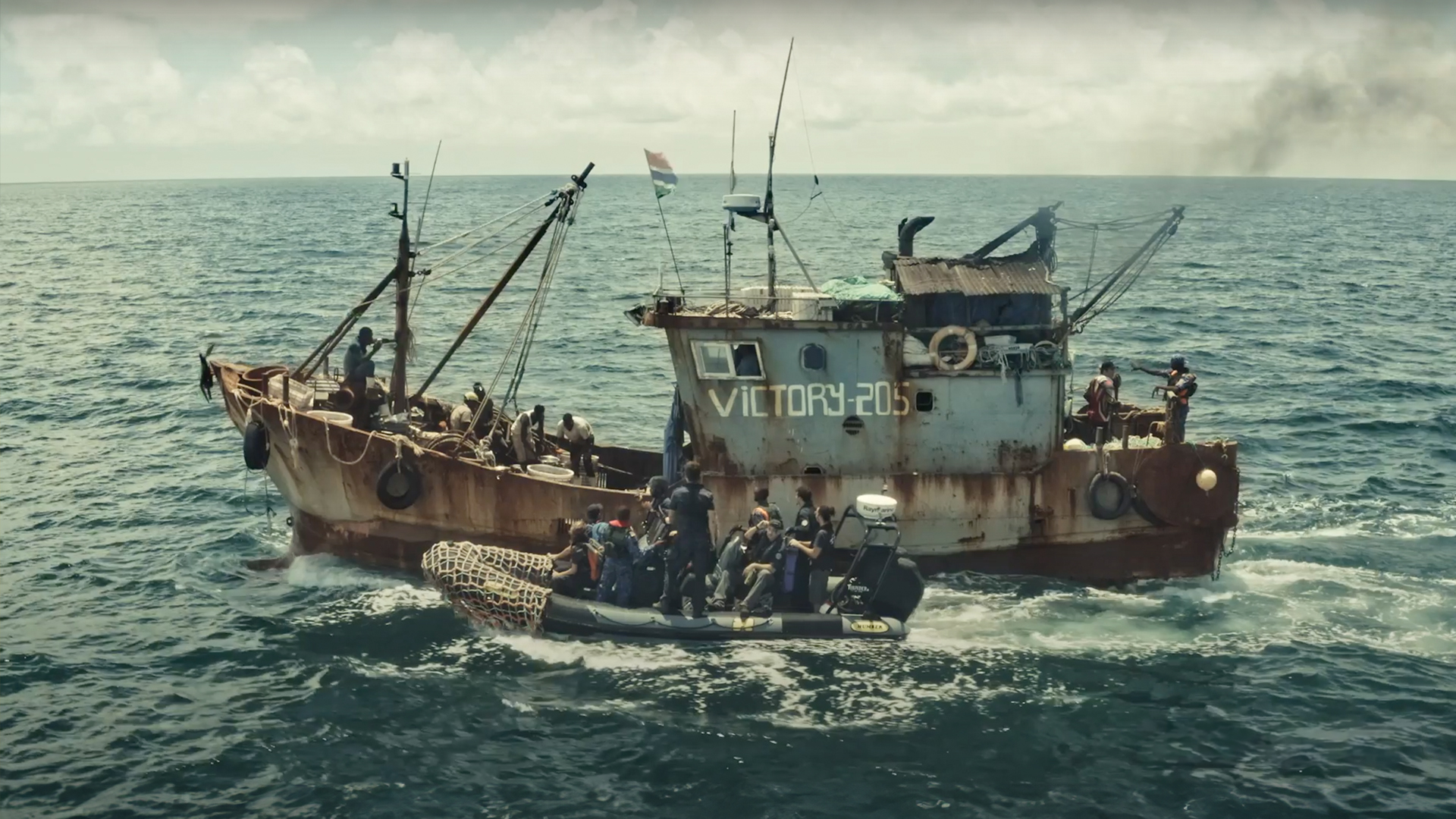
The past half year has seen a steady stream of disturbing reports about serious human rights abuses tied to industrial fishing.
First came a long expose about forced labor at sea tied to hundreds of Chinese fishing ships that supply many of the biggest restaurant and grocery store chains in the U.S. and Europe.
Then the investigations moved on land, exposing the widespread use by Chinese processing plants of state-sponsored forced labor—specifically North Korean and Uyghur workers, both of which are strictly banned from being tied to any products imported into the U.S.
This epic investigation that we just published about an unusually brave whistleblower in India & what we found in the massive trove of documents he provided us.
A whistleblower, named Joshua Farinella, leaked thousands of pages of internal documents, invoices, emails, recorded zoom calls, security footage, whats app exchanges tied to a shrimp processing plant where he was the manager.
The story, which was published by Outlaw Ocean Project which I founded, was important for Americans since a third of the shrimp they eat comes from India.
The documents seem to back up the whistleblower’s statements and raise a variety of serious concerns about human rights abuses tied to workers at the Indian plant as well as food safety issues relating to shrimp possibly having been shipped to the US that tested positive for antibiotics.
The whistleblower is an American and a longtime seafood industry executive, and he showed unusual bravery in leaking the documents since he likely just threw his entire career away in doing so.
Aside from talking to reporters, he followed other proper channels, by filing federal whistleblower complaints to law enforcement officials at the State Department, Customs and Border Patrol, the Labor Department and the FDA, who have already spoken with him and begun investigating.
Congress formally wrote the whistleblower to request the documents as they too intend to investigate the plant.
That is often a precursor to hearings.
For the risks taken and bravery shown in leaking the documents, podcasters have dubbed the whistleblower, the “Snowden of Seafood”, and he has also been hailed publicly as a “superhero” by a variety of advocates and others, including the Hulk.
(The actor Mark Ruffalo posted a message saying the whistleblower was a real-life superhero for his actions).
The company at the center of the disclosures takes a different view and has categorically denied that it did anything illegal or unethical.
The story about conditions at the shrimp plant in India come against a broader backdrop.
The same week that the whistleblower documents were published, the Corporate Accountability Lab, which is an advocacy group of lawyers and researchers, released a report detailing severe cases of captive and forced labor as well as environmental concerns often tied to wastewater at a variety of other shrimp plants in India.
Behind the Story: A Whistleblower Investigation From Antarctica to India | The Outlaw Ocean Project
It’s worth remembering the history here.
The New York Times and the Associated Press covered the issue extensively a decade ago, especially tied to Thailand.
Even before that, a human rights NGO called the Environmental Justice Foundation revealed in 2013 widespread problems with forced and child labor in Thai shrimp.
The EJF report and subsequent news coverage spurred a series of sweeping reforms by the Thai government to better protect workers from such abuses.
But these reforms came with a price, leading to escalating labor costs in Thailand right when nearly half of the country’s shrimp production was wiped out by a disease.
India emerged to fill the void, with help from its government which bolstered subsidies and loosened laws restricting foreign investment.
By 2021, India was exporting more than $5 billion of shrimp globally, and was responsible for nearly a quarter of the world’s shrimp exports.
And yet, here we are again: the seafood problems previously highlighted in Thailand are now being widely revealed in China and India.
Part of the problem with global seafood is that companies and governments barely know where these ships are working, much less how they are behaving.
A new study published in the journal Nature in January 2024 revealed that 75 percent of the world’s industrial fishing fleet are not publicly tracked.
The study, using machine learning and satellite imagery, detected vessel activity at sea that was previously “dark” in marine protected areas and in countries' waters that previously showed significantly less of a fishing footprint.
If we dont know where the ships are, we surely dont know if the workers on them are trafficked.
Even on land, companies and governments are minimally informed about what is happening at the fish farms and processing plants partly because the audits that are meant to verify ethical and legal conditions tied to worker treatment, food safety, and ocean sustainability are deeply flawed.
These experts also say companies need to stop relying on auditing firms that claim to be checking for things in places (like India and China) where they actually have limited capacity to do so effectively.
Until then, the rotten smell inside this industry is likely going to get worse.
- Conservation Int : New consortium will support human rights risk assessments within global seafood chains
- Pulitzer Center : China: The Superpower of Seafood
- YouTube : The North Koreans Behind the World’s Seafood | The Outlaw Ocean Project
- GeoGarage blog : Global Fishing Watch: Raising awareness of the impacts ... / The Outlaw ocean / The origin of North Korea's 'ghost boats' / Stowaways and crimes aboard a scofflaw ship /
Wednesday, May 1, 2024
‘Cold tongue’: what the Pacific Ocean cool patch mystery says about climate change
(Image credit: Planet Observer/Universal Images Group via Getty Images)
From The Week by Arion McNicholl
One part of the Pacific Ocean is baffling scientists, but the broad trajectory of oceanic temperatures remains clear
A thin stretch of the eastern Pacific Ocean has been getting colder for the past 30 years, defying the broad global trend and baffling scientists.
The anomaly, known as the “equatorial cold tongue”, is affecting an area that extends west from the coast of Ecuador for thousands of miles.
Over at least three decades the region has cooled by roughly half a degree and it “has scientists wondering how long that will hold”, said The Atlantic.
What is causing the ‘cold tongue’?
Scientists are not entirely certain what is keeping the “cold tongue” cool.
“The trade winds blow from east to west across the tropical Pacific Ocean,” Seager told Newsweek. “Because of the rotation of the Earth, the winds drive waters northward to the north of the Equator and southward to the south of the Equator. As the waters are driven away from the Equator, water is pumped up from below and since the waters below the surface are cold this creates the equatorial Pacific cold tongue.”
Yet despite the effect of these winds, the cold tongue has “puzzled scientists”, Newsweek said, “because advanced climate computer models suggest that the waters should have been warming for decades at a faster rate than the rest of the Pacific due to rising greenhouse gas emissions”.
Other hypotheses suggest that the answer may be found in the cold seas of the Southern Ocean around Antarctica, which have also seen sea surface temperatures decline in recent decades.
Suspected drivers include the melting of Antarctic glaciers as global temperatures rise, and ozone depletion in conjunction with rising greenhouse gas emissions, which are intensifying the movement of cold air from Antarctica.
Not knowing what is causing it “means we also don’t know when it will stop, or whether it will suddenly flip over into warming”, New Scientist added.
More profoundly still, “it could even alter the extent of climate change globally”, the site said, “by tweaking how sensitive Earth’s atmosphere is to rising greenhouse gas emissions”.
What are its effects on wildlife?
As well as the climate-related questions it presents, the cold tongue is also of interest to biologists, particularly in relation to the Galápagos Islands, which lie about 600 miles off Ecuador.
This is because the “cold, nutrient-rich water” of the cold tongue has become a “prosperous patch [that] feeds phytoplankton and breathes life into the archipelago”, said The Atlantic.
According to Judith Denkinger, a marine ecologist at the Universidad San Francisco de Quito in Ecuador, the ecological impacts of the cold tongue are profound.
“The cool water sustains populations of penguins, marine iguanas, sea lions, fur seals, and cetaceans that would not be able to stay on the equator year-round,” Denkinger told The Atlantic.
Colder temperatures can also “inhibit coral growth rates” and “fish may experience shifts in their distribution due to changes in water temperature, which can also affect their metabolism and reproduction”, said Brilliantio in its explainer on temperature in the Pacific Ocean.
As well as the cold tongue, other pockets of cool oceanic water sporadically present themselves, such as an area of the Pacific Ocean near San Francisco that has recently been the coldest it’s been in more than a decade.
Despite this, the overall direction of ocean temperatures is going up, said Ryan Walter, associate professor at California Polytechnic State University.
Solving the puzzle of the cold tongue “isn’t about proving climate models wrong”, said New Scientist.
“Rather, the cold tongue is the last big piece of the puzzle. Fit that in and we can build a more accurate picture of how life will change in a warming world – and how best to prepare for that future.”
- NewScientist : Something strange is happening in the Pacific and we must find out why
- ResearchGate : Is the Pacific Cold Tongue a greater immediate threat to the world’s climate than the increase in global temperature?
- Nature : Two annual cycles of the Pacific cold tongue under orbital precession / Emergent constraints on future projections of the western North Pacific Subtropical High
- Colombia Climate School : Part of the Pacific Ocean Is Not Warming as Expected. Why?
- Newsweek : Mystery Stretch of the Pacific Ocean Is Not Warming Like the Rest of the World's Waters