Saturday, November 10, 2012

Vendée Globe 2012-2013 : still the utimate


 From SailMagazine

Why does the Vendée Globe remain, in the eyes of many, the gold standard of global ocean races? 

Simply put, because of the purity of its challenge: one skipper, one boat, one world, nonstop, set out from Les Sables d’Olonne, France, and then sail around the planet leaving Antarctica to starboard. The first one back to France wins. 

The race continues to attract the world’s most experienced sailors. 
This year there will be two skippers sailing their ninth global race, and a past winner and two past runners-up among the 14 returning veterans. 
Five rookies will also be on the starting line November 10. 
Among these will be Italian Alessandro Di Benedetto, who recently sailed a 21-foot Mini along the same route as the Vendée, broke his mast at Cape Horn, jury-rigged its two pieces back together, and continued on to finish the route nonstop in 268 days. 

We applaud 90-foot Rambler’s breaking of the Bermuda record with 20 crew aboard averaging 16 knots for 650 miles in under 2 days. 
But how about Vendée Globe 2008-9 winner Michel Desjoyeaux? 
He not only recorded a speed of 30.44 knots under autopilot, but set his 5,000-square-foot spinnaker alone in 27 knots of wind, and averaged 14 knots for 28,300 nautical miles over 84 days. 

Competing in the Vendée means being on high alert round-the-clock. 
The stress never ends. 
The Open 60s in the race are huge, the rigs are gigantic, it’s stifling hot in the tropics, and it’s freezing cold in the Southern Ocean gales. 
Will you be able to make the inevitable repairs? 
Will you have to go aloft? 
Will you be injured thousands of miles from help? 
And perhaps, most important, will you live up to standards of the competitiors who went before you, the storied legacy that is the Vendée Globe?

For the 2008-09 edition of the race, 300,000 people came to the start, and three-quarters of a million people over three weeks walked the docks to see the boats and talk with the skippers and shore crews. Why?
Because at its heart, the Vendée Globe is both an incredible dream and a daring adventure, one that transcends national boundaries and appeals to people from all walks of life.
I’ll be glued to it.
For more on this year's race, visit vendeeglobe.org/en

Friday, November 9, 2012

NZ Linz update in the Marine GeoGarage

9 charts have been updated in the Marine GeoGarage
(Linz July published 7 November 2012 updates) 

  • NZ52 Cape Brett to Cuvier Island
  • NZ53 Bream Head to Slipper Island including Hauraki Gulf
  • NZ268 Chatham Islands
  • NZ532 Approaches to Auckland
  • NZ533 Firth of Thames
  • NZ5111 Plans Between Parengarenga and Whangaruru
  • NZ5124 Plans in the Bay of Islands
  • NZ5125 Bay of Islands
  • NZ5327 Waiheke Island to Coromandel Peninsula

    Today NZ Linz charts (178 charts / 340 including sub-charts) are displayed in the Marine GeoGarage.

    Note :  LINZ produces official nautical charts to aid safe navigation in New    Zealand waters and certain areas of Antarctica and the South-West    Pacific.


    Using charts safely involves keeping them up-to-date using Notices to Mariners

    More than a holiday: Pegaso, the luxury superyacht that doubles as a science lab

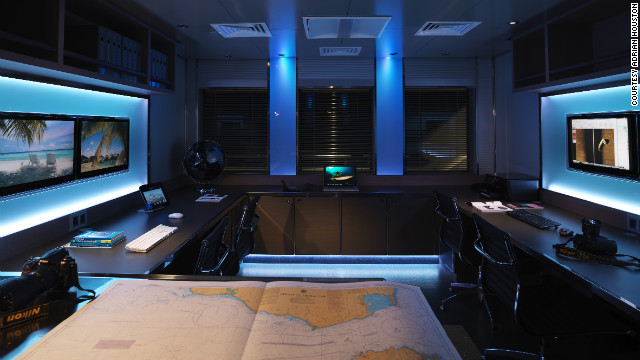
    A view of Pegaso's laboratory area on the main deck -- fitted with a range of technology that allows the on board team of scientists to do everything from tracking endangered marine life to studying water pollution levels.
    Pegaso was born as an idea on a chart table aboard the owner's first yacht whilst cruising in Fiji.

    From CNN

    A recently built superyacht suggests that at least some wealthy holiday makers are demanding more from their sailing trips than just exotic islands and sun-drenched sea decks.

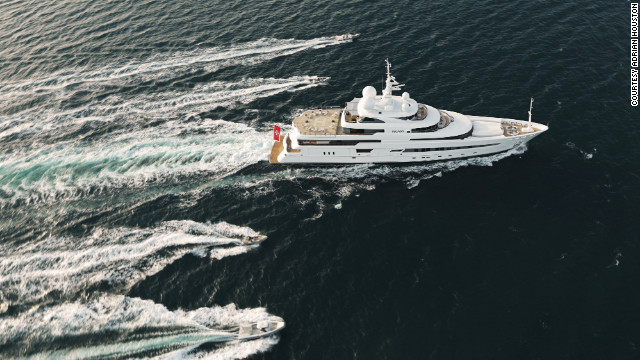
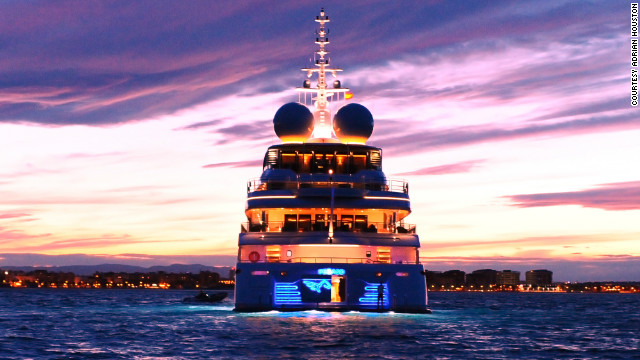
    The RV Pegaso is a 73.6 meter superyacht boasting a fully-equipped, cutting edge marine laboratory big enough to house a team of 12 scientists.

    The 74-meter RV Pegaso comes with the usual roster of flat-screen TVs, designer furniture and en-suite bathrooms, but a closer inspection reveals that it also doubles as a fully-fledged floating laboratory.
    Indeed, Pegaso's "RV" designation stands for "research vessel", and the boat is equipped with a five-man submarine, a decompression chamber for deep sea diving and a small team of marine biologists.

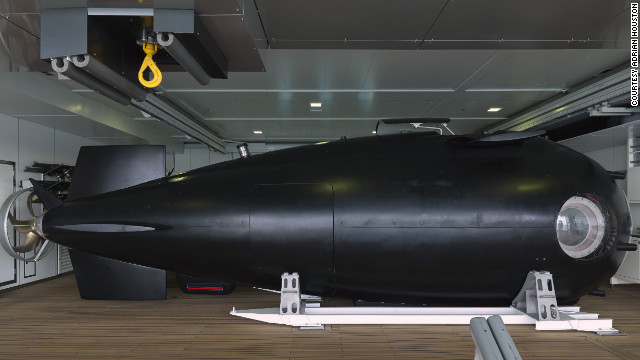
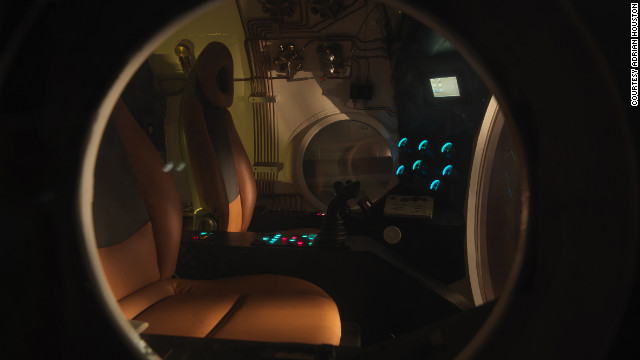
     The research vessel is equipped with a five-person submarine.
    Weighing 14 tons, it is the world's only privately owned diver-lockout sub, according to its management company, allowing divers to enter and leave underwater via different chambers.

    Alex Flemming is the chief executive of the yacht's managing company, Pegaso Marine.
    He explains that anyone who charters the yacht can have as much or as little involvement in the research as they like, with the one condition that they always allow a group of scientists to travel with them.
    Flemming believes demand for boats of this type represent a growing trend within the yachting community, where people are looking for something more than just a hedonistic getaway.
    "The historic perception of the superyacht set is the south of France, drinking champagne and having a lovely time," he said. "
    But suddenly people are going: 'Hang on a second. I can go somewhere further afield and be a part of something bigger.'
    "This is about getting the most out of time and also feeling as though they're doing some good," he added.

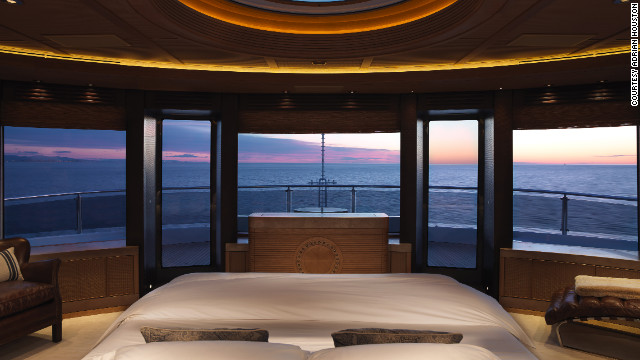
     Along with cutting edge scientific facilities are all the luxury comforts you'd expect from a superyacht. Boasting six double bedrooms, the number of scientists is dependent on the number of guests on board.

    According to Sean Dooley of the Ocean Preservation Alliance (OPA), the boat is owned by an accomplished diver and marine preservationist who wishes to keep his identity private.
    "This is his fourth vessel. He'd already been yachting for 15 years and traveled around the world twice," claimed Dooley. "It was at that point he said: 'Let's do something different.'"


    The boat's original dining area was converted into a lab and fitted with scientific equipment capable of everything from tagging endangered marine life to monitoring water pollution levels.
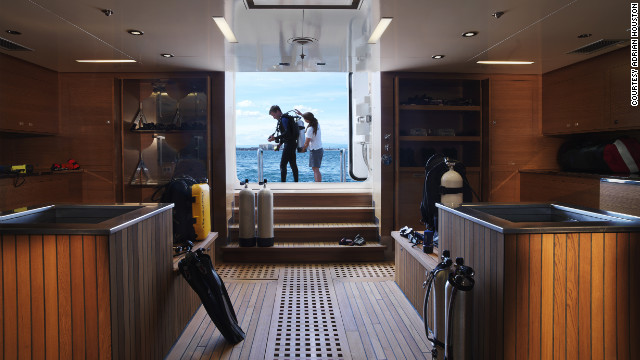
    As well as the decompression chamber, the vast array of diving equipment on board RV Pegaso includes a machine that produces high-quality oxygen -- allowing trained guests to dive deeper, longer and safer.

     The sub has standing room of 1.8meters and can travel to 170 meters under water, allowing guests to explore at depths few have ventured before.

    One of the biggest draws -- for guests and scientists -- is the five-person submarine on board.
    Weighing 14 tons, managing company Pegaso Marine claim it's the world's only privately owned diver-lockout sub, allowing divers to enter and leave underwater via different chambers and explore depths few others have ventured before.


    Such experiences can be transforming.
    Dooley recounts the journey of a guest aboard a similar research vessel in the Socorro Islands, just off Mexico, who helped scientists tag giant manta rays in an effort to track their migration patterns.
    The vital data was packaged into a video that the guest then presented to the president of Mexico.
    "He was able to help conduct important research that will have a lasting impact. And as he kept telling us, this was the best trip he'd ever had," said Dooley.


    But all this worthy enterprise does nothing to distract from the luxury embellishments at hand on RV Pegaso.
    True to its owner's vision of combining high-level research with opulence fit for a sultan, guests who are not otherwise tagging hammerhead sharks or monitoring the breeding habits of whales, can enjoy comforts that include an eight-person spa pool, bar, cinema, gym and extensive observation lounge.
    "When we do trips with our clients, they still like wonderful meals, they still like massages, they still like the luxury of living aboard a superyacht," said Dooley.
    "But we've got a whole other layer of richness you just can't get from your average superyacht."

    Links :

    Thursday, November 8, 2012

    Google Earth tour of a more acidic world


    From Oceana

    Above is a good primer on ocean acidification narrated by Dan Laffoley of the International Union for Conservation of Nature (IUCN).
    The video spans the vulnerable corals of Australia's Great Barrier Reef to the equally vulnerable shellfish industry of the Pacific Northwest, detailing the potential effects of a more acidic ocean.

    To those unfamiliar with global warming's "evil twin", the video does a good job of explaining the basics of ocean acidification: simply put, carbon dioxide reacts with ocean water to make carbonic acid.
    The ocean absorbs about a quarter of civilization's carbon dioxide emissions, and as a result they are now 30 percent more acidic than before the industrial revolution.
    What does this mean for animals like clams, corals, or oysters that rely on a more stable pH range to build their calcium carbonate skeletons and shells?

    Mother nature has provided some of her own experiments, as documented in the video.
    Near Vesuvius in the Mediterranean carbon dioxide bubbles up from below, rendering a glimpse in to a future, more acidic, and bleaker ocean.
    Closer to the vents, where the water is more saturated with carbon dioxide, the communities of life become less diverse and invasive algaes thrive.

    Off of Australia, the Great Barrier Reef is already struggling in the new man-made environment.
    As more and more acidic water continues to erode the corals in the coming decades, these ecosystems of otherworldly beauty and diversity could simply go extinct.

    Perhaps most worrisome of all is the effect of acidification on pteropods, a shell forming plankton at the very bottom of the ocean's food web, nicknamed the "potato chips of the sea".
    These animals are especially vulnerable to acidification, and as the narrator ominously intones: "If their shells dissolve a critical part of the food web dissolves with them".
    Learn more about ocean acidification and what you can do to help.

    Wednesday, November 7, 2012

    SpeedDream, quest for the faster monohull on the planet


    SpeedDream skipper Cam Lewis showboats off the coast of Rockland, Maine


    We the People are fascinated with speed, pushing ourselves ever faster, be it on water, on land in the air or in space.
    For Millennia the quest for speed was among the main driving forces of progress.
    Boatbuilding, railroads, automotive  and aerospace industries - all grew and advanced fueled by our insatiable appetite for moving faster, for covering greater distances in less time.
    Ocean liners that plied the waters between Europe and America were fighting for the famous Blue Riband Trophy.
    Just an honorary prize with no monetary value, it generated fierce competition with great rewards for the Trophy holders.
    Quest for the Blue Riband contributed greatly to the technological advancement and led to explosion of commerce between America and Europe.
    Over the last two decades the quest for speed in sailing has for the most part been led by a small elite group of high performance multihull enthusiasts represented mostly by the sailors from a single nation - France.
    The common perception is that monohulls are inheritantly slow and nothing could ever change this.


    A quick animation of the SpeedDream 35 prototype.

    SpeedDream challenges this perception.
    We are confident that our innovative design concept will result in a super-fast monohull capable of beating catamarans and trimarans in their own game and establish a string of speed records, from sailing faster than 50 knots in the open ocean to circling the globe in less time than any yacht ever.
    We believe that the true impact of this daring project will extend far beyond setting new sailing records, no matter how lofty they are.


    Through the SpeedDream innovative media communication devices, we will take sailors and non-sailors alike on a thrilling ride that reaches beyond the limits of our current knowledge.
    We will inspire imagination and challenge established perceptions.
    SpeedDream is a quest of turning something that  seems impossible today into reality.