Saturday, November 26, 2011

Australia plans huge marine reserve in Coral Sea

From BBC

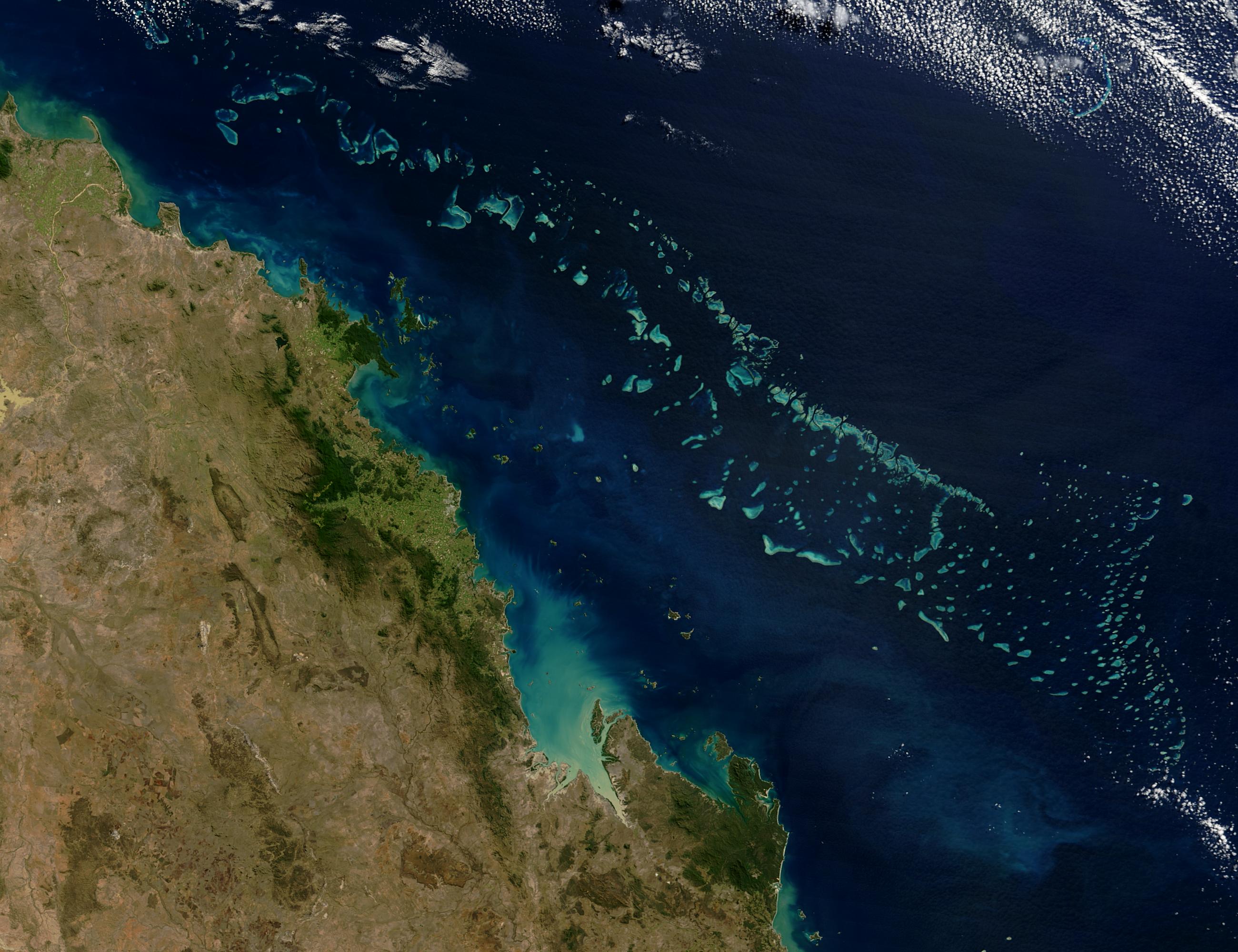
The Australian government says it plans to establish the world's largest marine reserve in the Coral Sea.

Environment Minister Tony Burke said the protected zone would cover an area more than one-and-a-half times the size of France.

New fishing limits would be imposed and and exploration for oil and gas banned.

The proposal is subject to a 90-day consultation, but Mr Burke said the Coral Sea's biodiversity was at the heart of the plan.
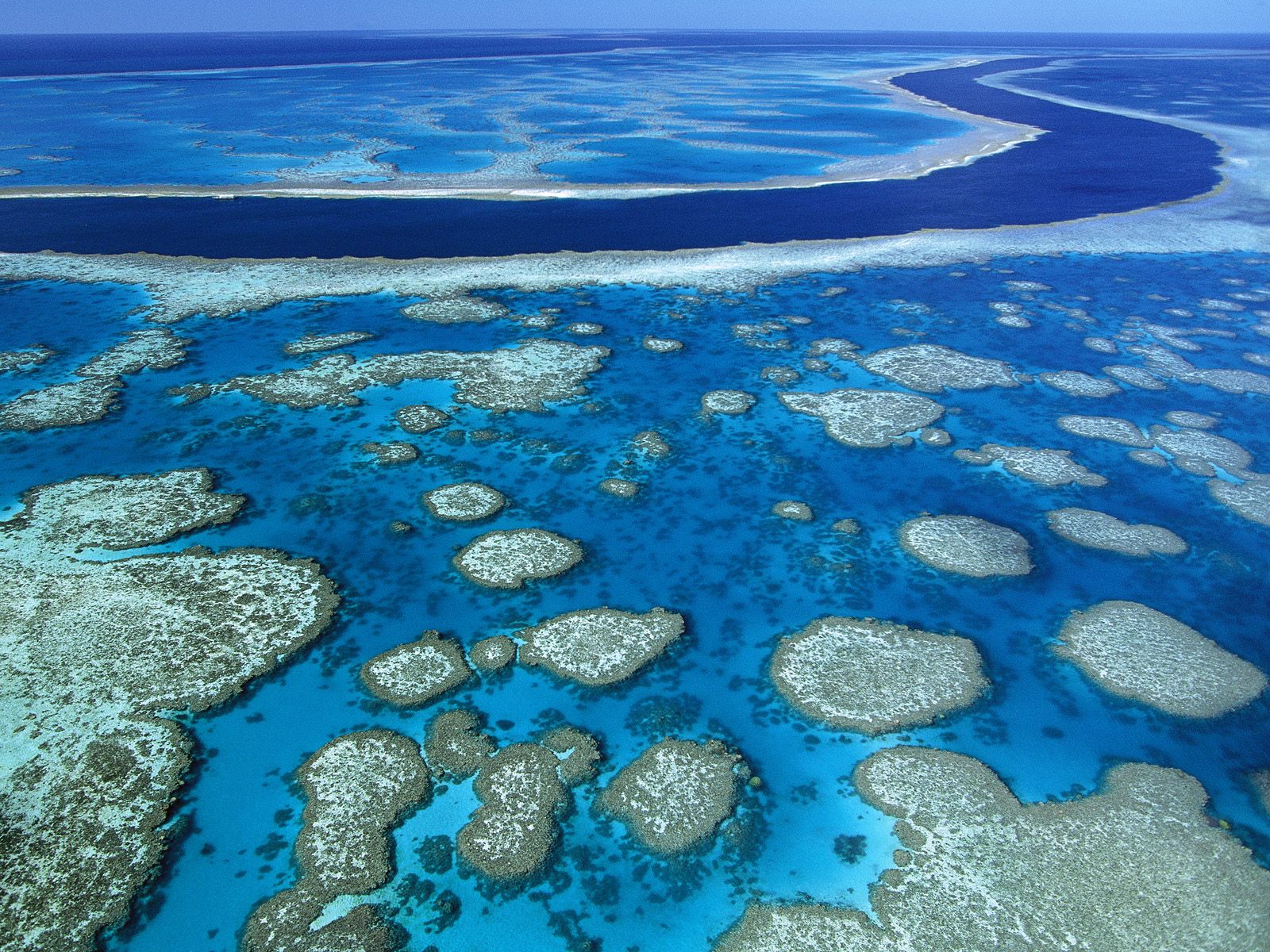

"There is no other part of Australia's territory where so much comes together - pristine oceans, magnificent coral, a military history which has helped define us and now a clear proposal for permanent protection," he said.

The sea - off the Queensland coast in north-east Australia - is home to sharks and tuna, isolated tropical reefs and deep sea canyons.
It is also the resting place of three US navy ships sunk in the Battle of the Coral Sea in 1942.

'World leader'

Under the plans, fishing - commercial and recreational - would be allowed in some areas of the reserve, which at its closest point would start 60km (37 miles) from the coast and it extends out to 1,100km.

President of the Queensland Seafood Industry Association Geoff Tilton said a larger area was needed for commercial fishing.

But Professor Terry Hughes, director of coral reef studies at James Cook University, called the proposal a "welcome step" that "cements Australia's reputation as a world leader in marine resource management".


"The proposed Coral Sea no-take area is hundreds of kilometres offshore, and will have no impact on recreational fishing. There is very, very little commercial fishing currently operating legally in the Coral Sea today," he said.

Activists called the plan a good start but said key reefs and spawning grounds lay outside the fully protected area.

Currently the world's largest marine reserve is a 545,000-sq-km area (210,425 sq miles) established by the UK around the Chagos Islands in the Indian Ocean.

The Coral Sea reserve, if approved, would be approximately 989,842 sq km.

Links :

Friday, November 25, 2011

Whaling in Faroe Islands, grindadrap


From MSNBC

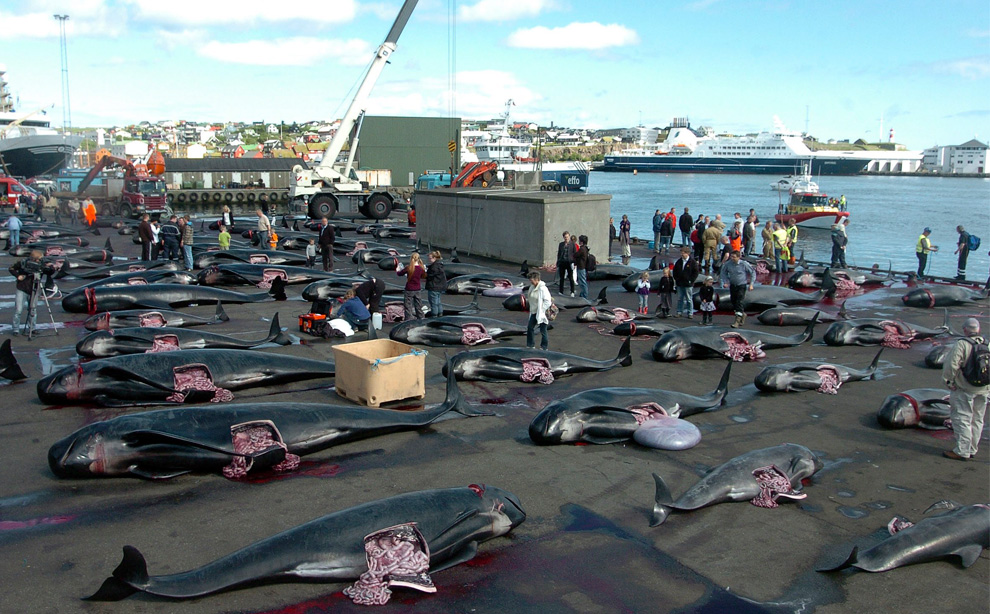
Dozens of boats herded a group of pilot whales into a bay for slaughter in the Faroe Islands on Tuesday as local residents took part in a traditional 'Grindadrap' whale hunt.


Inhabitants of the Faroe Islands round up pilot whales (Globicephala melaena) during the traditional 'Grindadrap' ('whale hunting' in Faroese) near the capital Torshavn on November 22.
Andrija Ilic / Reuters

The meat and blubber of pilot whales have long been a part of the islanders' national diet, according to Reuters, which reports that the whaling is not done for commercial purposes.
Nevertheless, the Whale and Dolphin Conservation Society, a pressure group, says that the techniques used to kill the whales are "intensely stressful and cruel."
In a statement posted on a government-run website, the Faroe Islands' Ministry of Foreign Affairs said that they were committed to "internationally adopted principles for the conservation and sustainable use of living marine resources."


Viking tradition: the blood of slaughtered pilot whales turns the sea red near Torshavn
on November 22.

There were 5 whale drives between January and September this year, with a total catch of 406 pilot whales, according to the Faroese government statement.

More than 120 pilot whales, slaughtered on July 23, 2010, are pictured on docks in the harbor of Torshavn, Faroe Islands, an autonomous province of Denmark.
Every year, herds of pilot whales (Globicephala melaena) pass by the shores of the Faroe Islands.
In the past fishermen used spears and harpoons, but today the whale hunting equipment is legally restricted to special knives, ropes, and assessing-poles for measurement.
(REUTERS/Andrija Ilic)

The American Cetacean Society says that pilot whales are not considered to be endangered, but that there has been a noticeable decrease in their numbers around the Faroe Islands.

Thursday, November 24, 2011

'Brinicle' ice finger of death filmed in Antarctic


In this clip, Sir David Attenborough describes the first ever footage of the unusual formation.
HD pictures : I / II

From BBC

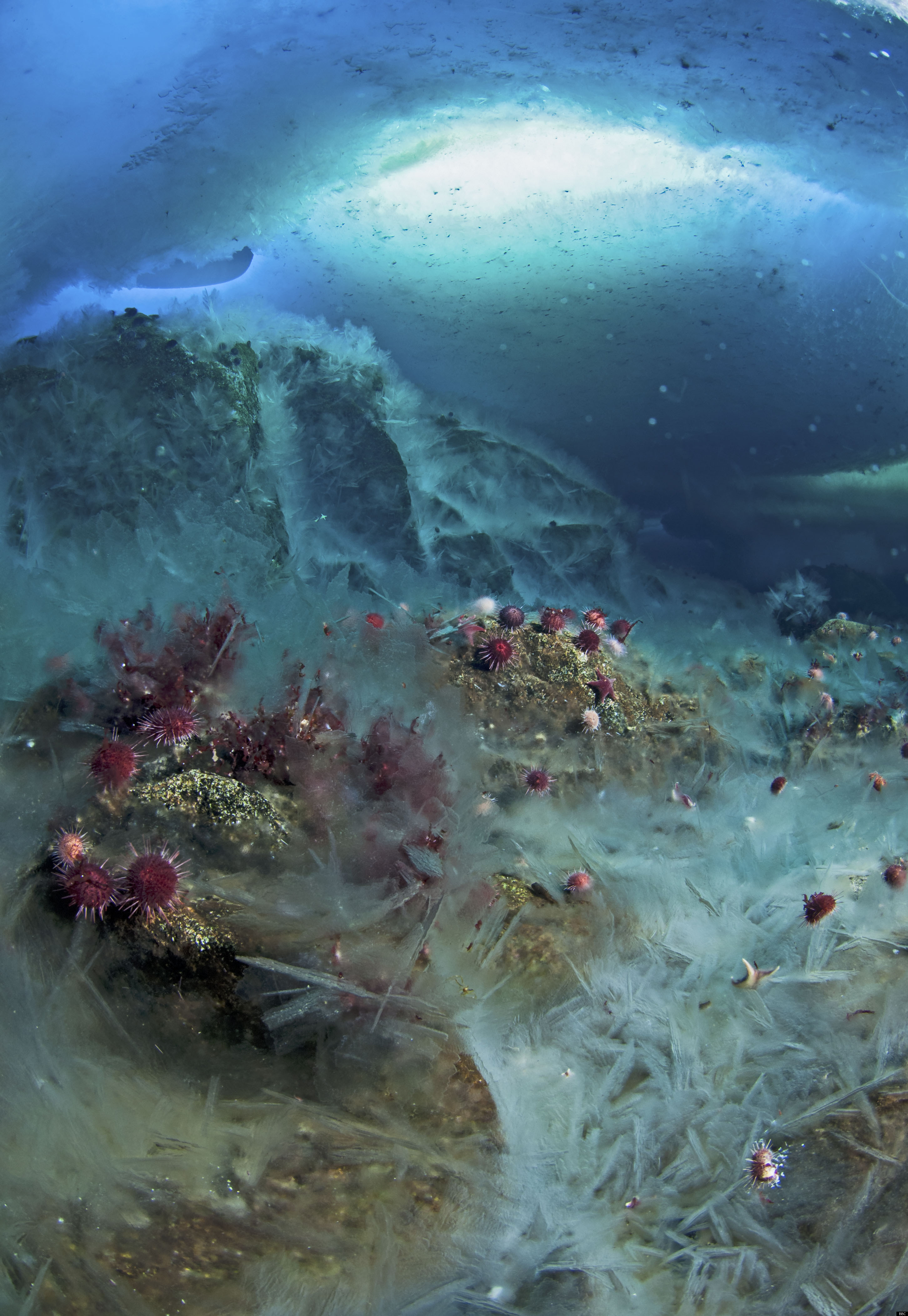
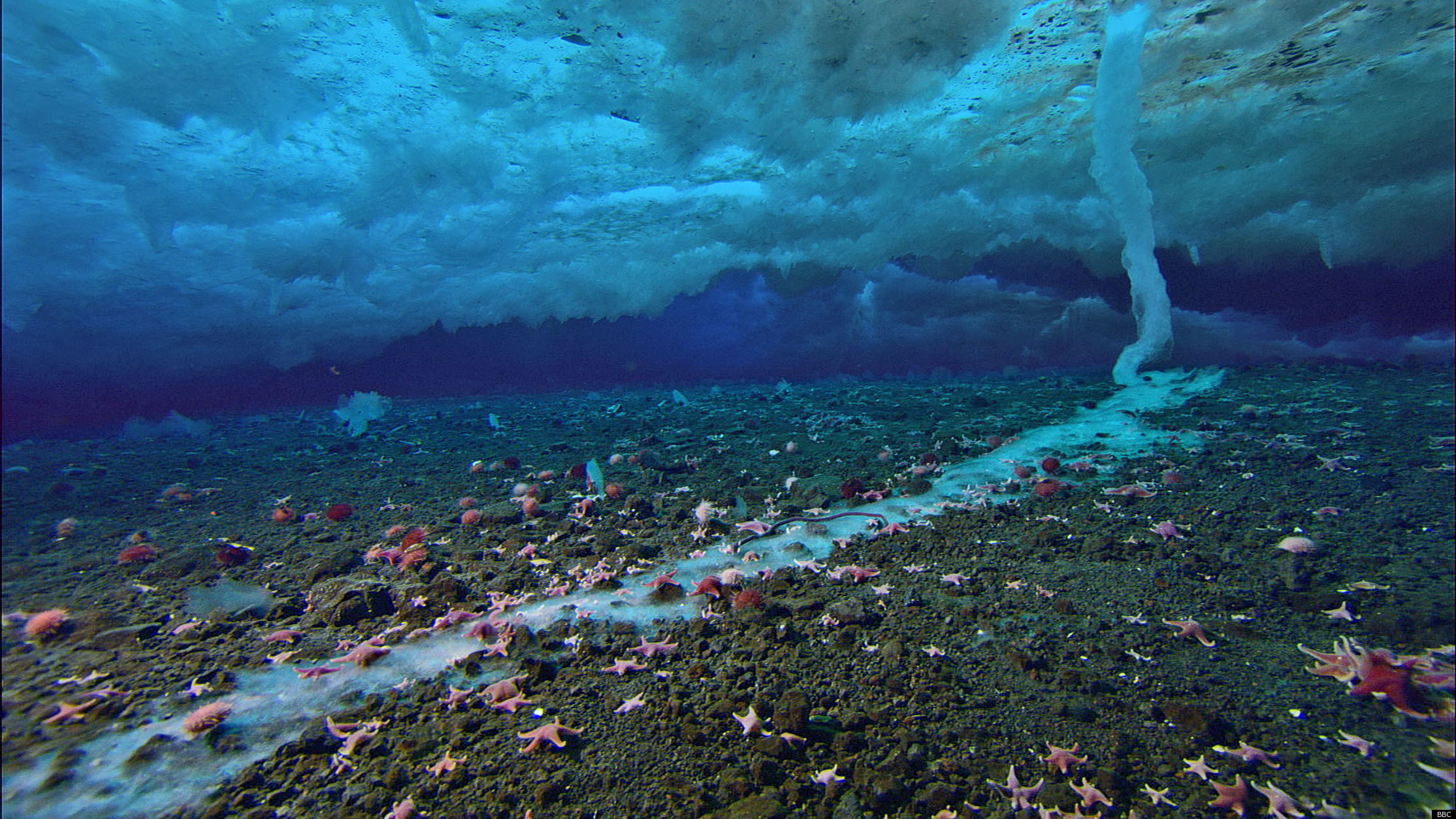
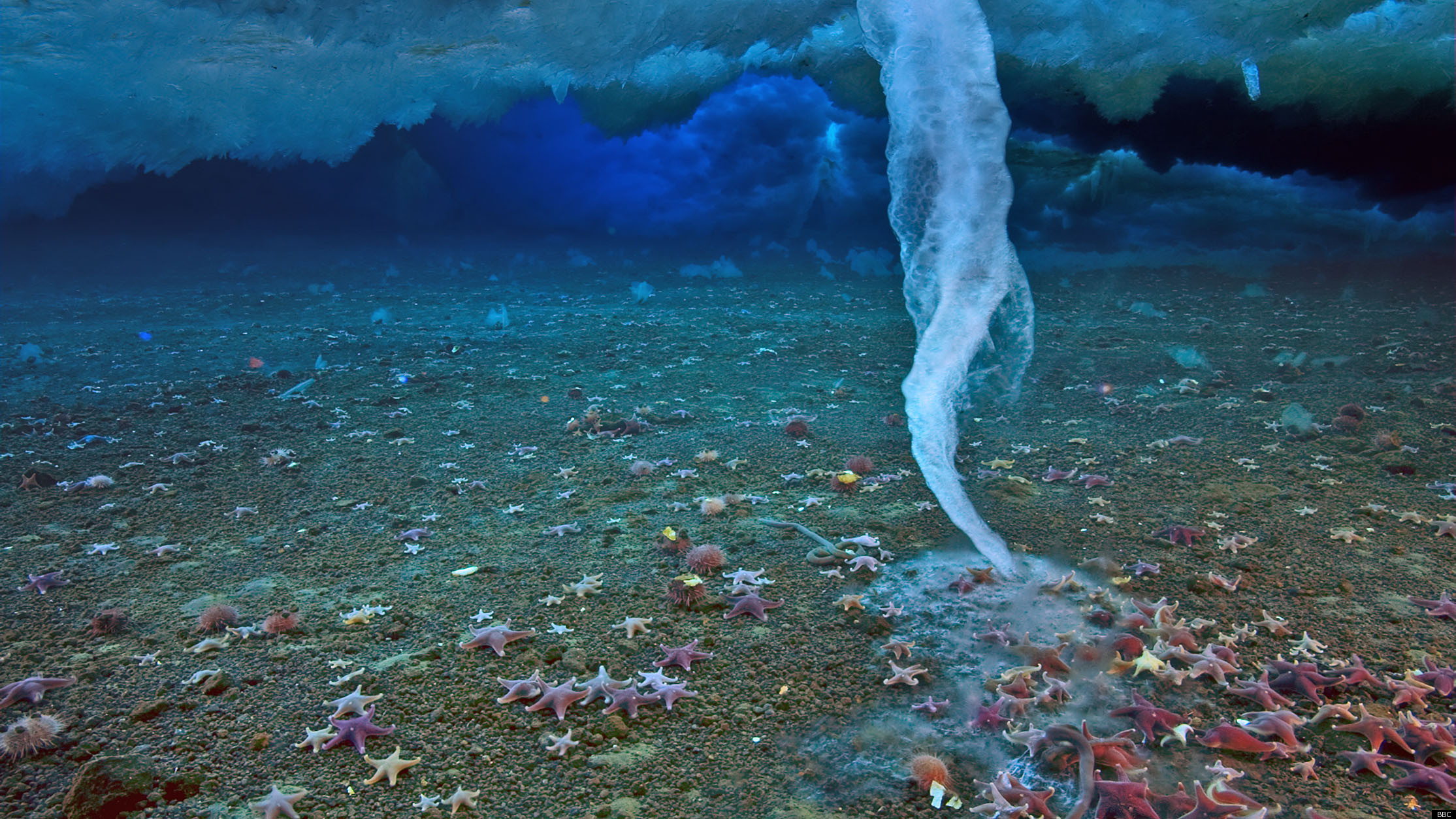
A bizarre underwater "icicle of death" has been filmed by a BBC crew.

With timelapse cameras, specialists recorded salt water being excluded from the sea ice and sinking.
The temperature of this sinking brine, which was well below 0°C, caused the water to freeze in an icy sheath around it.
Where the so-called "brinicle" met the sea bed, a web of ice formed that froze everything it touched, including sea urchins and starfish.

The unusual phenomenon was filmed for the first time by cameramen Hugh Miller and Doug Anderson for the BBC One series Frozen Planet.

Creeping ice

The icy phenomenon is caused by cold, sinking brine, which is more dense than the rest of the sea water.
It forms a brinicle as it contacts warmer water below the surface.

Mr Miller set up the rig of timelapse equipment to capture the growing brinicle under the ice at Little Razorback Island, near Antarctica's Ross Archipelago.
>>> geolocalization with the Marine GeoGarage <<<

"When we were exploring around that island we came across an area where there had been three or four [brinicles] previously and there was one actually happening," Mr Miller told BBC Nature.

The diving specialists noted the temperature and returned to the area as soon as the same conditions were repeated.
"It was a bit of a race against time because no-one really knew how fast they formed," said Mr Miller.
"The one we'd seen a week before was getting longer in front of our eyes... the whole thing only took five, six hours."


Against the odds

The location - beneath the ice off the foothills of the volcano Mount Erebus, in water as cold as -2°C - was not easy to access.

"That particular patch was difficult to get to. It was a long way from the hole and it was quite narrow at times between the sea bed and the ice," explained Mr Miller.
"I do remember it being a struggle... All the kit is very heavy because it has to sit on the sea bed and not move for long periods of time."

As well as the practicalities of setting up the equipment, the filmmakers had to contend with interference from the local wildlife.

The large weddell seals in the area had no problems barging past and breaking off brinicles as well as the filming equipment.
"The first time I did a timelapse at the spot a seal knocked it over," said Mr Miller.
But the team's efforts were eventually rewarded with the first ever footage of a brinicle forming.


HOW DOES A BRINICLE FORM?
Dr Mark Brandon Polar oceanographer, The Open University

Freezing sea water doesn't make ice like the stuff you grow in your freezer.
Instead of a solid dense lump, it is more like a seawater-soaked sponge with a tiny network of brine channels within it.

In winter, the air temperature above the sea ice can be below -20°C, whereas the sea water is only about -1.9°C.
Heat flows from the warmer sea up to the very cold air, forming new ice from the bottom.
The salt in this newly formed ice is concentrated and pushed into the brine channels.
And because it is very cold and salty, it is denser than the water beneath.

The result is the brine sinks in a descending plume.
But as this extremely cold brine leaves the sea ice, it freezes the relatively fresh seawater it comes in contact with.
This forms a fragile tube of ice around the descending plume, which grows into what has been called a brinicle.

Brinicles are found in both the Arctic and the Antarctic, but it has to be relatively calm for them to grow as long as the ones the Frozen Planet team observed.

Wednesday, November 23, 2011

GeoGarage : 7800 nautical charts onboard


With Germany, the 10th layer displayed in the Marine GeoGarage,
a total of 4168 charts (7797 including sub-charts)
are now integrated in our Cloud computing solution.


More to come...

Jeju island grannies of the sea

This is the cover photo that introduced me to the book
“Moon Tides: Jeju Island Grannies of the Sea.”
Written by Brenda Paik Sunoo with Young Sook Han, the book is divided into seven chapters: Survival, Shamans, Suffering, Aging, Compassion, Family, and Future.
see JejuWeekly

From JejuWeekly

The Jeju Special Self-Governing Provincial Council’s Special Committee on Women has gathered the first public opinion regarding the Jeju haenyeo [diver] culture.
In particular, I spoke on “What is the Jeju women’s culture, and what content would make it a leading world brand.”
Bearing that in mind, on Sept. 23 a policy debate was held regarding the divers cultural globalization plan and ways to obtain listing as a UNESCO Intangible Cultural Heritage of Humanity.

>>> geolocalization with the Marine GeoGarage <<<

Due to the unique “muljil” [substantive customs] of labor and the ecological way of life of the Jeju women divers, and a ‘strong woman’ as a cultural anthropological figure, these women have already received considerable attention in the cultural anthropology field.
Of particular note are their collaborative work while retaining an autonomous mentoring system to train juniors, their equitable distribution of ecological methods and collaborative resource management.
Of equal note is their active “bulteok” communication among divers, and positive traditions and rites of community, all of which serve to identify them as eco-cultural treasures of modern humankind.
This has brought additional reviews and new attention to the diving women as an example of feminist governance.

In reality however, the number of Jeju divers has been shrinking.
From a registered 14,143 in 1970, the population has been reduced to approximately one-third with only 5,095 members registered in 2009, and was reduced by another 100 people one year later, to just 4,995 people in 2010.

Clearly, the community is declining.
There are only two members in their 30s.
Of note, female children now receive a higher education and rural employment is no longer favored, so the subsequent generations are not becoming divers and at stake is the sustainability of this society.
To increase this diminishing number of divers is important but even more is the enhancement of their self-esteem, and there is an urgent need to raise awareness of Jeju society and change the approach of policy.

About four years ago, Jeju women divers on Udo were represented on video by Sumbi Pictures, representative Ko Hee-Young, but it was a pity for the Jeju women divers, inadvertently or not, that it had a small showing and only interactively.

If you try to approach divers from Udo and are not their brother or sister, it is difficult to get into the intimate confessions of their lives.
An Israeli documentary director, Dahlia, came and learned Korean language, Jeju dialect, and local gestures, and began filming.
When leaving Jeju after six months of grueling labor she was sad, as she divided her gosari tablets among the divers, to note that they were more diseased.
The documentary was taken to Europe to introduce the Jeju women divers’ lifestyle.
In the end, the basics of good work is a deep affection for the destination.


Jeju must notify the world that we’re losing something very significant.
No matter how nicely we are setting up agendas and advertising slogans, even if they work in unison like a scene out of a movie... it’s hard not to have a dream.
Rather than a mere task, we must aim to go beyond with creativity and passion.


Rare breed: A Haenyo diver at Seongsan Beach. Picture: David May

Jeju women divers cultural globalization, a five-year plan, has yielded a successful local festival which Jeju women divers promoted.
In particular, the chance for Japan’s Ama women divers and the divers of Jeju to mingle, dance, and know each other’s cultures was very meaningful.
A program was also launched to encourage foreigners to systematically promote Jeju women divers, giving them an opportunity to learn the culture well in order to promote it.

To go beyond this, we must not miss the chance to have the divers listed as a UNESCO Intangible Cultural Heritage of Humanity, as a symbol of the truly great minds of mothers contained in the sonorous “sumbisori” [sound made by divers] and to identify to the world what is happening to them.

In this whirlwind of modernization, we must arrange interviews of the 4,995 remaining divers and, in a reverent spirit, learn of the lives of these elderly women and those divers already departed.
It is critical that we advertise this to the world.
This work with them must begin as early as possible before these experts leave our world, an important task which must be done responsibly.

Links :
  • OpenDemocracy : South Korea, destroying the lives of the Haenyo ‘sea women’
  • News.com.au : Korean island is a new natural won
  • TheKoreaHerald : Beyond tangerines and beaches: Jeju’s unique culture
  • KoreaBrand : Haenyeo of Jeju, resilient strenght and life
  • Kuriositas : Haenyo – The indomitable diving grandmas of Jeju Island