This year’s race will feature 23 Double Handed entries, showcasing the growing popularity of this demanding discipline, alongside four 100-foot maxis who will be fighting for the Line Honours victory.
Local spectators can look forward to a thrilling display of competitive sailing as the fleet navigates to the Heads and sets a course for Tasmania, tackling one of the world’s most challenging offshore races.
Launched in 1945, the Rolex Sydney Hobart Yacht Race has built an towering global reputation to become one of the most famous fixtures on the international sporting calendar.
The 2024 marks the 79th edition of the 628-nautical mile (1,163 kilometre) offshore race from Sydney Harbour to Hobart, the state capital of Tasmania.
Starting on its traditional slot on 26 December, an impressive fleet of over 100 yachts are expected to participate.
Rolex has partnered the event and its organizer, the Cruising Yacht Club of Australia (CYCA), since 2002, the race forming an integral part of the Swiss watchmaker’s long-standing support for yachting. Stay tuned for more exciting updates for this great race!
It’s no secret: when we savour a delicious piece of fish or a platter of seafood, we’re not just consuming valuable omega-3s and vitamin D. Alongside these benefits come less appetising elements — countless micro- and nano-plastics.
A sampling of the freshwater invertebrates C. fluminea in the Loire river.
Amélie Châtel
These plastic particles, measuring less than 5 millimetres, enter our oceans through human waste and penetrate the food chain.
According to an Ifremer study, around 24,400 billion microplastics are floating on the ocean’s surface. These particles are found in all marine organisms — from microalgae to fish, which occupy higher levels of the food chain.
This phenomenon not only threatens marine ecosystems but also raises concerns about potential risks to human health.
What exactly do we know about the accumulation of these pollutants in marine life and the dangers they pose to human health?
Marine organisms bioaccumulate micro- and nano-plastics that humans discharge into the sea.
Since the 1950s, plastic production has grown exponentially, reaching 58 million tonnes in Europe in 2022 alone.
This has led to massive amounts of waste.
Over time, wind, waves, sunlight and microorganisms break down larger plastic waste into microplastics (1–5 mm) and nanoplastics (smaller than 100 nanometers), which now contaminate all parts of the environment, including the air, soil and water.
The process by which these plastics accumulate in organisms across different levels of the food chain is known as “bioaccumulation”.
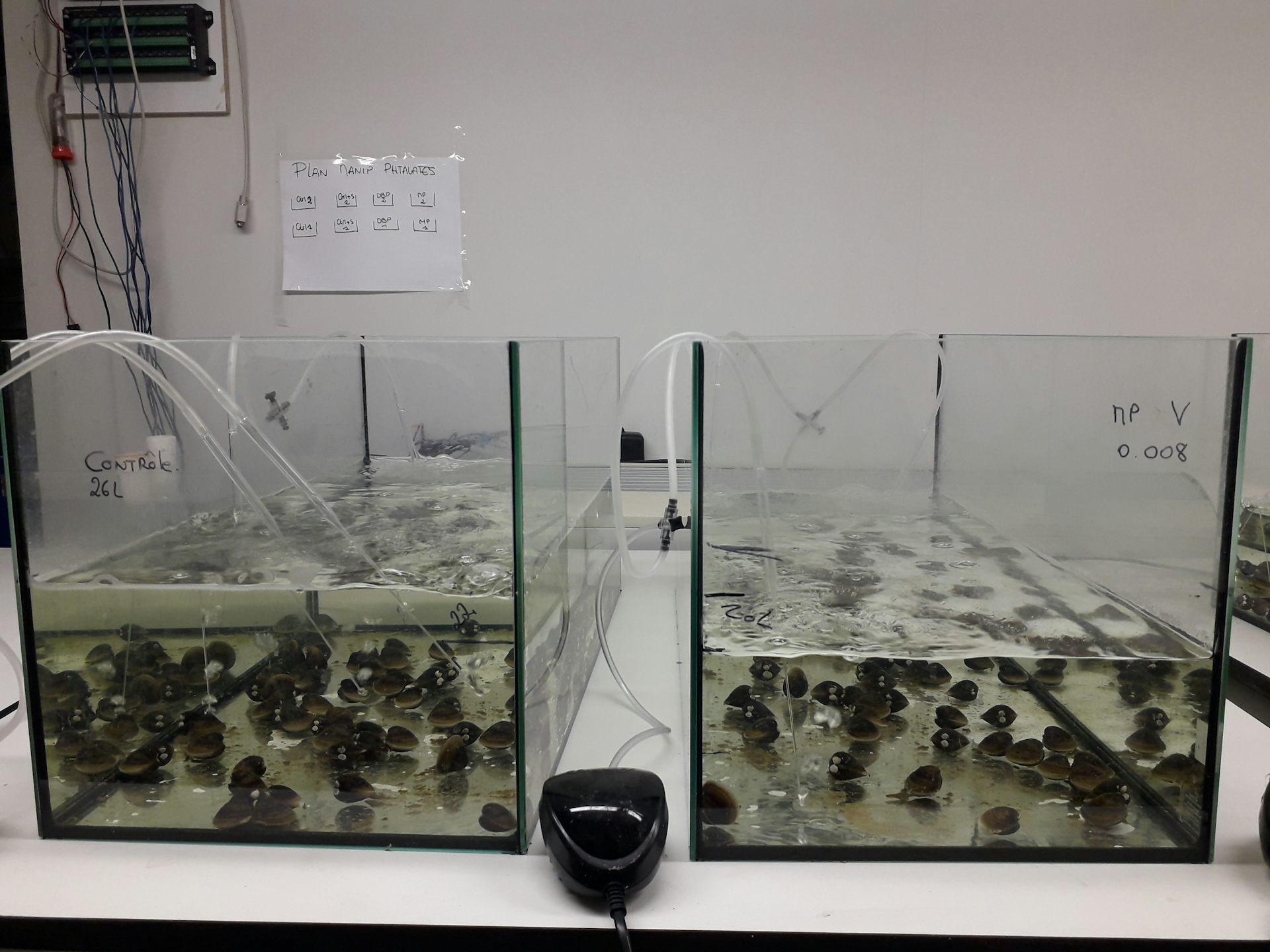
A design experiment from May 2022 » : laboratory exposures of C. fluminea bivalves to microplastics. Alice Vidal
Research from our laboratory reveals that in aquatic environments, micro- and nano-plastics are ingested by a wide range of species — from microalgae at the base of the food chain to top predators like eels.
The impact on marine life
These ingestions have serious consequences. Studies show that microplastics can cause toxic effects in marine animals.
For instance, in mussels, microplastics can block digestive systems, activate immune responses, cause DNA damage and interfere with the expression of genes essential to various cellular functions.
The severity of these effects depends on the plastics’ size, composition, degree of degradation and any harmful chemical additives they may contain.
Plastics often contain high levels of phthalates, which are endocrine disruptors.
These chemicals can interfere with hormonal systems, posing risks not just to marine life but potentially to humans as well.
Risks to human health
Plastics ingested by marine animals inevitably make their way into our food supply.
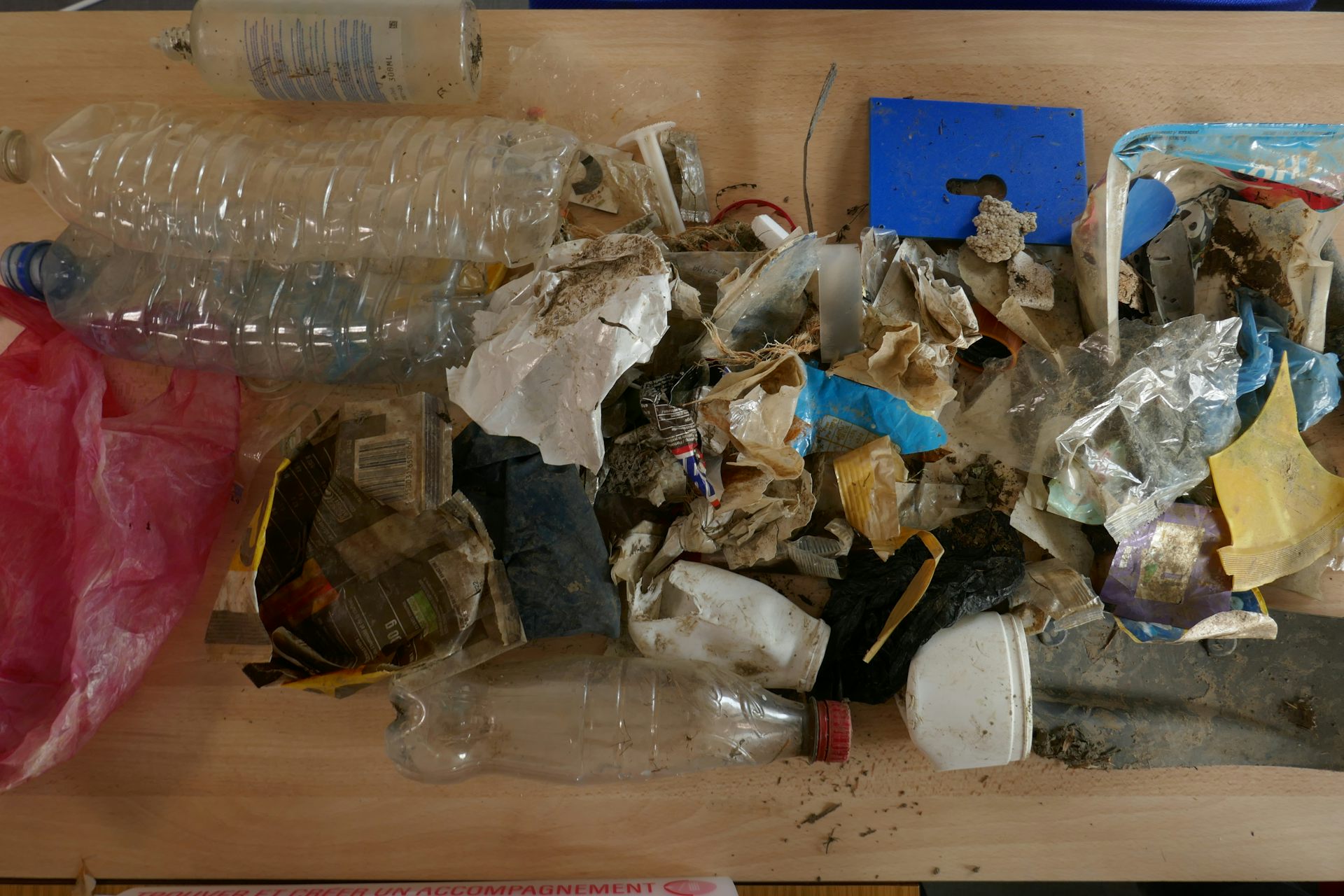
Plastic macro-waste collected at Montjean sur Loire. Amélie Châtel, Fourni par l'auteur
Frequent seafood consumers are estimated to ingest thousands of microplastic particles annually. Although research on the precise health effects on humans is ongoing, some troubling hypotheses have emerged.
Once inside the human body, these particles may cause damage similar to that observed in fish.
Studies on human cells indicate that micro- and nano-plastics can disrupt cellular functions in ways akin to the effects seen in marine organisms.
Scientists are particularly concerned about the toxic impacts of plastic additives.
Additionally, micro- and nano-plastics can act as carriers for pathogens or bacteria, potentially increasing the risk of infectious diseases.
The urgency to tackle plastic bioaccumulation in the food chain cannot be overstated.
By taking swift action to limit plastic usage and improve recycling technologies, we can slow the progression of this environmental and health crisis.
Release of major upgrade
to a new model tracking magnetic north prompts global reset of satellite
tracking systems across trade and passenger transport routes.
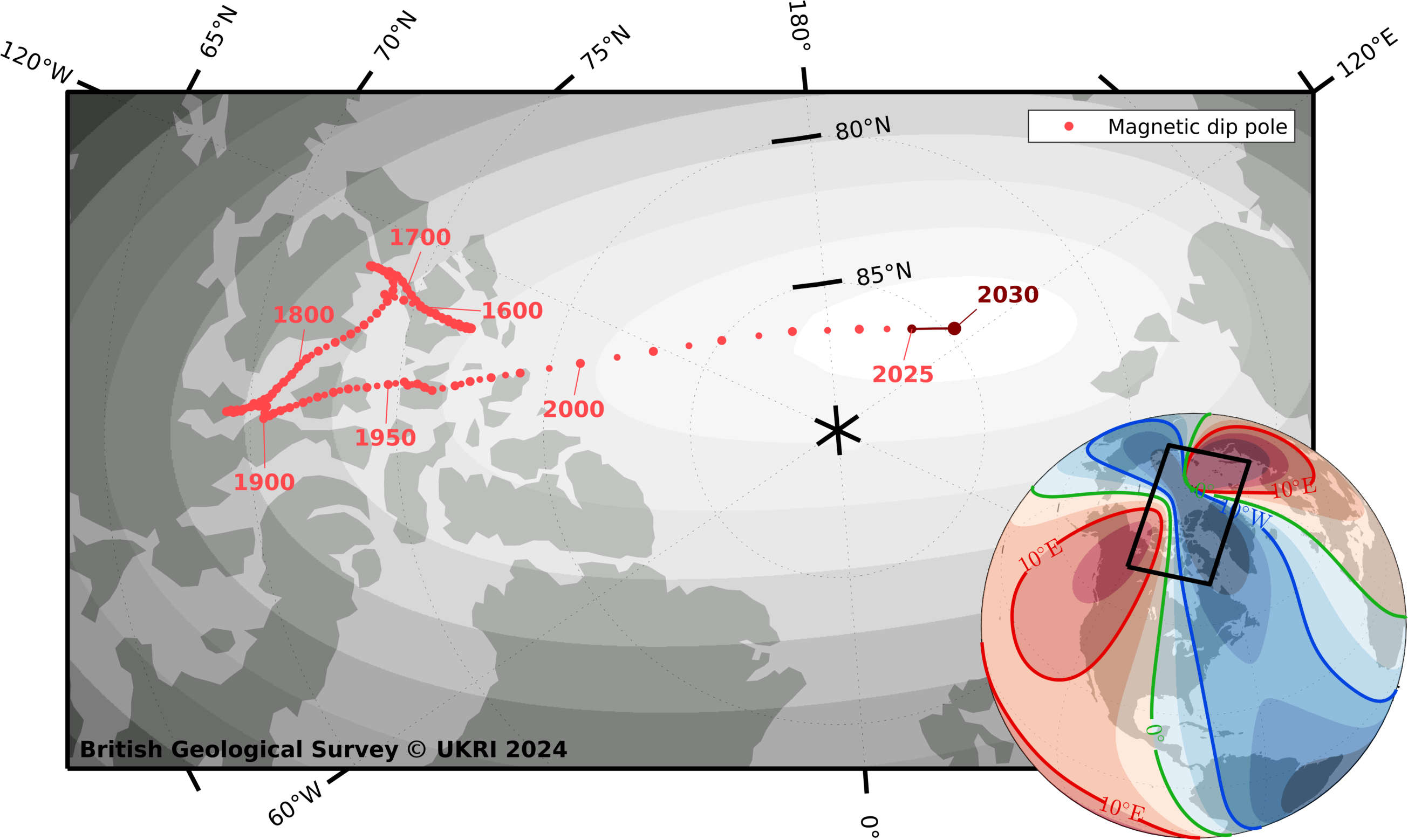
Hundreds of thousands of mariners, airline operators and North Pole-based gift distribution specialists will be rushing to update their navigation systems after the launch of a new model tracking magnetic north, which is crucial to the accuracy of global positioning systems (GPS) that are relied upon across the world.
In partnership with the UK Defence Geographic Centre and the US National Geospatial-Intelligence Agency (NGA), BGS and the US National Oceanic and Atmospheric Administration (NOAA) have teamed up to update the World Magnetic Model (WMM).
The WMM is the standard model used by the United Kingdom and the United States governments, including the U.S. Federal Aviation Administration and the U.S. Department of Defense, as well as organizations with an international remit such as the North Atlantic Treaty Organization (NATO), the International Hydrographic Organization and the UK Hydrographic Office.
The model comprises a series of magnetic field maps that track changes in the magnetic field, such as the spot at which compass needles point in the northern hemisphere.
To ensure pinpoint accuracy, it is crucial that the shifts in magnetic north, which are caused by flow of the liquid iron in the outer core of the Earth, are taken into account in the electronic equipment that is trusted to guide global trade and enable the safe transit of travellers across the planet.
From GPS-enabled mobile phones to nuclear submarines, this improved resolution update will allow navigation with more accuracy than ever before to take place in the run up to Christmas — vital for all those who do not have a red nose to follow.
The WMM is officially released today, ensuring users can have the most up-to-date information so they can continue to navigate accurately for the next five years. The current behaviour of magnetic north is something that we have never observed before. Magnetic north has been moving slowly around Canada since the 1500s but, in the past 20 years, it accelerated towards Siberia, increasing in speed every year until about five years ago, when it suddenly decelerated from 50 to 35 km per year, which is the biggest deceleration in speed we’ve ever seen. Dr William Brown, global geomagnetic field modeller at BGS.
While each model predicts how magnetic north will shift over the five-year period to limit any error, the change will have an impact on travellers.
Imagine someone was planning to travel by sleigh from a chimney top in South Africa to a snow covered-roof in the UK, a journey of around 8500 km. Using the previous WMM and setting off just one degree off-course, he would end up approximately 150 km away from where he should[1].
For the first time ever, scientists have
had help from sea lions in mapping the ocean floor. And the marine
mammals have done their job well, capturing six different marine
habitats, including algal meadows and reefs, that make up South
Australia’s seabed, researchers report in a recently published study.
For much of the planet’s ocean, what the seafloor looks like is still a mystery.
Conventional surveys using specialized underwater equipment and vessels
require large crews as well as good weather, which makes mapping wide
areas challenging and expensive, Nathan Angelakis, lead author of the
study and a doctoral student at the University of Adelaide, Australia,
told Mongabay in an email.
As an alternative, the researchers fit small, lightweight video
cameras and movement trackers on eight adult female Australian sea lions
(Neophoca cinerea).
The team had two goals: to understand the
habitats and food that are critical for the endangered species, and to
map the little-known seafloor off southern Australia’s coast.
Sea lion swimming through invertebrate
reef, sponge garden, macroalgae reef, bare sand, and invertebrate
boulder habitats. Video: Angelakis et al. 2024.
The sea lion videographers ended up capturing more than 89 hours of
data and footage, recording around 560 kilometers (350 miles) of the
continental shelf, at depths of 5-110 meters (16-360 feet).
On reviewing
this data, the scientists saw that the sea lions eat a wide variety of
fish, small sharks, stingrays and octopuses, either by flipping rocks
over, digging up sand, or ambushing schools of fish. “We were also lucky
enough to capture footage of a mother taking her pup on a trip to sea,
providing the first direct evidence we have that Australian sea lion
mothers pass on their foraging skills to pups,” Angelakis said.
The team also identified six kinds of seabed habitats from the
videos. They combined this habitat data at different locations, with
long-term oceanographic and environmental data for those locations, to
then predict habitats for areas that the sea lions didn’t visit. “This
allowed us to map and predict habitats on the seabed for more than 5,000
square km [1,930 square miles] of previously unexplored seabed across
the continental shelf in southern Australia,” Angelakis said.
Katie Dunkley, a marine researcher at the University of Cambridge, U.K., who wasn’t involved in the study, told The Washington Post
that while the number of sea lions used in the study was small, the
study was a “proof of concept” showing that sea lions can help us map
the ocean floor.
Angelakis added that such baseline knowledge of seabed habitats and
the conditions that influence their distribution is crucial “for
understanding how they may be impacted by human activity.”
Furthermore,
the study improves our understanding of the marine habitats that are
crucial for the rapidly declining Australian sea lions, he said.
“This information is fundamental for better conserving and managing their populations in the future,” Angelakis added.



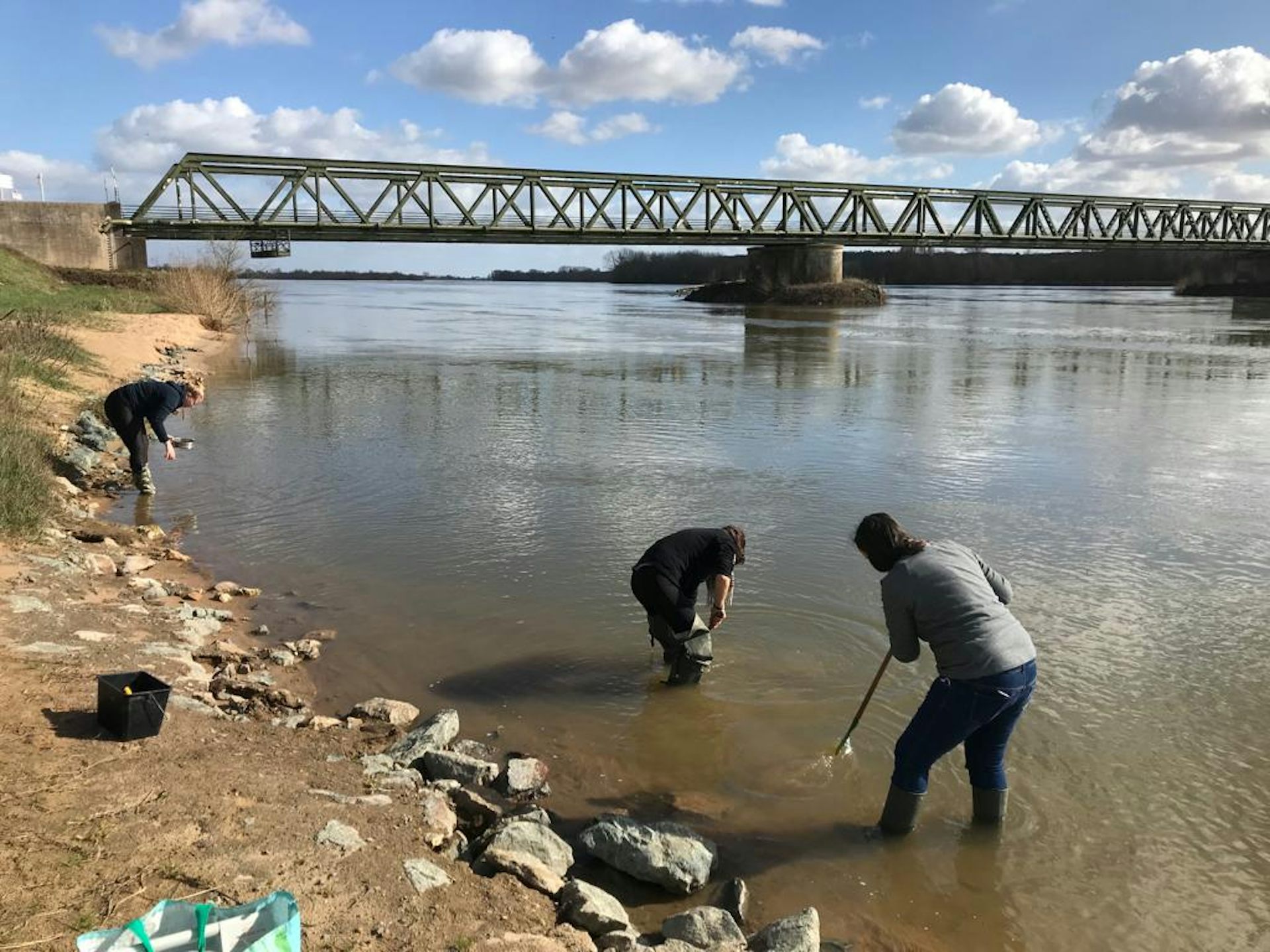 A sampling of the freshwater invertebrates C. fluminea in the Loire river.
 Magnetic declination (the angle between magnetic and geographic north) in 2025 according to

 Australian sea lion by John Turnbull via