Wednesday, April 5, 2023

Deepest ever fish caught on camera off Japan


At a depth of more than eight kilometres underwater, a new record for the deepest fish ever filmed and the deepest fish ever caught has been set by scientists from The University of Western Australia and Japan. 

From BBC by Jonathan Amos
 
Scientists have filmed a fish swimming at an extraordinary depth in the ocean, making it the deepest observation of this nature that has ever been made.

The species - a type of snailfish of the genus Pseudoliparis - was filmed swimming at 8,336m (27,349ft).
 

It was filmed by an autonomous "lander" dropped into the Izu-Ogasawara Trench, south of Japan.
 
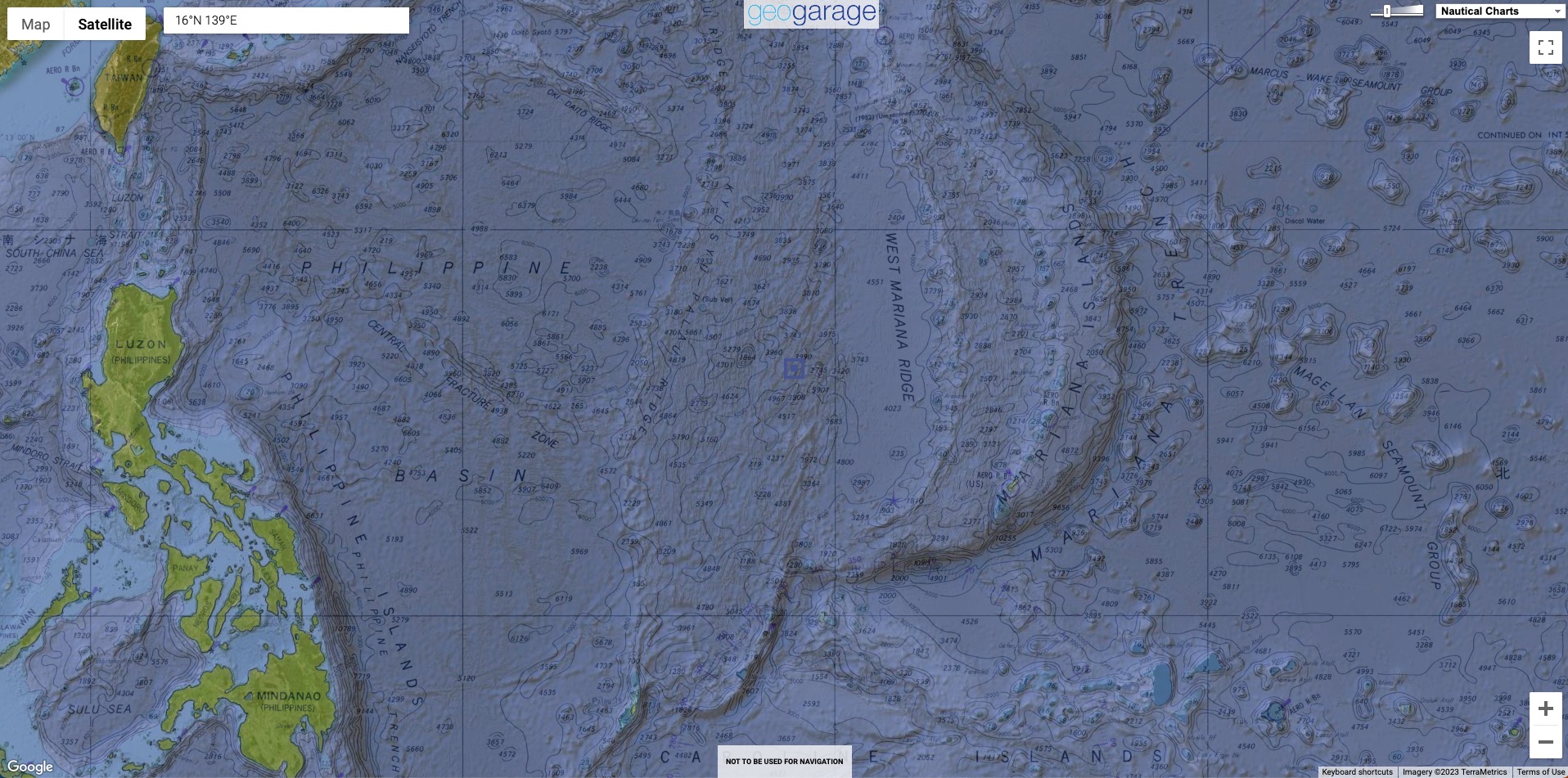
Localization -Izu-Ogasawara Trench- with the GeoGarage platform (NGA nautical raster chart)
 
The lead scientist said the snailfish could be at, or very close to, the maximum depth any fish can survive.

The previous deepest fish observation was made at 8,178m, further south in the Pacific in the Mariana Trench. 
This discovery therefore beats the depth record by 158m.
"If this record is broken, it would only be by minute increments, potentially by just a few metres," Prof Alan Jamieson told BBC News.
 
The University of Western Australia deep-sea scientist made a prediction 10 years ago that fish would likely be found as deep as 8,200m to 8,400m.
A decade of investigations around the globe has confirmed this.
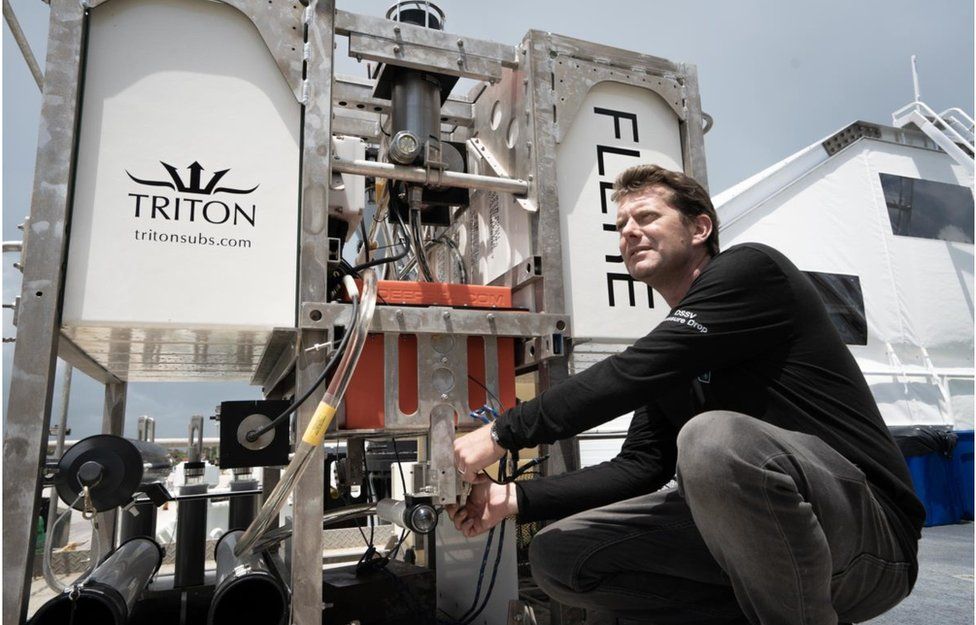
Image Source, Fivedeeps.Com
Prof Jamieson has pioneered the use of instrumented deep-ocean landers

The juvenile Pseudoliparis was filmed by a camera system attached to a weighted frame released from over the side of a ship, the DSSV Pressure Drop.
Bait was added to the frame to attract sea life.

Although a specimen was not caught to fully identify its species type, several fish were trapped slightly higher up in the water column in the nearby Japan Trench at a depth of 8,022m.
These, again, were snailfish, Pseudoliparis belyaevi, and set a record for the deepest fish ever caught.
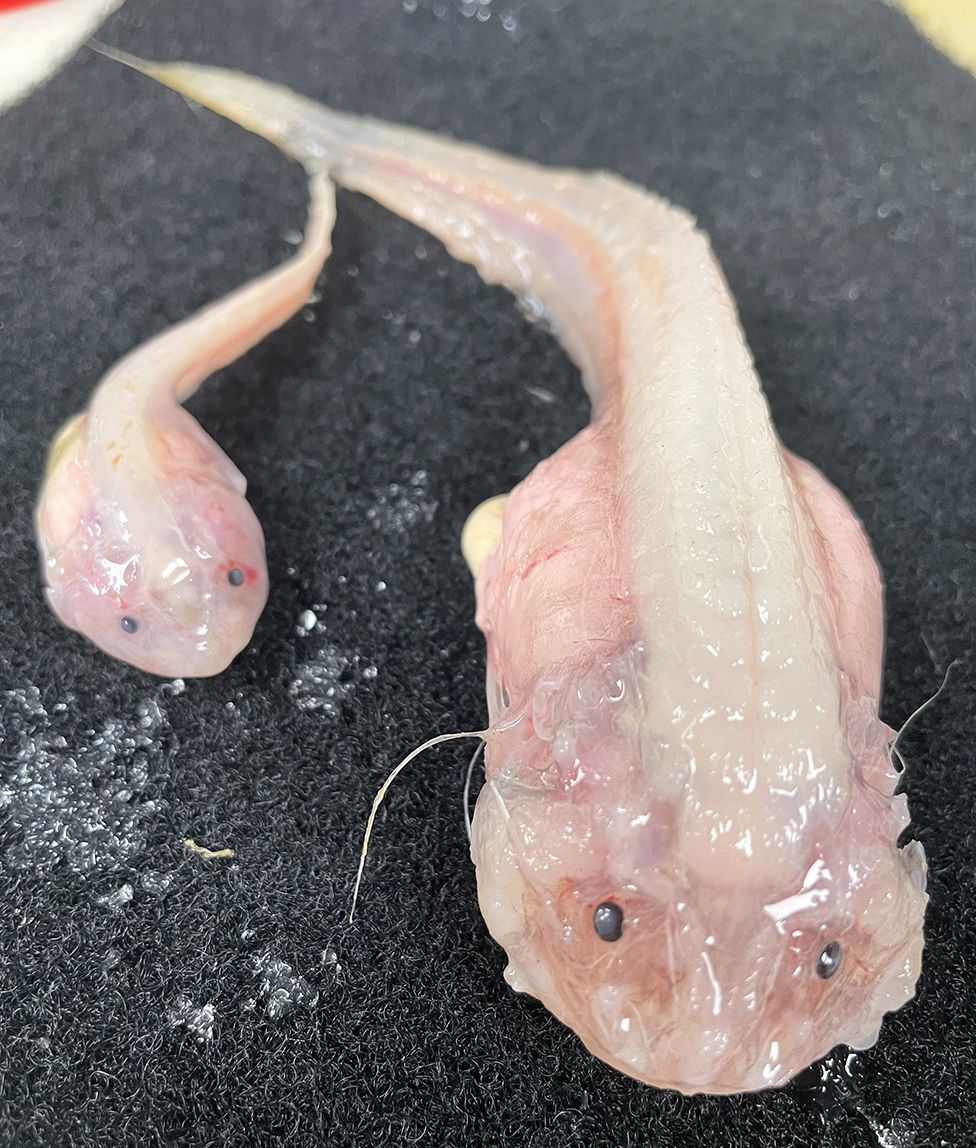
 
Image Source, Minderoo-Uwa Deep Sea Research Centre
Deepest ever catch: Some snailfish were pulled up from 8,022m

Snailfish are truly remarkable.
There are over 300 species, most of which are actually shallow-water creatures and can be found in river estuaries.
But the snailfish group have also adapted to life in the cold waters of the Arctic and Antarctic, and also under the extreme pressure conditions that exist in the world's deepest trenches.

At 8km down, they are experiencing more than 80 megapascals, or 800 times the pressure at the ocean surface.
Their gelatinous bodies help them survive.
Not having a swim bladder, the gas-filled organ to control buoyancy that is found in many other fish, is an additional advantage.
Likewise, their approach to food - they are suction feeders and consume tiny crustaceans, of which there are many in trenches.
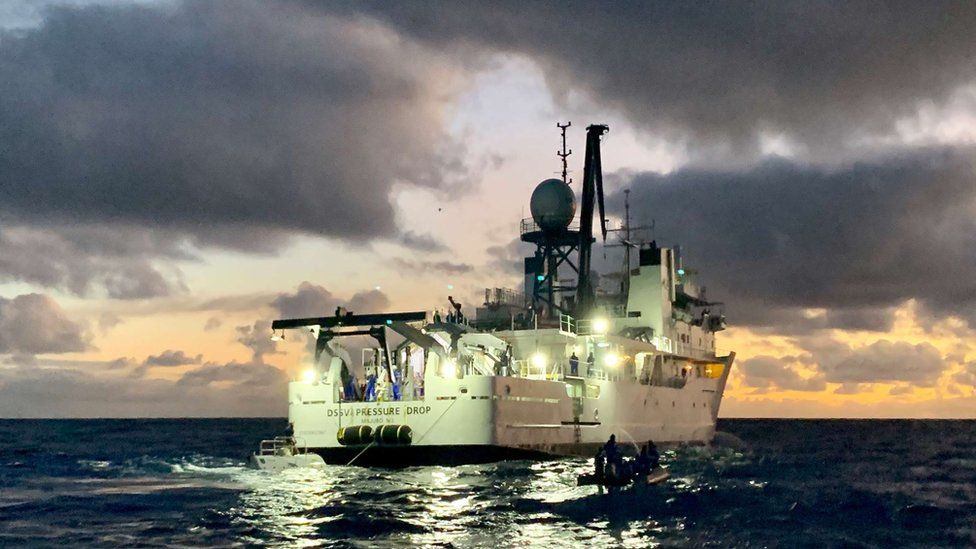
Image Source, Fivedeeps.Com
The DSSV Pressure Drop is now owned by Inkfish and has been renamed Dagon

Prof Jamieson says the discovery of a fish deeper than those found in the Mariana Trench is probably due to the Izu-Ogasawara's slightly warmer waters.
"We predicted the deepest fish would be there and we predicted it would be a snailfish," he said.
"I get frustrated when people tell me we know nothing about the deep sea. We do. Things are changing really fast."

Prof Jamieson is the founder of the Minderoo-UWA Deep Sea Research Centre.
On this expedition, which also explored the Ryukyu Trenche, he worked with a team from the Tokyo University of Marine Science and Technology.
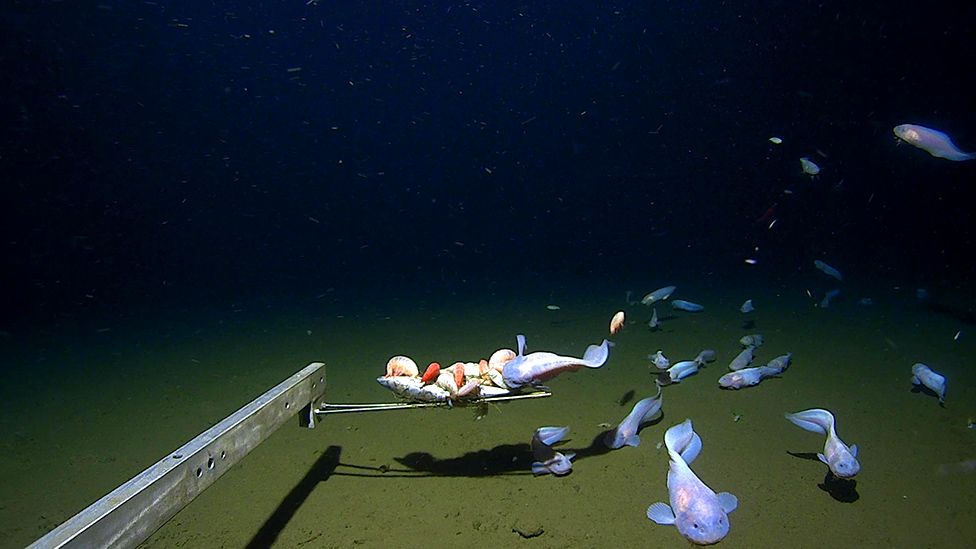
Image Source, Minderoo-Uwa Deep Sea Research Centre
Landers use bait to draw fish into the view of cameras

The DSSV Pressure Drop and its crew-capable submarine, Limiting Factor, were used by the American adventurer Victor Vescovo in 2018 and 2019 to visit the deepest parts of Earth's five major oceans.
The Texan became the first person in history to complete the quintet of dives, and Prof Jamieson acted as his chief scientist.

The ship and the submarine were sold last year to the marine research organisation Inkfish and sent for a refit in San Diego.
They have also been renamed - the ship is now Dagon and the submarine is Bakunawa - and will head back out to sea again in June with Prof Jamieson again acting as the chief scientist.

Prof Jamieson, who was born in Scotland, is credited with discovering not just the deepest fish in our oceans but also the deepest octopus, jellyfish and squid.

Tuesday, April 4, 2023

British Isles & misc. (UKHO) layer update in the GeoGarage platform

Godzilla gets a forever home on the ocean floor


Credit: Tokyo Cheapo

From EOS by Tim Hornyak (@robotopia)
 
The world’s largest oceanic core complex is named after the reptilian monster from Japanese science fiction.
Parts of the seabed feature were recently christened with the beast’s anatomy.

If you dive deep enough in the western Pacific Ocean, you may just come across Godzilla.
A group of ridges on the seabed resembling the king of monsters was named after the beast’s body parts and will be officially recognized as such in nautical charts, the Japan Coast Guard announced in February.
 
Localization with the GeoGarage platform (NGA nautical raster chart)

The feature known as the Godzilla Megamullion Province is located in the Parece Vela Basin of the Philippine Sea, around 600 kilometers (370 miles) southeast of Japan’s southernmost coral reef, Okinotorishima.
The ridges were first reported after a 2001 survey of the area by marine geologist Yasuhiko Ohara and colleagues from the Japan Coast Guard’s Hydrographic and Oceanographic Department, who undertook several research cruises in the area.
“The Godzilla Megamullion is the largest known oceanic core complex on the Earth, and more than 10 times larger in area than those developed on the Mid-Atlantic Ridge.”
Also known as oceanic core complexes, megamullions are a relatively recent discovery, and scientists are still probing how they work.
Megamullions are dome-shaped rises generally found along slowly spreading mid-ocean ridges.
Characterized by ridgelike structures, megamullions are thought to form during spreading episodes when faults expose deep magmatic or mantle rocks on the seafloor.

Roughly 155 kilometers (100 miles) long by 55 kilometers (30 miles) wide, the Godzilla Megamullion has ridges reaching heights of 2,500 meters (8,200 feet).
“The Godzilla Megamullion is the largest known oceanic core complex on the Earth, and more than 10 times larger in area than those developed on the Mid-Atlantic Ridge,” said Ohara, citing a 2014 study he coauthored that describes the feature’s characteristics.

It may take a bit of imagination, or creative squinting, but you might be able to make out the shape of Godzilla lying face down on the seafloor.

Hat Ridge and Head Peak are next to two deeper areas above the monster’s shoulders, which are situated near roughly parallel rises that form its arms, backbone, hipbones, legs, and tail.
“The individual 14 names were the result of a beautiful coincidence,” said Ohara.
 
 
The ridges of the Godzilla Megamullion are named after the monster’s body parts: (1) Hat Ridge, (2) Head Peak, (3) West Shoulder Ridge, (4) Neck Peak, (5) East Shoulder Ridge, (6) West Arm Rise, (7) Backbone Rise, (8) East Arm Rise, (9) West Hipbone Rise, (10) North Tail Rise, (11) East Hipbone Rise, (12) West Leg Ridge, (13) South Tail Rise, and (14) East Leg Ridge.
Credit: Toho Co.
Ltd./Japan Coast Guard


Shaded bathymetric map of the Godzilla Megamullion, showing the names of the prominent features (Ohara & Snow, 2009), and the locations of dredge sites and dives that recovered gabbroic rocks (Ohara et al., 2003; Harrigane et al., 2008, 2010, 2011).
The location of Dive 6K-1147 is shown by the white star.
The inactive spreading segments S1 and S2 (Ohara et al., 2001) are marked by red lines.
Map inset in upper left shows the major features of the western Pacific (after Ohara et al., 2001) with the location of Godzilla Megamullion marked by a red rectangle.
 
Localization with the
GeoGarage platform (STRM bathymetry)

An Ocean of Monikers

Japanese researchers chose the Godzilla moniker for both the feature’s enormous size and its relatively close proximity to the monster’s island of origin.
In the 1954 sci-fi classic produced by Toho Co., Godzilla emerged from the sea near the fictional Odo Island, which some fans situate in the region of Okinotorishima.

“As far as we know, it is the first time for such a feature [to be] named after a fictional monster.”

Toho’s “chief Godzilla officer,” Keiji Ota, said in a statement last year that it was an honor for the megamullion to be named after the monster, which has appeared in more than 30 films.
“As far as we know, it is the first time for such a feature [to be] named after a fictional monster,” said Ohara.

The Pacific is riddled with interesting nomenclature.
Japan has the Shichiyo Seamount Chain, named after the days of the week.
Off Hawaii’s coast one can find the Musicians Seamounts, honoring composers such as Beethoven, Mendelssohn, Tchaikovsky, and Gershwin.
Farther south, a collection of vents west of Easter Island has been given the names of cartoon characters such as Homer Simpson, Scooby, Tweety, and Road Runner.

Standardizing Names

With a 2022 approval by the Sub-Committee on Undersea Features Names (SCUFN), part of the General Bathymetric Chart of the Oceans (GEBCO) Gazetteer, the 20-year wait for the Godzilla Megamullion to get an official name ended; the recent decision was related to the giant reptile’s individual body parts.

GEBCO was established in 1975 to create a uniform policy on name standardization.
It falls to the SCUFN to recognize whether a proposed name is suitable.

“One can find names from mythology, flowers, painters, marine scientists, and famous historic people.
It’s not easy sometimes to avoid sensitive issues,” said the International Hydrographic Organization’s Yves Guillam, who serves as SCUFN secretary.
Despite Godzilla and Homer Simpson, he said, “in general, the SCUFN favors famous worldwide recognized high-level marine scientists, oceanographers, and hydrographers.…
SCUFN efforts are driven to remain realistic, pragmatic, efficient, based on the available short resources allocated to the international recognition of undersea feature names.”

Scientists hope the Godzilla Megamullion will yield insights into the dynamics of back-arc basins.

Links :
 

Monday, April 3, 2023

Why sea creatures are washing up dead around the world

A dead dolphin on the shores of Île de Ré, an island in southwestern France, on March 13.
Eight dolphins also washed ashore in New Jersey recently.
(Philippe Lopez/AFP/Getty Images)


From The Washington Post by Rachel Pannett

Dead fish in Florida.
Beached whales in New Jersey.
Sea urchins, starfish and crayfish washing ashore in New Zealand.
Millions of rottingfish clogging up a river in the Australian outback.
A mass fish die-off in Poland.
Around the world, freshwater and marine creatures are dying in large numbers, leaving experts to puzzle over the cause.

In some cases, scientists say climate change may be leading to morealgal blooms and other events that starve fish of oxygen.
Warming oceans and marine heat waves are driving sea creatures from their normal habitats.
Human activities including coastal shipping are suspected in a spate of recent marine mammal deaths in the United States.

Here’s a look at some of the events that led to the deaths of swaths of aquatic creatures around the globe in the past year.
 
A killer red tide in Florida

Dead fish on a red tide near Fort Myers Beach, Fla., in 2019.
The harmful algal blooms, which were present again this month, produce toxins that stain the water red and can kill fish and the seabirds that eat them, as well as sicken humans.
(Andrew West/The News-Press/AP)


Harmful algal blooms, called red tides, have sent scores of dead fish ashore in southeastern Florida in recent weeks.
A similar red-tide event killed off thousands of fish in the San Francisco Bay Area last summer.

So-named because in large numbers the algae stain the water red, these toxic blooms occur when winds blowing across the ocean surface push that water away and bring deeper, nutrient-rich waters to the surface.
This process, known as “upwelling,” creates the ideal conditions for algae to bloom.

The algae produce toxins that can kill fish and the seabirds that eat them, and sicken humans.
They also block sunlight from reaching underwater plants, depriving the fish of oxygen.

The Environmental Protection Agency predicts that climate change will alter the “timing and intensity” of coastal upwelling, potentially leading to more algal blooms along the West Coast.
Warmer waters caused by climate change could also spur other types of harmful algae, the EPA says.
Toxic blue-green algae prefer warmer temperatures.

Storms and extreme weather events, which global scientists predict will worsen in the future, can also lead to algal blooms by causing nutrients to run off from the land into the water.
Authorities suspect an algal bloom was responsible for dead sea animals, including sea urchins, starfish and crayfish, washing up on New Zealand’s east coast in February during a particularly stormy Southern Hemisphere summer.

It’s not just coastal environments that are at risk of harmful algal blooms, according to scientists.
Droughts, which may become more frequent because of climate change, can cause marine algae to invade freshwater systems, which has happened a number of times in freshwater lakes in the United States over the past couple of decades.

Algal blooms can be caused by humans, too.
A rare golden algae thought to have led to a mass fish die-off in the Oder River that runs along the border between Germany and Poland last summer may have been caused by industrial discharges into the river, according to German researchers.

Hundreds of little penguins wash up dead


A little blue penguin arrives at its nest in Caroline Bay in Timaru, New Zealand.
(Sanka Vidanagama/NurPhoto/AP)

When hundreds of little penguins washed up dead on New Zealand’s shores in June, local conservation officials said climate change was probably forcing the penguins to venture into deeper and colder waters to forage, making it harder for them to nest, breed and find food — and exposing them to deep-ocean predators.

On Australia’s southern island state of Tasmania, some sea creatures have nowhere to go to escape the rising heat because they can’t migrate farther south into the icy waters of the Southern Ocean, according to scientists.

Researchers found the population of common sea dragons (Phyllopteryx taeniolatus) had fallen by 57 percent over the past decade across the sites they were monitoring, Graham Edgar, a marine ecologist at the University of Tasmania, wrote in a recent article in the Conversation.
Sea stars and sea urchins have also experienced “precipitous population declines” over the same period, he said.

According to a study last year, about a third of all marine animals could vanish within 300 years — as oceans absorb the excess heat created by humans, cooking them alive in their own habitats.
Already by 2021, oceans contained more heat energy than at any point since record-keeping began six decades ago.

Whales and dolphins die after washing ashore


 A woman photographs a dead humpback whale that washed ashore in January in Lido Beach, N.Y.
(Seth Wenig/AP)
 
There has been a spate of whale and dolphin deaths in the Northeast this winter.
More than a dozen humpback whales and several critically endangered North Atlantic right whales were stranded on or near beaches from North Carolina to New York between December and early March, according to the National Oceanic and Atmospheric Administration.
Eight dolphins also washed ashore in New Jersey recently.

Officials in New Jersey said changes in ocean temperature and water chemistry — which they attribute to climate change — could be drawing the fish that whales feed upon closer to land, putting the whales at greater risk of colliding with shipping vessels.
Post-mortem examinations have indicated that ship strikes are the probable cause of many of the whale deaths.

Conservation activists are questioning whether preconstruction activity on a slew of offshore wind turbines could be to blame, although government scientists say there is no evidence linking offshore wind activities to the whale deaths.
The turbines are slated for construction inan area where an unusual number of humpback whales have died since 2016, and where scientists and federal officials are working to prevent the North Atlantic right whale, one of the world’s most endangered marine mammals, from going extinct.

Experts don’t always know why whales and other marine mammals wash up on land.
Hundreds of pilot whales washed up on the remote shores of New Zealand’s Chatham Islands in two separate “mass stranding” events last year that occurred just days apart.
About two weeks earlier, some 200 whales died on Tasmania.

Millions of dead fish clog up a river

Thousands of fish killed by floods and hot weather blanket the Darling-Baaka River in Australia this month.
(Samara Anderson/EPA-EFE/Shutterstock)
 
Officials said a lack of oxygen sparked by rising temperatures and recent floods caused millions of fish to die in a river in southeastern Australia this month, although some locals blamed the government for water mismanagement.

Videos from the scene showed a thick carpet of silver fish carcasses on top of the water, and residents complained of the stench of rotting fish carcasses.

Joy Becker, an aquatic animal health expert at the University of Sydney, described it as a “blackwater event” where flooding caused a lot of organic material to enter the river system.
That was followed by a period of “intense warm air temperatures” that led to a “very low oxygen event” in the river, she said.
Fish need more oxygen to survive warmer temperatures, according to officials.

“Why do we have so much flooding and why do we have such extreme air temperatures?” Becker said.
“What we’re seeing is a result of climate change.”

Links :

Sunday, April 2, 2023

Illegal bottom trawling in the Mediterranean: A threat to marine life and livelihoods in Tunisia

 
The Gulf of Gabès is an area of exceptional ecological, cultural and socio-economic importance. However, kiss trawling - a form of illegal bottom trawling - is devastating the marine ecosystems in the Gulf of Gabès and the livelihoods of local fishers who depend on them.
This film explains why it must be ended, swiftly and fairly.