Tuesday, March 7, 2023

A mysterious fleet is helping Russia ship oil around the world. And it’s growing


From CNN by Julia Horowitz


Russian oil is still finding its way to buyers around the world.
But even those who spend their days tracking its movement across oceans struggle to work out exactly who is ferrying it.

As Western sanctions against Russia have escalated over its invasion of Ukraine, more ships have joined an existing fleet of mysterious tankers, ready to facilitate Russia’s oil exports.

Industry insiders estimate the size of that “shadow” fleet at roughly 600 vessels, or about 10% of the global number of large tankers.
And numbers continue to climb.

Who owns and operates many of these ships remains a puzzle.
As trading Russian oil became more complex over the past year, many Western shippers withdrew their services.
New, obscure players swooped in, with shell companies in Dubai or Hong Kong involved in some cases.
Some bought boats from Europeans, while others tapped old, creaking ships that might have otherwise ended up in the scrapyard.

“You’ve gone deeper into the dark arts,” a senior executive at an oil trading firm told CNN, referring to this opaque network.

The under-the-radar fleet has increased in importance as Moscow tries to avoid working with Western shippers, and as customers in China and India supplant those in Europe, now banned from purchasing seaborne Russian oil and refined products such as diesel.
Delivery to more distant buyers requires additional boats — and ship owners willing to deal with added complexity and legal risk, especially after Group of Seven countries imposed price caps on Russian oil.
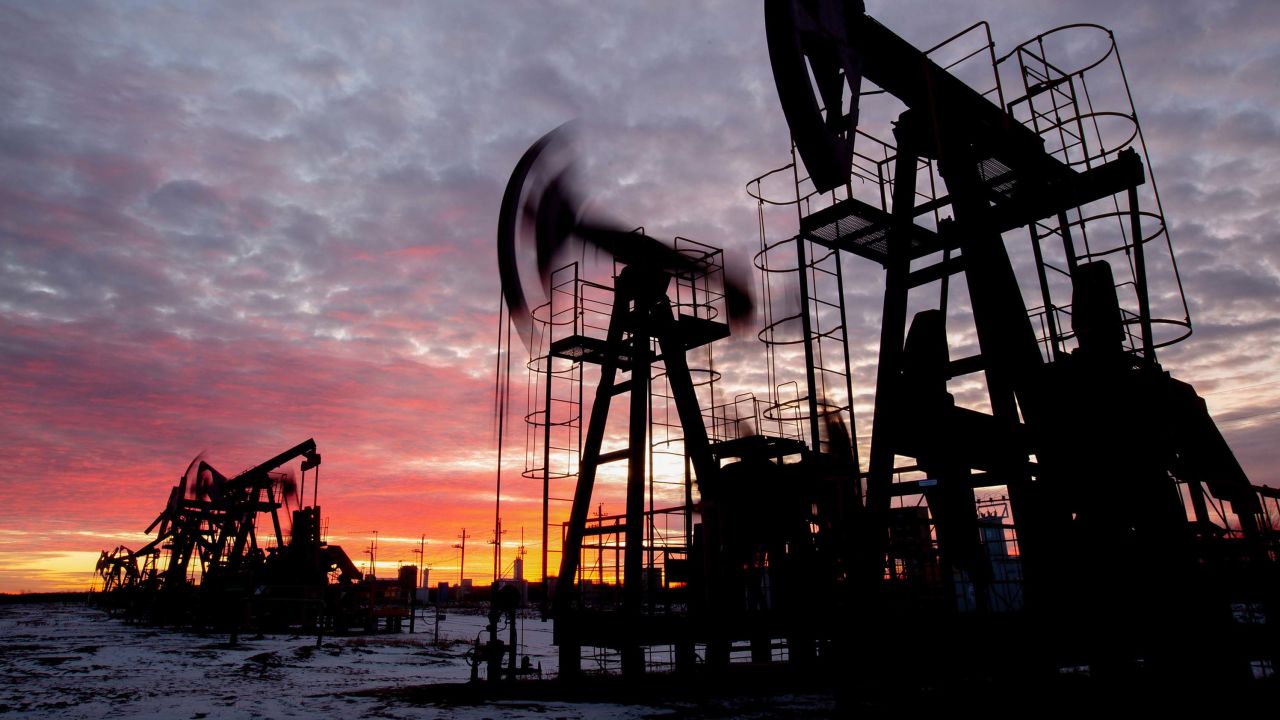
Oil pumping jacks operate in an oilfield near Russia's Neftekamsk on Nov.
19, 2020.
Andrey Rudakov/Bloomberg/Getty Images


The expansion of the shadow fleet highlights the dramatic changes Russia’s war has brought to the global oil market.
In its bid to keep operating, the world’s second-largest crude exporter has reshaped decades-old trading patterns and split the world’s energy system in two.

“There’s the fleet that is not doing any Russian business, and then there’s the fleet that’s almost exclusively doing Russian business,” said Richard Matthews, head of research at EA Gibson, an international shipbroker.
Only a few ships, he added, are doing a “bit of both.”
 
‘Gray ships’ and ‘dark ships’

As Europe has weaned itself off Russian energy, buyers in Asia have cut deals.
China boosted imports of Russian oil to 1.9 million barrels per day on average in 2022, up 19% from 2021, according to the International Energy Agency.
India ramped up purchases even more sharply, logging an 800% increase to an average of 900,000 barrels per day.

Russia’s oil exports to China and India both hit record highs in January after Europe’s ban on seaborne Russian oil took effect, according to Kpler, a data and analytics company.
Exports to Turkey, another top customer, also continued apace.
(The ban on refined oil products did not kick in until February.)

 
Filling these orders requires boats amenable to the trip.
Russia’s national fleet doesn’t have enough vessels.
That’s where the “shadow fleet” comes in.

Matthew Wright, senior freight analyst at Kpler, sorts the boats moving Russian crude into two categories: “gray ships” and “dark ships.” Gray ships have been sold since the invasion — mostly by owners in Europe to firms in the Middle East and Asia that weren’t previously active in the tanker market.
Dark ships, on the other hand, are veterans of campaigns by Iran and Venezuela to avoid Western sanctions that have recently switched to carrying Russian crude.

We read all day so you don’t have to.
Get our nightly newsletter for all the top business stories you need to know.

“There is often some evidence that they have been disguising their activities by turning off their AIS transponder,” Wright said of the “dark” ships, referring to technology that helps identify and locate vessels.

While Western countries have banned most Russian oil imports, there aren’t any rules preventing Western ships from delivering to buyers such as China and India, or from providing services such as insurance — so long as the G7 price caps are respected.
Ships with European owners accounted for 36% of Russian crude trade in January, according to Kpler.

But the legal and reputational risks of failing to comply with the price caps loom large.
At the same time, Russia is eager to stop working with Western shippers.
That has led to the development of a new cohort, whose makeup is murkier — and history more checkered.

“The dark fleet that has been around carrying Venezuelan and Iranian oil globally is something we all expected to grow, and it has,” said Janiv Shah, senior analyst at Rystad Energy, a consultancy.

One reason: Sending Russian oil on longer trips to China or India is less efficient than shipping it to nearby countries such as Finland.
Russia now needs four times as much shipping capacity for its crude as it did before the invasion, according to EA Gibson.

As a result, an estimated 25 to 35 vessels are being sold per month into the shadow fleet, according to anothersenior executive at an oil trading firm.
Global Witness, a nonprofit, estimates that a quarter of oil tanker sales between late February 2022 and January this year involved unknown buyers, roughly double the proportion the previous year.

Demand could increase in the coming months if China needs more fuel to power its economic recovery.
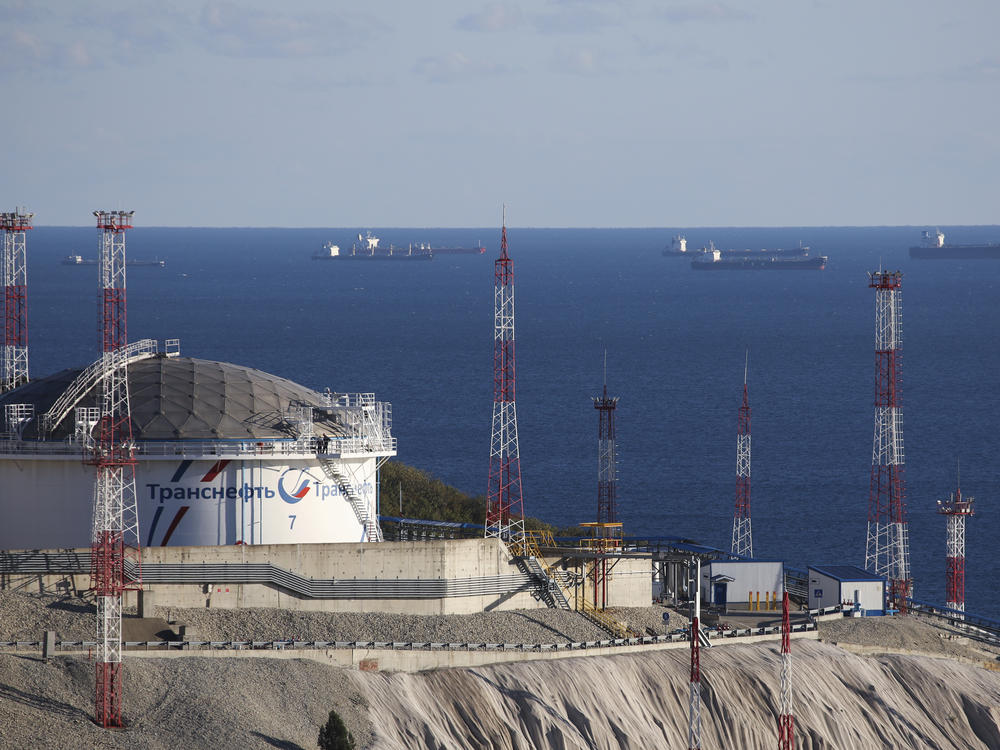
 
Oil tankers are seen at the Sheskharis complex, part of Chernomortransneft JSC, a subsidiary of Transneft PJSC, in Novorossiysk, Russia, on Oct. 11.
This is one of the largest facilities for oil and petroleum products in southern Russia. / AP

 
Questions and risks

If a greater percentage of the global fleet is being used for Russian crude and petroleum products, that eats up capacity, raising costs for all oil traders.

“There’s been a massive increase in inefficiencies in the way the tanker market operates,” said Wright of Kpler.

There are also questions about who ultimately runs the shadow fleet.
Some suspect a portion of the shell companies that have cropped up have ties to “the Russian state or certain politically connected players,” according to Sergey Vakulenko, a former executive at a Russian oil company, now nonresident scholar at the Carnegie Endowment for International Peace.
"The likelihood of there being a major spill or accident is growing by the day.”
Richard Matthews, head of research at EA Gibson
This past weekend, the European Union imposed sanctions on Sun Ship Management, a subsidiary of Sovcomflot, Russia’s largest shipping company.
The EU said the Dubai-based firm, registered a decade ago, had been “operating as one of the key companies managing and operating the maritime transport of Russian oil,” and that the “Russian Federation is the ultimate beneficiary” of its business operations.

Moreover, experts have said the shadow fleet may be easing Russia’s ability to dodge sanctions or sell its oil above the price cap.
It’s also making it harder to discern exactly how much Russia’s barrels are selling for.
Experts including Vakulenko have found evidence in customs data that Urals, the country’s benchmark, is selling for much more at key ports than official prices indicate.

Safety is also a worry.
The dark fleet is believed to have a large contingent of vessels older than 15 years, the age at which mainstream oil companies would typically retire them due to wear and tear.
Now, more of these boats are making trips across the globe.

“You’ve got all these old vessels that are probably not being maintained to the standard they should be,” said Matthews of EA Gibson.
“The likelihood of there being a major spill or accident is growing by the day as this fleet grows.”
 
Links :

Monday, March 6, 2023

Ocean treaty: Historic agreement reached after decade of talks / ‘One of the most important talks no one has heard of’: why the high seas treaty matters

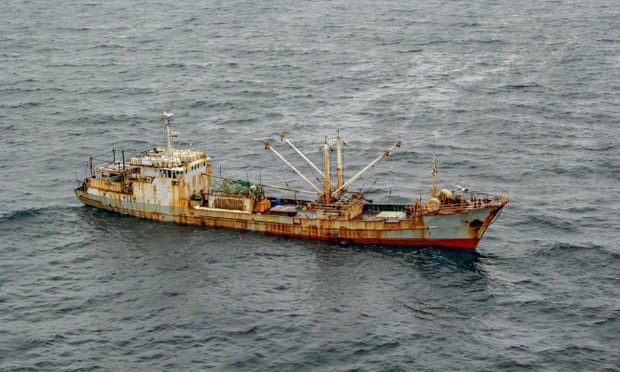
A vessel is detained for potential illegal fishing using drift nets by the US coast guard in the North Pacific Ocean.
Photograph: US Coast Guard Photo/Alamy

From The Guardian by Karne Mc Veigh

The pressure is building around critical negotiations that could, if successful, shield swathes of the world’s ocean

Almost two-thirds of the world’s ocean lies outside national boundaries.
These are the “high seas”, where fragmented and loosely enforced rules have meant a vast portion of the planet, hundreds of miles from land, is often essentially lawless.

Because of this, the high seas are more susceptible than coastal seas to exploitation.
Currently, all countries can navigate, fish (or overfish) and carry out scientific research on the high seas practically at will.
Only 1.2% of it is protected, and the increasing reach of fishing and shipping vessels, the threat of deep-sea mining, and new activities, such as “bioprospecting” of marine species, mean they are being threatened like never before.

Yet, not only does a healthy ocean provide half of the oxygen we breathe, it represents 95% of the planet’s biosphere, soaks up carbon dioxide and is Earth’s largest carbon sink.
Heavily subsidised, industrial fishers seek to exploit and profit from ocean resources that, by law, belong to everyoneJessica Battle, WWF

This week, delegates from 193 member states will begin the final talks at the UN headquarters in New York to conclude negotiations for what scientists have described as a “once in a lifetime” chance to at last protect the high seas.

Aimed at shielding huge swathes of the world’s ocean from exploitation, the talks – officially called the Intergovernmental Conference on Marine Biodiversity of Areas Beyond National Jurisdiction, or BBNJ – are the fifth round of negotiations, which ended last August without agreement.
The current round of talks began last week and will end on 3 March.

The pressure is on.
Last month, the UN secretary general, António Guterres, weighed in with strong words, saying the ocean was on the “frontlines” of the war against nature, and calling on nations to stop squabbling and conclude the delayed negotiations.

Above all, the talks are critical to enforcing the 30x30 pledge from the UN biodiversity conference in December: a promise to protect 30% of the ocean (as well as 30% of the land) by 2030.
Without a high seas treaty, scientists and environmentalists agree the 30x30 pledge will fail, for the simple reason that no legal mechanism exists for establishing protected marine areas on the high seas – rendering any promises to do so meaningless.
 
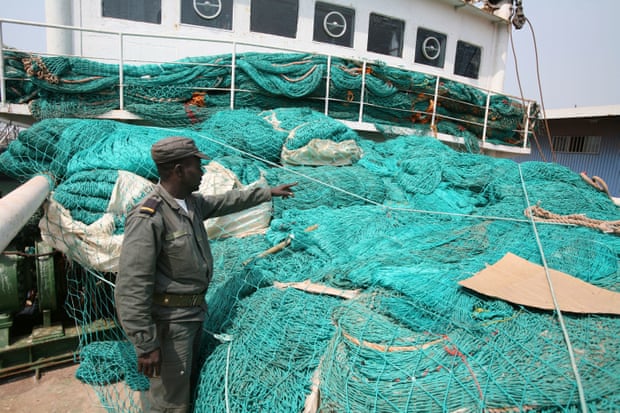
Fishing nets onboard a seized boat in Conakry Guinea, West Africa.
Photograph: Steve Morgan/Alamy

“Every second breath being taken comes from the ocean generating oxygen,” said Liz Karan, who leads high seas protection work at the Pew Charitable Trusts.
“A healthy ocean is critical for having life on the planet – including human life.”

Karan and others are hopeful that over the next few days countries will finalise a legal framework to establish a network of high sea marine protected areas (MPAs), to create “reservoirs for adaptation and resilience” for species in a changing climate.
The deal would also set out rules for conducting environmental impact assessments for other activities (including resource exploitation) – another currently next-to-impossible task because there is no agreed way to do it.

The hold-ups in the treaty talks are practical and ideological.
When the last session wrapped in August without a deal, the conference president, Rena Lee, sounded a hopeful note: “We’re closer to the finish line than ever before.
But there are sticking points: the practical matter of how to establish and maintain MPAs in areas that aren’t governed by any individual country, and the ethical matter of how to secure fair access to marine resources for all.

“There is tension between countries that have those resources and countries that don’t,” said Karan.
“There are some countries – like big, distant-water fishing countries [nations that send fleets of fishing vessels across the globe] – that are protecting their interests.”

Even within the 51 countries – including the UK, the US and the EU – that pledged to conclude the talks by 3 March by signing up to a “high-ambition coalition” for BBNJ at the One Ocean summit in Brest, there are issues yet to be resolved.

“One of them”, Karan said, “is how this new treaty body will interact with existing organisations: in particular, the fisheries organisations.” These are bodies called RFMOs (regional fisheries management organisations) that set quotas for stocks such as tuna.

“But what the science shows”, Karan added, “is that we need to put conservation first if we are going to protect fisheries resources for future generations.”

That means immediately confronting overfishing and illegal fishing, which together are the biggest driver of environmental decline in the ocean.skip past newsletter promotion

“Heavily subsidised, industrial fishers seek to exploit and profit from ocean resources that, by law, belong to everyone,” said Jessica Battle, a senior global oceans expert for WWF who is leading the NGO’s team at the negotiations.

“It’s a tragedy of the commons.”

For Battle a legally binding high-seas treaty would be crucial to breaking down the existing silos between current management bodies, resulting in less cumulative impact and better cooperation.
There are some esoteric holdups, too, such as who owns marine genetic resources – the potential scientific discoveries in the ocean that could lead to new pharmaceutical, cosmetics, food and industrial advances.

This week, Greenpeace warned the treaty was in jeopardy as countries in the global north, including China, refused to compromise.
The latest draft of the treaty, published on Saturday, still contained major areas of disagreement, it said.

Laura Meller, an oceans campaigner at Greenpeace Nordic, said: “Negotiations must accelerate and the global north must seek compromises instead of quibbling over minor points.
China must urgently reimagine its role at these negotiations.
At Cop15, China showed global leadership but at these negotiations, it has been a difficult party.
China has an opportunity to transform global ocean governance and broker, instead of break, a landmark deal on this new Ocean Treaty.”

Among the high seas biodiversity hotspots that would benefit from being sanctuaries is the Costa Rica Dome – nutrient-rich waters that attract yellowfin tuna, migratory dolphins, endangered blue whales and leatherback sea turtles.
There is also the Emperor Seamount chain, a biodiverse series of seamounts that arches north-west of the Hawaiian islands towards Russia.

“There are corridors of the sea where whales aggregate every year.
Big undersea mountains, encrusted in corals,” said Doug McCauley, an associate professor of ocean science at the Benioff Ocean Initiative at the University of California, Santa Barbara, who contributed to a paper for the Pew Charitable Trusts highlighting 10 such proposed sanctuaries.

Getting something on paper that allows the international community to set up those parks is vital, he said.

“There’s a real opportunity to make history with this treaty,” he said.
“It is arguably one of the most important international negotiations that no one has ever heard of.”
 
-----------------------------------------------------------------------------------------------------------------------------
 

From BBC by Esme Stallard
 
Nations have reached a historic agreement to protect the world's oceans following 10 years of negotiations.

The High Seas Treaty places 30% of the seas into protected areas by 2030, aiming to safeguard and recuperate marine nature.

The agreement was reached on Saturday evening, after 38 hours of talks, at UN headquarters in New York.

The negotiations had been held up for years over disagreements on funding and fishing rights.

The last international agreement on ocean protection was signed 40 years ago in 1982 - the UN Convention on the Law of the Sea.

That agreement established an area called the high seas - international waters where all countries have a right to fish, ship and do research - but only 1.2% of these waters are protected.

Marine life living outside of these protected areas has been at risk from climate change, overfishing and shipping traffic.
In detail: The plan to protect the high seas

In the latest assessment of global marine species, nearly 10% were found to be at risk of extinction, according to the International Union for Conservation of Nature (IUCN).

These new protected areas, established in the treaty, will put limits on how much fishing can take place, the routes of shipping lanes and exploration activities like deep sea mining - when minerals are taken from a sea bed 200m or more below the surface.

Environmental groups have been concerned that mining processes could disturb animal breeding grounds, create noise pollution and be toxic for marine life.

The International Seabed Authority that oversees licensing told the BBC that moving forward "any future activity in the deep seabed will be subject to strict environmental regulations and oversight to ensure that they are carried out sustainably and responsibly".

Rena Lee, UN Ambassador for Oceans, brought down the gavel after two weeks of negotiations that at times threatened to unravel.

Minna Epps, director of the IUCN Ocean team, said the main issue was over the sharing of marine genetic resources.

Marine genetic resources are biological material from plants and animals in the ocean that can have benefits for society, such as pharmaceuticals, industrial processes and food.

Richer nations currently have the resources and funding to explore the deep ocean but poorer nations wanted to ensure any benefits they find are shared equally.

Dr Robert Blasiak, ocean researcher at Stockholm University, said the challenge was that no one knows how much ocean resources are worth and therefore how they could be split.
He said: "If you imagine a big, high-definition, widescreen TV, and if only like three or four of the pixels on that giant screen are working, that's our knowledge of the deep ocean. So we've recorded about 230,000 species in the ocean, but it's estimated that there are over two million."

Laura Meller, an oceans campaigner for Greenpeace Nordic, commended countries for "putting aside differences and delivering a treaty that will let us protect the oceans, build our resilience to climate change and safeguard the lives and livelihoods of billions of people"
"This is a historic day for conservation and a sign that in a divided world, protecting nature and people can triumph over geopolitics," she added.

Countries will need to meet again to formally adopt the agreement and then have plenty of work to do before the treaty can be implemented.

Liz Karan, director of Pews Trust ocean governance team, told the BBC: "It will take some time to take effect.
Countries have to ratify it [legally adopt it] for it to enter force.
Then there are a lot of institutional bodies like the Science and Technical Committee that have to get set up." 
 
Links :

Sunday, March 5, 2023

Australia's Great Barrier Reef will survive if warming kept to 1.5 degrees, study finds

The Great Barrier Reef Marine Park Authority has confirmed an unprecedented sixth mass coral bleaching event since 1998.

From CNN by Reyters

A study released on Friday by an Australian university looking at multiple catastrophes hitting the Great Barrier Reef has found for the first time that only 2% of its area has escaped bleaching since 1998, then the world's hottest year on record.
If global warming is kept to 1.5 degrees, the maximum rise in average global temperature that was the focus of the COP26 United Nations climate conference, the mix of corals on the Barrier Reef will change but it could still thrive, said the study's lead author Professor Terry Hughes, of the Australian Research Council's Centre of Excellence for Coral Reef Studies.
"If we can hold global warming to 1.5 degrees global average warming then I think we'll still have a vibrant Great Barrier Reef," he said.
Bleaching is a stress response by overheated corals during heat waves, where they lose their color and many struggle to survive.
Eighty percent of the World Heritage-listed wonder has been bleached severely at least once since 2016, the study by James Cook University in Australia's Queensland state found.


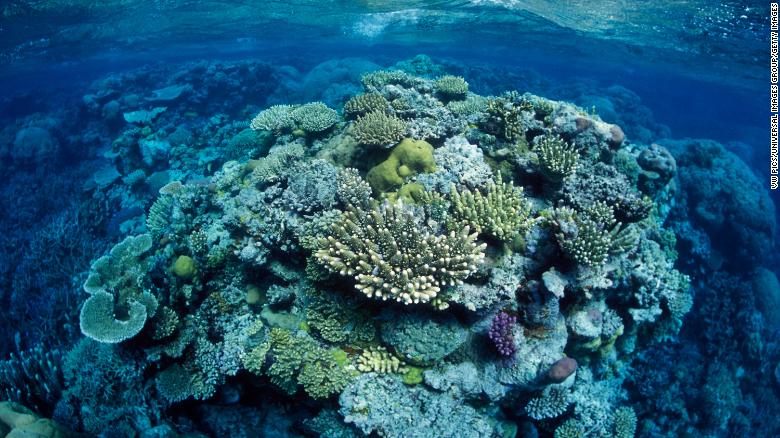
Great Barrier Reef, north-east of Port Douglas, Queensland, Australia.

The study found the corals adapted to have a higher heat threshold if they had survived a previous bleaching event, but the gap between bleaching events has shrunk, giving the reefs less time to recover between each episode.
Australia, which last week said it would not back a pledge led by the United States and the European Union to cut methane emissions, needs to do more to cut greenhouse gas emissions, Hughes said. 


"The government is still issuing permits for new coal mines and for new methane gas deals and it's simply irresponsible in terms of Australia's responsibilities to the Great Barrier Reef," he said.
The Great Barrier Reef is comprised of more than 3,000 individual reefs stretching for 2,300km (1,429 miles). The ecosystem supports 65,000 jobs in reef tourism. Globally, hundreds of millions of people depend on the survival of coral reefs for their livelihoods and food security.
"If we go to 3, 4 degrees of global average warming which is tragically the trajectory we are currently on, then there won't be much left of the Great Barrier Reef or any other coral reefs throughout the tropics," Hughes told Reuters.
 
Links :

Saturday, March 4, 2023

Glass octopus moving in the deep sea of the Central Pacific Ocean


Marine biologists spotted the elusive glass octopus (Vitreledonella richardi) during a 34-day expedition off the remote Phoenix Islands, an archipelago located more than 3,200 miles (5,100 kilometers) northeast of Sydney, Australia.


Friday, March 3, 2023

The strange items washing up on beaches

(Image credit: Getty Images)
 
From BBC by Richard Fisher

From mysterious metal balls to Garfield-themed phones, the strange material that drifts ashore from the oceans can reveal a surprising amount.

It's around 1.5m (5ft) wide, almost perfectly spherical – and people in Japan aren't quite sure what it is.
This week, a mysterious round ball washed up on the coast off the city of Hamamatsu, prompting widespread speculation about what it might be.

Despite its metallic exterior, it's probably not an explosive mine – though bomb experts did check.
Nor is it thought to be a surveillance device, fears of which have been fuelled by the recent reports of Chinese spy balloons drifting over the continental US.

It would not be the first time a strange giant sphere has washed up on land: in 2019, police in London responded to reports of an unexploded device on the banks of the Thames in Wapping – it turned out to be a giant Christmas bauble.

Nor is it the first mysterious object to appear on a coastline.
Every year, the ocean washes up many unusual items that often can't be explained at first.

In recent years, beachcombers have stumbled on:
  • An unusual 24m-long (84ft) wood and metal object in Florida in 2022 that people speculated could be a barrier, old pier or even row of spectator seats from a Nascar race. Archaeologists later found it was a shipwreck.
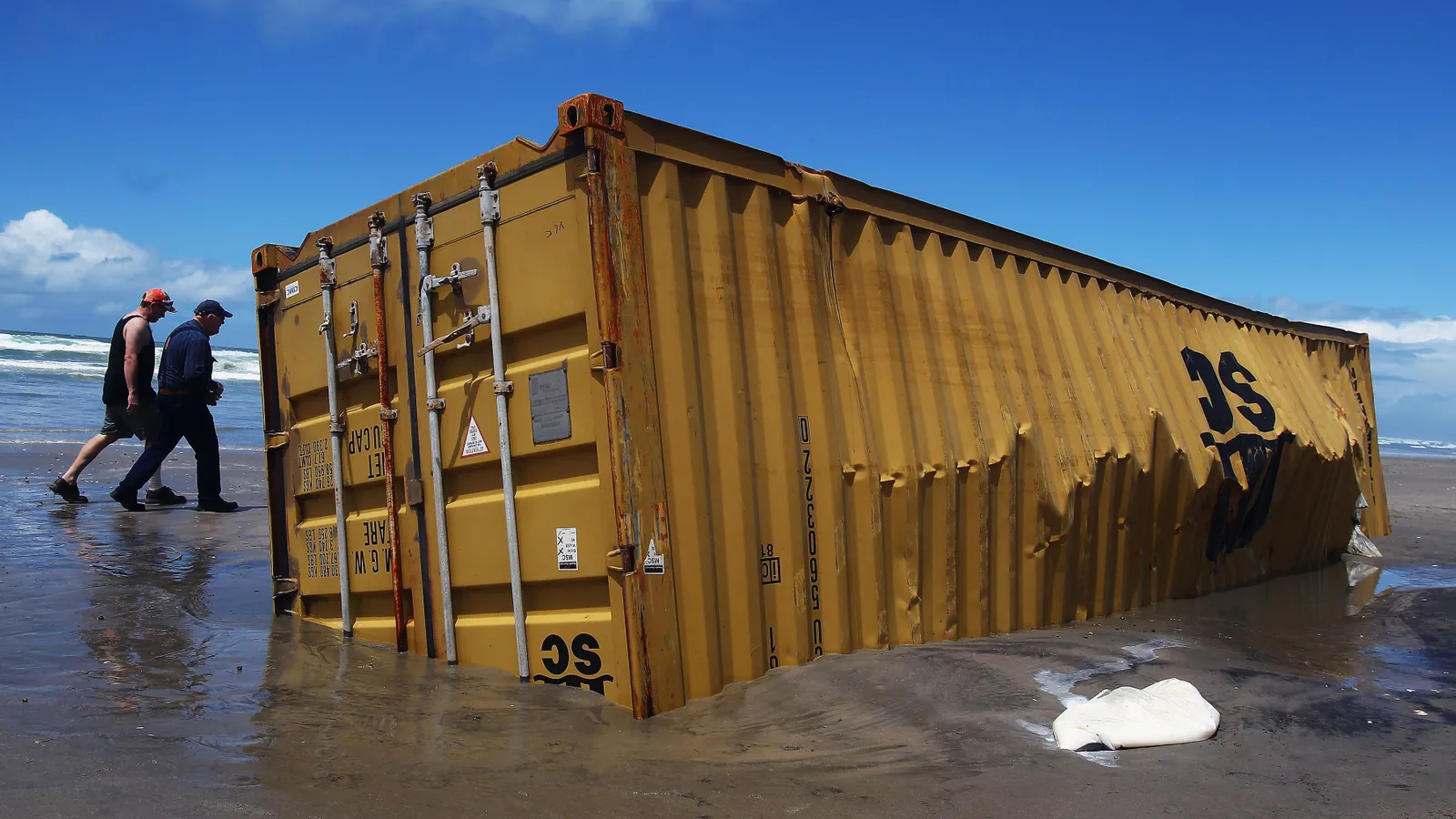
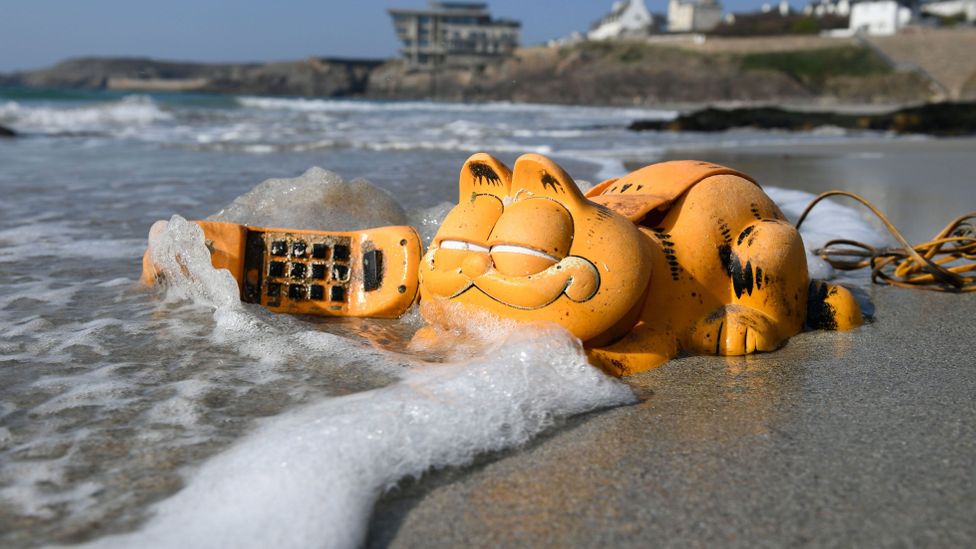
  • For 35 years, residents of a coast in Brittany were puzzled why landline telephones based on the cartoon cat Garfield were washing up. The culprit – a lost shipping container – was only recently located.
  • A decade ago, blocks of rubbery material engraved with the word Tjipeterappeared all over Europe. They may have come from a rubber plantation in Indonesia. Another rubbery mystery washed ashore last year when a curious layered block found at Falmouth, UK, which may have been a 100-year-old bale of rubber sheets. Another had been found in Shetland, Scotland in 2020.
  • A large foam object in South Carolina in 2018 that some outlets labelled as "space junk", but a more sober analysis from local authorities later suggestedwas a buoy.
One thing that these beach-finds often reveal is just how far objects can travel, and how long they can stay at sea.
Materials like plastic or rubber can endure in the ocean for decades, and travel thousands of miles.


Garfield phones turned up on French beaches for years before the explanation was found
(Credit: Getty Images) 
 
In 2020, the National Trust released a list of far-flung items that were found on beaches on the island of Britain: including a fly spray from Russia and an aerosol can from Saudi Arabia, as well as a crisp packet from 1976 and the remains of a 1980s picnic.
 
Researchers can sometimes guess at the origin of washed-up objects using maps of ocean currents they have been meticulously building.
 
Since the 1980s, marine scientists have used a standardised array of drifting buoys, which send a message about their location every few hours.
A decade ago, oceanographers used this data to build this interactive map, which reveals just how far floating debris can travel.
 
 
Click on a point in the ocean, and the map will tell you where an item will end up after days, weeks and months.
For example, an item dropped off the coast of Japan could reach the coast of California after about three years.
Discarded items, such as printer ink cartridges, syringes, golf balls, business cards and drinks bottles have been used to track ocean currents

Sometimes, however, debris itself is helping scientists to map ocean currents.

The most famous example of flotsam used for this purpose were the 29,000 plastic turtles, ducks, frogs, and beavers, known as the Friendly Floatees, which fell into the Pacific from the Ever Laurel ship in 1992.
They continued to be found more than a decade later, allowing researchers to track the pace, location and reach of ocean currents.
(Read more about the secrets being revealed by ocean garbage.)

In Japan, where the giant sphere was found this week, researchers have also turned to flotsam to map currents.
These include natural items such as pumice rafts from subsea volcanoes, but also discarded items, such as printer ink cartridges, syringes, golf balls, business cards and drinks bottles, according to Shigeru Fujieda of Kagoshima University.

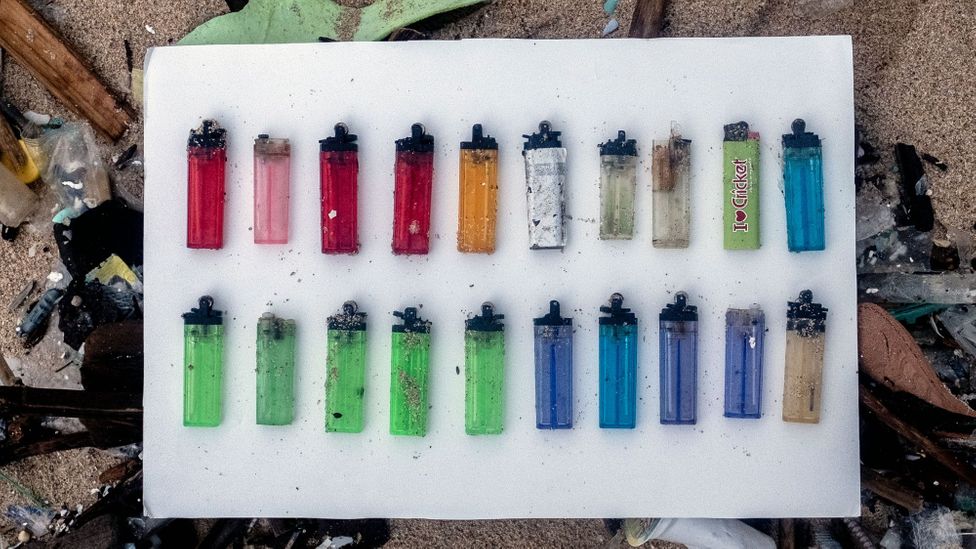
In a paper published earlier this month, Fujieda proposed a new way to track ocean currents: cigarette lighters.
"Disposable lighters are one of the few types of marine litter that have evidence of their source, because they have printed information about the consuming country or city," he writes.
What's more, a lighter "can drift a long time on the sea owing to its robust and hollow construction.
It can easily be found, picked up, and carried on the beach, because of its bright colour and small size."


Cigarette lighters could prove a useful tool for tracking the origins of plastic pollution and marine debris (Credit: Getty Images)

In his study, he analysed 79,948 lighters from beaches and estuaries collected across the North Pacific, from Japan to the US, across seven years.
This allowed him to map and track the marine litter flows across Asia and the US – which could in principle allow countries to better understand where the polluting plastics and trash appearing on beaches originates from.

Such information could also prove vital in helping to identify how potentially invasive species might cross the oceans on floating debris to colonise new parts of the world.
In 2011, the tsunami that hit Japan washed five million tonnes of debris out to sea.
Some of it spent more than a year floating in the North Pacific – including the remains of a 18m-long (60ft) dock that drifted for 451 days – before washing up on the shores of the western US and Canada.
Hitchhiking with the debris were marine life normally only found in the shallow waters of Japan.
Researchers found 289 sea creatures that normally inhabit the coast of Japan among the debris they analysed, including a highly predatory starfish called the Northern Pacific seastar, raising fears they might gain a foothold in North American waters, and begin devastating local biodiversity.

As for that mystery sphere that turned up in Japan, it remained unidentified at the time of writing.
Probably the most likely explanation, however, is a little more boring than the wilder ideas on social media: it's likely some sort of mooring buoy.
That probably won't stop people and the media continuing to speculate, however, just like they have every time the sea has thrown up a large mysterious object.
 
Links :