Monday, January 16, 2023

Compound derived from B.C. sea sponge could block COVID-19 virus, researchers find

Glass sponge reefs can grow 20 to 30 metres high and serve as the habitat for a variety of fish.
UBC researchers say a compound derived from sea sponges found off the B.C. coast can block coronavirus infection in human cells.
(Glen Dennison)

From CBC

3 most effective natural compounds in catalogue of 350 were sourced in Canada, UBC team says

Researchers at the University of British Columbia say a compound derived from sea sponges found off the B.C. coast can block coronavirus infection in human cells.

The discovery could pave the way for the development of new COVID-19 medicines made from natural sources, researchers say.

An international team led by UBC scientists analyzed a catalogue of more than 350 compounds derived from natural sources that included plants, fungi and marine sponges in an effort to find new antiviral drugs to treat coronavirus variants.

Researchers bathed human lung cells in solutions made from the compounds and then infected the cells with SARS-CoV-2, the virus that causes COVID-19.
They found 26 compounds reduced viral infection in the cells.

The three most effective compounds were sourced in Canada: one from sea sponges collected in Howe Sound, northwest of Vancouver, another from marine bacteria collected in Barkley Sound on the west coast of Vancouver Island, and a third from marine bacteria in Newfoundland.

"These compounds blocked infection, so we cannot see more virus in the cells after a few days," said Jimena Pérez-Vargas, a research associate in UBC's department of microbiology and immunology.
Wastewater from some flights arriving at Vancouver airport to be tested for COVID-19
"They are very efficient because we need to use very small amounts of these compounds to block completely the infection of the virus in the cells."

Pérez-Vargas says the compounds are promising in that they target cells rather than the virus, blocking the virus from replicating and helping the cell to recover.
She says researchers are able to replicate the compound found in sea sponges so it won't be necessary to harvest them.

The peer-reviewed paper was published in the journal Antiviral Research.
'More work to do': researcher Pérez-Vargas says they are pleased with their findings "but we have more work to do."
She says the results have come at the cellular level and the next step is to test them on animal models.

Dr. Srinivas Murthy, an infectious diseases expert in UBC's faculty of medicine who was not affiliated with the study, says it's always exciting to find new molecules that could work against viruses.
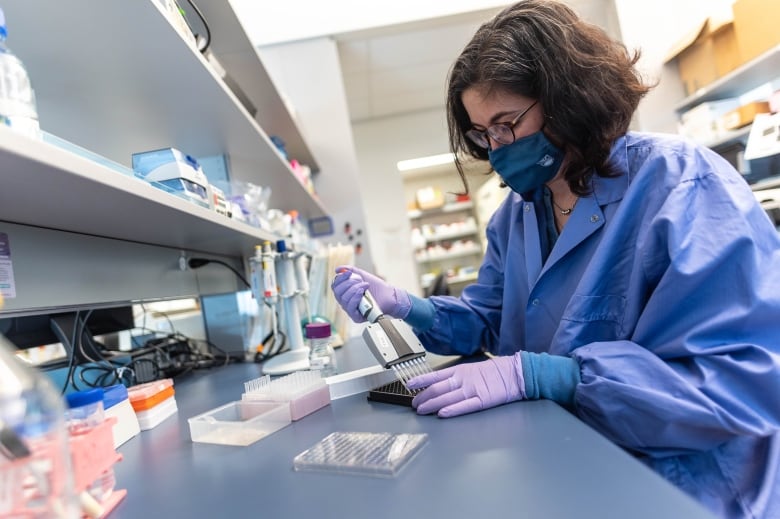
 
Dr. Jimena Pérez-Vargas of the University of British Columbia is the co-author of a study that says a compound derived from sea sponges found off the B.C. coast blocks some COVID-19 infections.
(Paul Joseph/The University of British Columbia)

"It's reassuring that there's still work being done in this space ... there's lots of things that we still have to learn about how COVID works and the possible therapeutics that are out there," Murthy said.

Even if the findings don't lead directly to a treatment for humans, it could help scientists better understand the disease, he says.
"Scientists from around the world can see this paper and think, OK, I have something similar, let's adapt what we're doing and build toward something that could work for everybody," he says.

The study notes that natural products are "considered a rich resource for novel antiviral drug development" and "have the advantage of more favourable toxicological profiles, fewer side effects, and a faster approval process in comparison to chemically engineered drugs."

Murthy says the study speaks to the importance of "maintaining biodiversity because there's so many medicinal products that exist out there in the natural environment."

The antimalarial drug Artemisinin, for instance, was extracted from sweet wormwood. Farnesol, which is found in fruits and herbs, is being studied as a potential treatment for Parkinson's Disease.
"I think the ability to find new medicines is truly exciting," he said.
 
Links :

Sunday, January 15, 2023

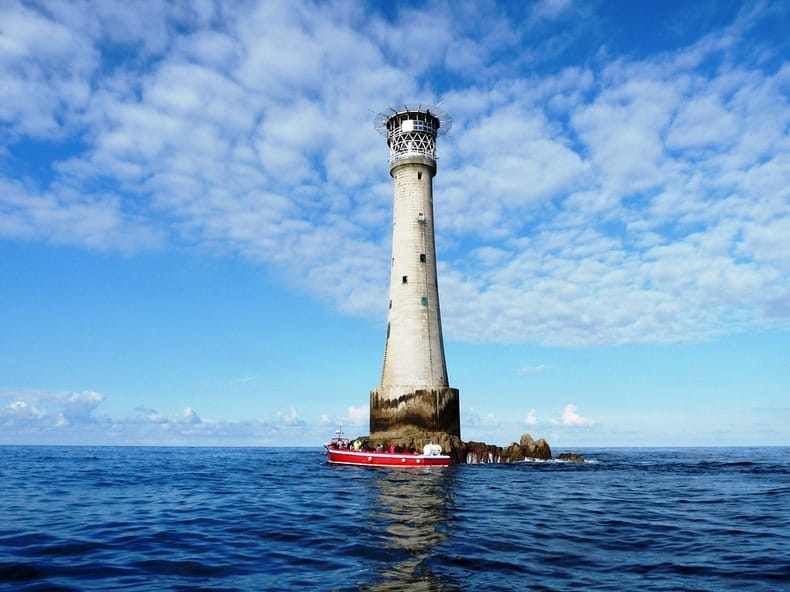
Bishop Rock : a Scilly island


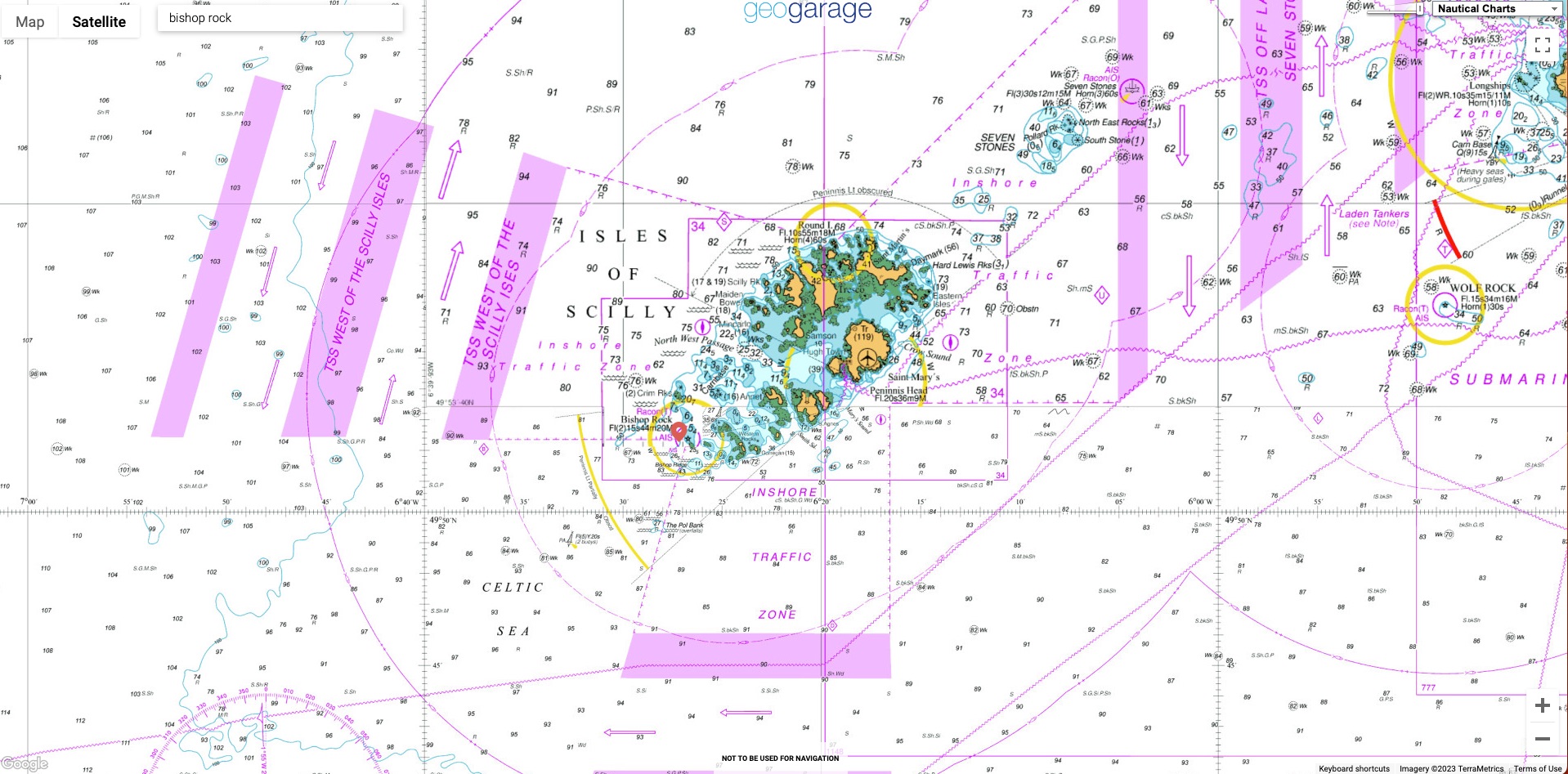
Twenty-eight miles from Cornwall is Bishop Rock.
 
Localization with the GeoGarage platform (UKHO raster chart)
 
This tiny island is in the Guinness Book of Records as the smallest island with a building on Earth.
A storm destroyed the original lighthouse in 1847, but builders completed the current lighthouse in 1858.
Impressively, this lighthouse is tied with Eddystone Lighthouse for the tallest lighthouse in England. 
 

This was shot on video tape with a fisheye lens, in the 1990's.
I got a helicopter ride out with the crew who were about to automate the place.
So i only had a few hours on site.
This was also the 1st time I had been back from when I was stationed here in the 80's.
I was a Lighthouse Keeper from 1974 to 1997.
(Peter Halil)

Saturday, January 14, 2023

British Isles & misc. (UKHO) layer update in the GeoGarage platform


with new world map (4000) including new ice extent
 
previous version of the Planisphere (in the GeoGarage platform 10 years ago)

 French voyages of discovery from the 15th through the 19th century

from Gallica BNF

This is a 1930 L. Bergelin pictorial map of the world celebrating French voyages of discovery from 1402 to 1840.
This map appeared at the end of the Années folles , a post-World War I period of rich social, artistic, and cultural innovation centered in Paris.
It coincided with a resurgence of French national pride, much of which was expressed in novel new forms of art that combined advances in printing, the rise of propaganda imagery, and egalitarian social values. 

 Links :

Friday, January 13, 2023

The extraordinary life of explorer Peter Freuchen

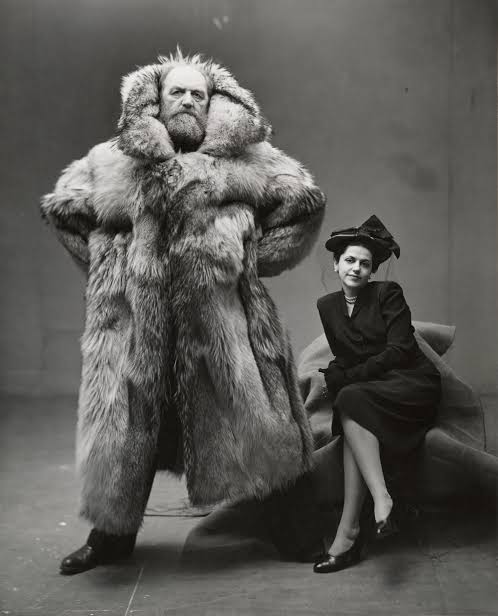
Peter Freuchen and his wife

From HistoryDefined y Miranda Leer

Easily one of the most interesting people that have walked the earth, the life of Peter Freuchen has gained so many public talks.
The life he lived suggests that of fulfillment and great exploits.

Peter Freuchen was an extraordinary explorer, writer, and anthropologist best known for his expeditions to Greenland and his work among the Inuit people.
He was born on February 2, 1886, in Denmark, and he would go on to lead a life full of adventure and accomplishment.

Away from his father’s blueprint


His father, Lorentz Freuchen, was a successful businessman who wanted a promising career and future for his son.
So he enrolled Peter at the University of Copenhagen to study medicine.

It wasn’t long until Peter realized his father’s idea of living a quiet and structured life was not for him.

As a kid, he had always been fascinated by sailing and traveling.
He would often bolt class to the sea to listen to stories of sailors who had made notable explorations.
So after a while in medical school, Peter Freuchen dropped out.

Carving his own path – the exciting career of Peter Freuchen

Freuchen began his career as an explorer in 1906 when he joined a Danish expedition to Greenland.
He and his companion Knud Rasmussen sailed as far north as they could from Denmark before abandoning their ship and going on foot for more than 600 kilometers.

They encountered and traded with the Inuit people while on their journey.
This trip sparked a lifelong fascination with the Arctic and its people.

Freuchen spent the next several decades exploring the region and studying the Inuit culture.
He learned to speak the Inuit language and lived among the native people for many years, learning their customs and ways of life.

In Cape York, Greenland, a trading post was established in 1910 by Peter Freuchen and Rasmussen, which they named Thule.

The Thule Expeditions, a series of seven expeditions, took place between 1912 and 1933, all departing from the Thule site.
In the period from 1910 to 1924, Freuchen traveled extensively in Greenland, visiting previously unexplored parts of the Arctic, and also gave lectures to tourists at Thule about Inuit culture.

One of Freuchen’s most famous expeditions took place in 1912 when he set out to cross Greenland from East to West.
The journey was difficult, and Freuchen and his team faced many challenges, including extreme cold, hunger, and treacherous ice conditions.

Yet, despite these obstacles, Freuchen persevered and completed the crossing, becoming the first person to do so on foot.

Beyond the expeditions – Freuchen’s literary works


In addition to his explorations, Freuchen also made significant contributions to the field of Anthropology.
He wrote several books about his experiences living among the Inuit, and his work helped to bring attention to the plight of indigenous people in the Arctic.

He was also a vocal advocate for their rights, working tirelessly to protect their way of life and ensure they were treated with respect and dignity.

His famous books include, among others:
  • “The Arctic Adventure of a Danish Explorer,” a book published in 1935, details Freuchen’s adventures in the Arctic and his encounters with the Inuit people.
  • “Peter Freuchen’s Book of the Seven Seas,” a book published in 1957, describes Freuchen’s travels to various locations worldwide, including the Arctic, Africa, and South America.
  • “The Vagrant Viking,” a book published in 1953, is a semi-autobiographical account of Freuchen’s life and experiences as an explorer and anthropologist.
  • “The Peter Freuchen Story,” a book published in 1956, is a collection of stories and essays about Freuchen’s life and adventures.

The Family life of a man busy exploring life


Freuchen had a complex and varied love life, with multiple marriages and relationships.

His first marriage was to a woman he met after he had started living amongst the Inuit people in Greenland.
Peter Freuchen wedded Mequpaluk, an Inuit woman, in 1911.

The couple had two kids: Mequsaq Avataq Igimaqssusuktoranguapaluk, a son, and Pipaluk Jette Tukuminguaq Kasaluk Palika Hager, a daughter.

Following Mequpaluk’s death from the Spanish Flu in 1921, Freuchen wedded Magdalene Vang Lauridsen in 1924.
Freuchen and Lauridsen’s marriage lasted 20 years before the pair split.

Freuchen married his third wife, Dagmar Cohn, a fashion illustrator and an immigrant from Denmark, in the United States in 1945.

Left with one leg – The famous feces chisel story

A terrible frostbite caused Freuchen to lose a leg in the 1920s.
He got stuck in the snow during a snowfall and had to use a chisel he made out of his frozen feces to free himself.

Even though the initial amputation only involved a few toes, Freuchen’s time as a daring explorer ended when another frostbite claimed the rest of the leg, then replaced with a wooden one.

Role in World war II and a significant player in the anti-Nazi scheme


Freuchen actively participated in the Danish resistance to the Nazis during World War II despite having a leg amputated.
He helped hide refugees on his island, but finally, the Germans found him and ordered his arrest and death sentence.
This forced him to escape to Sweden and then the US.

The last dance

A production company invited Freuchen to participate in a film project with other polar explorers at the North Pole in September 1957, when he was 71 years old.

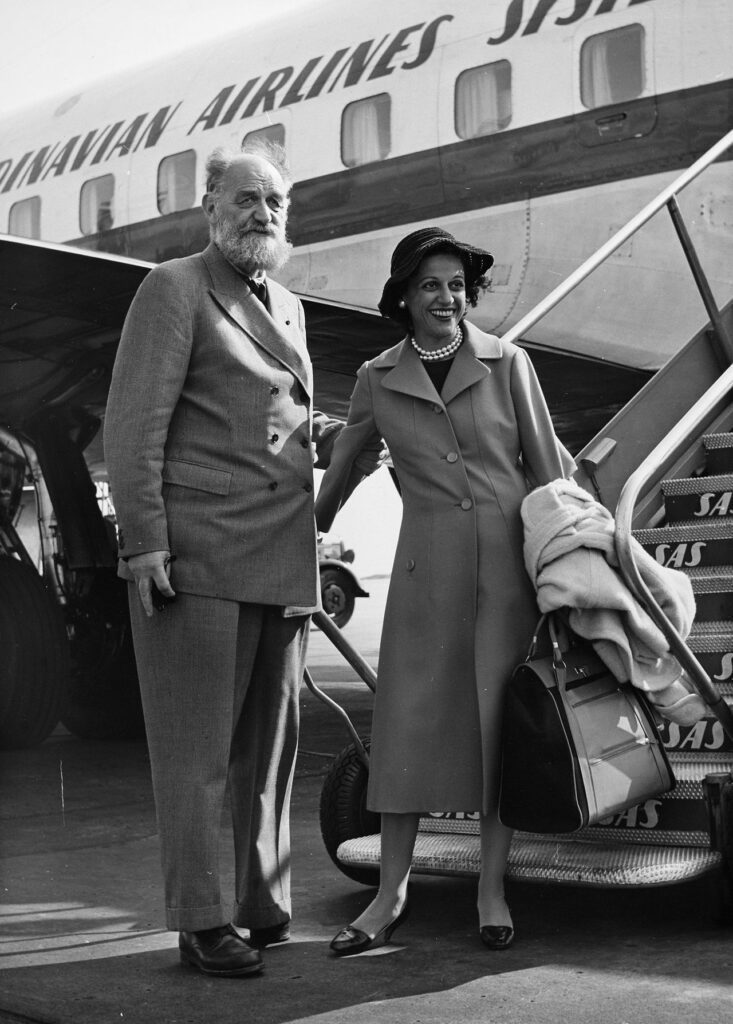
Unfortunately, he suffered a heart attack and passed away while walking up the steps to the plane in Anchorage, Alaska.
His ashes were later scattered on the tundra near Thule, which held special significance for him.
 
 
Peter Freuchen with his wife Dagmar Cohn
 
The amazing life of Peter Freuchen

Despite the many hardships he faced, Freuchen remained an optimistic and determined individual.
He believed in the power of the human spirit and was always willing to take on new challenges and push himself to the limit.

This spirit of adventure and determination is what made Freuchen such an extraordinary figure, and it is what has inspired so many people throughout the world.

Peter Freuchen was an incredible explorer and anthropologist who dedicated his life to understanding and supporting the Inuit people of the Arctic.
His many expeditions and contributions to the field have made him a legend in the world of exploration, and his legacy will continue to inspire future generations of adventurers and anthropologists.
 
Links :