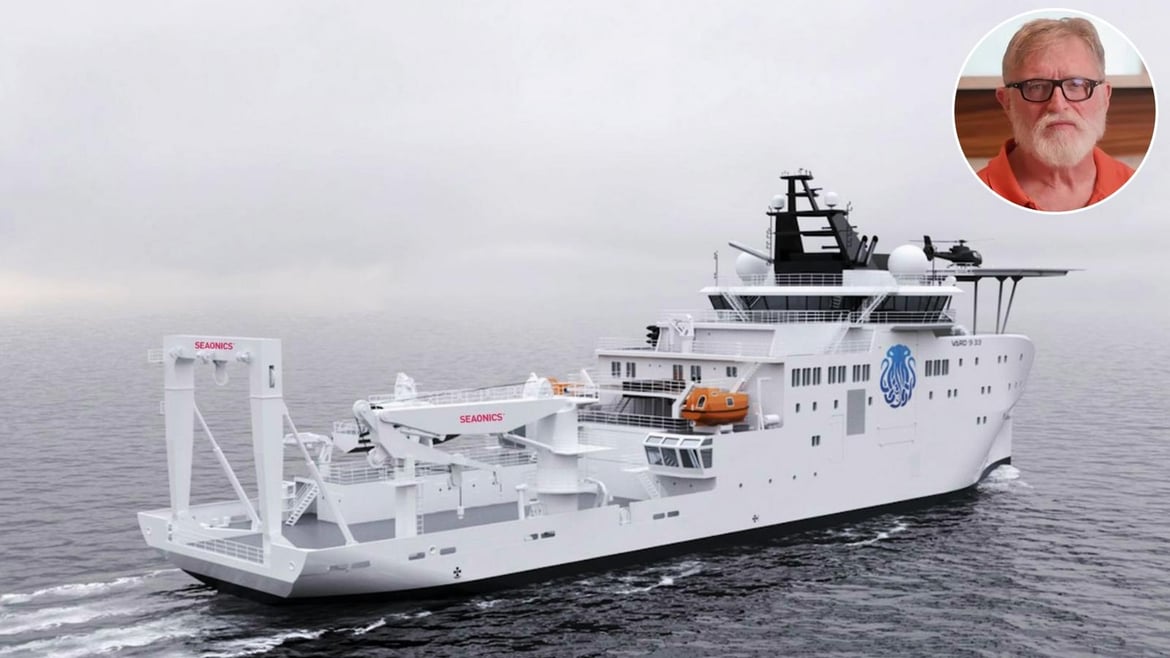
To be ready in 2028, it will be loaded with smart cranes that can drop robots two Everest depths down so onboard scientists can study the darkest depths of the seas
From LuxuryLaunches by Sayan Chakravarty
When a billionaire decides to build a 100-meter (about 328-foot) deep-ocean research vessel, the spotlight usually falls on the hull, the submersibles, and the headline budget. Yet the real story often sits in the hardware that actually puts steel and sensors into the water. That is where Seaonics enters the frame, as Gabe Newell pushes forward with what is poised to become the world’s most sophisticated research vessel.
When a billionaire decides to build a 100-meter (about 328-foot) deep-ocean research vessel, the spotlight usually falls on the hull, the submersibles, and the headline budget. Yet the real story often sits in the hardware that actually puts steel and sensors into the water. That is where Seaonics enters the frame, as Gabe Newell pushes forward with what is poised to become the world’s most sophisticated research vessel.

The Vard shipyard
Last year, Seaonics announced it had signed a contract with Vard to deliver a complete research package for Inkfish’s $300 million RV6000.
The Norwegian maritime technology company, a specialist in mission-critical handling and lifting systems, is a subsidiary within the Vard ecosystem.
That detail matters.
The cranes, winches, and launch systems destined for RV6000 are not being sourced from a generic third party and retrofitted later.
They are being engineered in the same industrial family as the hull and systems integration, aligning structure, power, and control logic from the outset.
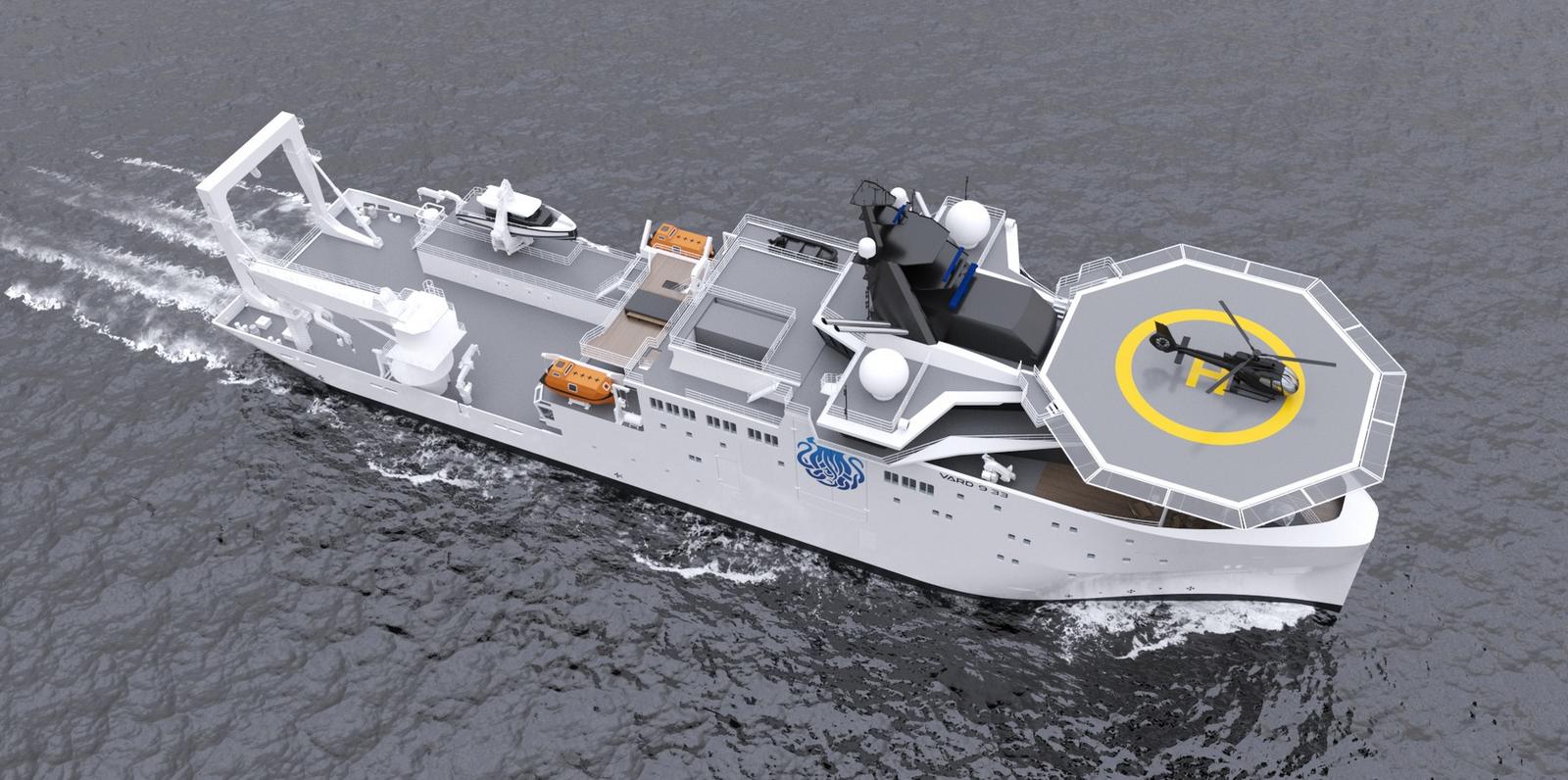
Seonics describes the contract as a flagship project that showcases high operability and reliability for demanding oceanographic missions.
It also subtly reinforces that RV6000 is joining a growing, purpose-built research fleet alongside RV Hydra and RV Dagon, positioning the vessel as the technological centerpiece of Gabe Newell’s expanding marine science ambitions rather than an isolated vanity project.
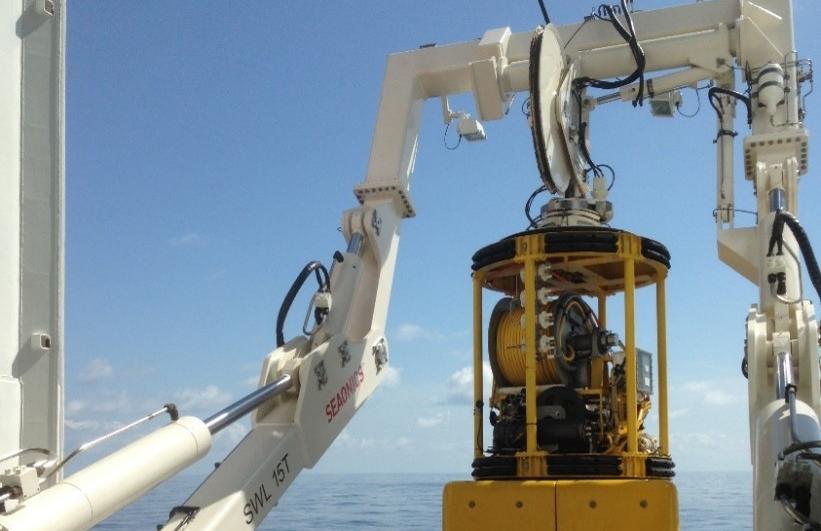
Also installed will be a LARS (Launch and Recovery System)
The package itself forms the mechanical backbone of the ship.
A large stern A-frame system will pivot out over the water, providing controlled launch and recovery of heavy subsea gear in the vessel’s wake, where turbulence can be better managed.
A dedicated scientific winch system will handle CTD casts, coring operations, towed arrays, and the long umbilicals required for deep deployments.
These winches are based on Seaonics’ electric and hybrid technologies, capable of regenerating electrical power back into the ship’s grid while paying out cable, reducing overall energy demand during intensive operations.

A Seaonics marine deck crane
A purpose-built Launch and Recovery System for ROV work will support Inkfish’s 6,000-meter-class remotely operated vehicles.
Designed with intelligent control, active heave compensation, and remote operation capability, the LARS manages the critical transition through the wave zone, where vessel motion can otherwise translate into damaging shock loads.

Completing the quartet is a multi-purpose offshore crane on the starboard side, specified with active heave compensation and configured for deep operations down to around 2,500 meters.
It will serve as the workhorse for heavier subsea packages and equipment that support both robotic and potentially crewed missions.

The underlying technology is as important as the hardware itself.
Active heave compensation systems sense the vessel’s vertical motion and automatically adjust cable length to keep the load as stable as possible relative to the seabed.
For a 6,000-meter ROV descending through rough surface conditions, that stability can mean the difference between a controlled deployment and a catastrophic failure.
Electric and hybrid drives further reduce noise and vibration, an advantage not only for crew comfort but also for sensitive acoustic mapping instruments that depend on a quiet platform.
 Gabe Newell
All of this engineering converges on RV6000, the research flagship commissioned by Gabe Newell through Inkfish.
Built by Vard and scheduled for delivery in the second quarter of 2028, the vessel is designed for multi-month missions with up to 70 scientists and crew onboard.
With Seaonics providing the arms and muscles that will lower humanity’s tools into the abyss, RV6000 moves from concept to capability, edging closer to becoming one of the most advanced privately funded research ships ever launched.
Links :
- Megayachts News : Yacht Leviathan Owner Gabe Newell Has a Vision Unlike Any Other / Yacht Leviathan built her crew's input from day One
- LuxuryLaunches : Half-life billionaire Gabe Newell is trying to sell his absolutely massive 256-foot luxury boat for a casual $106 million, making it the biggest and most absurdly expensive floating fortress you can buy at America’s richest boat bash / Half-Life billionaire Gabe Newell sailed, played games, and ran Valve from this 258-foot-long superyacht for 9 years, and it’s now on sale for $106 million. The Rocinante has 7 cabins, an onboard hospital, gaming rigs, a cinema, a hammam, and a helipad with refueling / With its critical sea trials complete, WhatsApp billionaire Jan Koum has taken delivery of his brand‑new $330 million superyacht, and sailed it to the icy fjords of Norway on its maiden voyage. / Longer than an NFL football field, Moonrise features a spa, cinema, & a hair salon / Taking a page from Mark Zuckerberg's playbook, has Google centibillionaire Sergey Brin scooped up a magnificent $450 million superyacht from a sanctioned Russian businessman? The Lürssen-built vessel is as long as a New York city block and boasts two helipads and four decks.
- SuperYachtTimes : From gaming to yachting: Gabe Newell on life at sea and building the future with Oceanco

No comments:
Post a Comment