Thursday, December 11, 2025

The story behind the fastest yacht in the world


Images courtesy of Victory Design and Ocean Independence

From Boat International by Emily Dawkins

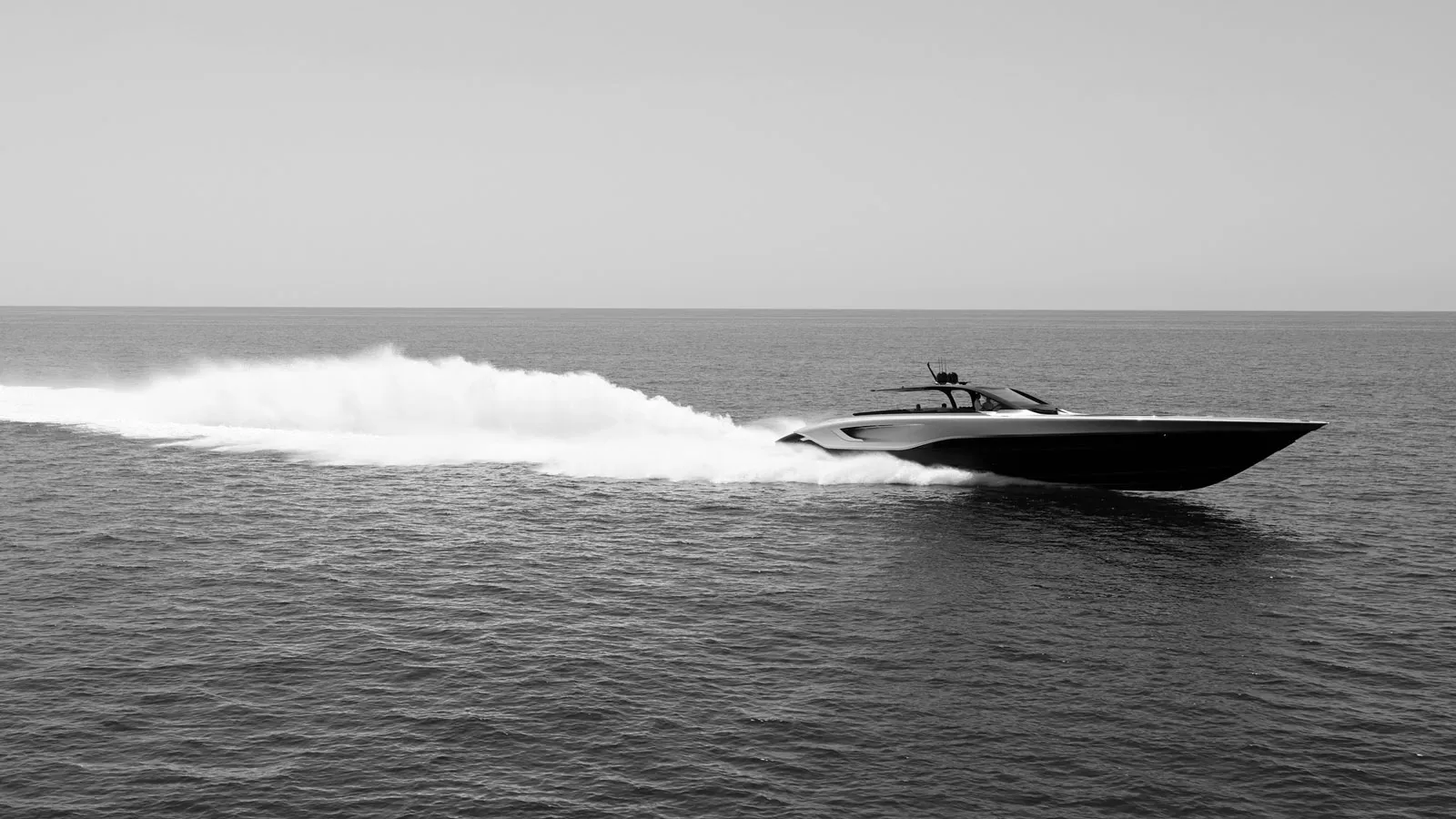
Forget everything you thought you knew about superyacht performance: Bolide 80 isn’t just fast, she's dubbed “the fastest superyacht in the world", with top speeds of 73 knots.
Following the news of her recent price drop, Emily Dawkins takes a closer look at how this record-breaking yacht for sale was built and the surprising features that set her apart...

With a name that means "fireball" in Italian and "racing car" in French, Bolide 80 certainly lives up to its name.
A fusion of pioneering engineering and lean Italian design, packed into a 24.9-metre hull, this "fireball" of a motor yacht was created from a desire to redefine what's possible at sea.

"The idea for Bolide 80 came from an experienced owner who was fed up with the small 'toy' boats which can reach high speeds but ultimately lack comfort," explained Victory Marine founder, Brunello Acampora, who, alongside the Victory Design team, was the brains behind Bolide 80's design, engineering and build.
"He wanted something safe and comfortable, as well as something efficient in terms of fuel consumption. And so that's exactly what we did."
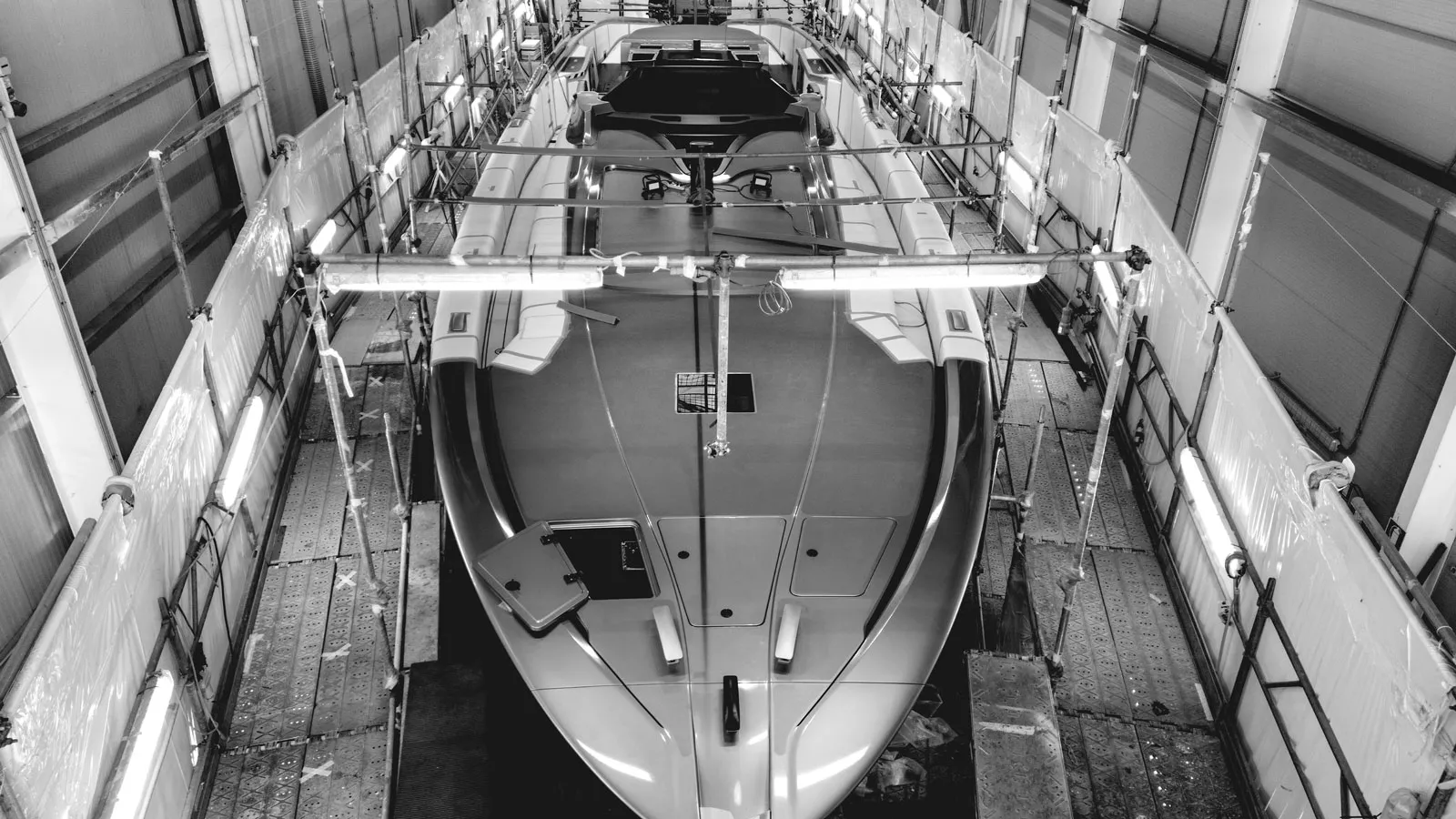
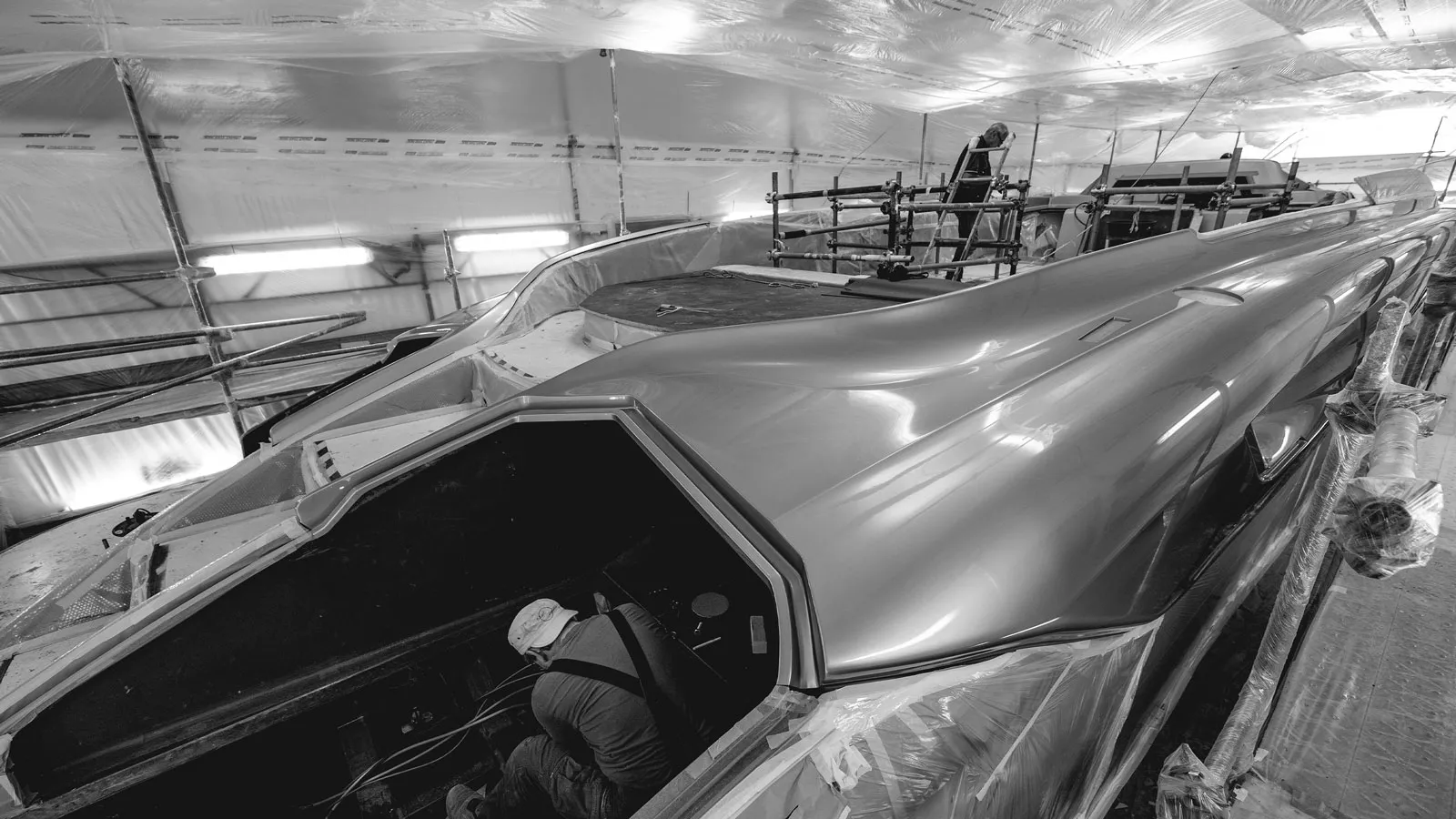
"We've been designing and following the construction of fast power boats for over 35 years: we come from the racing world", continued Acampora, whose company has long been at the forefront of yacht design and marine engineering.
"We've recently completed all of the naval architecture, engineering and production for the Seabird E1 electric racer - so we're firm believers of blending style with technology."

Bolide 80 is described as a "hyper muscle yacht" – a title never seen before in the yachting industry – called as such for her aerodynamic low profile and lightweight build, which was completed entirely in carbon fibre.

BOATPro key facts
Length: 24.9m
Builder: Bolide Yachts of Victory Marine
Exterior designers: Brunello Acampora, Victory Design
Naval architects: Brunello Acampora, Victory Design
Interior designer: Stefano Faggioni, in collaboration with Victory Design
Beam: 5m
Draft: 0.9m
For sale, asking: €6,950,000 with Ocean Independence


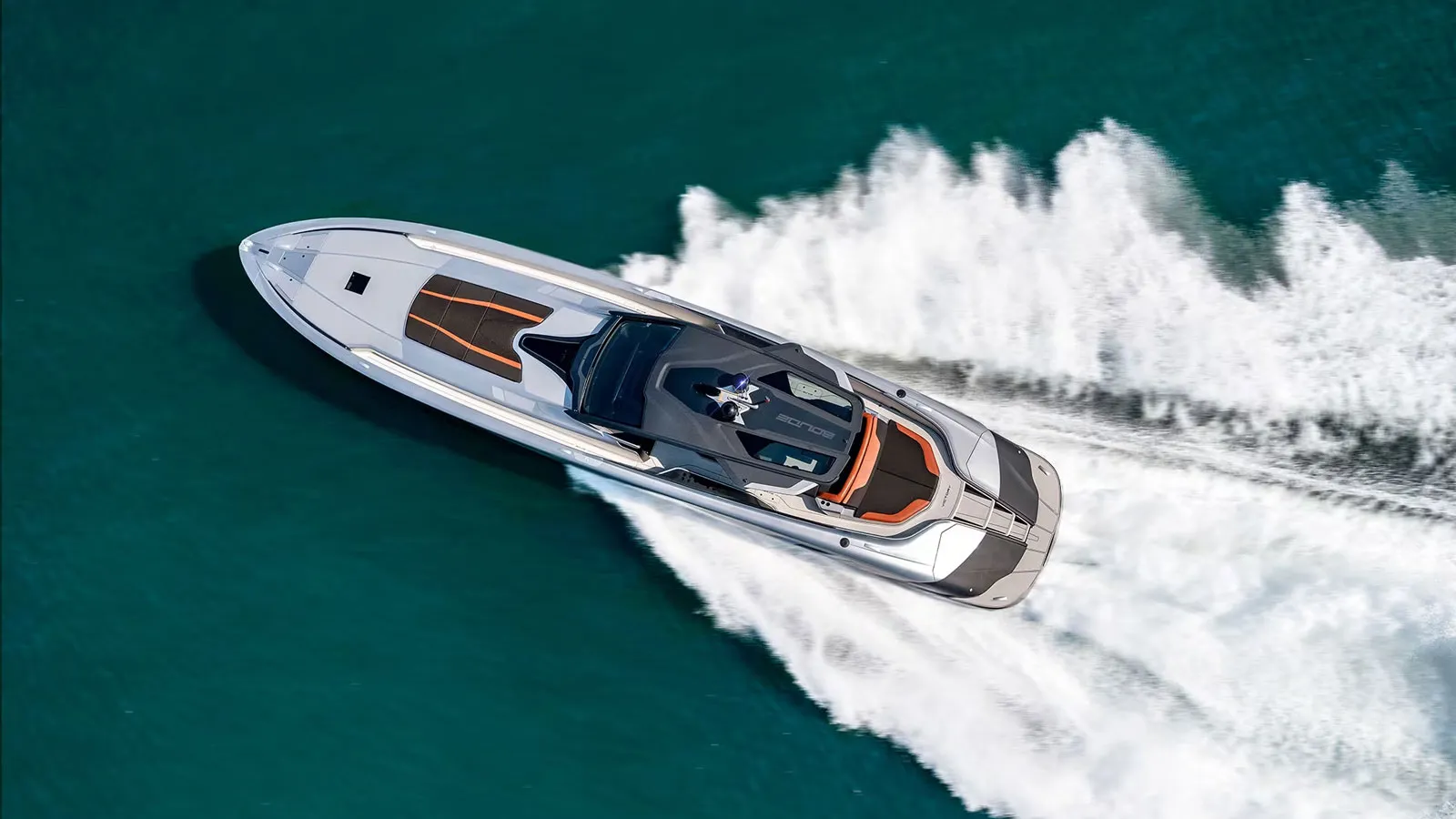
A multi-stepped planing hull also adds to her prowess – a feature specifically designed to reduce drag and increase speed and fuel efficiency – with her hardtop also specifically tailored to reduce wind resistance.

"From the first sketches, we knew that she was going to have the world's largest stepped hull.
But because of this, it meant that Bolide 80 couldn't be powered by water jets - although they'd never be able to beat surface propulsion in terms of efficiency anyway." 
While they could have designed a more efficient boat with twin diesel engines, the design team instead worked around "a modern diesel package with the best power-to-weight ratio" to give her her speed.

Bolide 80 has a tried and tested 73-knot maximum speed.
However, when launched in 2023, the designer revealed that she actually reached speeds above this.
"To put the record right, Bolide 80 hit a consistent 76-knot top speed on her sea trials" - a speed which on land amounts to more than 84mph.
"We wanted to set a record [for her top speed], but mostly we wanted to make such an exercise meaningful from a scientific viewpoint and set the standards of speed in yachting a little higher for the industry."


Triple 2,000hp 12V MAN diesel engines give the motor yacht her power, boasting a total of 6,000hp to get her to that maximum speed.
Even her cruising speed alone is 55 knots, with a "relatively low fuel consumption", and at a 45-knot speed she offers a 600-nautical-mile range.

However, despite her superyacht size and speed, her listing broker, Adam Sutton of Ocean Independence, noted that she still demonstrates exceptional fuel efficiency, hitting the nail on the head in terms of the original owner's brief.
“She uses about 30% of what a similarly sized boat would use for the same distance.
Impressively, she’s able to go further in the same amount of time while using less fuel doing so”.
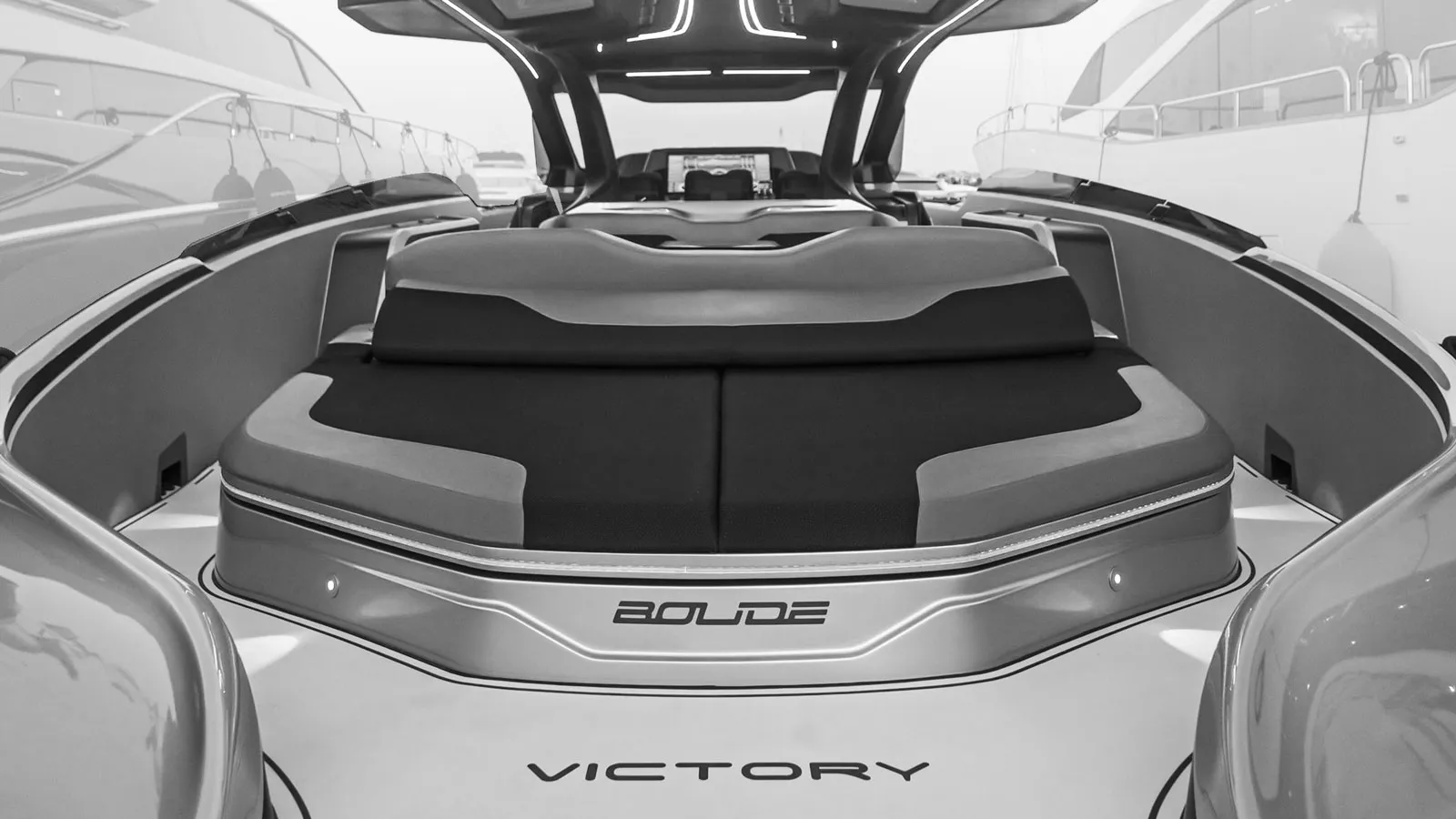

However, it's not just the number of knots she can reach which wins people's attention.
Judges at last year's Design & Innovation Awards praised Bolide 80's cohesive all-carbon structure, its subtle nods to iconic car design and the strong continuity between her trim exterior and striking interior.
Despite being the smallest entrant to the category, amongst other innovative and accomplished designs, Bolide 80 delivered the most powerful impression to the panel and, as a result, took home the award for "Outstanding Exterior Design - Motor Yachts, 24m to 39.9m".

"We designed the entire project to be oriented towards minimalism, but it's also more to do with futurism," explained Acampora.
"The idea was to restore faith in technology and the human capability of shaping its own future.
We strongly believe that we can steer our future through technology, and Bolide 80 – in an era of displacement boats and shy performance yachts – is one of the yachts which does so."
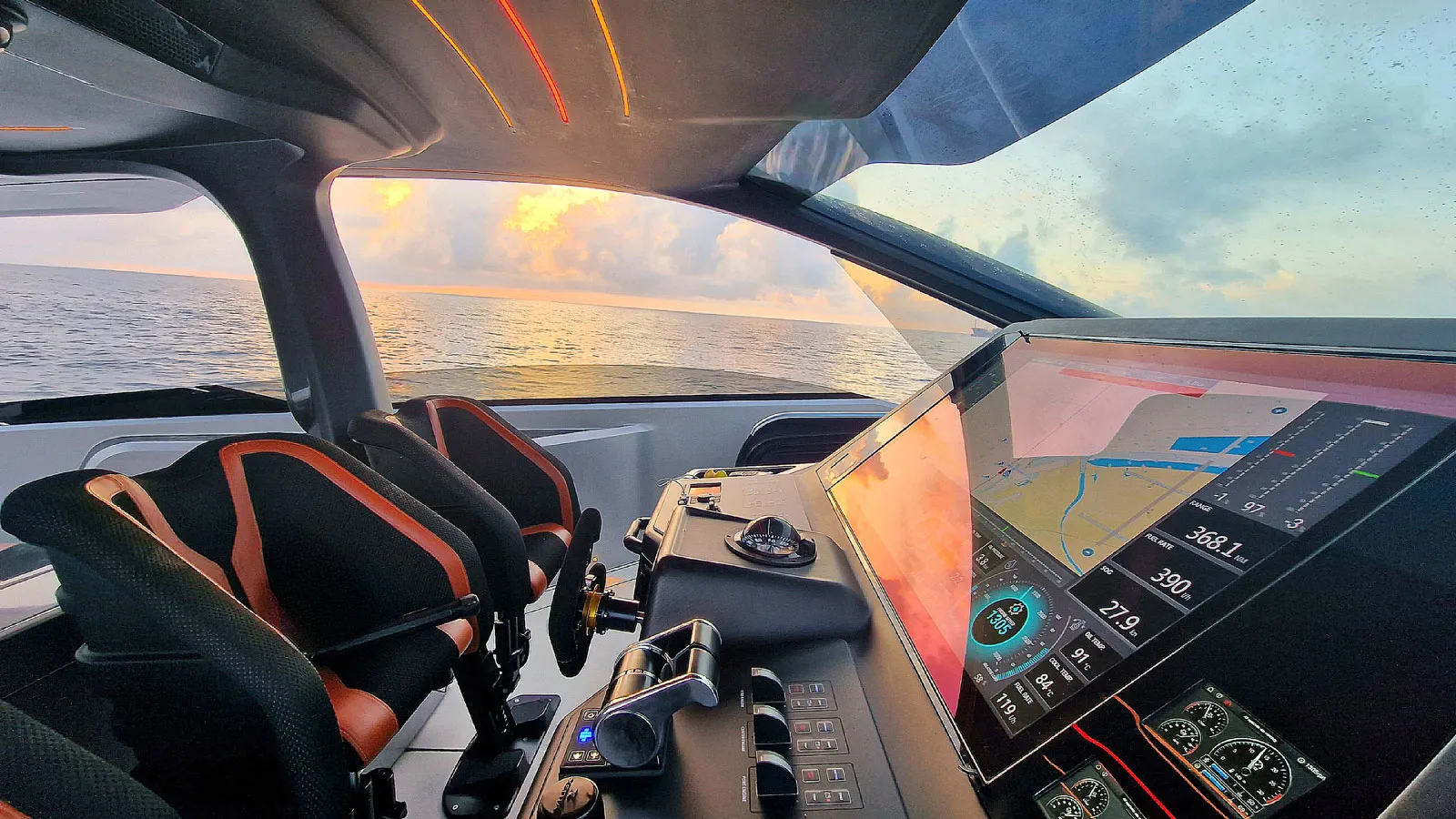

Out front, a sunpad sweeps the elongated foredeck for undisturbed sunbathing when at anchor.
To aft is another sunpad, in prime position behind fitted sofas and the triple-seated helm station, which looks like something out of a sci-fi movie. 

"One thing that people forget about - you look at all the photos and you almost kind of lose a sense of scale of how big Bolide 80 really is", added Sutton.
"She looks like a 40ft boat, but in reality she’s 24.9 metres and the sheer size of her is impressive!"

To match Bolide 80's bold top speeds, an equally as statement interior was required.
Renowned Italian designer Stefano Faggioni, in collaboration with Victory Design, used punchy orange ceilings and matching hand-stitched leather seating to bring the inside of Bolide 80 to life.
Even the leather itself, Acampora shared, "comes from the same guys doing the Ferrari interiors" - channelling her race car DNA further.
Other plush materials used on board include rich marbles and silk, in addition to fabrics by Loro Piana.
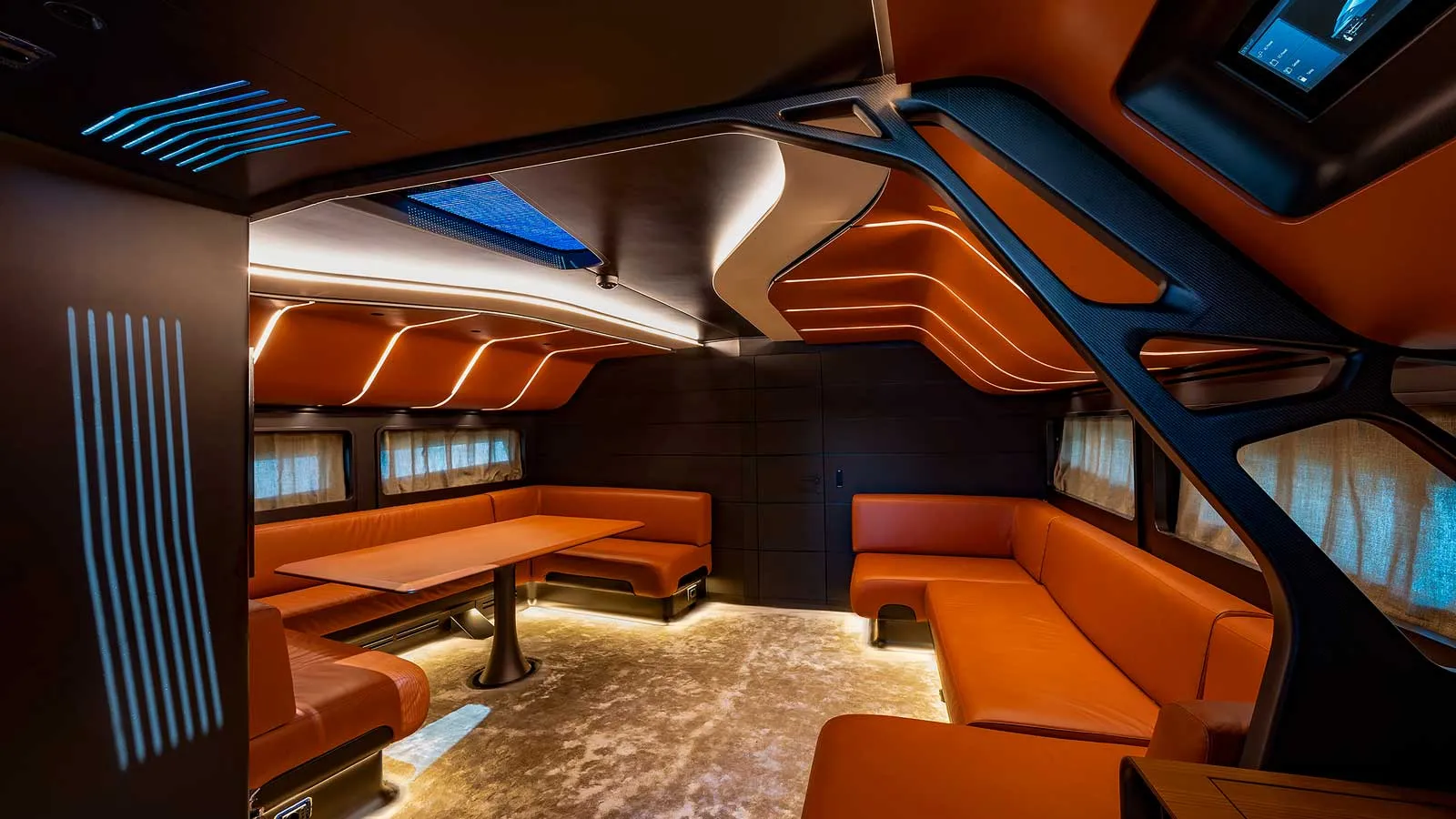

Despite futurism at its core, the yacht is still backed by classical features (albeit with a modern twist), with Faggioni well versed in traditional wooden boat design.
"You might have noticed the exposed structural carbon fibre frames in the main saloon.
The idea came from the original J Class boats with their wooden beams and exposed internal structure.
We wanted her owner to enjoy the beautiful carbon construction from inside, while performance-wise, reducing Bolide's structural weight."

And that's not the only classical inspiration; small seed bags for glassware shock absorption, often found in the racing sailing yachts of previous centuries, have been swapped for modern foam, stored within custom shock-absorbing compartments.
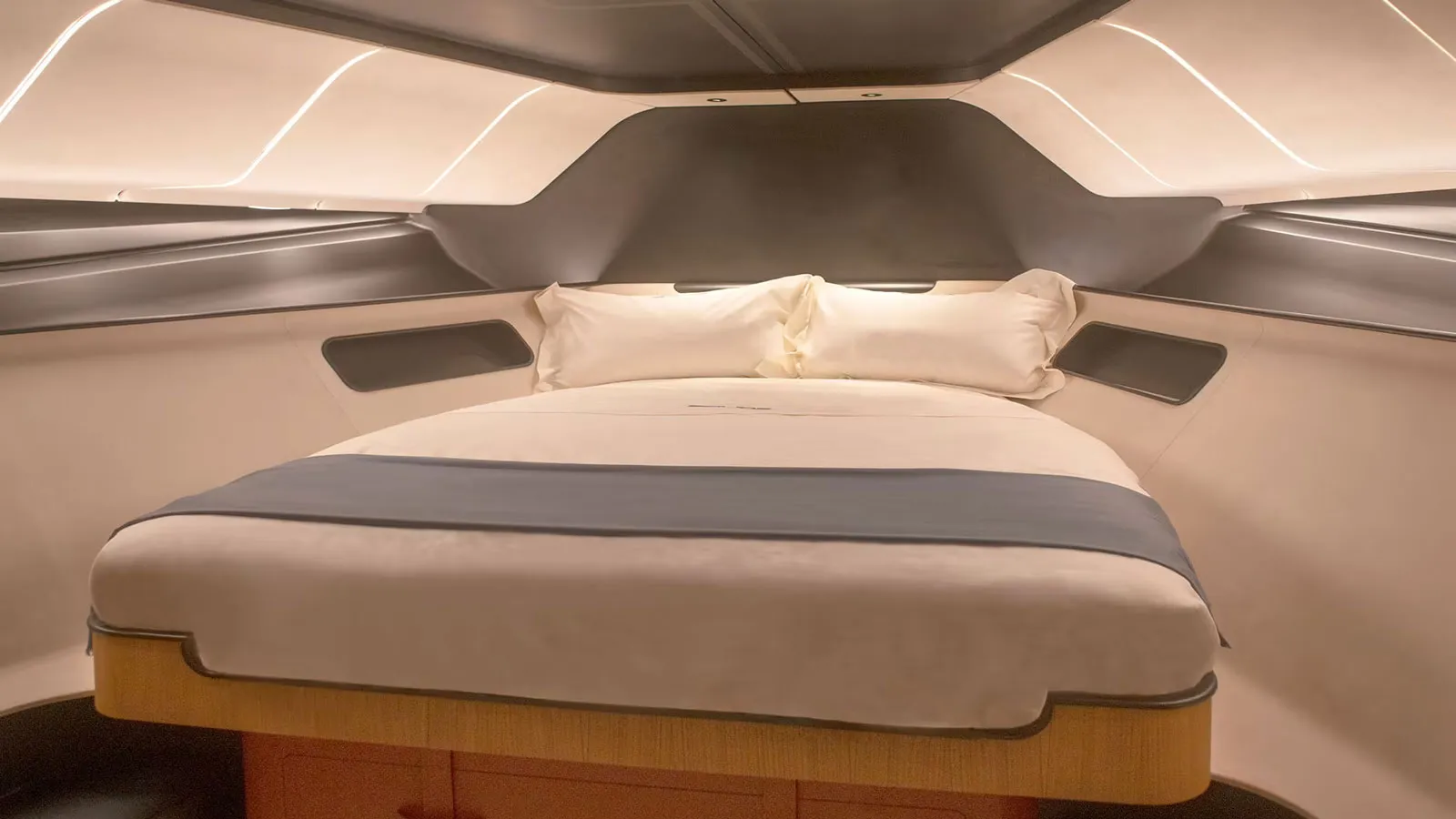

Although just above the superyacht territory (in terms of length), Bolide 80 is surprisingly spacious within.
Accommodation-wise, she can cater for up to four guests across a flexible cabin layout.
A double owner's cabin located forward is accessed via a "vestibule" that also doubles as the wardrobe.
Aft, there is a "children's cabin" to starboard, which can be used for crew or guests (called the "secret" cabin by Acampora), and a dedicated crew cabin to port.

Other interior highlights at the request of the owner include full air-conditioning to allow him to work contentedly below deck, alongside a large kitchen and open-plan saloon.
There is space on board for a crew of two (or three if required), but according to Acampora, "she's the type of boat that you can take out on your own if you really want" - adhering to strict handling rules, thanks to her length at the waterline lying just below 24 metres.

So who is best suited to be Bolide 80's next owner? “Ultimately, I see the Bolide 80 appealing to an owner who has an interest in speed and engineering, namely because of all of the onboard technology and the engines: you’re going to have a petrol head!" said Sutton.

"She is also great for someone who is time-poor", he adds.
"You don’t get the slow and relaxing sailing time; instead, she’ll get you from Ibiza to Palma [de Mallorca] within a couple of hours, rather than half a day.”

With punchy speed, slender design and an interior to match, there's no doubt that Bolide 80 will make her next owner very happy indeed. 
 
Links :

Wednesday, December 10, 2025

10 of the most destructive tsunamis of all time


From HistoryDefined by Carl Seaver

A tsunami is one of the greatest and most potent natural disasters known to man.
While several things can cause a tsunami, the result is always, quite literally, a tidal wave of disaster.

Tsunamis have been around since the beginning of time, but the first recorded occurrence was in 2000 BC off the coast of Syria.
Since then, tsunamis have been documented worldwide but occur most frequently along the shores of the Pacific Ocean, the Mediterranean Sea, and the Eastern Pacific Ocean.
 
What Exactly is a Tsunami?

A tsunami is a truly frightening force of nature. Essentially, it’s a giant wave or series of waves that come from the ocean or the sea.
In most cases, tsunamis result from massive underwater turbulence caused by an earthquake or a volcano.

Tsunamis are so destructive because of how big and fast they’re moving.
A single tsunami wave can be over 1,000 feet tall, 12 miles wide, and move at speeds of up to 500 mph as it reaches land.

Because of the sheer size and speed of these waves, they can cause extensive damage along the coast and flooding up to a mile inland.
However, it all depends on the wave’s size and speed, as most tsunamis don’t grow taller than 30 or 40 feet.

10 of the Largest and Most Destructive Tsunamis in History


Without further ado, let’s dive into the largest and most destructive tsunamis of all time.

Sumatra, Indonesia – 2004

No matter who you ask, the 2004 earthquake and tsunami in Sumatra, Indonesia, is often considered the worst tsunami of all time.

The destruction began on December 26, just one day after Christmas, when a 9.1 magnitude earthquake occurred off the coast of Sumatra in the Pacific Ocean.

The resulting tsunami from this earthquake created waves more than 160 feet tall that swept over 3 miles inland.

Although the Sumatra tsunami wasn’t the largest tsunami wave ever, it was by far the most destructive. It claimed the lives of an estimated 230,000 people, injured 225,000 more, and caused more than $10 billion in damage. 

North Pacific Coast, Japan – 2011

The Great Sendai Earthquake and Tsunami, as the disaster has come to be known, takes the number two spot on our list for several reasons:It’s the most recent major tsunami to occur.
It was the costliest and one of the most destructive tsunamis ever and had a sizeable death toll.
It could have resulted in the worst nuclear disaster since Chornobyl.

The Great Sendai Earthquake and ensuing tsunami occurred off the coast of Japan’s main island, Honshu, on March 11, 2011. 
 
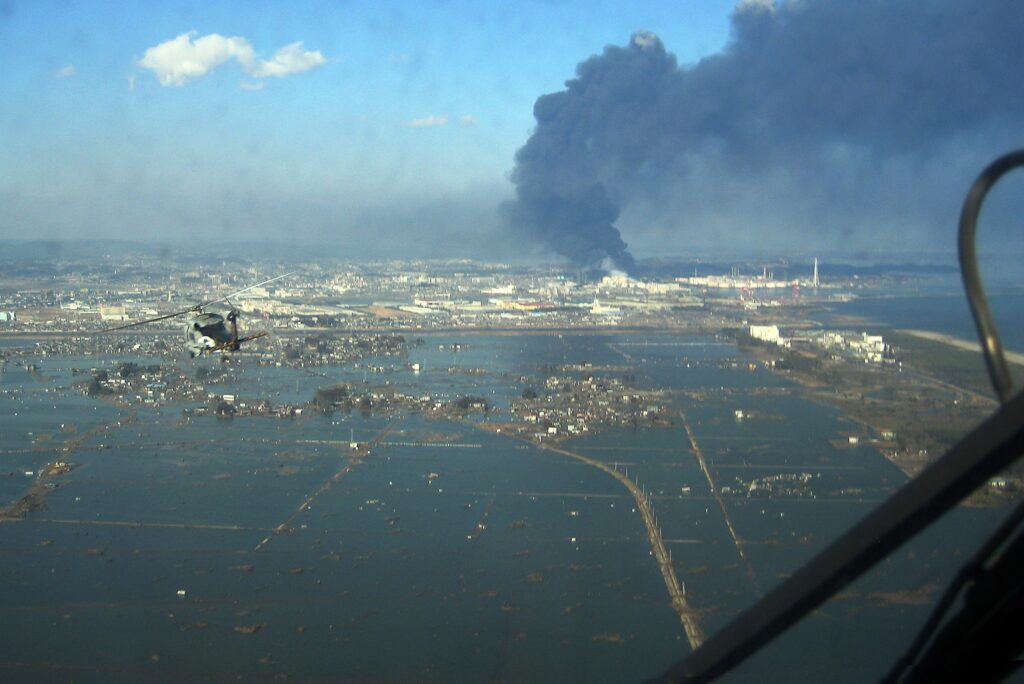
Sendai after the tsunami

The tsunami was set off by a 9.0 magnitude underwater earthquake that resulted in waves more than 130 feet tall traveling at a speed of 500 mph.
The result was the destruction of entire towns and cities.

This tsunami claimed the lives of an estimated 18,000 people, left half a million homeless, and caused more than $235 billion of damage.

In addition, its proximity to several nuclear power plants along the Japanese coast nearly resulted in a catastrophic nuclear event. 

Lituya Bay, Alaska – 1958

In terms of sheer size, the Lituya Bay tsunami is by far the largest megatsunami ever recorded in history.
Yet, despite this, there’s also a good chance you’ve never heard of this disaster.

That’s because it happened in 1958 along the mostly uninhabited coastline of southeastern Alaska in a small fjord known as Lituya Bay.

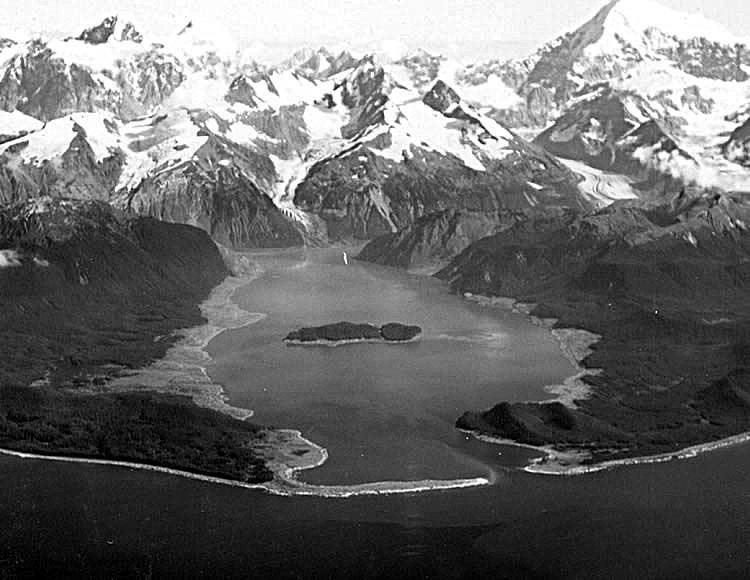
The tsunami was generated by a powerful 7.8 magnitude earthquake that resulted in more than 90 million tons of rock and debris getting dumped into Lituya bay.

This created the largest tsunami wave in history, measuring 1,720 feet tall.
However, because the tsunami only killed five people and caused minor damage, it didn’t gain much notoriety. 
 
Lituya bay after the tsunami

Lisbon, Portugal – 1755

The tremendous Portuguese tsunami of 1755 happened on All Saints Day and was the most destructive tsunami in recorded history up to that point

The tsunami was created by a series of 8.0+ magnitude earthquakes

These earthquakes resulted in not one but three separate tsunami waves that hit various port cities in Portugal, but none were as destructive as the one that hit Lisbon.

The wave that hit Lisbon was around 100 feet tall and one of the widest in recorded history, as it affected cities hundreds of miles along the coast.
In Lisbon alone, however, the death toll was 60,000, and the destruction was unimaginable. 

Krakatau, Indonesia – 1883

While the 2004 tsunami in Indonesia was the most destructive of all time, it wasn’t the first major tsunami to hit the country.

Instead, that honor goes to the Krakatau tsunami of 1883.
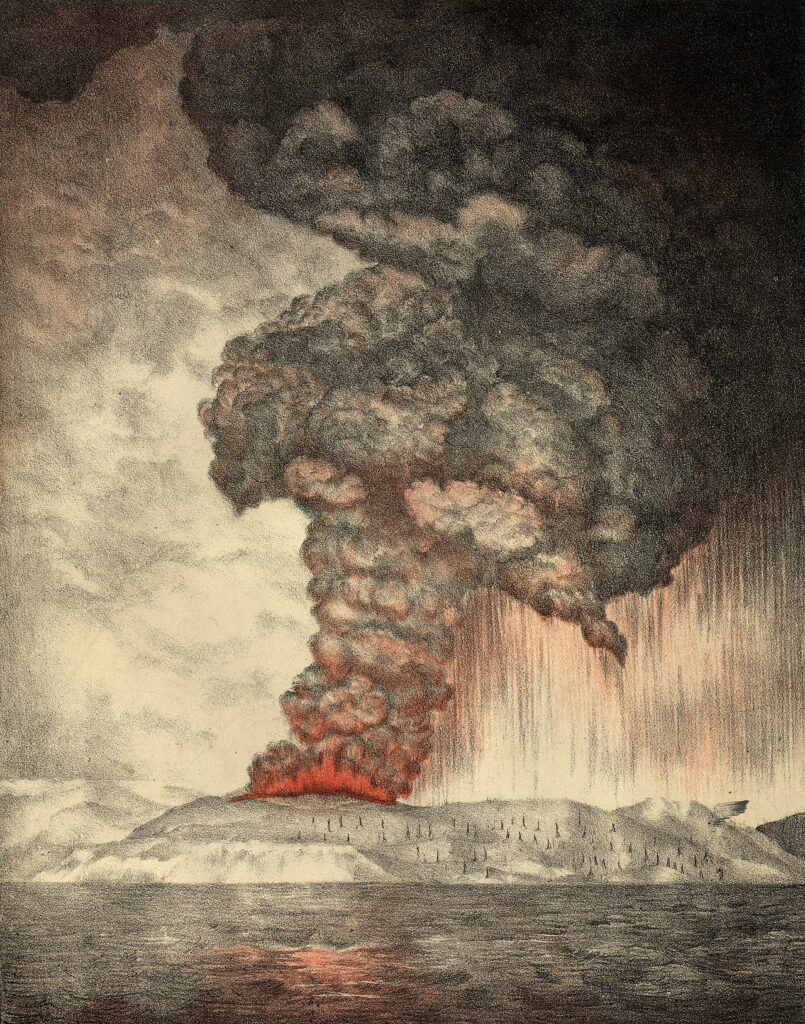
However, unlike the other tsunamis on this list, the Krakatau tsunami happened due to a volcanic eruption.

Regardless of the cause, this tsunami was highly destructive as it claimed an estimated 40,000 lives and injured 30,000 more.
It also measured more than 120 feet tall and is considered the most violent volcanic tsunami in history. 
 
 
Krakatu eruption

Enshunada Sea, Japan – 1498

The Enshunada Sea tsunami of 1498 is the oldest recorded tsunami on our list.
It happened on the morning of September 20 and affected the coastal cities of Kii, Sagami, Izu, Surugu, and Mikawa.

Although the exact magnitude of the earthquake that caused the tsunami isn’t fully known, most experts place it at 8.3.

We also don’t know how tall or wide the resulting tsunami wave was.
What we do know, however, is that it killed more than 30,000 people and left thousands more injured and homeless.
 
Nankaido, Japan – 1707

Keeping to the trend of destructive Japanese tsunamis, let’s look at number seven on our list, the Nankaido tsunami of 1707.
Unfortunately, while we know more about this tsunami than the one in 1498, the facts are somewhat messy and skewed.

We know that the tsunami wave was nearly 100 feet tall and happened as a result of an 8.4 magnitude earthquake.

We also know that more than 30,000 people died, a similar number of buildings were destroyed, and dozens of ensuing waves washed inland for miles. 

Southern Chile, South America 1960

Our next tsunami takes us to South America off the coast of Chile.
In 1960, the largest earthquake ever recorded, a 9.5 magnitude earth-shaker, happened in southern Chile and was strong enough to have a global impact.

While the quake did plenty of damage, it also created a tsunami wave measuring up to 80 feet tall in some areas.
This wave killed roughly 140 people and left more than 2 million Chileans homeless.

Messina, Italy – 1908

The earthquake and tsunami in Messina, Italy, of 1908 weren’t necessarily the biggest to ever occur, but it was one of the worst double disasters in modern history.

It all started when a 7.5 magnitude earthquake occurred in the Straight of Messina, resulting in tsunami waves up to 40 feet tall.

Because the earthquake and tsunami happened in the wee hours of the morning, most people were still in bed and completely unprepared.

As a result, more than 80,000 people perished in the double disaster, and hundreds of thousands were forced to relocate.
The earthquake and tsunami nearly destroyed more than a dozen cities in the area, including Messina and Reggio de Calabria. 

Mount St. Helens, Washington – 1980

The final entry on our list hits closer to home than any other tsunami in recorded history.

The volcanic eruption of Mount St. Helens in Washington was one of the most shocking and frightening natural disasters to hit the United States in the last 50 years. It also led to one of the most unique and largest tsunamis ever recorded.

When Mount St. Helens erupted on May 18, 1980, a large chunk of the volcano broke off into nearby Spirit Lake. This resulted in a tsunami wave exceeding 800 feet tall that hammered into the side of Mount Margaret. Although no one was killed in the tsunami, it is one of the tallest tsunamis in history.

Links :

Tuesday, December 9, 2025

Royal Navy unveils new Atlantic strategy to counter Russian threat

 
From BBC by Paul Adams

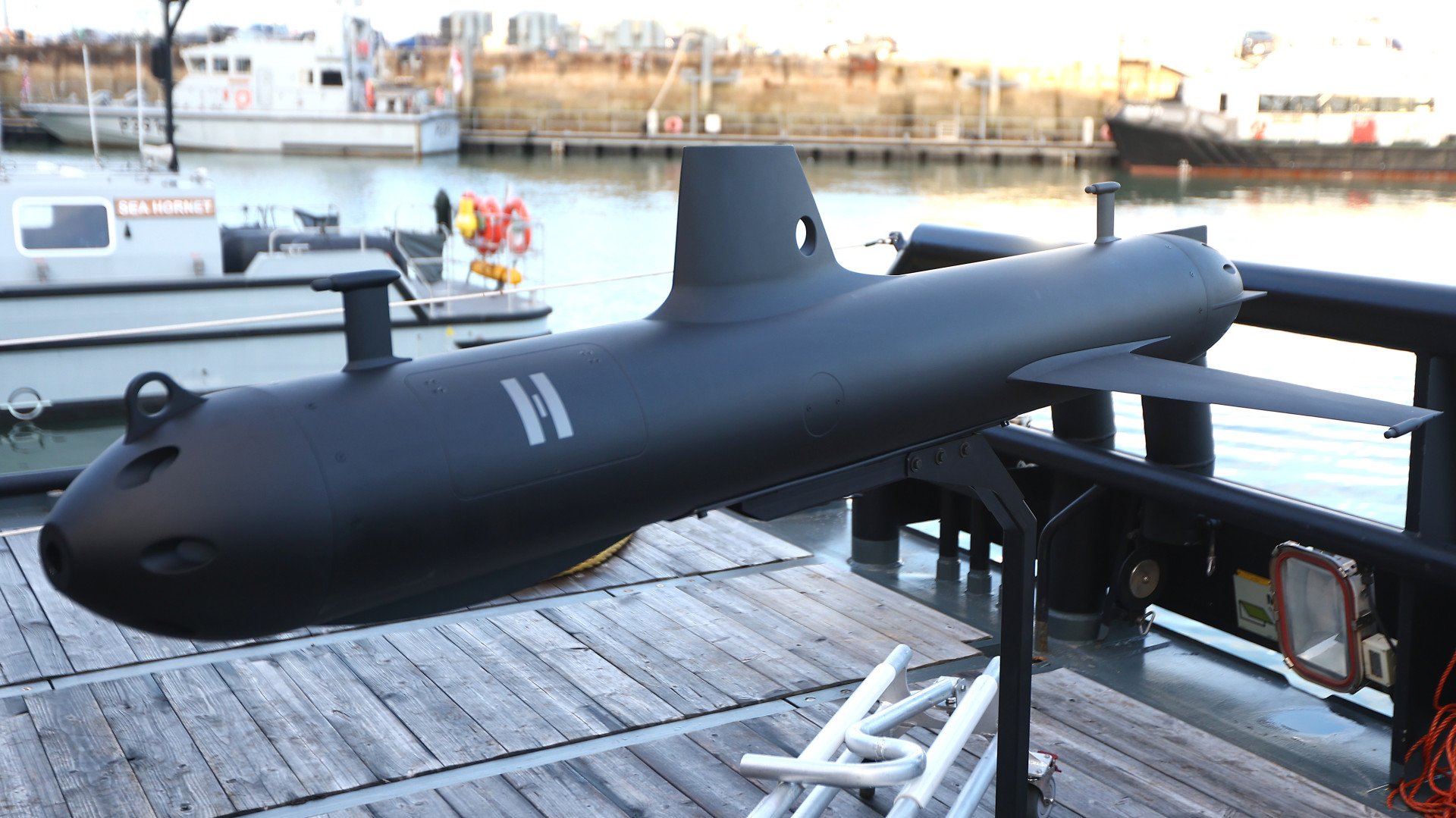
In the dark waters off the west coast of Scotland, a slender submarine glider, like a torpedo with wings, slips under the surface and quickly disappears off into the murk.
The SG-1 Fathom is on the prowl for intruders.

The SG-1 Fathom monitors the water, using its sensors to gather information 
 
"The glider patrols through the depths of the ocean monitoring and listening for adversaries that might be in the area," says Fathom's programme manager Katie Raine.

Adversaries like Russian submarines operating covertly in or near British waters, suspected of working with spy ships to map the UK's vital undersea cables and pipelines.
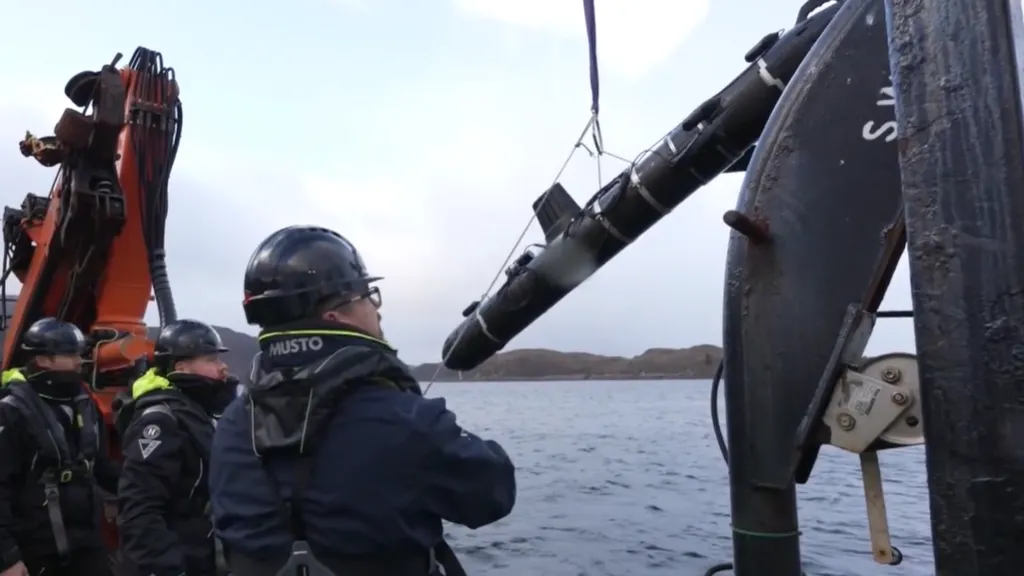
Fathom, made by the German defence company Helsing and now being trialled by the Royal Navy, moves silently, its sensors constantly gathering information.
It's designed to patrol for months on end, working autonomously with dozens of other gliders, using software trained on decades of acoustic data.
"The glider processes and identifies threats more quickly than we've been able to do previously," Raine says.
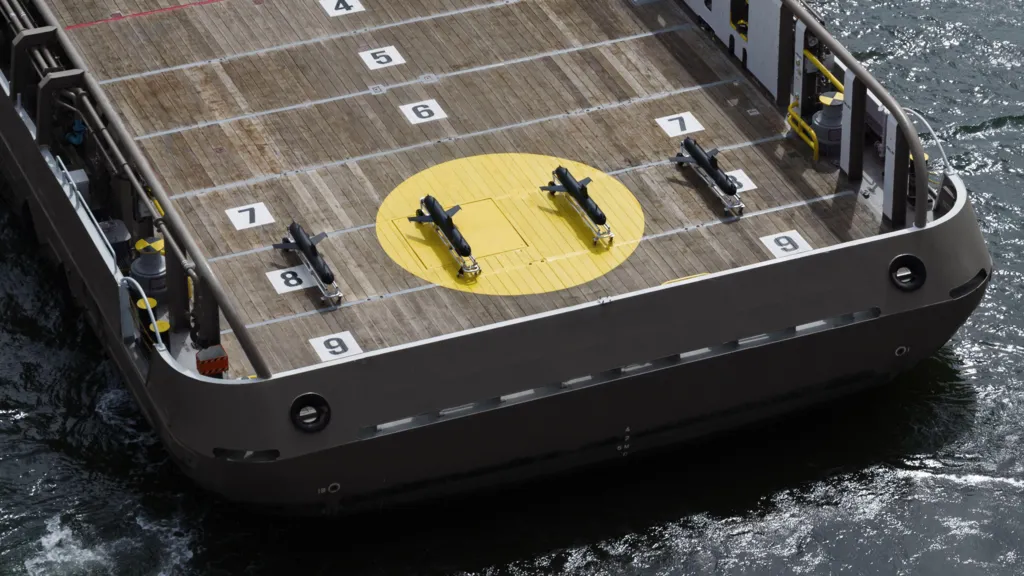
If it proves effective, Fathom will likely form part of Atlantic Bastion, a network of drones, warships and surveillance aircraft aimed at protecting vital undersea infrastructure.

The Atlantic Bastion programme is a network of drones, warships and surveillance aircraft designed to protect undersea infrastructure

The Ministry of Defence, which is unveiling elements of Atlantic Bastion on Monday, said in a statement that the programme was "in direct response to the resurgence in Russian submarine and underwater activity".

The government says there has been a 30% increase in the number of Russian vessels threatening UK waters in the last two years.
Russia says its the UK government that's being provocative.

In September, the parliamentary National Security Strategy Committee said it was "not confident" the UK was equipped to protect its undersea cables, warning that an attack could cause "catastrophic disruption" to vital financial and communications systems.
 
A thermal image of the Yantar taken off the coast of the United Kingdom.
United Kingdom Ministry of Defense Photo.
 
Last month, the Yantar, a Russian oceanic research vessel suspected of mapping British undersea cables and pipelines, shone lasers at RAF pilots tracking its progress near UK waters.
Defence Secretary John Healey called the action "deeply dangerous", saying the Yantar had repeatedly crossed in and out of the UK's exclusive economic zone.
 
The Fathom is designed to patrol autonomously for months and works with other gliders to detect threats
Helsing 

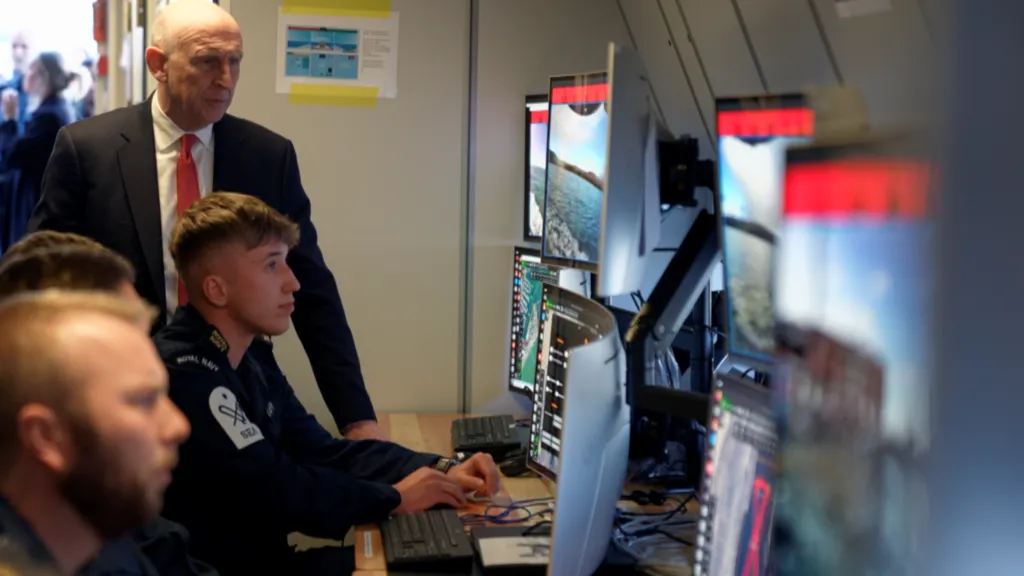
On a visit to Portsmouth last week, Healey stressed the government's investment in new technology to combat the threat was vital.
"This is about keeping us ahead of the Russians," he told me aboard the XV Patrick Blackett, the Royal Navy's experimental ship used as a testbed for new technologies.

Some of those new technologies were on display, from a remote-controlled speedboat, zipping about in the harbour, to a mock-up of Proteus, the navy's first pilotless helicopter.

On the dock above us loomed the black hull of Excalibur, a 12-metre-long, 19-tonne unmanned submarine, first launched earlier this year.
"We know the threat that Russia poses," Healey said. "We track what their ships do. We track what their submarines are doing. 
"We know that they are mapping our undersea cables and our networks and our pipelines, and we know that they are developing new capabilities all the time to put those at risk."

Accompanied by his Norwegian counterpart Tore O Sandvik as the two countries signed a defence pact - the Lunna House Agreement - to work together to hunt Russian submarines and protect underwater infrastructure, Healey said time was of the essence.
"It's a rapidly evolving threat and that's why it requires a rapid response from the UK."

It's a daunting challenge for the man charged with supervising Britain's response, the First Sea Lord Gen Sir Gwyn Jenkins.

So how does the UK keep up with an opponent who hasn't declared war but is investing heavily and behaving increasingly aggressively through increasingly complex means?

"Despite the cost of the war in Ukraine to [Russia], they continue to put hundreds of billions of dollars' worth of investment into their submarine fleet," he said.
"We're still ahead in the Atlantic, but it's not by as much of an advantage as I would like. We're being pressed, and we're definitely in the competition to stay ahead of where the Russians are."

Others are less optimistic.

Prof Peter Roberts, an expert on contemporary conflict at the Royal United Services Institute (Rusi), says the Royal Navy's new strategy looks fine on paper but "feels like putting lipstick on a pig".

He argues the UK has "neglected" its post-World War Two responsibility to be the guardian of the western Atlantic, and now the Royal Navy is "trying to find a way to look credible" in addressing a threat that has been "steadily increasing for the past 20 years... but still ignored by the government and Navy".

"The Royal Navy does not have the ships to do this job coherently or credibly and is looking to address it with drones as they are cheaper and can provide coverage of the geographical areas for which the Royal Navy is responsible in lieu of new ships," Prof Roberts adds.
"Russia so far is going unchallenged in much of UK water space and this strategy is playing catch up long after the fact."

Russia says it's Britain that's being provocative, even hysterical.
Russian Foreign Ministry spokesperson Maria Zakharova told a news briefing in Moscow that the Lunna House Agreement was being used to justify "monitoring Russian naval activity" and risked "provoking unnecessary conflicts" in international waters.

But the military says it's clear-eyed about the dangers.
And it's working closely with industry to address them.

Links :

Monday, December 8, 2025

Research center will enable 6 people to live 6,560 feet underwater for 30 days


From Earth by Jordan Joseph

China has begun building an underwater research center in Guangzhou that pairs a crewed seafloor lab with a land-based simulator.
Their plan focuses on long stays in the deep ocean so scientists can watch natural changes unfold in real time.

At a depth near 6,560 feet, the mission profile allows a six person crew to remain underwater for up to 30 days.
That single figure hints at what this project is really about, time.
 
Why cold seeps matter

A cold seep, seafloor lab – where methane and other gases leak and feed microbes – is the project’s core target.
These places host food webs that run on chemistry rather than sunlight.

These oases run on chemosynthesis, the process where organisms use chemical energy to make food. That pathway fuels tube worms, mussels, and a menagerie of microbes.

The work is led by Li Chaolun at the South China Sea Institute of Oceanology (SCSIO).
His research centers on deep sea ecology and environmental change.

Scientists also watch hydrate, a methane rich ice-like solid that forms under pressure and cold temperatures.
It occurs in seafloor sediments and often neighbors cold seeps.

How the seafloor lab will work


Crews will run in situ, in the original place under natural conditions, experiments inside a pressure safe habitat.
They will monitor chemistry and biology with cameras, mass spectrometers, and samplers that never leave the deep.

The design links the seafloor lab to a land simulator, which mirrors key conditions topside.
This pairing lets teams replay the same events under controlled settings without waiting for the next expedition.

“This is a project designed to deepen our understanding of deep sea science through the study of cold seep systems in the South China Sea,” said Chaolun. 
He described an internationally open program built to answer environmental and biological questions that require time at depth.

China’s teams have already practiced long watchkeeping with a corrosion resistant observation platform deployed in a South China Sea cold seep for 1,070 cumulative days.

That experience showed the value of continuous video and chemical data for tracking slow shifts in deep habitats.

What scientists hope to learn

Researchers hope to place more compact chemical sensors on future missions that can stay in place for months.

These tools could track changes in methane, oxygen, and minerals with better accuracy than current hardware allows.

Teams are also considering robotic helpers that can operate near the habitat and extend its reach.
Those machines would handle tasks that require long hours outside the structure, giving crews more time for analysis.

The first task is to map how methane moves from the seafloor into the water and who eats it along the way. That includes methanotrophs, bacteria that gain energy by consuming methane and shaping carbon flow.

Researchers also want to watch community shifts after small, natural pulses of gas or mineral rich fluids. With people on site, experiments can start within minutes rather than days.

Another goal is to test how seep chemistry influences nitrogen and sulfur cycling across time.
Those results can sharpen models that predict when and where bursts of activity will appear.

Expanding future research paths

Scientists plan to link the new observations with long term data from earlier survey lines to see how seep activity changes across wider regions.

They hope the combined record will give them a clearer sense of how deep seachemistry shifts over months and years.

Teams also want to test new tools that can sample fragile microbes without disturbing their structure. These trials could guide the design of future probes for other deep habitats.

Life support at these depths must manage hydrostatic pressure, pressure from the weight of overlying water.
Every seal, hatch, and cable path faces stress that would crush ordinary hardware.

Teams will also manage confined living and limited emergency options.
Redundant systems and strict checklists are the quiet heroes that make a month underwater both possible and safe.

Why this seafloor lab matters

Better instruments, tougher materials, and reliable data links proven here can improve offshore work in energy, cables, and environmental monitoring.

The same sensors that track methane could check leaks or verify cleanup.

The facility also creates a training pipeline for engineers, biologists, and pilots who will shape the next decade of ocean work.

The wider public gains clear, long form observations that turn distant deep sea life into measurable evidence.
 
Links :

Sunday, December 7, 2025

GEBCO 2025 : Seabed 2030 announces millions of square kilometers of new seafloor data

New version of GEBCO bathymetric grid available to download
Mapped seafloor is shown in blue, with red indicating new bathymetric data added in the last year. (Image credit: Seabed 2030)
 
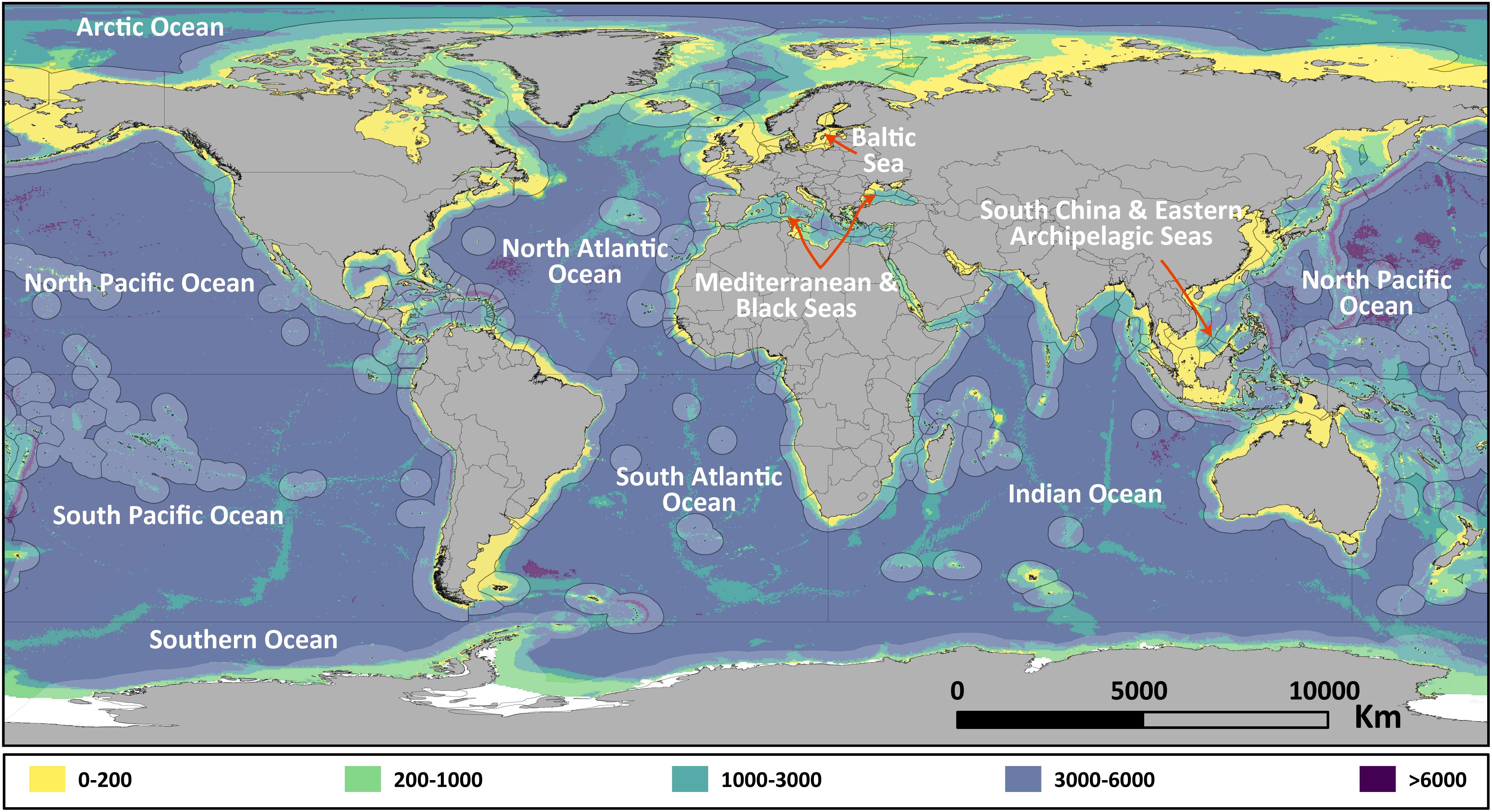
Distribution of different depth zones within the world ocean and seas and EEZ. The EEZ analysed this study includes all the area between a state’s coastline (delineated as zero depth based GEBCO_2024 bathymetry grid) and the outer limit of the corresponding EEZ.
Territorial claims by sovereign states in the Southern Ocean are not considered EEZ.
The depth zones are based on GEBCO_2024 bathymetry grid.
 
 
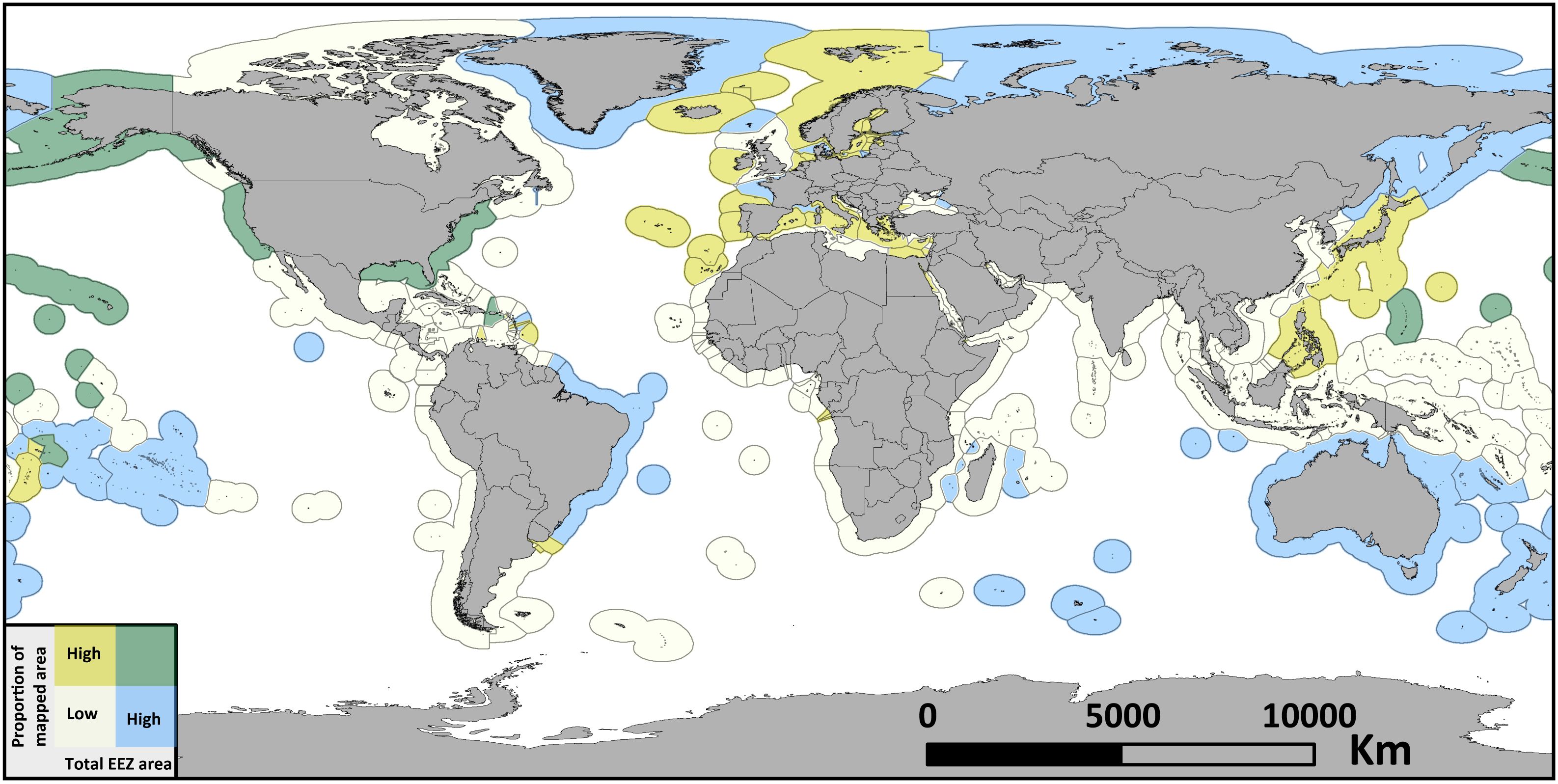
Bivariate map showing the proportion of total area mapped by direct method and total area of Exclusive Economic Zone (EEZ) for each nation.
Both the total EEZ area and proportion of mapping is classified by equal interval method.