Wednesday, January 3, 2024

Northern Sea Route saw seven containership voyages in 2023, including controversial trip by Chinese container ship


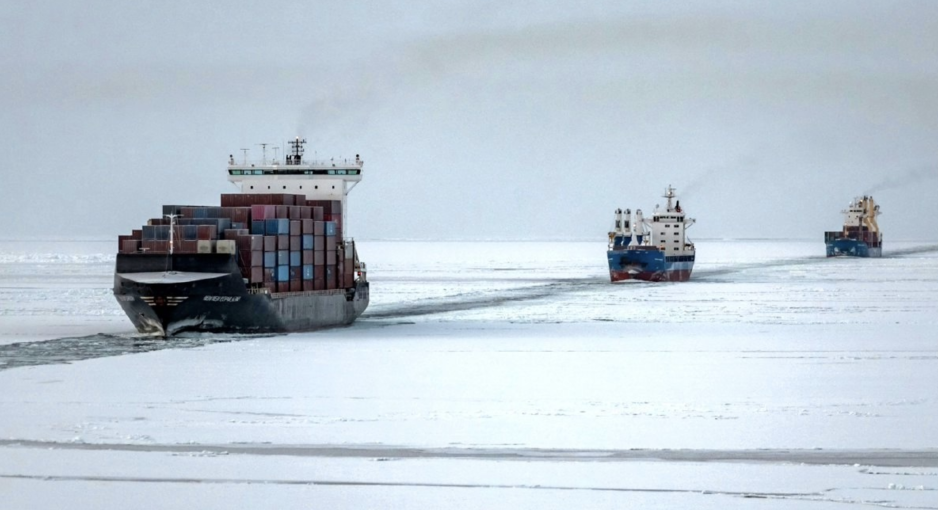
Chinas NewNew Polar Bear in a convoy on the Northern Sea Route during eastbound voyage in October 2023. (Source: Rosatomflot)

From HighNorthNews by Malte Humpert

Northern Sea Route shipping activity during the summer of 2023 included the first regular container service between Asia and Europe. 
But the novel service did not transpire without controversy as one of the vessels, Chinas NewNew Polar Bear is suspected of damaging the Balticconnector pipeline.
Results of a Finnish request for inquiry with Chinese counterparts remain pending.

After years of announcing grand, but hitherto unfulfilled plans by Russian officials for routine container traffic on the Northern Sea Route (NSR), the Arctic seaway saw the first significant regular liner service this summer.

China’s NewNew Shipping Line dispatched four container ships along the route between July and November, completing a total of seven voyages.
For next year the company announced plans to expand its operation to seven vessels.
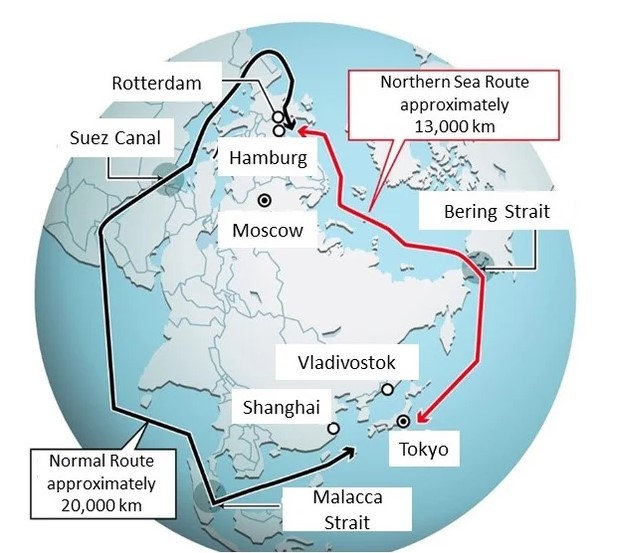


NewNew Shipping Line provided service between ports in East Asia and St Petersburg, with some vessels making intermediate stops in Arkhangelsk and ports in the Baltic Sea.

All four container ships, NewNew Polar Bear, Xin Xin Hai 1, Xin Xin Tian 1, and Xin Xin Shan, feature light to medium ice protection between class Ice 1 and Arc 5 and are able to carry between 1,200 and 2,800 standard containers.

In comparison, the world’s largest container vessels transport in excess of 20,000.
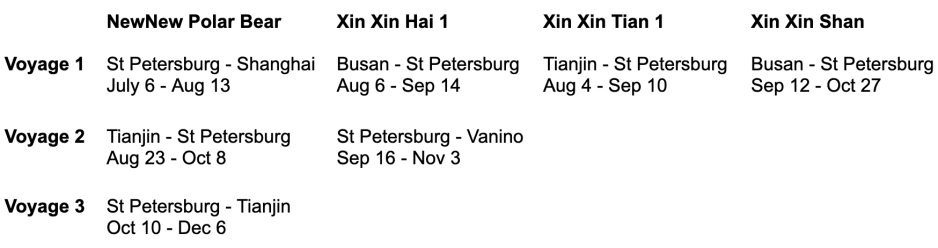

Table showing port of origin and destination for the seven Newnew Line voyages in 2023. (Source: Author’s own work)


NewNew Polar Bear managed to complete three full transits of the NSR, a unique feat for a containership on the route.
The vessel departed from St Petersburg in early July and arrived in China in mid-August before beginning its return voyage back to the Baltic later that month.
It completed another late-season eastbound voyage, with a stop in Arkhangelsk, arriving in China in early December.
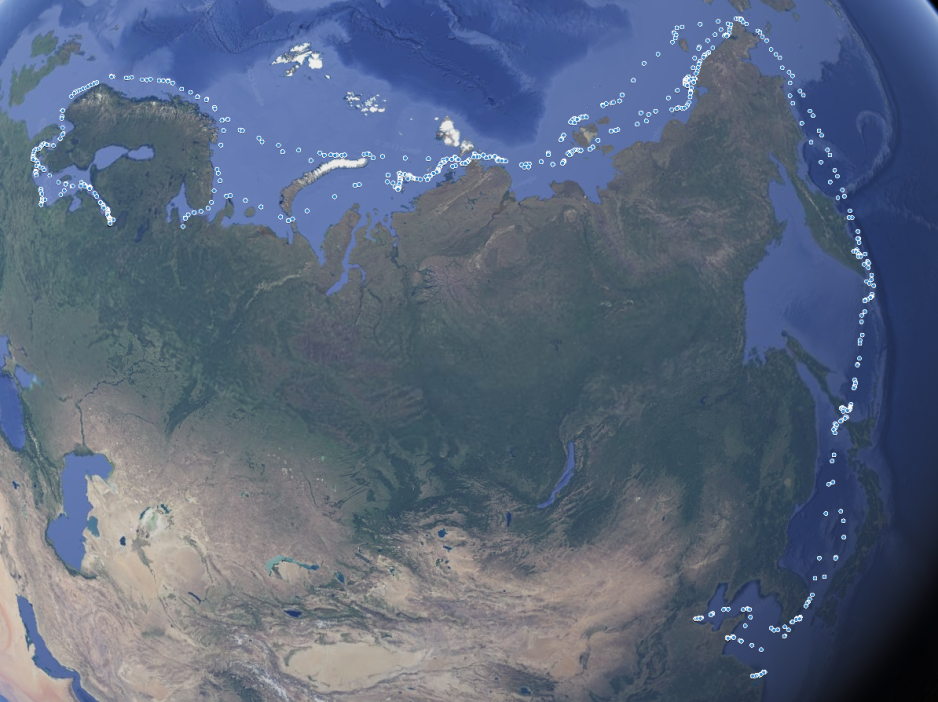

Map showing NewNew Polar Bear’s three voyages along the NSR in 2023.
(Source: Author’s own work)

Additional voyages were conducted by Xin Xin Hai 1, which completed a three month trip between Busan and St Petersburg and returned to the Russian port of Vanino.
Two one way voyages by Xin Xin Tian 1 and Xin Xin Shan round out this summer’s operation.
Both vessels returned to Asia via the Suez Canal.
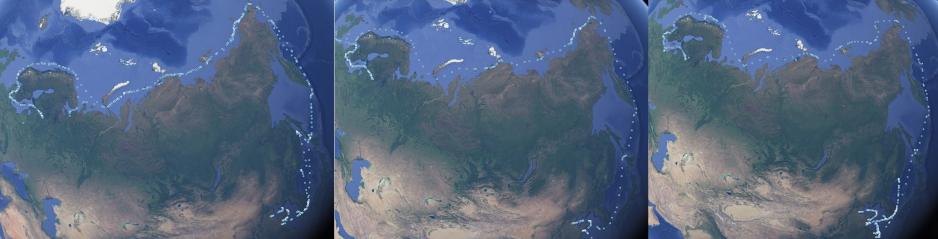

Maps showing the voyages of Xin Xin Hai 1, Xin Xin Tian, and Xin Xin Shan. (Source: Author’s own work)

Incident remains unresolved

Apart from the novelty of Arctic container operations, the company’s NewNew Polar Bear garnered international attention when the vessel appears to have damaged subsea infrastructure in the Gulf of Finland.

According to Finnish officials, the ship dragged and subsequently lost its anchor along the seafloor for 180 km damaging the Balticconnector natural gas pipeline.
The vessel was subsequently photographed during a stop in Arkhangelsk with its port anchor missing.

Shipping experts, who ran simulations about the loads involved when dragging an anchor and the likely course divergences, question the accident theory.

“The hypothesis that it lost its anchor and dragged it on the bottom for a very long distance does not seem very credible,” explains Hervé Baudu, Chief Professor of Maritime Education at the French Maritime Academy (ENSM).
“The accidental theory of an anchor line dragging for several miles without the ship realizing it is unlikely,” continues Baudu.


Simulation showing the dragging anchor slowing the ship down in 5 minutes, and the speed dropping to 5 knots. The anchor turns the ship to port, even with the autopilot on.
(Source: © Herve Baudu, 2023 – Wärtsilä simulator of ship handling from ENSM College)

NewNew Polar Bear also conducted a two-day stop in a remote fjord in Russia’s Kamchatka, which raised eyebrows among shipping experts.
“Also strange are the two anchorages that the ship made at the end of the return transit on the NSR, one on the Kamchatka peninsula and the other to the south of Sakhalin Island. Could it then have picked up a new anchor?” questions Baudu.
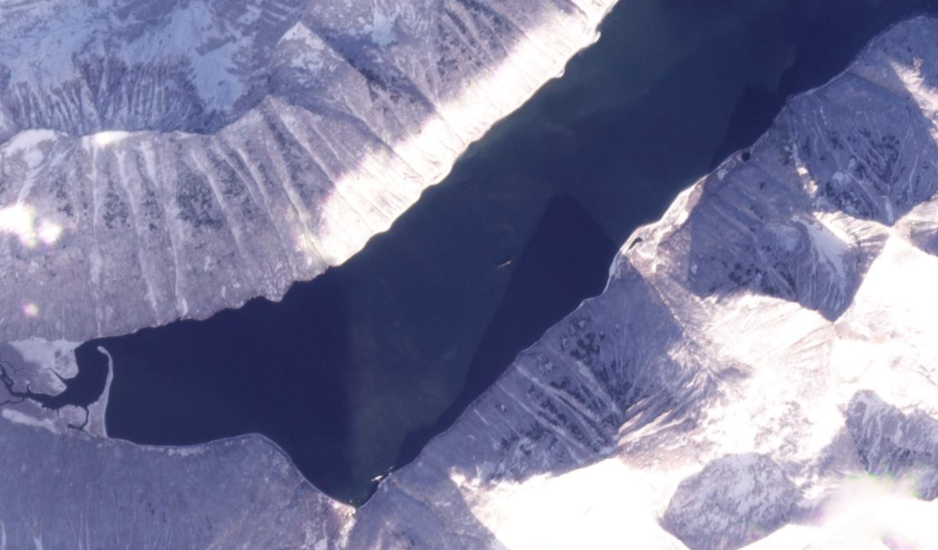

Newnew Polar Bear visible in the center of the image in Bukhta Russkaya, a bay in Kamchatka between November 18-20, 2023.
(Source: Google Earth)

Much speculation continues to surround the incident and officials, including from the Finnish National Bureau of Investigation, requested the vessel’s inspection upon its return to China.

“It is easy to check, because the anchor line and the anchor have a nomenclature number to track the condition of the equipment. So, was there any intention to rupture the pipeline or was it pure coincidence? Only a thorough inspection by the Chinese authorities will quickly clear up any doubts,” concludes Baudu.

Links :

Tuesday, January 2, 2024

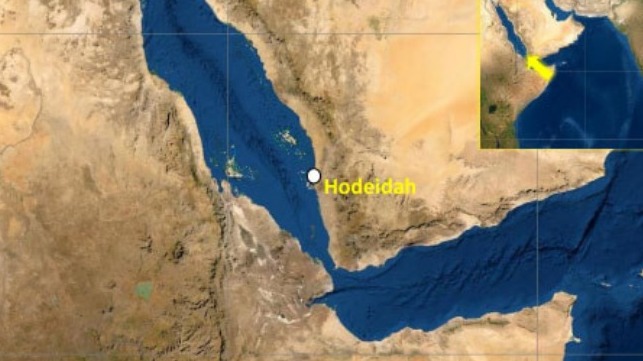
Iran-Houthis tap AIS tracking tech for high sea attacks

warning messages on AIS Ships transiting the Red Sea are sending out messages to ward off attacks
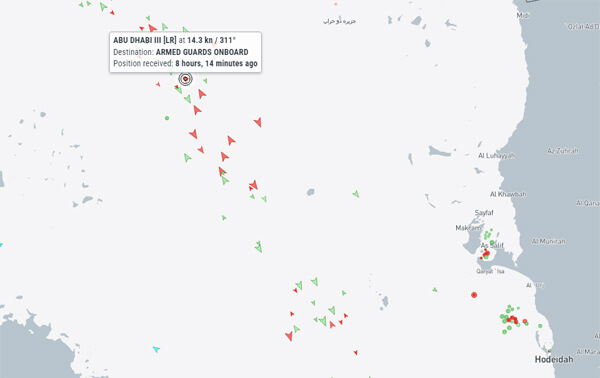
(YKMTO map of the danger zone)
 
 
With the security situation remaining very volatile in the Red Sea and around the Bab al-Mandab Strait, ships and their owners/operators are looking for any means to improve security.
Many ships have chosen to reroute away from the danger while it also appears some are trying to use a novel means of communication to speak indirectly to the Houthis to ward off potential attacks.  Since launching the attacks, the Houthi rebels in Yemen have vowed to target any ships owned by Israeli interests or trading with Israel.
 U.S. officials have said that over 100 drones and missiles have been launched against merchant shipping in the region and an analysis of the individual attacks in many cases has found either a clear linkage to Israeli interest or suspected associations.

The Houthis appear to be using the Internet and searching databases to identify at least some of their targets. Initially after the seizure of the car carrier Galaxy Leader, and with reports of small boats attempting to hail or board ships, the owner/operators responded by increasing onboard security.
There were several reports of armed guards firing warning shots at small boats when they came too close. Normally the vessel’s Automatic Identification System is used to post information about the ship’s destination, direction, and speed.
Occasionally it is used to warn of dangers.
It is common to see a ship listed as “not under command,” when it is experiencing a mechanical problem to warn ships not to approach.
A vessel between contracts often posts a message “awaiting orders” to say it is anchored or drifting aimlessly.

Now, however, ships have started using their AIS to communicate indirectly with the rebels.
When the primary fear was boardings, ships began displaying messages saying “armed guard onboard.” Several tankers transiting the Red Sea today are showing that message as their destination. TankerTrackers.com highlights in its posting on X (formerly Twitter) that it identified a new message attempting to say we are not involved in your fight.
The tracking and analytics company detected several vessels using a new tactic, posting a message they called “interesting.”

 
The Kriti State, a 76,500 dwt crude oil tanker registered in Liberia and sailing from Novorossiysk, Russia, was the first vessel TankerTrackers.com detected using a message to say it was not associated with Israel.
TankerTrackers.com posted an image to X showing the tanker displaying the message “VSL No Cntact Israel.”
The tanker is owned and managed out of Greece. It might have been a one-off, but an hour later TankerTrackers.com posted another image on X showing a similar message from the Xin He Lu 1, a containership registered in Liberia.
At last check, the 46,350 dwt vessel still has that message on its AIS display.
The 46,350 dwt/3429 TEU containership owned and managed out of China is also outbound from Novorossiysk, Russia, but a decade ago appears to have operated under charter to the Israeli shipping company Zim.
TankerTrackers.com reports it also spotted a third vessel displaying the same message earlier today. It is not clear if the message is reaching the intended target and if this is a coincidence or a planned effort to try and ward off attacks.
Earlier this week, the destroyer USS Laboon took down 12 one-way attack drones, three anti-ship ballistic missiles, and two land attack cruise missiles in 10 hours, all fired by the Houthis in the Southern Red Sea.
On Thursday, USS Mason shot down one drone and one ballistic missile, according to U.S. Central Command.
 
Links :

Monday, January 1, 2024

Obibini


OBIBINI from Benoit Lalande
For most of their history, Ghanaian beaches were reserved solely for working men due to a prevailing fear of drowning in the village.
This restriction barred women from enjoying the ocean, confining them to household chores.
In 2017, a man named Justice Kwofie spearheaded a transformative movement along with his six brothers with the establishment of the Obibini Surf Club.
This initiative not only challenged this gender-based inequality but also the cultural fear around drowning.
The surf club empowered women, granting them rights and inspiring young girls to embrace surfing as a new passion.
Justice's visionary stance ushered in a wave of change along Ghanaian beaches, liberating women from historical limitations and sparking enthusiasm for the sport.
This shift toward inclusivity has enabled Ghanaian society to evolve, providing women with the same recreational prospects as men and allowing them to pursue their interests freely.
With a membership of over ten active female participants, the surf club stands as a testament to the brothers' impactful mission.


Sunday, December 31, 2023

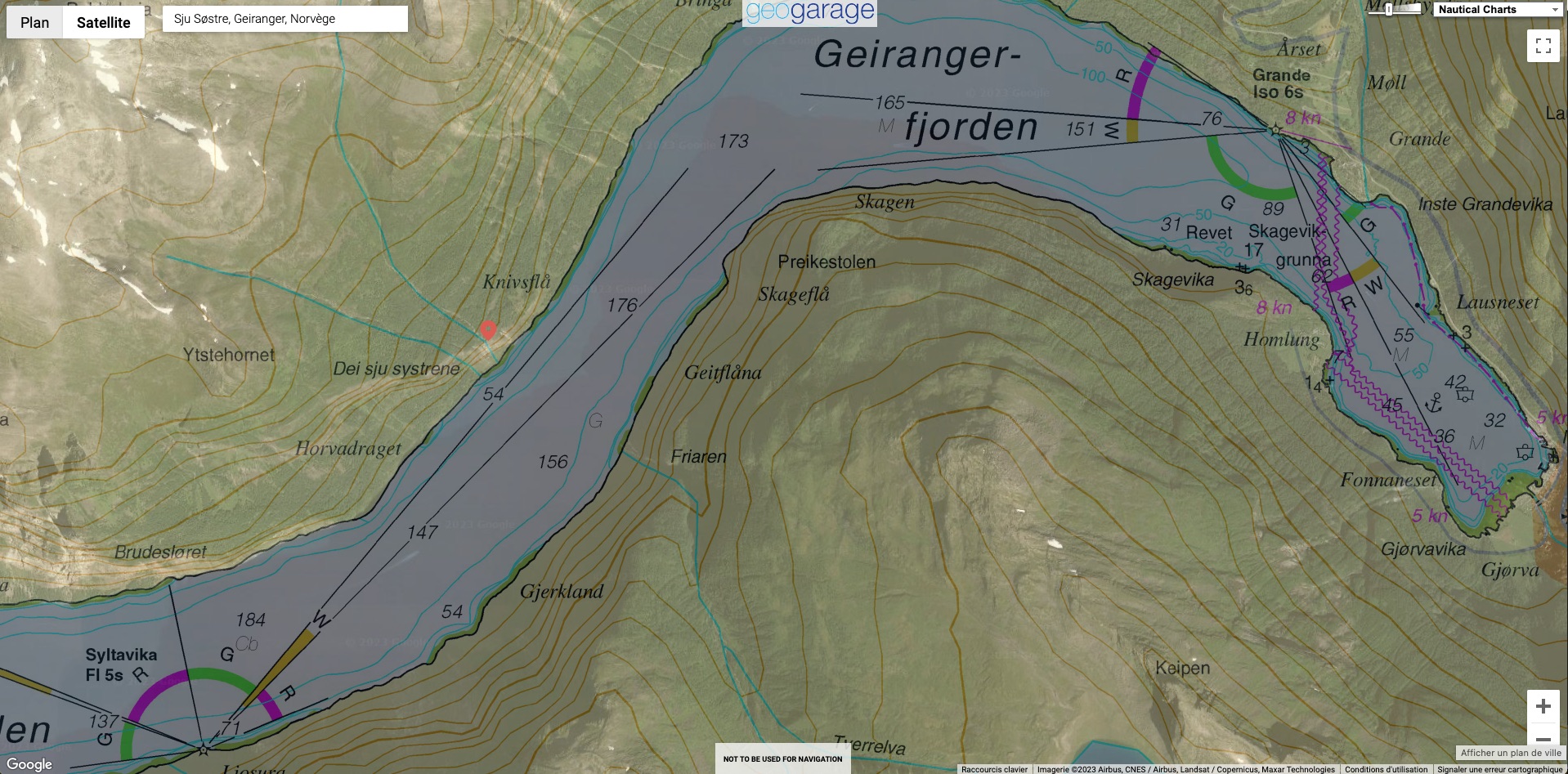
Norway (NHS) layer update in the GeoGarage platform

73 nautical raster charts updated


"The Seven Sisters" is located on the northern side of Geirangerfjorden, 
and directly across the fjord lies a single waterfall called "The Suitor".
 
The legend of the seven sisters is that they dance playfully down the mountain.
Meanwhile, across the fjord, the suitor (or courter) flirts playfully with them from afar.
This footage is taken in early summer when the snow melting from the high mountain peaks are making the waterfalls bigger and more majestic.

We went to the biggest iceberg in the world on RRS Sir David Attenborough | British Antarctic Survey

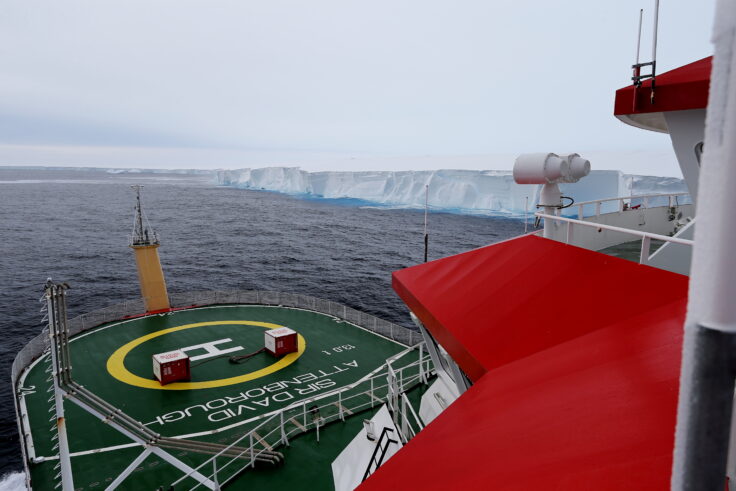
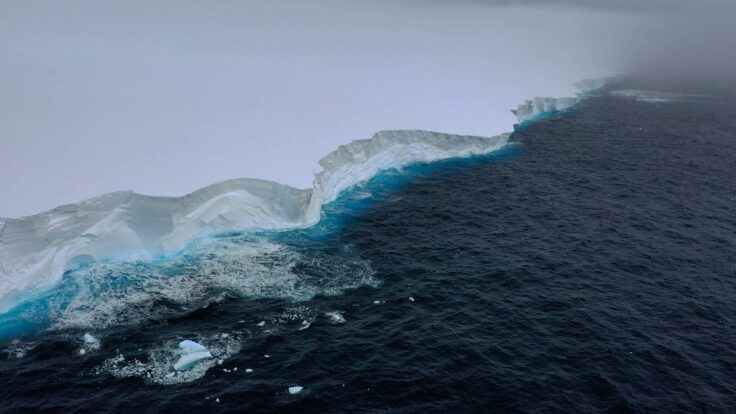
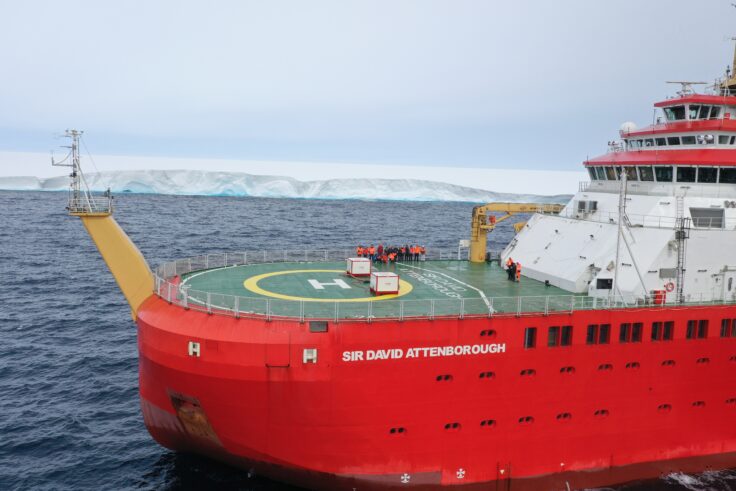
 ANTARCTICA: Scientists aboard the RRS Sir David Attenborough collected samples of seawater around the A23a mega iceberg, the largest iceberg in the world. New video footage shows the enormous iceberg, some 3,900km2 and 400m tall, stretching out into the distance beyond the research vessel.
Footage was captured by Theresa Gossman, Matthew Gascoyne and Christopher Grey, with additions from Roseanne Smith.
 
From BAS

Dr Andrew Meijers, Chief Scientist aboard the RRS Sir David Attenborough and Polar Oceans Science Leader at British Antarctic Survey (BAS), says :

“It is incredibly lucky that the iceberg’s route out of the Weddell Sea sat directly across our planned path, and that we had the right team aboard to take advantage of this opportunity. We’re fortunate that navigating A23a hasn’t had an impact on the tight timings for our science mission, and it is amazing to see this huge berg in person – it stretches as far as the eye can see.”
 
View of A23a from the deck of RRS Sir David Attenborough (Rich Turner)
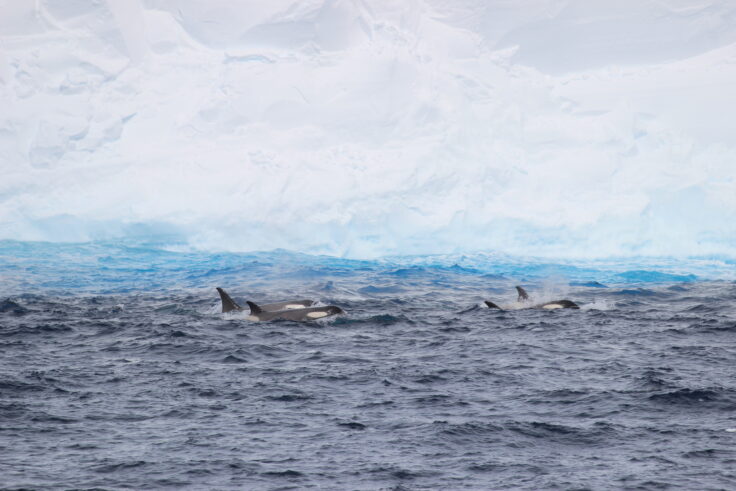
 
A23a hit the headlines worldwide last week (24 November 2023) after it moved out of the Weddell Sea sector into the Southern Ocean.
It calved from the Filchner Ice Shelf in 1986, before being grounded on the seabed nearby.
A23a is now likely to be swept along by the Antarctic Circumpolar Current into ‘iceberg alley’, putting it on a common iceberg trajectory towards the sub-Antarctic island of South Georgia.
 
A high resolution view of A23a, the world's largest iceberg.
This image was captured by NOAA-21.
courtesy of @CIRA_CSU
 
The RRS Sir David Attenborough passed the iceberg as part of its planned route towards the Weddell Sea, where the team will start the intensive 10-day BIOPOLE cruise.
The cruise, which is the first scientific mission aboard the new research ship, is investigating how Antarctic ecosystems and sea ice drive global ocean cycles of carbon and nutrients.
Their results will help us understand how climate change is affecting the Southern Ocean and the organisms that live there, from microscopic marine plants and tiny copepods to charismatic penguins and whales, and their roles in regulating our climate and keeping our oceans healthy and productive.
 
Orca in from of A23a (Liam O’Brien)
 
 Laura Taylor, a biogeochemist working on the BIOPOLE cruise, explained the significance of the A23a samples: 
“We know that these giant icebergs can provide nutrients to the waters they pass through, creating thriving ecosystems in otherwise less productive areas. What we don’t know is what difference particular icebergs, their scale, and their origins can make to that process.
“We took samples of ocean surface waters behind, immediately adjacent to, and ahead of the iceberg’s route. They should help us determine what life could form around A23a, and how this iceberg and others like it impact carbon in the ocean and its balance with the atmosphere."
 
A person riding a wave on a surfboard in the waterEdge of A23a, 1 December 2023 (Theresa Gossman, Matthew Gascoyne, Christopher Grey)
 
 Professor Geraint Tarling, Principal Investigator on the BIOPOLE Programme and Ecosystems Science Leader at BAS, says:

“Calving of icebergs from Antarctica’s ice shelves is part of the natural life cycle of glaciers. Polar ecosystems play a crucial role in regulating the balance of carbon and nutrients in the world’s oceans and are impacted by melting icebergs in numerous ways. The data being collected will improve our understanding of these processes and their sensitivity to climate change.”
 
 
RRS Sir David Attenborough in front of A23a iceberg, 1 Dec 2023
(Credit. Theresa Gossman, Matthew Gascoyne, Christopher Grey)
 
Links :