Monday, March 22, 2021

Cubans are embarking on treacherous sea journeys as the economic crisis worsens


The US Coast Guard has said increasing numbers of Cubans are making dangerous and illegal trips to the US by boat. CNN's Patrick Oppmann reports.
 
From CNN by Patrick Oppmann

When Beatriz Jimenez closes her eyes, she sees her daughter and two young grandchildren and they are alive.
Jimenez's family left the small seaside town of Cabarién, on Cuba's north coast, on March 4, aboard a packed smuggler's boat.

The boat had come from Florida and picked up a group of Cubans desperate to reach the US, according to a statement from the Cuban foreign ministry.
The smuggling run violated both US and Cuban laws and put the passengers' lives at risk.
Although the communist-run island is only 90 nautical miles from the US, the weather in the Florida Straits is treacherous, particularly in the spring when "Easter winds," as Cubans call seasonal abrupt shifts in weather, can transform the sea into a frothing monster.
Jimenez said her daughter Lisbethy took the trip because she had been apart from her husband in Florida for more than a year, after the pandemic forced Cuba to cut most international flights.
Lisbethy had been afraid to leave her daughter Kenna Mariana, 6 years old, and Luis Nesto, 4, behind in Cuba and risk a lengthy separation.
"My daughter is a good mother. She wouldn't have done this if everything wasn't safe. She wouldn't have put them through this. Her children are everything to her," Jimenez told CNN from the small room full of toys that her daughter had shared with the children


Jimenez holds a picture of her grandchildren Kenna Mariana, 6, and Luis Nesto, 4.

According to the Cuban foreign ministry statement, the smugglers made the migrants switch boats once they reached Bahamian waters, likely to try and confuse any Coast Guard ships that could be in pursuit.
As the second boat sped north, it lost control and capsized.
It is not clear how many people were aboard.
Some 14 hours later, a Royal Bahamian Defence ship found 12 survivors and one dead body, according to a Bahamian government statement.
Lisbethy and her children were not among them.
Jimenez said relatives in Florida, who had contacted survivors in the Bahamas, later told her the smugglers had not brought life vests for any of the passengers.
As Cuba's economic crisis worsens, US Coast Guard officials say they are seeing more Cubans attempting the dangerous journey by boat.

Since October 1, the Coast Guard has intercepted 90 Cubans at sea, according to spokesman Brandon Murray.
That number already surpasses the 49 Cuban migrants the previous fiscal year and does not account for many migrants who may arrive in third countries like the Bahamas or who successfully reach the US.
In February, a small boat carrying eight Cubans, including two pregnant women, capsized as it reached the Florida coast after 16 days at sea.
The same month, the US Coast guard rescued three Cubans who had been living mostly off coconuts after being stranded on a deserted island in the Bahamas for 33 days.

While so far the numbers of Cuban migrants taking to the seas are far less than the rafters crisis of the 1990's, when thousands of people attempted the dangerous crossing by boat, the increase is raising alarms.
"The Coast Guard does not recommend anyone taking to the seas in vessels that are not seaworthy.
The vessels are often overloaded, the seas are unpredictable and the risk of loss of life is too great," the US Coast Guard said in a statement provided to CNN.
Most Cubans caught entering the US now are returned to the island, after President Obama, in his final days in office in 2017, canceled the "Wet Foot, Dry Foot' policy that allowed those who reached the country to remain.
According to figures released by the Coast Guard.
5,396 Cubans were interdicted in the fiscal year of 2016.
That number dropped to 1,468 the next fiscal year, following Obama's policy change, and since then has stayed in the hundreds.

But a worsening economic climate could push more Cubans to make the desperate voyage, despite having lost their preferential status.
In 2020, the economy shrank by 11%, according to Cuban government figures, as the island's tourism industry was almost entirely shut down by the pandemic.
That followed a series of punishing sanctions by the Trump administration -- the toughest in decades -- that included returning Cuba to the list of countries that support terrorism, limiting US citizens' ability to travel to the island and cutting off channels for Cuban-Americans to send remittances to relatives there.
"Remittances basically determine who can eat and who can't," said Ernesto Gonzalez, whose remittances company Vacuba was impacted by the Trump sanctions.
Gonzalez said he is urging the Biden administration to restore the money transfer services before Cubans face a humanitarian crisis.

Desperate circumstances
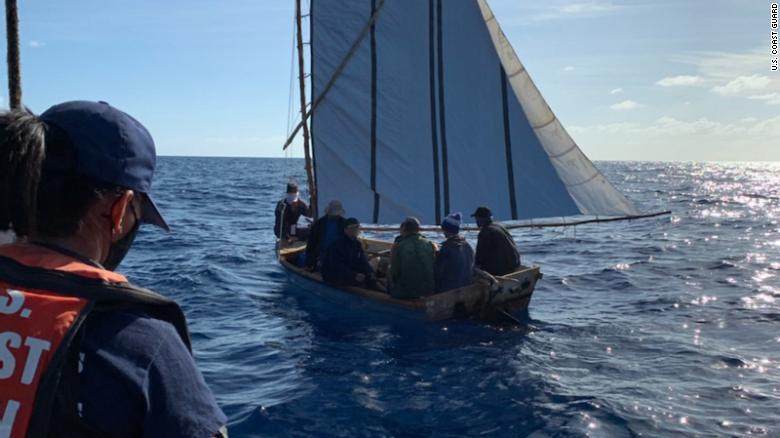

Coast Guard Station Islamorada law enforcement crew interdicts a migrant boat with 7 migrants, Islamorada, Florida, March 2, 2021.

The migrants were repatriated to Cuba.
Increasingly Cubans wait in hours-long lines to buy food, which they must pay for in US dollars at many Cuban government-run stores.
Without tourists, restaurants and home rentals opened by Cuban entrepreneurs sit empty.
Many Cubans compare the ongoing crisis to the dark years the island experienced following the collapse of their ally the Soviet Union in 1991, when tens of thousands of Cubans fled to the US by boat and raft.
The Biden administration has said it is studying potential changes to its Cuba policy, including determining how scores of US diplomats working at the US Embassy became ill.
The mysterious health incidents led the State Department in 2017 to pull most of their diplomats from the island and shut down embassy services through which Cubans could receive US visas.
According to a State Department report, as of November 2020, more than 78,000 Cubans were on a waiting list for immigrant visas.
Beatriz Jimenez said her daughter had hoped to apply for a visa to reunite with her husband in the US but as the embassy closure and disruption caused by the pandemic dragged on, she could not wait any longer.
As Jimenez held a vigil with neighbors and relatives for her missing family, she prayed for word of their rescue.
"They are alive. I know it because I believe in God. I know it will be a miracle," she said.
"I am desperate but clinging to the idea that we will have an answer."
But ten days after their disappearance, the Cuban government announced it was suspending the search operation.
Jimenez still does not know what became of her daughter and grandchildren.
The children and their mother had vanished into the sea.

Links :

Sunday, March 21, 2021

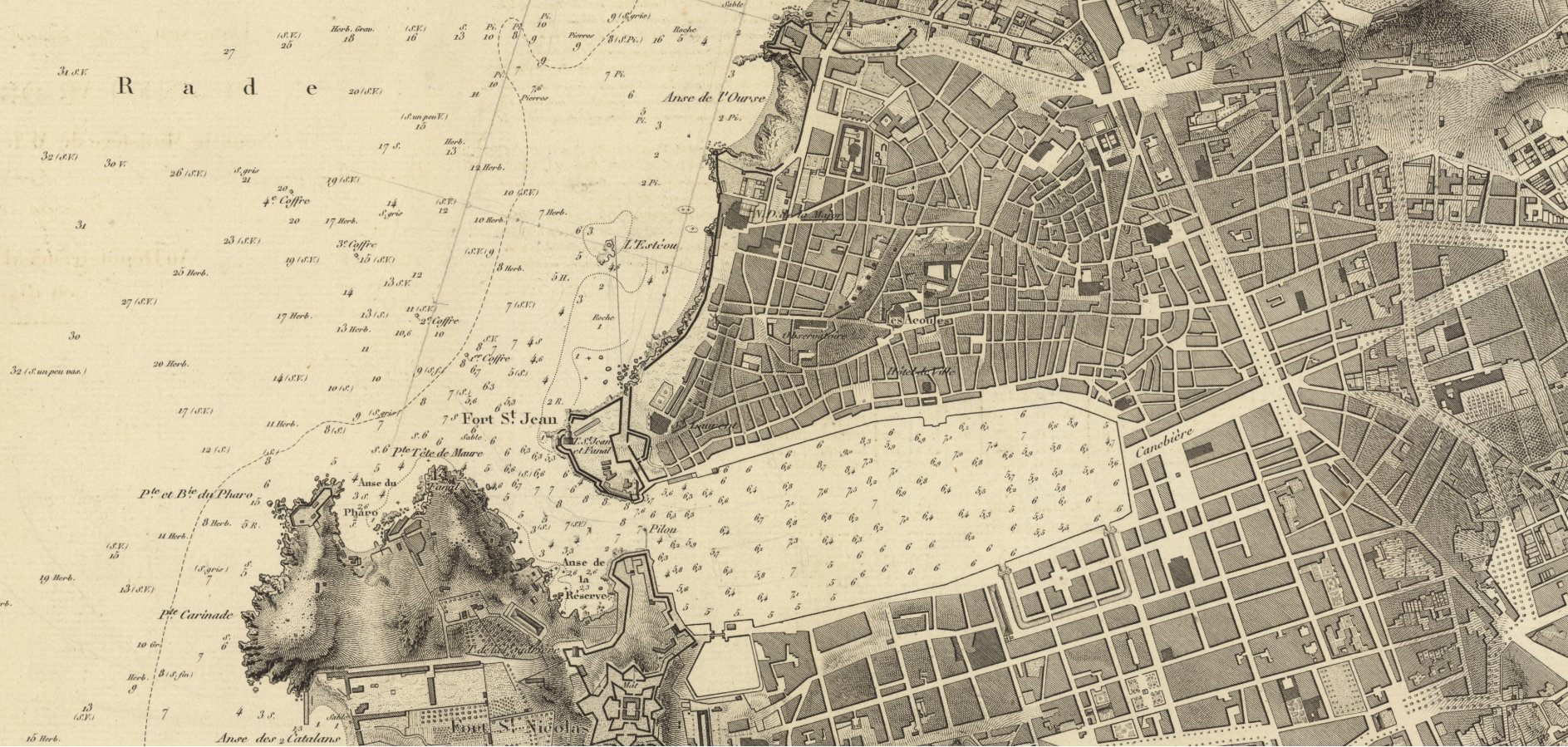
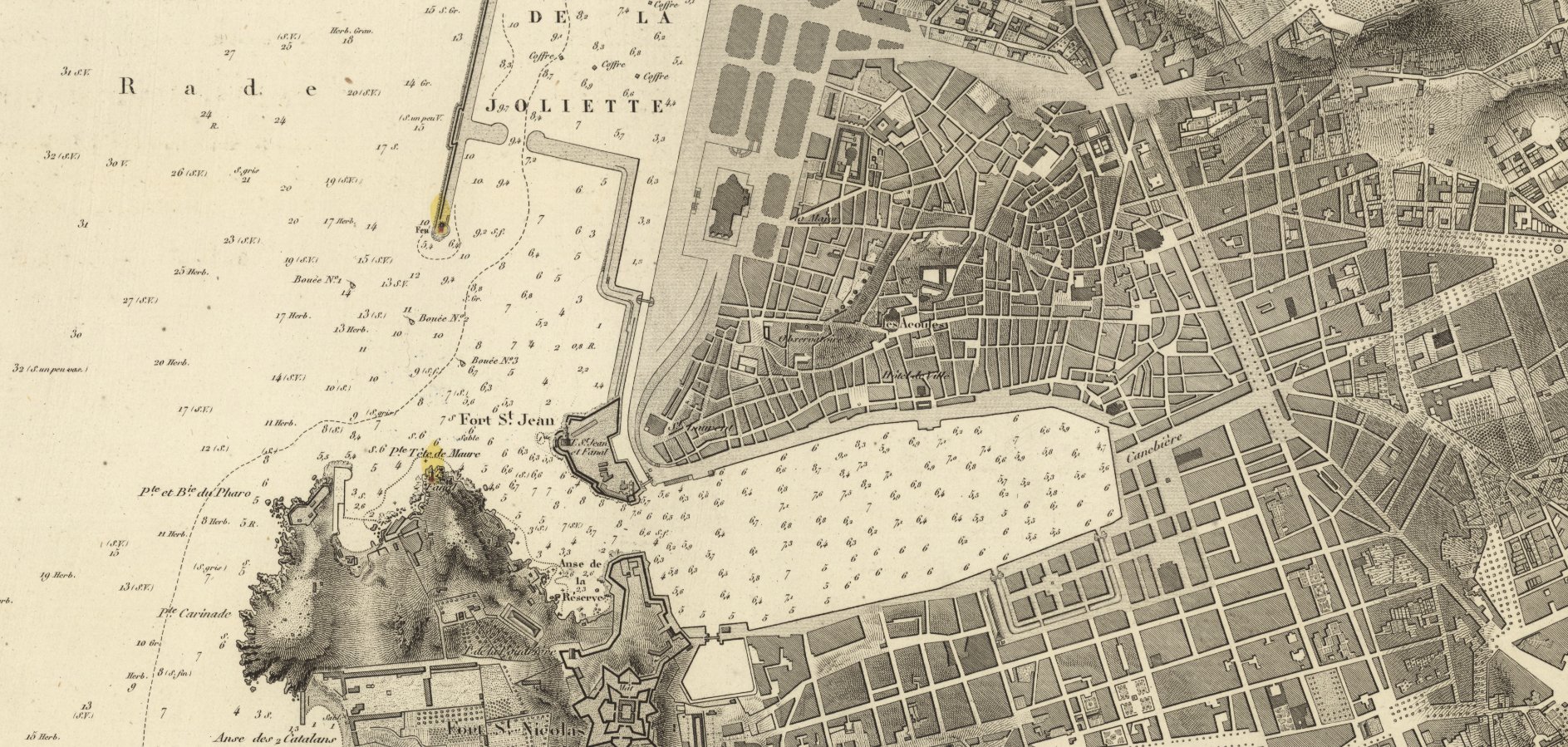
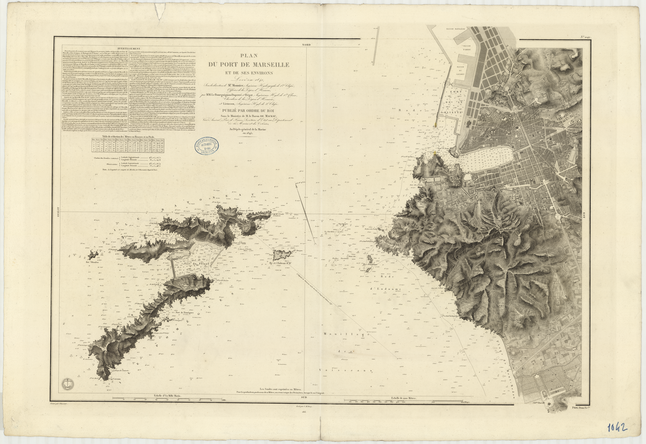
Maps : Marseille harbor


Sebastian Munster
First published in the 1575 edition of Munster's Cosmographia
 
1695
 
 
1743 plan Razaud (source Gallica BNF)
 
1845 (carte OpenData SHOM)


1897

2021 (GeoGarage platform, carte SHOM)

Links :

Saturday, March 20, 2021

36th America's Cup : Emirates Team New Zeeland wins 36th America’s Cup


Day 6 race 9
An astounding battle of tacking and gybing

From AmericaCup

Today had a very different feel. Today was the first day that the America’s Cup could be won.
Today was the chance for the Italians to redress the balance after a day in which they had lost two races after winning the starts and maintaining their advantage for the first few legs.
Today was the day that Emirates Team New Zealand could take another step towards winning the Cup.
Emirates Team New Zealand entered cleanly across Luna Rossa Prada Pirelli who took their time to gybe around and head out to the right-hand side of the pre-start zone.
The Kiwis were first to get there, gybing around while the Italians tacked before diving back down to the Kiwis.
Plenty of weaving followed as both boats tried to slow down on their approach to the start line.
With the greater wind speeds the pre-start zone was feeling smaller.

The start was even, both on starboard but a big big gap between the two as they charged out to the left-hand boundary at 30 knots.
A critical tack was coming – could Luna Rossa get up to the Kiwis and cast dirty air on them?

The Italians’ height mode was working as they eventually forced the Kiwis to tack off while they headed for the right-hand lay line for the top gate who had to put in two tacks to get around the top gate plus.
As they came together the Kiwis dipped the Italians’ transom to take the right hand mark of Gate 1, while Luna Rossa took the left hand mark, leading by just a second.
As the pair split on the downwind leg the Kiwis seemed to get a better gust of breeze and manged to cross in front of the Italians when they came back together a lead change followed.
Now they had swapped sides, gone to the full width of the course and were about to come back at each other for another cross.
This time it was the Italians who were in front, another lead change. By the bottom gate a perfectly executed gybe by the Italians protected their position and forced the Kiwis to follow them through Gate 2.

As the second beat continued the battle remained close but by the top at Gate 3 the Italians had protected their lead once again.

The same was true of Leg 4 with yet more close racing. At the bottom Luna Rossa LR rounded the right-hand mark of Gate 4 and were 3 seconds ahead as Emirates Team New Zealand took the left-hand mark.
The Italians had released their cover on the Kiwis, although they retained the starboard tack advantage. 
When they came back together Luna Rossa was still ahead.

But the big change came towards the top of Leg 5 when the pair came together once again.
Now it was the turn of the Kiwis to come back in on starboard.
But Luna Rossa were just ahead as they crossed and tacked in front of the Kiwis forcing the defenders to tack back to the right-hand side of the course. Was this another risk? 
The Italians would be on port tack when they came back.

But there was trouble in store as the breeze shifted right, benefitting the Kiwis.
By the time the pair came back for Gate 5 Team New Zealand had taken the lead, rounding the left-hand mark ahead by 18 seconds.

One leg to the finish with a distance of 400 m between the pair, this was a big distance to make up for the Italians with so little runway left.As Emirates Team New Zealand came into the finish they had taken Race 9 by 29 seconds in the closing stages of the race.
A dramatic and closely fought race to place Emirates Team New Zealand within just one win to take the 36th America’s Cup.

Max Sirena, Skipper & Team Director:
"Possibly one of the best races we have seen in the last 15 years of the America's Cup. The guys did really well controlling at the start, we kept them behind for four legs without ever giving up. After all, we are in the final against a very strong team and I am very proud of the guys on the water and the whole team, because today they raced an amazing race. Obviously we are very disappointed with the outcome, but we are still alive and tomorrow we will go on the water to fight and we will give everything. It's not over yet."

Francesco Bruni, Helmsman:
"It's a hard one to digest. We raced flawlessly until they overtook us: we had to decide whether to defend the left or go right, and in hindsight it probably was the wrong choice. It was very hard to keep them behind, they definitely had an extra gear because whenever we tried to stretch our lead we couldn't shake them off and as soon as we gave them some space they just set off. We don't feel too much remorse because the race was conducted very well, but we don't plan to give up and we will continue to do what we need to do, analyzing where we can improve to get back on the water geared up to go win."

Vasco Vascotto, Afterguard:
"The race was really difficult with tricky wind conditions. I believe the boys raced incredibly well, and Team New Zealand was forced to adapt to our choices. We led the game, and gave a great show of match racing, not only at the start but also throughout the course. This is our mindset, and tomorrow we will keep on racing with this same attitude."

Friday, March 19, 2021

New Zealand (Linz) update in the GeoGarage platform

3 nautical raster charts updated

Bottom trawling releases as much carbon as air travel, landmark study finds

 
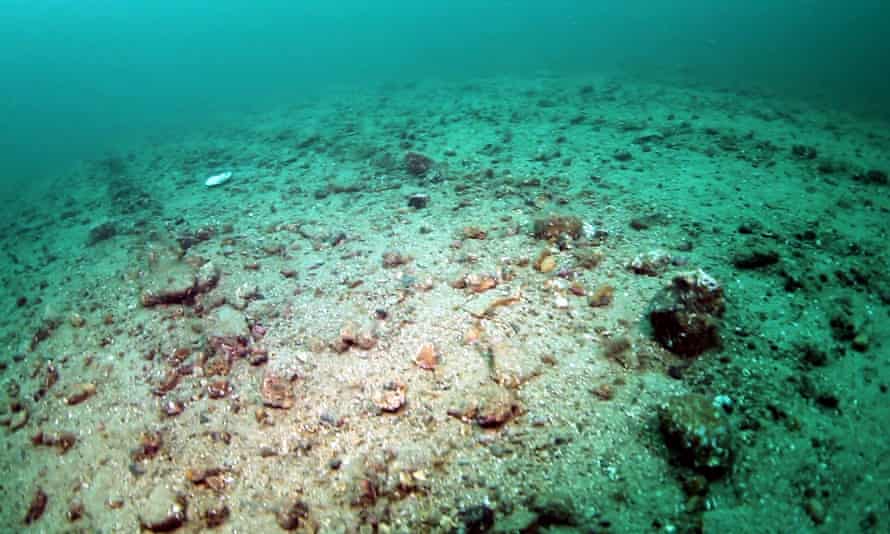
An area of seabed damaged by trawling. Bottom trawling by fishing boats pumps out 1 gigaton of carbon every year.
Photograph: Marine Conservation Society/PA

From The Guardian by Karen McVeigh

Dragging heavy nets across seabed disturbs marine sediments, world’s largest carbon sink, scientists report

Fishing boats that trawl the ocean floor release as much carbon dioxide as the entire aviation industry, according to a groundbreaking study.

 Bottom trawling, a widespread practice in which heavy nets are dragged along the seabed, pumps out 1 gigaton of carbon every year, says the study written by 26 marine biologists, climate experts and economists and published in Nature on Wednesday.

The carbon is released from the seabed sediment into the water, and can increase ocean acidification, as well as adversely affecting productivity and biodiversity, the study said. Marine sediments are the largest pool of carbon storage in the world.
The report – Protecting the global ocean for biodiversity, food and climate – is the first study to show the climate impacts of trawling globally.
It also provides a blueprint outlining which areas of the ocean should be protected to safeguard marine life, boost seafood production and reduce climate emissions.

Only 7% of the ocean is under some kind of protection.
The scientists argue that, by identifying strategic areas for stewardship – for example, regions with large-scale industrial fishing and major economic exclusion zones or marine territories – nations could reap “significant benefits” for climate, food and biodiversity.
Protecting “strategic” ocean areas could produce 8m tonnes of seafood, they say.
Humanity and the economy benefit from a healthier oceanDr Enric Sala, scientist

“Ocean life has been declining worldwide because of overfishing, habitat destruction and climate change,” said Dr Enric Sala, explorer-in-residence at the National Geographic Society and lead author of the paper.
 “In this study, we’ve pioneered a new way to identify the places that – if strongly protected – will boost food production and safeguard marine life, all while reducing carbon emissions.
“It’s clear that humanity and the economy will benefit from a healthier ocean. And we can realise those benefits quickly if countries work together to protect at least 30% of the ocean by 2030.”

The scientists identified marine areas where species and ecosystems face the greatest threats from human activities.
They developed an algorithm to identify regions where safeguarding would deliver the greatest benefits across three goals: biodiversity protection, seafood production and climate mitigation. They then mapped these to create a practical “blueprint” that governments can use, depending on their priorities.

The top 10 countries with the most carbon emissions from bottom trawling, and therefore the most to gain, were China, Russia, Italy, UK, Denmark, France, the Netherlands, Norway, Croatia and Spain.

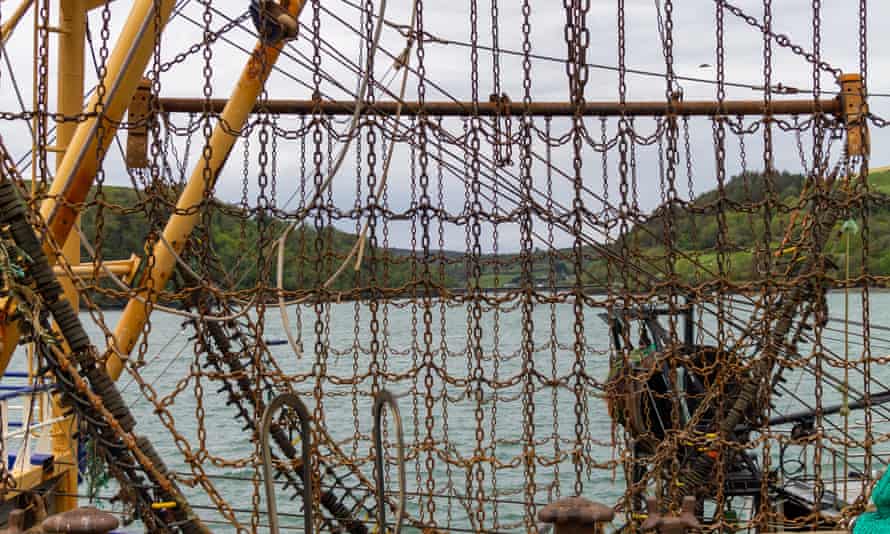
Beam trawlers’ heavy chains are dragged along the seabed, releasing carbon into the seawater.
Photograph: aphperspective/Alamy

The analysis shows that the world must protect a minimum of 30% of the ocean in order to provide multiple benefits.
The scientists say their results lend credence to the ambition of protecting at least 30% of the ocean by 2030, which is part of the target adopted by a coalition of 50 countries this year to slow the destruction of the natural world. 
 
Zac Goldsmith, the UK minister for Pacific and the environment, described the paper as “an important contribution to the science on ocean protection and highlights the need for countries to work together to protect at least 30% of the global ocean by 2030”.
He said the UK was playing a leading role in a global ocean alliance supporting this target and promised: “We will do all we can to deliver it at the UN biodiversity conference in China.”


“There is no single best solution to save marine life and obtain these other benefits. The solution depends on what society – or a given country – cares about, and our study provides a new way to integrate these preferences and find effective conservation strategies,” said Dr Juan S Mayorga, a report co-author and a marine data scientist with the Environmental Market Solutions Lab at the University of California, Santa Barbara and Pristine Seas at the National Geographic Society.
One notable priority for conservation is Antarctica, which has little protectionDr David Mouillot, co-author

The study calculates that eliminating 90% of the present risk of carbon disturbance due to bottom trawling would require protecting only about 4% of the ocean, mostly within national waters.

Dr David Mouillot, a report co-author and a professor at the Université de Montpellier in France, said: “One notable priority for conservation is Antarctica, which currently has little protection, but is projected to host many vulnerable species in the near future due to climate change.”

The study estimated the emissions at between 0.6 and 1.5 gigatons of carbon dioxide a year, or an average of 1 gigaton annually. Aviation emissions of carbon dioxide in 2019 were 918m tons.

The UN’s biodiversity conference, Cop15, which is to be held in Kunming, China, this year, is expected to produce a global agreement for nature, building on the targets already set by some nations to protect at least 30% of the ocean by 2030. 
 
Links :