Thursday, February 20, 2020

What four years at sea taught me about our relationship to the ocean

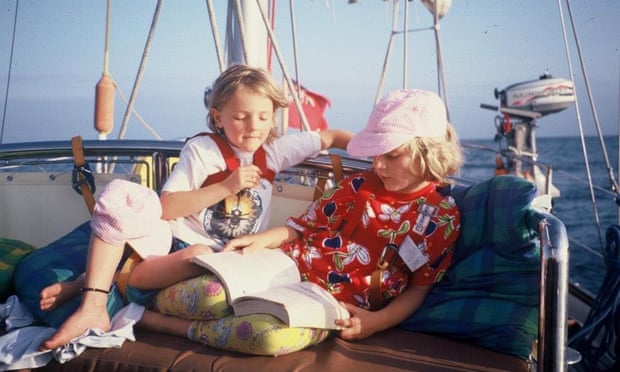
Elle Hunt with her sister on the family boat.
Photograph: Elle Hunt

From The Guardian by Elle Hunt

Oceans are central to the story of civilisation – so why do so many of us feel disconnected from them?

It was on day 11, I think, that I stopped getting out of bed at all.
I had already let my hygiene standards slip to the point that a large knot was starting to form in my hair.
Later my mother would have to cut it out with scissors.
She didn’t mind.
We were all in the same boat.

I was nine years old, and nearly two weeks into sailing across the Atlantic with my family.
My father had sailed all his life, and introduced my mother to it; and they spent years preparing to sail around the world.
Including my little sister, that made four of us aboard a 52ft yacht – our home for four years from 2000, in which time we got from Dorset to New Zealand.

The longest period we spent entirely at sea was 21 days, and we did so twice: from La Gomera in the Canary Islands to Barbados, and then from the Galápagos Islands to Nuku Hiva, in French Polynesia.
The first trip I remember spending mostly in bed, below deck in the dark, listening to Wings on cassette, forging a new relationship to time.

I grew used to observing the ebb and flow of my thoughts with a languor that today would probably be praised as meditative.
The days slid by, mostly unbroken except for meals – you came to really anticipate meals – and milestones: quarter-way, halfway, crossing the equator, which we marked with little parties.

Not long after the sun had gone down, you’d go to sleep – partly because artificial light drained the boat’s battery, and partly because the sooner you went to sleep, the sooner another day would pass, and the sooner you would arrive.
(I was lucky – being nine, I was spared night watch.
My parents slept in alternating shifts of two hours for the whole journey.)
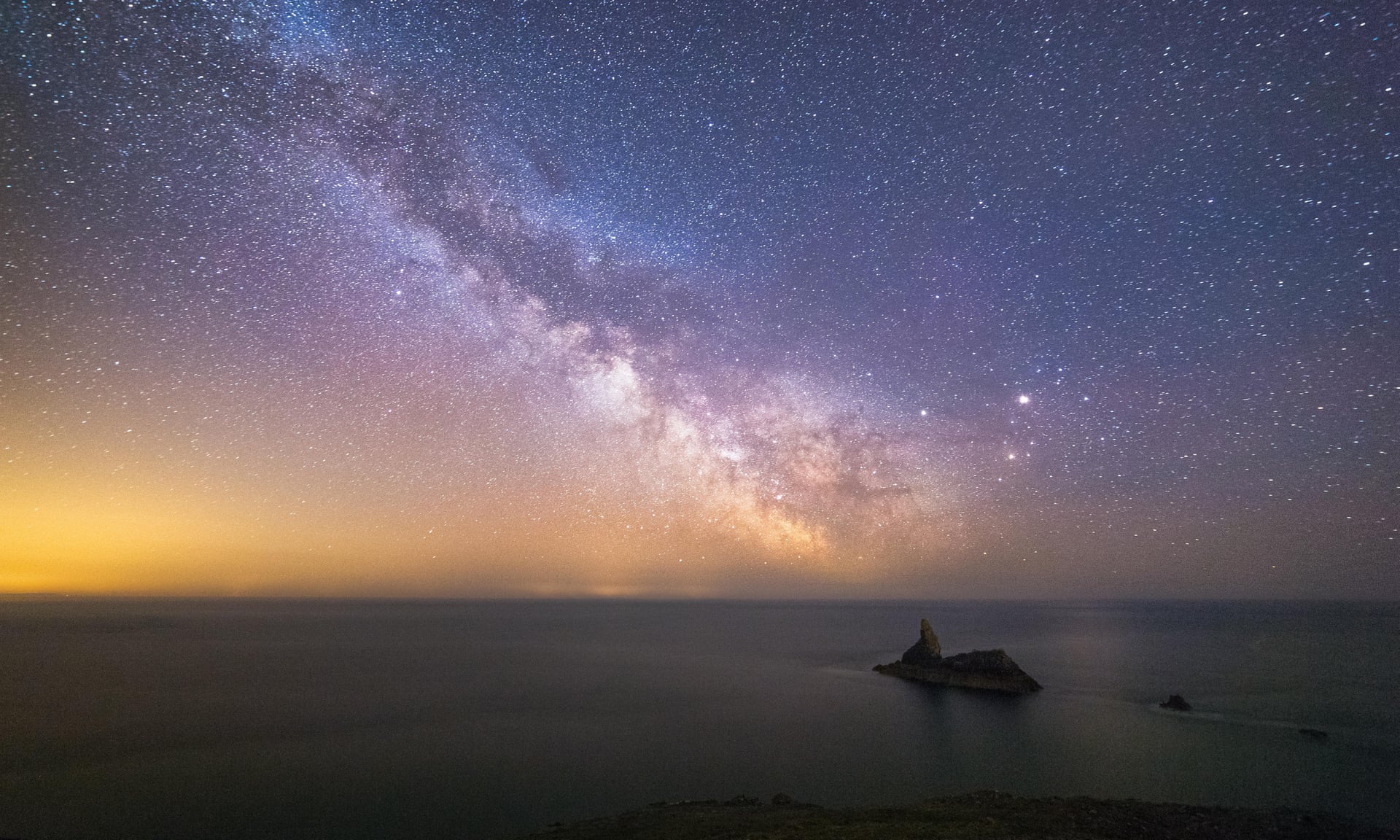
  ‘Not long after the sun had gone down, you’d go to sleep’
Photograph: Drew Buckley/Alamy

When we finally reached Bridgetown in Barbados, and set foot on land for the first time in three weeks, my knees wobbled, bracing for the next wave that didn’t come.

That transatlantic crossing is a well-trodden path, from 15th-century navigators from Italy and Spain to Greta Thunberg’s voyage to New York last year.
All of history, in fact, can be charted from the world’s oceans, as David Abulafia attempts in The Boundless Sea: A Human History of the Oceans, a 1,000-page doorstopper that he nonetheless makes no pretence is either “complete or comprehensive”.

Connections made by sea “have brought together peoples, religions and civilisations” through conquest and colonisation, migration and trade, writes Abulafia, an emeritus professor of Mediterranean history at Cambridge – and in the process changed the world.
Much of it has been driven simply by curiosity, and the desire to accumulate knowledge, he says.

“Even if you go back to the time before Christopher Columbus, when the open Atlantic was very little known, the myths and assumptions that developed about it – the ‘sea of darkness’ and then, on the other hand, ‘the isles of the blessed’ – the fascination with what lies beyond the horizon was certainly an important part.”

I see elements of that in my father, whose 50-year passion for sailing goes well beyond what you might call a hobby.
“He’s only happy at sea,” says Mum, who is happy at sea, but also in her garden, or at a concert hall, or with her children.

My parents remain “liveaboards”, sailing international waters from New Zealand.
For them, it is a lifestyle that they have opted into, a way to see the world from a relatively unique vantage point.

Portuguese explorers arriving in Kolkata in 1498, painted by Alfredo Gameiro.
Shipping spices from India was a lucrative industry for Portugal.

Yet for most of history there has also been “a mercenary dimension” to ocean exploration, says Abulafia, “the wish to exploit”: “You know you’re taking risks, but these are risks that can bring you the most fantastic returns.”
Maritime trade has been more productive and enduring than the Silk Road; in the 16th century, shipping spices from India proved so lucrative for Portugal that the Portuguese king made disclosing the route punishable by death.

The movement of not just goods, but people has been another constant – whether their migration was forced, such as by invasion or the slave trade; or voluntary, in search of a new life and opportunities.
Passages have been guided by the trade winds and currents that drive climate and weather all over the world.
More than 70% of the globe is covered by ocean; it produces around half the oxygen we breathe, and absorbs half of all man-made carbon dioxide.

At many levels, the story of civilisation is a story of the seas – but it is easy to overlook that from land.
Most people, even those who live by the coast, have no more personal connection to the sea than the limited or conditional view afforded by a passion for water sports, say, or the odd trip to the seaside.
A more intimate relationship can be incompatible with conventional ways of life and maybe – the knot in my hair might attest – its quality.

At the same time it changes you, in what can feel like a very profound way.
It was only relatively recently, I’m embarrassed to say, that I realised that my experience was not universally shared – that not everyone had known the open ocean, with no land in sight in any direction for many miles.
No other boats, either – just endless sea, sometimes even indistinguishable from sky; an expanse of grey or blue, entirely uninterrupted, except by you.

It is hard to convey what that feels like, the effect that it can have.
You feel dwarfed and insignificant, of course – but the mind cannot hold on to reverence for long.
I remember it more often playing tricks on me, registering patterns and shapes in the movements of the wave – my brain determinedly generating interest, overlaying meaning, as though it could not make sense of there being only water everywhere.
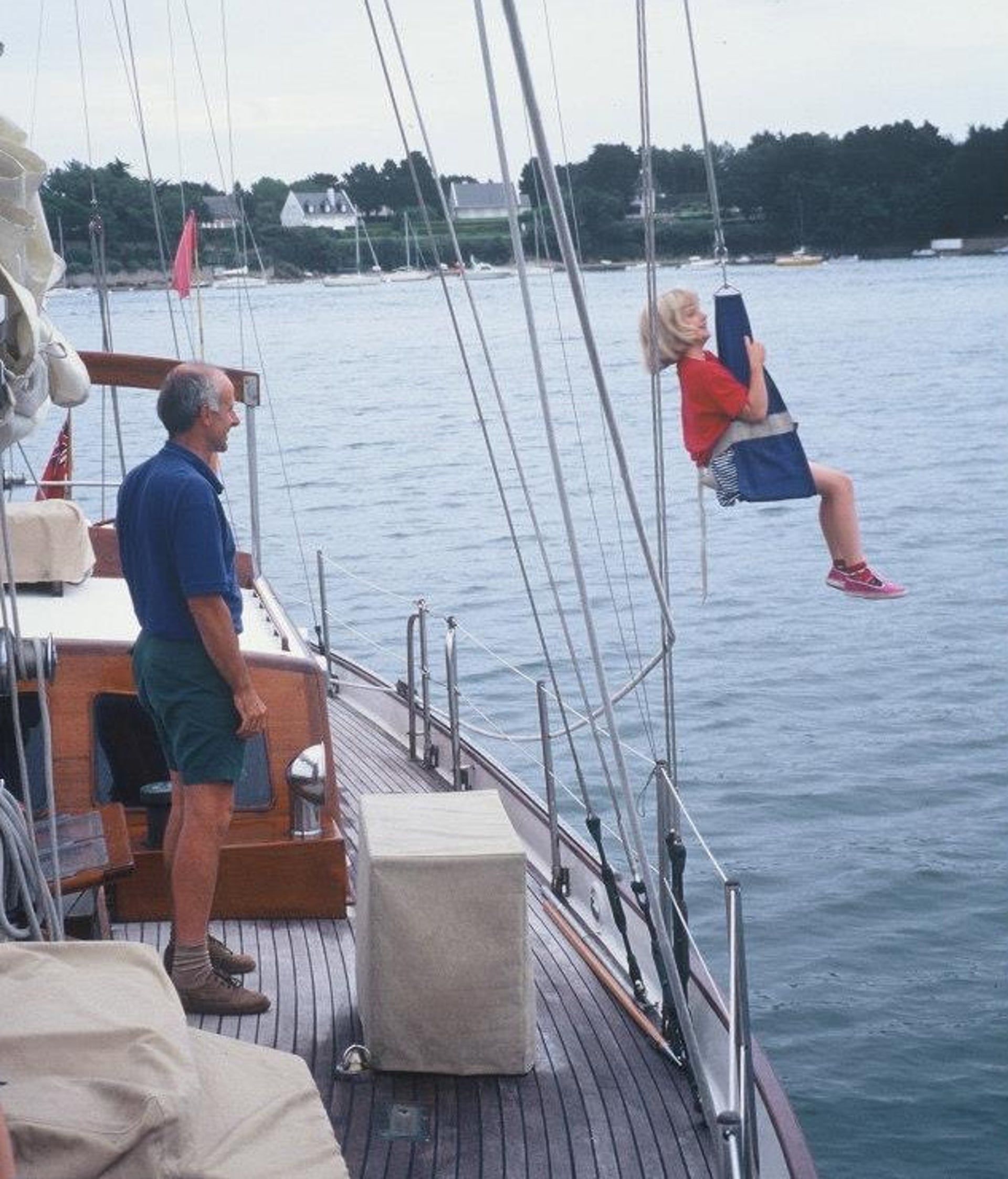
 Elle Hunt aged about nine in the bosun’s chair, with her father Anthony.

Even as a child, though, there was something about being at sea that made me feel well: more vital, clear-headed.
In fact the benefits of “blue space”, for body and mind, have been established by decades of research, from environmental factors such as more vitamin D and less polluted air and the increased activity that tends to go with being in nature.

More significant is the psychologically restorative effect, where the movement of water – its literal immersiveness – can force attention outwards, beyond the self.
But these effects on mood tend to be most acute at coastal margins, where the sea meets the land.
“The optimal environment has both,” says Dr Mathew White, an environmental psychologist with BlueHealth.
“If you’ve ever been on a cruise, or crossed to France, it’s pretty boring out there when you can’t see the coast.”

As a crew member on the inaugural voyage from New York to Macau in 1784 grumbled of their smooth passage: “It has been one dreary waste of sky & water, without a pleasing sight to cheer us.” Abulafia paraphrased: “One went to sea for excitement, and all that happened was that the captain fell against a railing and bruised his head and arm.”
He suspects that some ships’ diarists exaggerated the risk of storms and shipwreck so as to enliven accounts “of a flat sea and neutral sky for days and days”.

Yet, in imagining a life at sea, most people seem less inclined to think of tedium than terror.
Many have told me that the thought of being stranded in the open ocean is one of their greatest fears; I’m not sure that they would single out being lost in a forest, for example, or on a snowy mountain in the same way, though all three landscapes are alien and potentially dangerous.

In fact the first question I am most often asked about my childhood is “Were there any storms?” or, more to the point: “Were you scared?”
The answers are yes, only one, a freak occurrence overnight; and no – I slept through it.
My parents were highly risk-averse, setting out for sea only when the weather forecast was favourable and they had supplies – food, medical, electrical – to account for every possible eventuality.

HMS Erebus in the Ice, 1846, by François Etienne Musin.
The vessel had to be abandoned in the Arctic ice on a later journey.
Photograph: National Maritime Museum

The exhaustive (and expensive) logistics tend to be glossed over in the other image people have of being at sea – the romantic one, of chucking it all in and sailing off into the sunset.
Whether or not this idea appeals to you was found by data scientists at the dating app OkCupid to be one of the strongest predictors of romantic compatibility; I know enough to answer no.

Both scenarios, the worst-case and the rose-tinted, are telling of the disconnect most people feel from the ocean.
A sense of trepidation has figured in seafaring through history, except among those whose knowledge and mastery of the ocean was evolved over several millennia to seem almost innate – the early Polynesian navigators of the Pacific, the ancestors of the New Zealand Māori and Hawaiians.

There could be a genetic predisposition towards how we feel about travelling the seas: DRD 4-7R, the so-called “wanderlust” gene, is thought to be present in about 20% of the population.
In his book On the Ocean, the archaeologist Sir Barry Cunliffe pointed to scientific findings that this impulse to travel, “to satisfy an innate curiosity”, could be one explanation for why “the unknown engages the human imagination, and draws the curious out of the familiar place they inhabit into the threatening, but ever exciting space beyond”.

Even if my parents have wanderlust in their DNA, I’m not sure it was handed down to me.
Though I spent the first half of my life sailing, I acquired none of the skills – I couldn’t even manage a bowline knot.
I have blamed it on my being a child, but the truth is I have never had any interest in boats beyond as a means of accessing the open ocean.

I still feel a strong connection to the sea – but it has been challenging to maintain in my adult life, from the tower block in south London where I now live.
When I am struggling to get to sleep I play ocean sounds through my phone, a crude attempt to simulate the limitlessness, even transcendence, I remember feeling out in open water.

The ocean presents a potential passage through history, like handling an ancient piece of pottery; only more so, because it “is alive, like a person”, to paraphrase an Indigenous Australian saying.
You can be claimed by the sea without drowning.
I feel its absence on a bodily level like a mineral deficiency, and make regular visits to the coast to “top up”, as the geographer Catherine Kelly evocatively put it.
Now, although long-distance passenger travel by sea has become almost unheard of, Thunberg’s voyage across the Atlantic, and the growing “no-fly” movement to cut down on carbon emissions, could suggest turning tides.

The oceans face considerable challenges themselves, from plastic pollution and deep-sea oil drilling, to unsustainable shipping and fishing.
The rising acidity of the Pacific Ocean is causing crabs’ shells to dissolve.
Warming temperatures have already opened up new trade routes over the top of Russia and Canada.
We face the beginning of a new chapter in the history of oceans – for us along with them.

Abulafia notes that rising sea levels have been suggested as a precipitating factor in past migration, forcing people to go in search of new land.
A study last year predicted that warming temperatures will raise sea levels by 30cm by the end of the century, on top of the contribution from melting ice and glaciers.

These are uncharted waters that humanity is navigating – but not, there is some comfort in acknowledging, for the first time.

Links :

Wednesday, February 19, 2020

Norway clarifies Svalbard treaty after Russian complaint

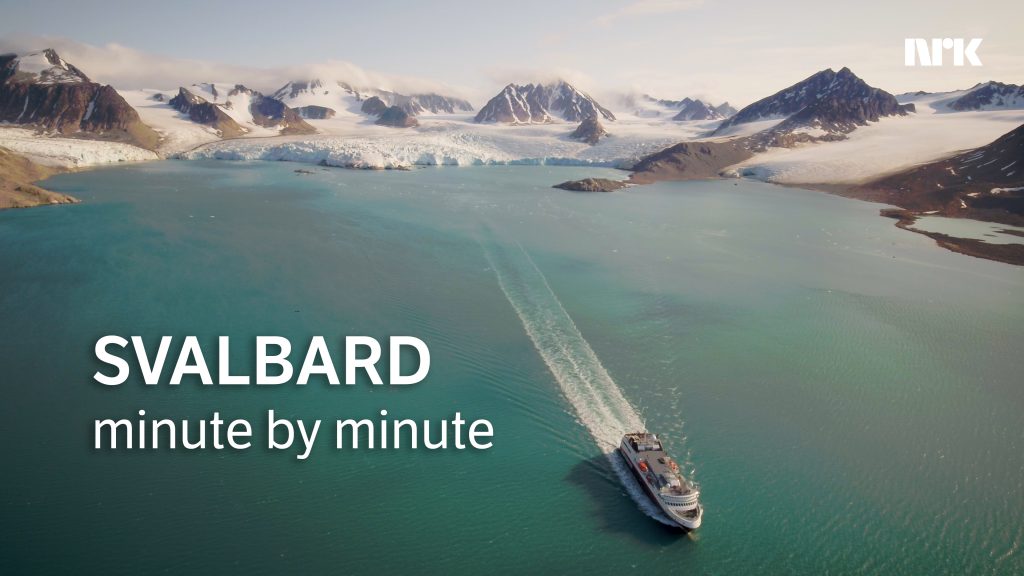
Nordsyssel, the ship of the Sysselmann on Svalbard, towed to the pier of Ny Alesund, Spitzbergen.
© Photo : Hannes Grobe

From Maritime Executive

Norway's Minister of Foreign Affairs Ine Eriksen Søreide and Minister of Justice and Public Security Monica Mæland have clarified the nation's stance on the Svalbard Treaty as it enters its 100th year.

The move apparently comes as Russia voices its concern over limits being put on its operations there, including coal mining and fishing.

 Svalbard with the GeoGarage platform (NHS nautical chart)

The Treaty

On February 9, 1920, Norway and eight other countries signed the Svalbard Treaty (originally the Spitsbergen Treaty) in Paris.
The Treaty entered into force in 1925, and Svalbard became part of the Kingdom of Norway.
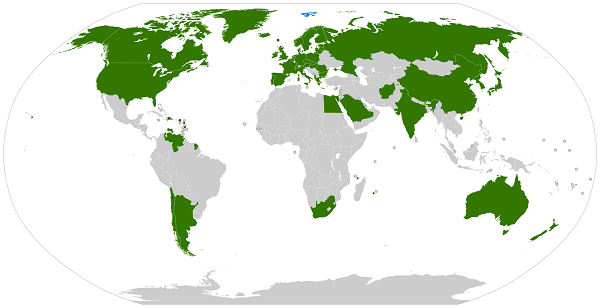
The treaty, now with nearly 50 signatories, sets out that:
  • Spitsbergen is under Norwegian administration and legislation.
  • Citizens of all signatory nations have free access and the right of economic activities.
  • Spitsbergen remains demilitarized.
  • No nation, including Norway, is allowed to permanently station military personnel or equipment on Spitsbergen.
The situation in the archipelago before 1920 has been likened to the Wild West, full of adventurers, coal miners, gold diggers and fortune hunters taking the law into their own hands.
But once Norway’s sovereignty was formally recognized, it was possible to resolve property ownership issues and bring unregulated activities under control.

Many countries wanted to ensure that the Svalbard Treaty did not put an end to all foreign activity in Svalbard, so the principle of equal treatment was enshrined in the Treaty.
This means that, in certain areas, Norway is obliged to treat nationals and companies from states that are party to the Treaty in the same way as Norwegian nationals and companies.
They have, for example, an equal right of access and entry to the archipelago and equal rights to engage in fishing and hunting and other commercial activities.

Svalbard Treaty Signatories

Russia's Complaint

Earlier this month, Russia's Minister of Foreign Affairs of the Russian Federation Sergey Lavrov sent a message to Søreide calling on Norway to ensure "equal free access" to the archipelago and the possibility of conducting economic and economic activity there "on conditions of complete equality."

Lavrov notes Russia's concern about restrictions imposed on the use of the Russian helicopter [associated with Russia's coal mining activities on Svalbard], the establishment of a fish protection zone by Norway and “the artificial expansion of nature protection zones to limit economic activity in the archipelago.”
“On Svalbard, Russia - the only one except Norway - has been carrying out economic activities for many decades and does not intend to curtail its presence.
On the contrary, there are long-term plans for its strengthening, diversification and modernization.”
Lavrov has requested bilateral consultations to remove the restrictions.

Svalbard archipelago is one of the northernmost inhabited places of our planet, which is has settlements of two countries - the Kingdom of Norway and the Russian Federation.
The Russian part of region once-prosperous is now in the doldrums since for more than 20 years most of the settlements have been left and forgotten.
Today we are taking a 6-day hike and will hit the still living Russian village of Svalbard and abandoned villages of Pyramiden, Grumant, and Kolsbey.

Norway's Stance

“Norway has given high priority to fulfilling these obligations under international law ever since the Treaty was signed,” said the Ministers.
“It is worth mentioning that the provisions on equal treatment in the Svalbard Treaty are far less extensive than the corresponding provisions of the European Economic Area Agreement.”

According to Norway, the waters outside the 12 mile zone, but within the exclusive economic zone (200 miles) are waters where Norway can limit the rights of any third party.
This has been disputed by countries with interests in fisheries and oil and gas including Latvia and Russia.

The Ministers state that provisions on equal treatment apply only to nationals and companies from states that are parties to the Treaty.
Traditionally, however, Norwegian law in Svalbard has not made a distinction between nationals from contracting parties and nationals of other states.
This means that people from a country like Thailand, for example, have enjoyed many of the same opportunities as citizens from states that are parties to the Treaty.

“The right to equal treatment is not the same as the right to resources.
The Norwegian authorities can both regulate and prohibit activities, as long as there is no discrimination on the basis of nationality.
This is particularly important when we take action to safeguard Svalbard’s vulnerable environment or share limited resources.


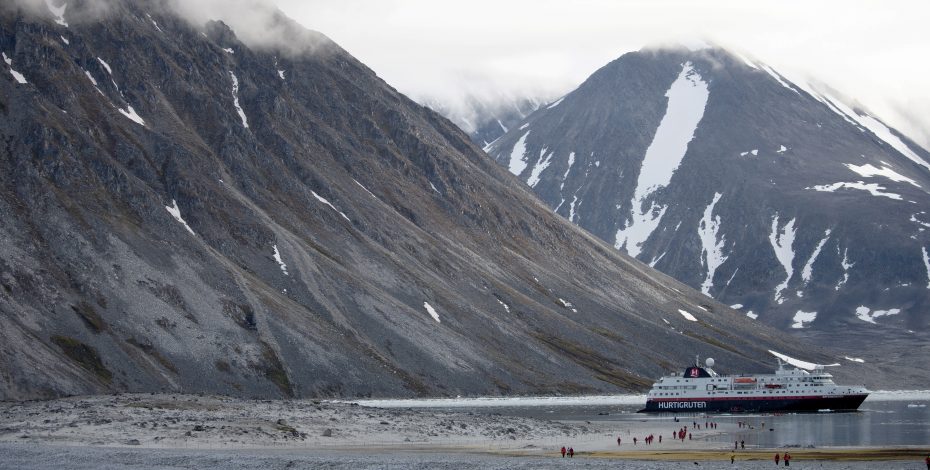
 Magdalenefjorden (photo Lise Dreistel)

“At the same time, the Treaty does not preclude differential treatment on grounds other than nationality.
For example, it is only people resident in Svalbard who are entitled to hunt reindeer in the archipelago.
And only permanent residents of Svalbard are allowed to own cabins there.
Likewise, only vessels from countries that have traditionally harvested prawns in the area are entitled to catch prawns in the territorial waters of Svalbard.”

Certain states have challenged Norway’s interpretation of the Treaty’s provision on equal rights to engage in fishing and hunting.
Under the Treaty, ships and nationals from states that are parties to the Treaty have equal rights to engage in fishing and hunting on land in Svalbard and in the territorial waters around the archipelago, i.e. up to 12 nautical miles from land.

Nevertheless, the E.U. has cited the Treaty’s principle of equal treatment when, for example, the E.U.
member states Latvia and Lithuania have expressed an interest in harvesting snow crabs on the Norwegian continental shelf far beyond the territorial waters of Svalbard.

The Svalbard Global Seed Vault is a secure seed bank
on the Norwegian island of Spitsbergenin the remote Arctic Svalbard archipelago.

“But the wording of the Treaty is clear,” said the Ministers.
“The provisions on equal treatment apply only in Svalbard’s land areas and territorial waters.
We see that certain other states could have a clear interest in advocating a more expansive interpretation to include areas beyond the territorial waters.
However, any such interpretation would mean an expansion of their rights at Norway’s expense.

“States that claim that the reference to territorial waters in the Treaty also includes sea areas outside the 12-nautical-mile limit are interpreting this provision in a way that is contrary to international law.
This is clear not only from the Svalbard Treaty, but also from the Law of the Sea and the Vienna Convention on the law of treaties.

“The fact that there can be differing interpretations of the same provision of a treaty is a more general problem, and the Svalbard Treaty is a case in point.
Misunderstandings or a lack of knowledge about the actual substance of the Treaty can also in some cases lead to unrealistic expectations or opinions about the Treaty’s significance for the interests of specific stakeholders.
“Svalbard is part of Norway. Norway does not routinely consult with other countries about how it exercises authority over its own territory.”

Links :

Tuesday, February 18, 2020

Russian intelligence agents reportedly went to Ireland to inspect undersea cables, and it's reigniting fears they could cut them and take entire countries offline

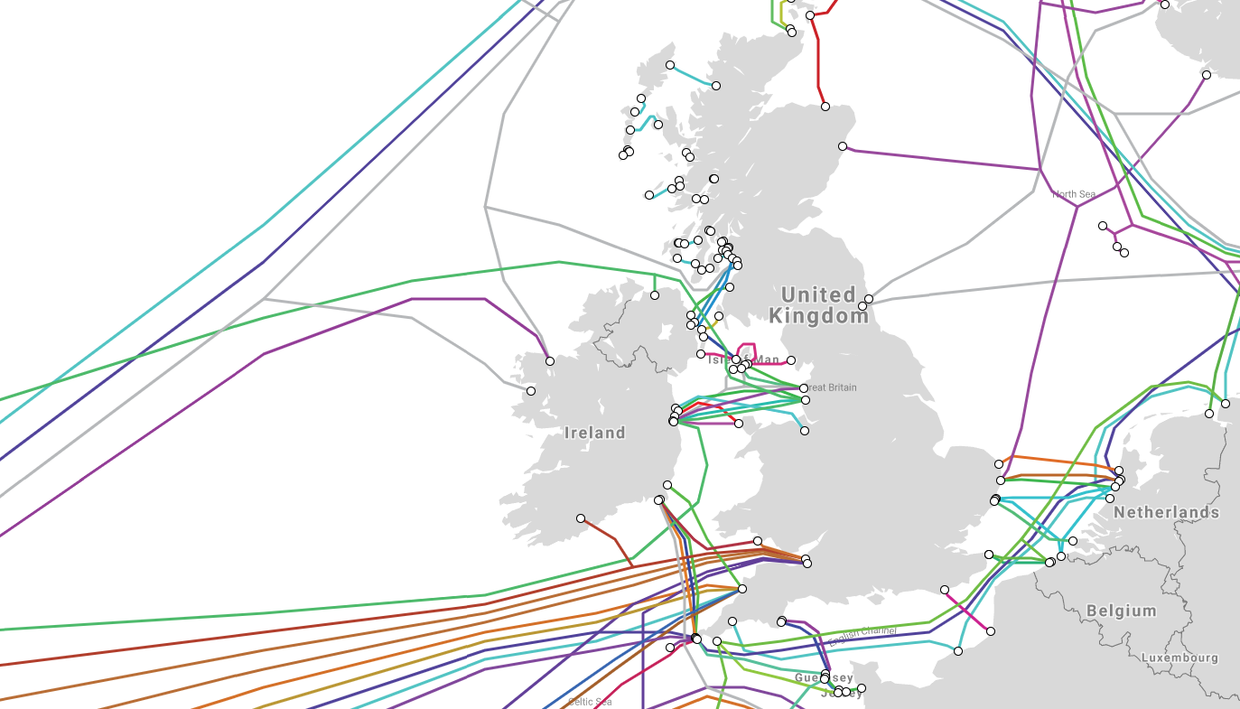
A map showing undersea cables around the world.
Submarine Cable Map (TeleGeography)

From Business Insider by

Russian agents have been sent to Ireland to inspect its undersea cables, and it's sparking fears they could be tapped or cut in the future, according to The Sunday Times citing Irish police.
Irish security services suspect that Russia's intelligence agency, the GRU, is using their country as a base to gather intelligence on targets in the EU and UK, The Sunday Times reported.
The large number of tech companies that are based in Dublin could be another reason for Russia's suspected monitoring, an expert on transnational crime and Russian security told the newspaper.
There have been longstanding fears that Russian spies could cut transatlantic undersea cables to disrupt communications and financial transactions, and take entire countries offline.

Russian intelligence agents have been sent to Ireland to make the precise locations of undersea cables connecting Europe to North America, and it's raising fears that they plan to tap or even cut them, The Sunday Times reported.
Irish security services believe that the agents were sent by Russia's foreign intelligence agency, the GRU, and are checking the fiber-optic cables for weak points, The Times also reported, citing police and military sources.
They were also seen monitoring Dublin Port, which prompted the country to ramp up security at a number of landing sites along the Irish coast, The Times reported.
It's unclear where else the agents have been seen.

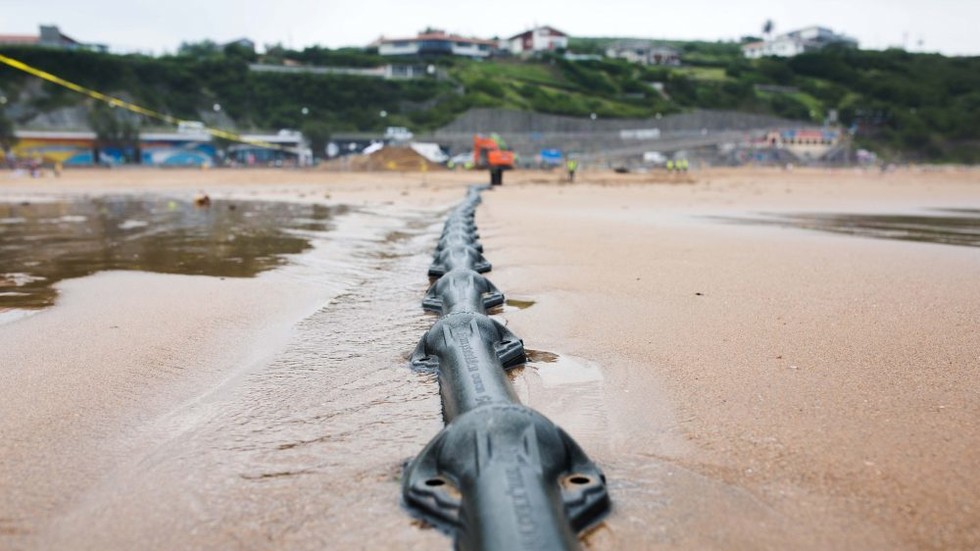
 Microsoft's MAREA cable lands on Ireland's west coast
© RUN Studios / Microsoft

The vast network of transatlantic cables that run under the world's oceans power the internet, texts, calls, and global financial transactions.
About 97% of all intercontinental data is transferred through these cables, according to the Asia-Pacific Economic Cooperation forum.

Ireland is an ideal location for these undersea maps, given its proximity to North America and Europe.
In 2015, Irish telecommunications company Aqua Comms set up a $300 million cable to connect the US to Dublin, and on to London and European continent, the Irish Examiner reported.

Irish police and military sources suspect the GRU is using Ireland as an operations base to gather intelligence on targets in the EU and the UK, The Times said.

Another reason for the Russians' presence could be Dublin's place as one of Europe's largest tech hubs, as authorities suspect the agents could also be spying on large tech companies, according to The Times. Google, Airbnb, Facebook, and Twitter all have headquarters in the city.

A map showing undersea internet cables landing in Ireland
© TeleGeography

The country also presents itself as an ideal target to the Russians, Mark Galeotti, an expert on transnational crime and Russian security at the Royal United Service Institute think tank, told The Times.
"Ireland doesn't have a counter-intelligence capability. It's a relatively soft target. Ireland is a major node for the global internet. It has a large concentration of tech companies," he said.
"This is the new battle space of the future."

News of the Russian agents' arrival in Ireland has prompted concerns that Russia might ramp up its information warfare by cutting or tampering with the cables, which could disrupt global financial transactions or even take entire countries offline.

John Sipher, a retired CIA officer, in Moscow, told The Times that there is a high chance the agents are either spying or planning to cut communications.
"They also may wish to show their capability in order to threaten the West," he told the British newspaper.
"Our FBI has caught Russians trying to gain access to underwater cables, including the areas where they come into land."
"They are also seeking to gain physical access to routers and communication nodes," Sipher added.

Western countries have long feared that Russia could cut undersea cables and interfere with the global economy and way of life.

Air Chief Marshal Sir Stuart Peach, the UK's most senior military officer, said in December 2017: "There is a new risk to our way of life, which is the vulnerability of the cables that criss-cross the seabeds."
"Can you imagine a scenario where those cables are cut or disrupted, which would immediately and potentially catastrophically affect both our economy and other ways of living?"

Russian ships were seen in 2018 in the vicinity of vital undersea fiber-optic cables, sparking further speculation that the Kremlin was finding a new way to spy.

Submarine cable installations in the telecom, power and seismic industries have similarities and differences. But there is a common thread in every submarine cable lay: you need accurate real-time control over the position and bottom tension of your cable as it lands on the seabed. This video discusses a proven method for achieving this control being used by over 75% of the telecom cable ships in the world.

What are undersea internet cables?

More than 300 undersea cables, which run a total of 550,000 miles, keep the internet running around the world.

Most lines are owned by private telecommunications companies, including tech companies like Google and Microsoft.
Their locations, which have been built up over the decades, can be easily identified on public maps.

Despite their importance, little is being done to guard and protect these deep-sea cables.
Cybersecurity experts told Business Insider's Jim Edwards in 2018 that it's only "a matter of time" before hackers can access these cables and entire countries can be taken offline.

Links :

Monday, February 17, 2020

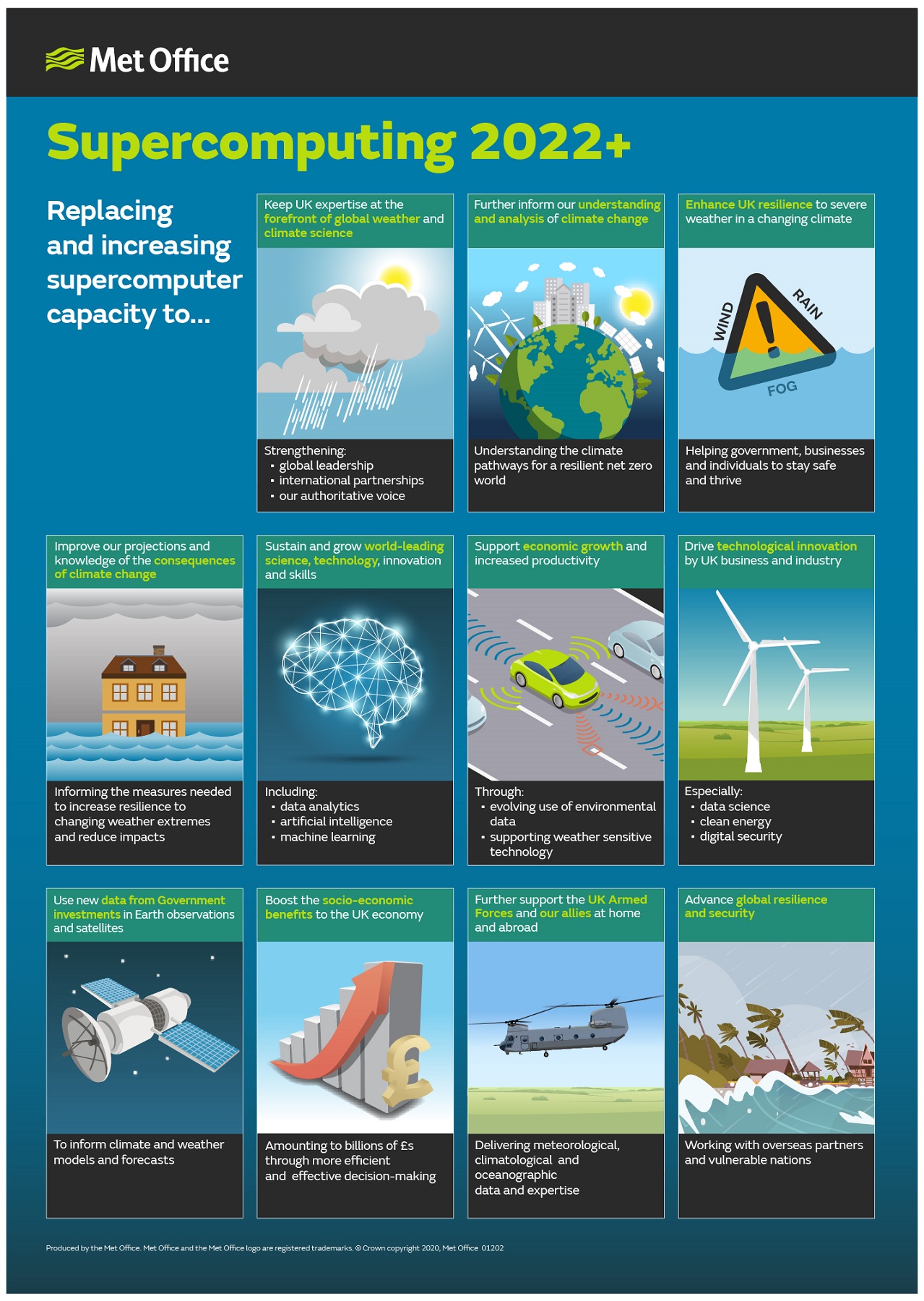
Met Office forecasters set for 'billion pound' supercomputer

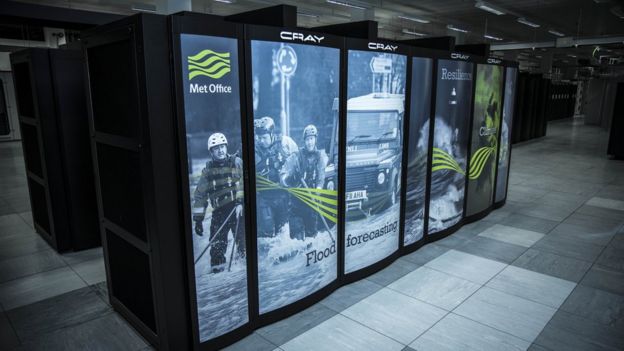
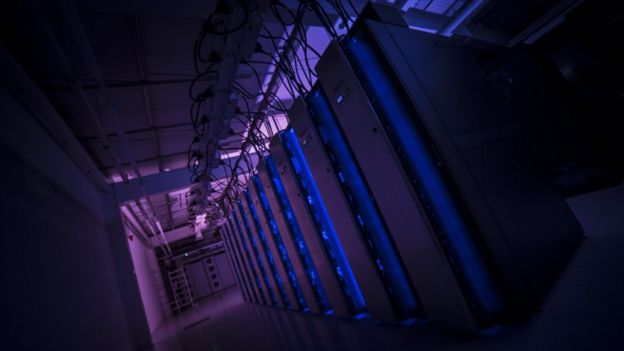
The Met Office's existing supercomputer

From BBC by David Shukman 

Ever wondered why your village was suddenly flooded by a thunderstorm the weather forecasters hadn't mentioned?

Or why they failed to warn you about the dense fog shrouding your home in the morning?

The fact is that predicting the "big picture" of future conditions has got a lot better - Storm Dennis was spotted six days before it arrived.
But getting local forecasts right - street by street and hour by hour - is still a massive challenge.
And that might now change as the Met Office secures the help of a supercomputer project costing £1.2bn.

Better forecasting means handling more data, more rapidly, and running it through simulations of the atmosphere more accurately.
Already the Met Office is pulling in more than 200 billion observations from satellites, weather stations and buoys out in the ocean every single day, and that's set to increase.
And working out if a summer downpour will flood your home or one down the road requires more and more processing power.
"We'll be streets ahead of anybody else," according to Penny Endersby, chief executive of the Met Office.
"Ultimately it'll make a difference to every individual, every government department, every industry as people see forecasts becoming steadily better."

It'll be the biggest investment in the 170-year history of the organisation and will dwarf the £97m bill for the current supercomputer.
In the new project, the billion-plus cost will cover not just the hardware itself but all the running costs too over a ten-year period.
There'll be a first stage installation, which should be six times more capable than the supercomputer used now.

And then five years later there'll be a major upgrade to increase performance by a further three times.

The new supercomputer will be six times more capable than the current one

What will the supercomputer actually do?

It'll run what the Met Office calls its "digital twin" of the Earth's atmosphere, a highly detailed "model" of everything from the winds to the temperatures to the pressures.
To create this simulated picture of our weather, the globe is divided into grid squares.

These have become smaller as the technology has advanced - and the smaller the better because that means more accuracy.

At the moment, the model of Earth is divided up into a grid of squares that are 10km across.
The UK gets more detailed treatment: its squares are 1,500m across.
London is studied with the aid of even smaller squares - 300m wide - mainly to improve the accuracy of forecasts for the airspace above the big airports.
And the ambition, when the new supercomputer is up and running, is to operate at an even sharper resolution, down to a scale of 100m.

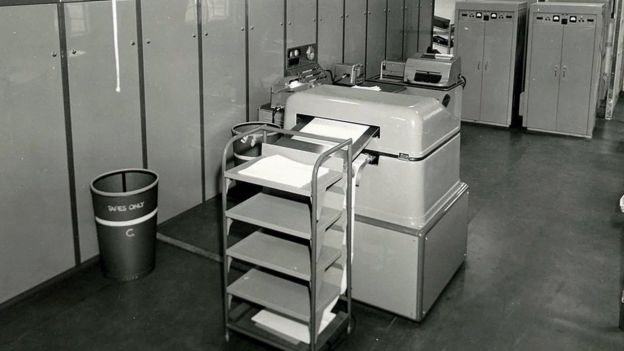
Original supercomputer installed at the Met Office in Dunstable in 1959

Will it really make a difference?

The Met Office certainly believes it will.
There's huge demand for better forecasting - from the military to the power companies to organisers of big outdoor events.

It could guide Environment Agency teams deploying mobile flood barriers or help the National Grid balancing fluctuations in wind and solar power.

And the prospect of rising global temperatures fuelling new and more dangerous extremes of weather makes accuracy all the more important.

There has been a huge improvement in recent years - every passing decade has seen forecasts reach a whole day further into the future.
A five-day forecast now is as accurate as a one-day forecast 40 years ago.

So will the new computing power continue that advance?
Penny Endersby prefers not to be make any promises.
"I won't hang my hat on getting another day in the next decade," she says.
"But it will make our forecasts more accurate, more timely and more localised."

And the government has calculated what that could mean in hard cash: that for every pound invested, there should be £19 in economic benefit.

Time lapse footage of our Cray supercomputer being installed in our new IT Hall 3.

And will it help with climate change?

That's the aim, with the digitally-simulated atmosphere also run far into the future to explore the effects of a hotter world.

The effects of the rise of 1C over the past 150 years are still not fully understood, let alone those of bigger increases to come.
It should mean researchers can add more detail to their projections, weaving in factors such as the way nitrogen reacts with the carbon in the air.

And as the UK moves towards its target of net zero emissions by 2050, there'll be a chance to explore different options for how the country uses the land.
For example, what will the effects be of planting new forests or protecting peat bogs or growing more biofuels?


Won't the new supercomputer itself add to carbon emissions?

Like any huge IT installation, it'll certainly need a massive supply of electricity.
That's why the Met Office is inviting the potential providers to come up with low-carbon options.
And that's led to a radical idea.

The last 14 Met Office computers have all been housed in the UK - and the new one might not be.
Around half of the processing work - the research devoted to climate change - could be located in countries blessed with easy sources of clean energy.
Iceland with its geothermal sources and Norway with its hydropower are both possibilities.

The offer is only open to countries in the European Economic Area - locating the facility on another continent has been ruled out because of the time lag in using a distant connection.
Invitations to the IT industry to bid for the project are being drawn up and will go out near the end of the year.
And the start date for the new machine will be sometime in late 2022.

Links :