
Shipping companies are calling on the federal government to invest in Arctic infrastructure and navigation technology as climate change renders transport corridors more hazardous — even as traffic ramps up.
Northern waters need new port facilities, higher quality satellite imaging and modern mapping that charts the depth of the ocean floor, say a group of more than a dozen ship owners and transport companies.
"There's a growing need for transportation in the Arctic," said David Rivest, president of Desgagnés Transarctik, a shipping firm that supplies dozens of northern communities.
Infrastructure upgrades would help meet the expanding needs of northern communities and mining firms as well as the threat of foreign actors amid rising global tensions, according to the St.
Lawrence Ship Operators association.
Northern waters need new port facilities, higher quality satellite imaging and modern mapping that charts the depth of the ocean floor, say a group of more than a dozen ship owners and transport companies.
"There's a growing need for transportation in the Arctic," said David Rivest, president of Desgagnés Transarctik, a shipping firm that supplies dozens of northern communities.
Infrastructure upgrades would help meet the expanding needs of northern communities and mining firms as well as the threat of foreign actors amid rising global tensions, according to the St.
Lawrence Ship Operators association.

Longer, sturdier boat ramps are one example.
"These ramps are essentially just gravel inclinations going from the water up to a beach landing area," Rivest said.
"They're exposed to the tides."
In communities where food, building materials and consumer items come primarily by ship, transport tugs can haul barges up to the ramp at high tide.
But at low tide, shallow water and rocks make landing tricky or impossible.
A new landing zone — in a nearby bay with better boat access and shelter from wind and storms, for example — would make the process much more efficient, Rivest said.
"For instance, in Kuujjuaq, a very important community in northern Quebec, we have to anchor four or five nautical miles away from the ramp. That means there's a long transit between the ship and the beach area," he said.
"These ramps are essentially just gravel inclinations going from the water up to a beach landing area," Rivest said.
"They're exposed to the tides."
In communities where food, building materials and consumer items come primarily by ship, transport tugs can haul barges up to the ramp at high tide.
But at low tide, shallow water and rocks make landing tricky or impossible.
A new landing zone — in a nearby bay with better boat access and shelter from wind and storms, for example — would make the process much more efficient, Rivest said.
"For instance, in Kuujjuaq, a very important community in northern Quebec, we have to anchor four or five nautical miles away from the ramp. That means there's a long transit between the ship and the beach area," he said.
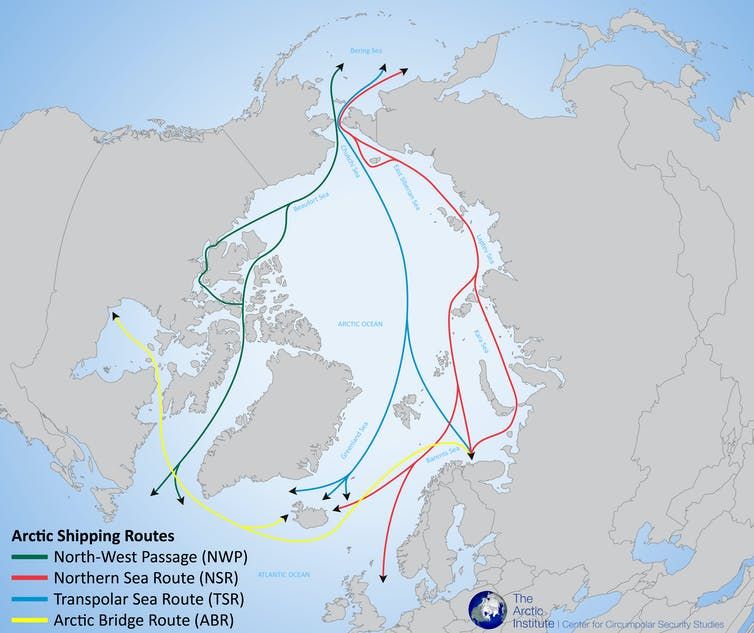
Efficiency is all the more crucial in areas with short seasonal windows for seaborne deliveries.
The Arctic shipping season typically runs from June through November.
"But there's certain locations where we can only deliver 45 days," Rivest said.
"Sometimes it's even less than that."
Meanwhile, a retreat in Arctic sea ice has opened up waterways to more boats, making passage more treacherous, but also unleashed icebergs that can hamper ships.
"Early this summer, we had a ship that was out west in the Northwest Passage, and I was completely surprised to find dozens of sailboats crossing west to east, meeting our ships in the area," said Daniel Dagenais, CEO of NEAS Group, which hauls everything from diesel tanks to roof trusses to towns and villages across the North.
The number of boat trips into Canadian Arctic waters increased by nearly half to 466 between 2011 and 2024, a study out of the Université du Québec à Montréal found.
Shippers say that steady increase in both traffic and ice flows demands better navigation tech — weather tracking systems and satellite image processing, for example.
As of May 2023, 15.8 per cent of Canadian Arctic waters had been "adequately surveyed," while 44.7 per cent of its key navigational routes met that standard, according to the Canadian Hydrographic Service.
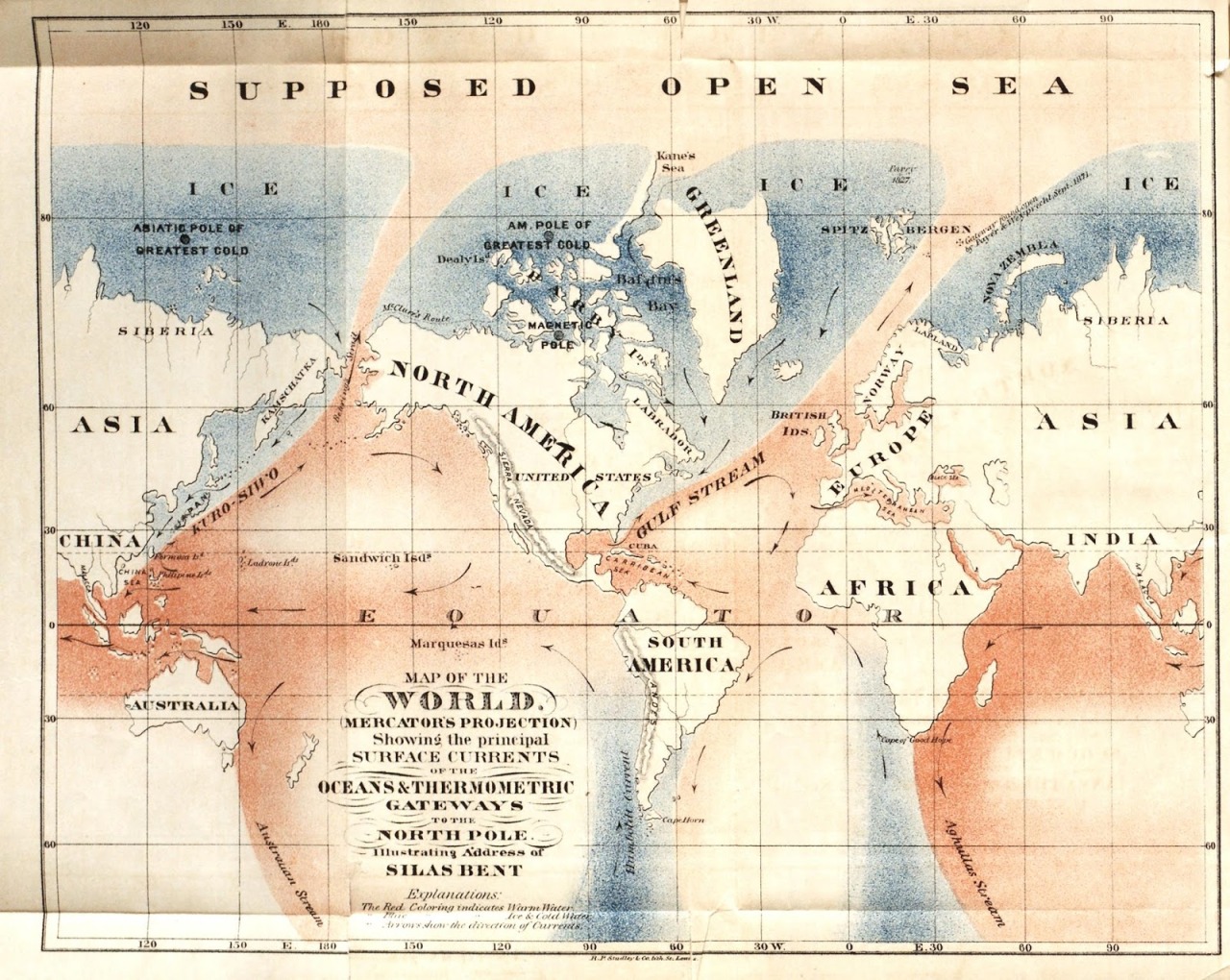
Oceans and Thermometric Gateways to the North Pole - 1872 map
by US Navy hydrographer Silas Bent.
In the 1800s many geographers mistakenly believed the Arctic was an open ocean
surrounded by a ring of ice.
"With the warming temperatures, it's a lot more volatile," Rivest said of ice flows.
"It's moving around, it's going into these main transit areas and then the ships need to take alternate courses.
"Compound that with the bathymetry" — topography mapping, but for water bodies — "that's not up to date, you accentuate the risks for incidents," he said.
"Think of going on Google Maps today and trying to look at the map of Canada and 85 per cent of it is not there. That's what we're dealing with when we're navigating in the Arctic."
The shipping association has welcomed Ottawa's renewed focus on infrastructure projects and defence spending, which could have northern applications ranging from radar stations to housing.
But precisely how the dollars in the recent federal budget will find their way to Arctic shipping remains uncertain.
"It all trickles down in the weeks and months that come afterwards, so that's where we need more details," said association executive director Saul Polo.
As Prime Minister Mark Carney seeks to make sovereignty a central theme in his government, shippers hope to shine a light on the defence benefits of broader federal investment in the North.
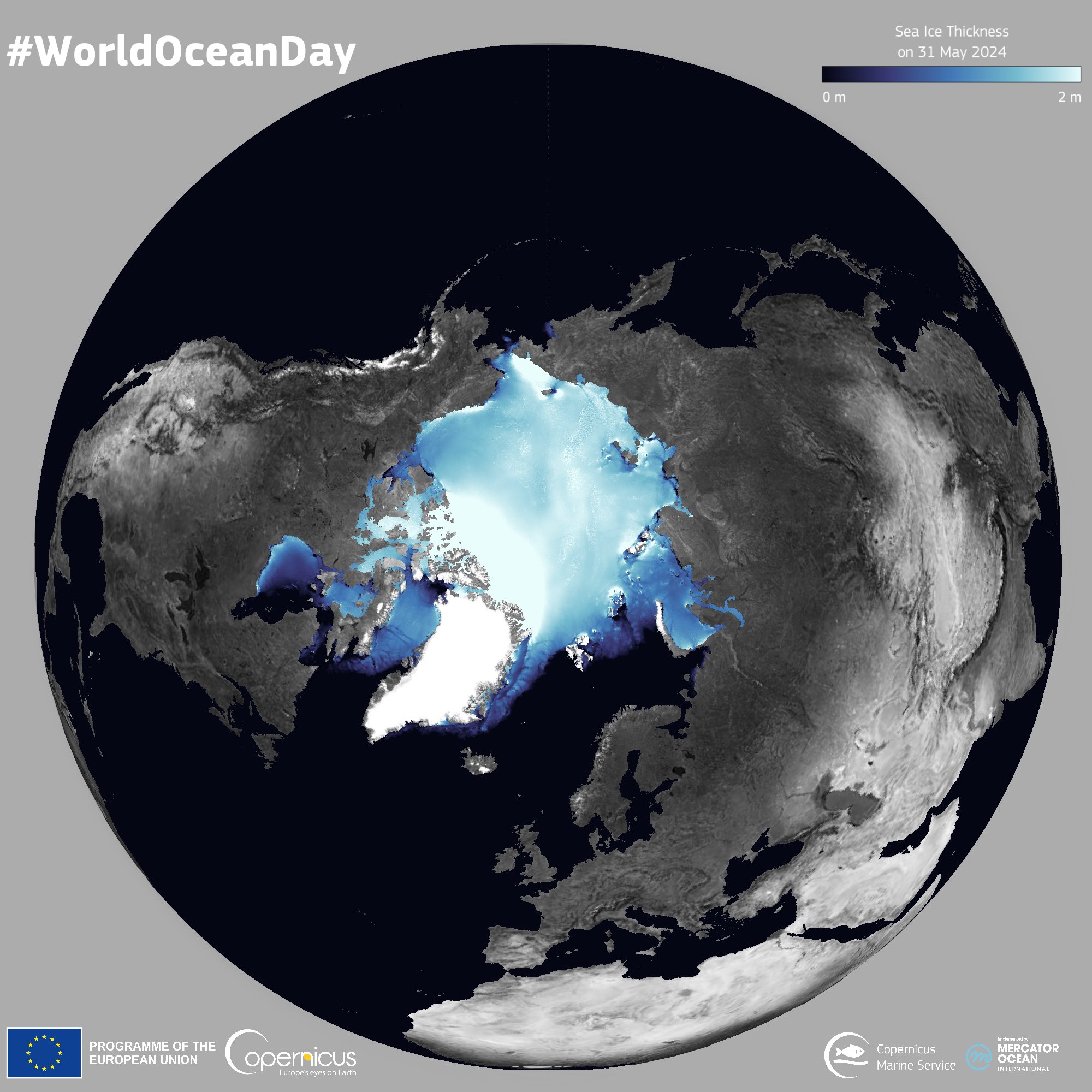
On top of surveillance and mapping gear, infrastructure ranging from housing and research stations to coast guard icebreakers and search-and-rescue crews could serve both commercial and military goals, the association argues.
"There's more and more demands in the Arctic, and it's not about to go away," Dagenais said.
"There's more and more demands in the Arctic, and it's not about to go away," Dagenais said.
Links :
- The Economist : The Arctic will become more connected to the global economy
- NOAA : Arctic Report Card: Update for 2025

No comments:
Post a Comment