From History
On August 1, 1861, Robert FitzRoy, a British naval officer who had been researching ways to predict the weather, publishes the first known weather forecast in The Times.
The report, which includes a prediction of 62 degrees and clear skies in London, is largely accurate.
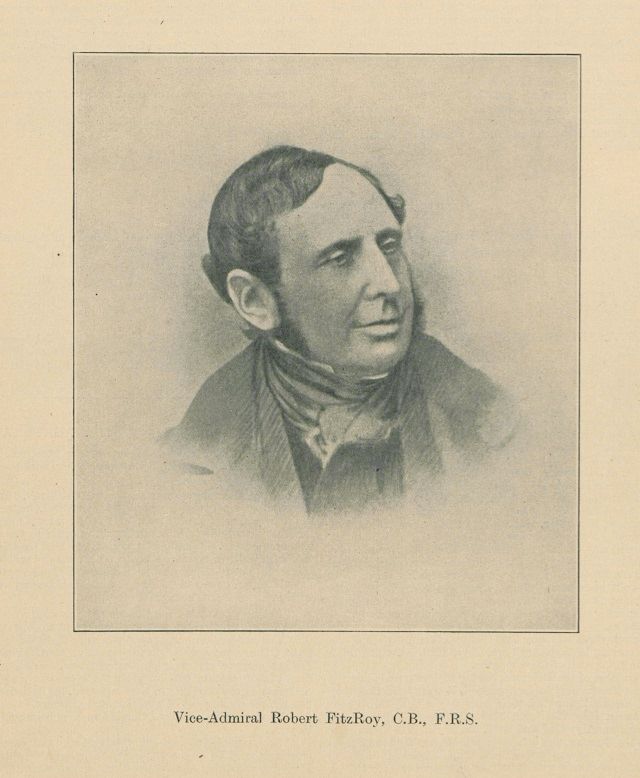
Fitzroy—who had captained the famed HMS Beagle, which sailed around the world with naturalist Charles Darwin—had become concerned about the massive loss of life at sea, with more than 7,400 shipwrecks near the British coast over a five-year period.
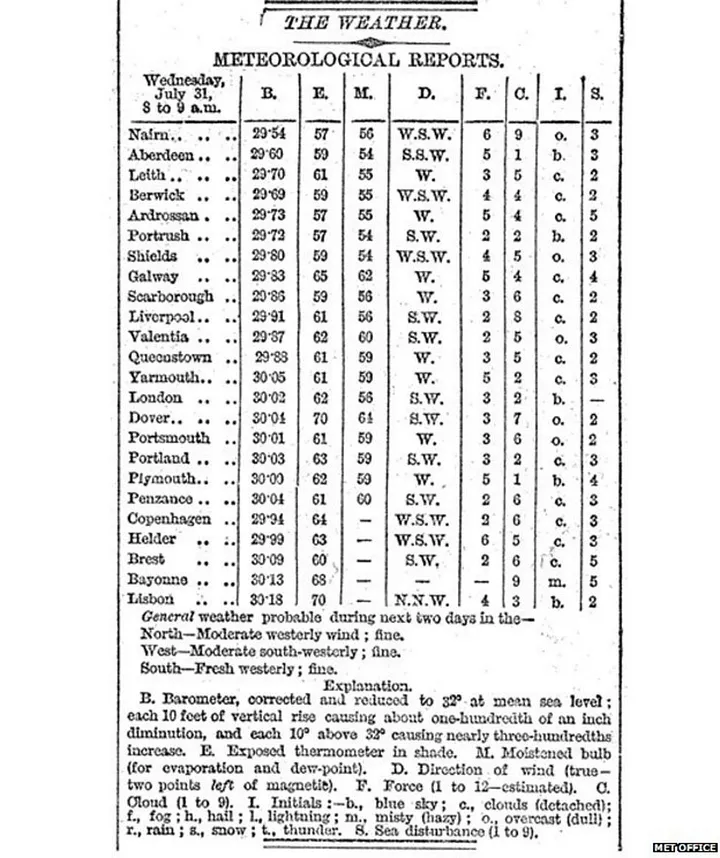
The first Weather Forecast published in The Times. Source: Met Office
Fitzroy believed advance warning about rough weather could prevent many such tragedies.
Why Hurricanes Have Names
At first, hurricanes were only given women's names -- until some women protested and got storms named after men, too.
In a world before forecasts, people relied on simply watching clouds or even observing animal behavior to predict storms.
Why Hurricanes Have Names
At first, hurricanes were only given women's names -- until some women protested and got storms named after men, too.
In a world before forecasts, people relied on simply watching clouds or even observing animal behavior to predict storms.
When “weather frogs” climbed up a little ladder in a jar with water, for example, it supposedly predicted good weather; if the frog climbed down, people believed rain was coming.
In 1854, FitzRoy, by then a vice-admiral, established the Meteorological Department of the Board of Trade.
In 1854, FitzRoy, by then a vice-admiral, established the Meteorological Department of the Board of Trade.
The organization, later called the Met Office, initially produced wind charts intended to help boats reduce their sailing times.
In 1859, the British government gave FitzRoy the authority to start issuing storm warnings, which he did using the electric telegraph, a new technology.
He started sending his predictions to newspapers.
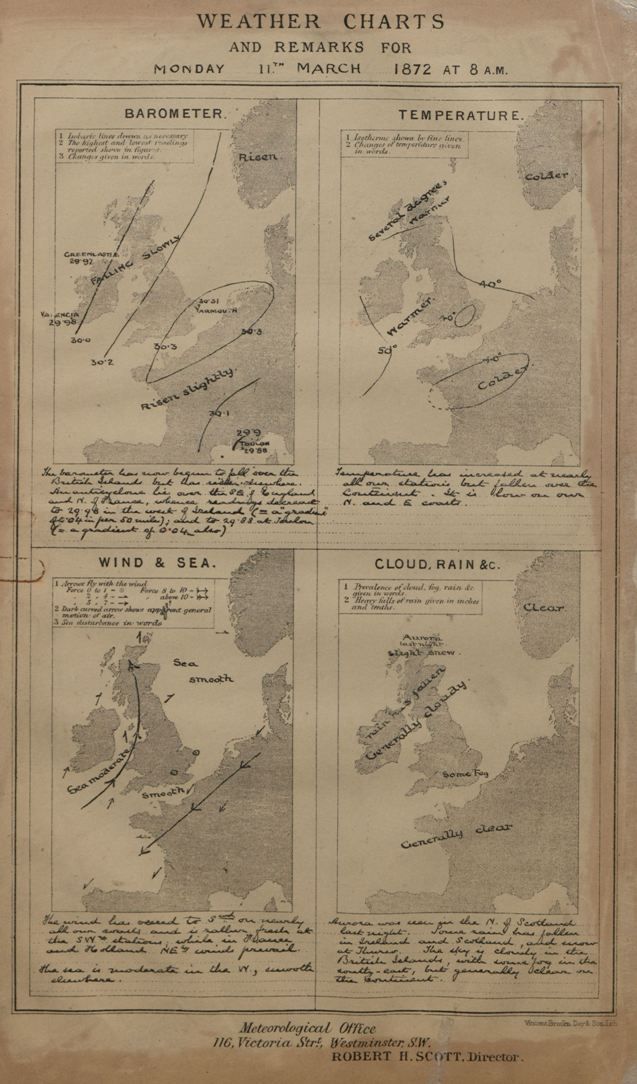
This is a celebratory film to mark 170 years of the Met Office.
Beginning in 1854, when Captain Robert Fitzroy founded the Meteorological Department, we share some of the key dates in our history of innovation and public service.
From the first storm warning system in 1861, to advancing weather and climate science and services around the world today.
After the initial August 1 forecast, weather reports quickly became very popular and syndicated in publications around England.
It wasn’t just fishermen and sailors, traditionally affected by the weather, who availed themselves of the forecasts.
People involved in organizing events like county fairs and flower shows obsessively followed them as well.
Some people even used the forecasts for more speculative purposes, like picking which horse to bet on in races, depending on how the weather might affect track turf.
Links :
- BBC : The birth of the weather forecast
- MetOffice : Robert FitzRoy and the early Met Office
- MetOffice : Our history
- Reading Univ : UK Met Office founder’s 19th century weather data rescued

No comments:
Post a Comment