London is calling.
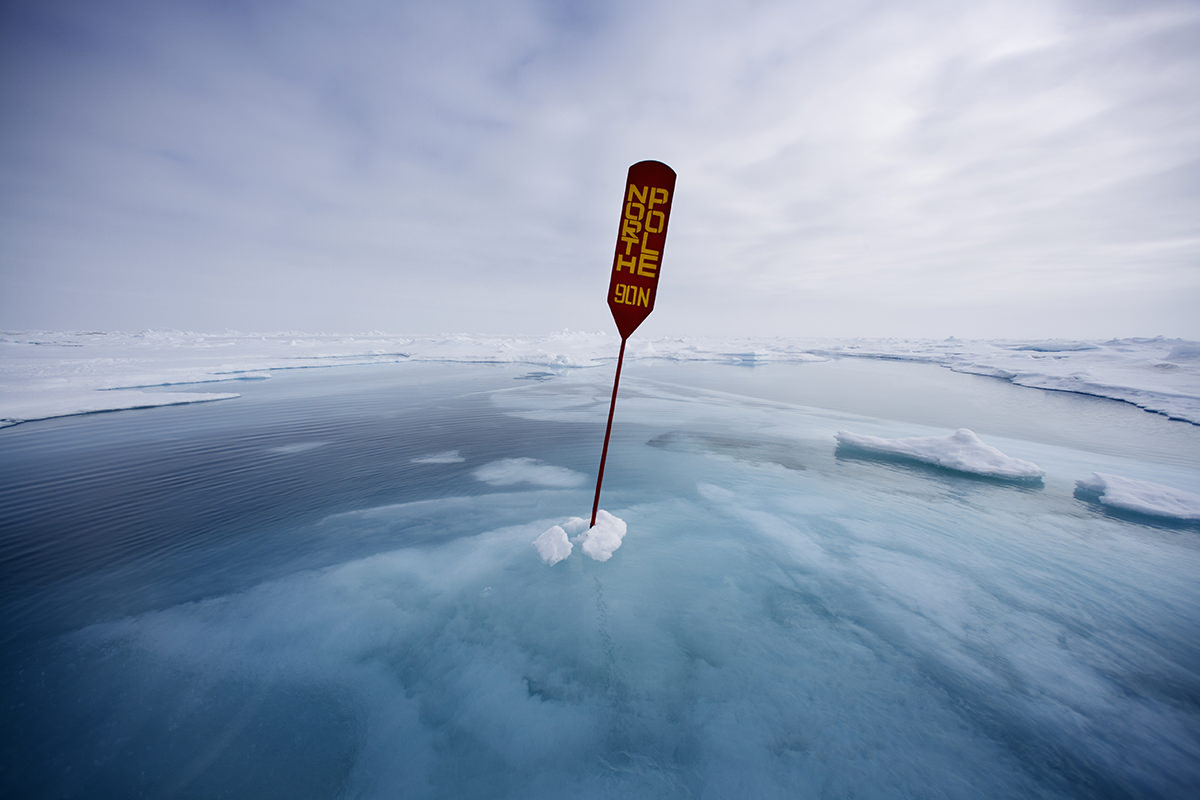
The planet’s North Pole mysteriously changed the direction of its travel in 2000, turning eastwards towards the Greenwich meridian.
It now seems that this change in direction is down to the redistribution of water on land as well as to melting polar ice.
The Earth’s rotational axis, and with it the location of the physical North Pole, was travelling at a rate of about 10 centimetres a year over the last century towards Canada’s Hudson Bay along a line of longitude that runs through Toronto and Panama City.
This movement was down to the redistribution of Earth’s mass as the crust has slowly rebounded after the end of the last ice age.
Some evidence suggested that the shrinking of ice sheets in Greenland and Antarctica caused by climate change was behind the surprise shift.
Now, a study says this change is also influenced by the changing distribution of water on land.
“This is the first time we have solid evidence that changes in land
water distribution on a global scale also shift which direction the axis
moves to,” says lead researcher Surendra Adhikari of NASA’s Jet Propulsion Laboratory in Pasadena, California.
For example, Adhikari says, the Indian subcontinent and the Caspian Sea are losing a massive amount of water, pulling the axis eastwards.
Pole shifts aren’t just theories.
— Darshak Rana ⚡️ (@thedarshakrana) April 11, 2025
Earth’s magnetic poles are known to move.
But currently, the North Pole is shifting at an unprecedented rate—34 miles per year toward Russia.
Some researchers worry this fast movement signals a potential sudden shift.
NASA's research shows: pic.twitter.com/AeAEUY0Q6U
Always on the move
The study used data from NASA’s GRACE satellites to investigate how
the distribution of water mass was related to the direction of Earth’s
axis movement between 2002 and 2015.
The results also shed light on another long-standing puzzle: why the
axis oscillates every few years. This oscillation is also down to
changes in water mass around the planet, says Adhikari.
“The precise knowledge of polar motion, and Earth rotation in
general, is indispensable for many applications,” says Florian Seitz of
the German Geodetic Research Institute in Munich.
This includes GPS
navigation systems and the positioning of satellites.
The findings could
also help us study climate change, he says.
Because we have an accurate record of the axis’s movement since 1899,
we may now be able to use that data to map out past changes in the
distribution of land water more precisely.
This, in conjunction with factoring in where the axis is heading, could help make climate models more accurate.
Links :
- National Geographic : Climate Change Is Moving the North Pole
- ScienceAlert : The North Pole Is Slowly Moving Towards London, And Scientists Have Finally Figured Out Why
- GeoGarage blog : Earth's magnetic North Pole moving closer to Russia / Earth's Magnetic North Pole has begun racing towards ... / Earth's magnetic field is acting up and geologists don't ... / Scientists explain magnetic pole's wanderings / ESA scientists celebrate discovery of weird magnetism ...

No comments:
Post a Comment