Credit: Seabed 2030
From Seabed20230
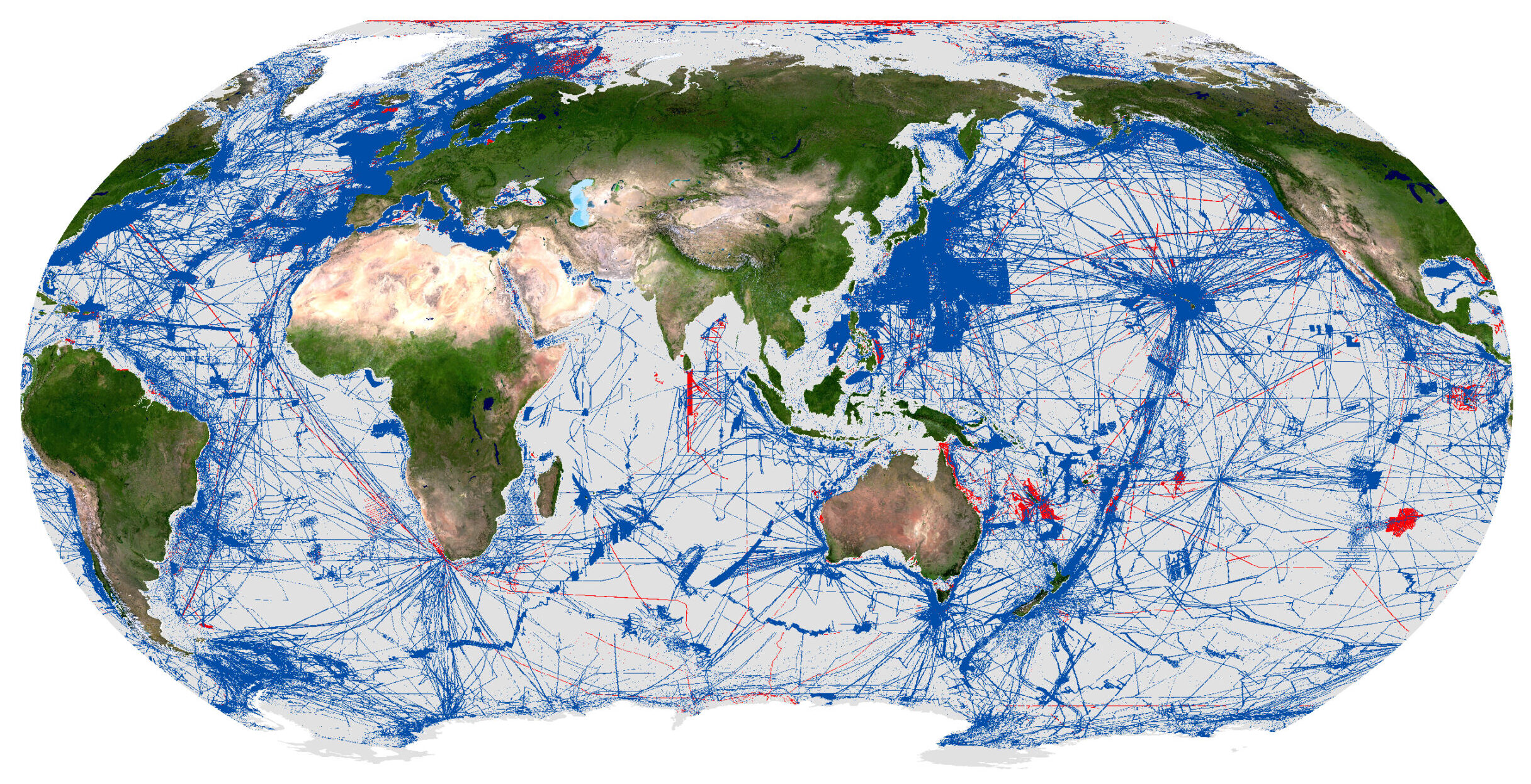
On World Hydrography Day, The Nippon Foundation-GEBCO Seabed 2030 Project has announced that 27.3% of the world’s ocean floor has now been mapped to modern standards
The increase in data represents more than four million square kilometres of newly mapped seafloor – an area roughly equivalent to the entire Indian subcontinent

This milestone comes at a pivotal moment
Just last week at the third UN Ocean Conference in Nice, the global ocean community united in a call for urgent, inclusive and transformative action – recognising the ocean’s central role in addressing some of the planet’s greatest challenges, from climate resilience to food security
Yet despite covering more than 70% of Earth’s surface, the ocean remains our least understood environment.
Established by the International Hydrographic Organization (IHO), World Hydrography Day raises awareness of the critical role hydrography plays in advancing our understanding of the ocean
This year’s theme, ‘Seabed Mapping: Enabling Ocean Action’, highlights how bathymetric data underpins the blue economy – supporting sustainable marine energy, coastal tourism and fisheries – and contributes to global efforts to protect biodiversity and tackle climate change.

Seabed 2030 is a collaborative project between The Nippon Foundation and the General Bathymetric Chart of the Oceans (GEBCO), which seeks to accelerate the complete mapping of the world’s ocean floor and compile all the data into the freely available GEBCO Ocean Map
As a flagship programme of the Ocean Decade, Seabed 2030 is helping to close one of the largest data gaps in ocean science
From improving tsunami early-warning systems to guiding the installation of undersea cables and identifying biodiversity hotspots, seafloor data enables informed, real-world action.
Over the past 12 months, Seabed 2030 has welcomed data contributions from 14 new organisations – including first-time contributions from five new countries: Comoros, Cook Islands, Kenya, Mozambique and Tanzania
With data now contributed by over 185 organisations worldwide, the project continues to galvanise global support towards a fully mapped ocean floor.

Commenting on the latest milestone, Seabed 2030 Project Director Jamie McMichael-Phillips said: “Mapping the seafloor is not just a scientific exercise – it’s a global imperative, foundational to everything from climate action and coastal resilience to sustainable development.
As we reach the midpoint of the UN Ocean Decade – a defining moment for ocean action – I urge governments, industry, research institutions and individuals alike to contribute to this global effort
Together, we can deepen our scientific understanding of the ocean and help secure the future of the blue planet.”
Executive Director of The Nippon Foundation, Mitsuyuki Unno, said: “The Nippon Foundation is committed to building on the achievements made through Seabed 2030 by continuing to support global collaboration to acquire bathymetric data, the promotion of innovative ocean mapping technologies, and the training of future ocean mappers.”
Chair of GEBCO Evert Flier added: “The progress captured in this update reflects the extraordinary value of global collaboration
Every contribution strengthens the GEBCO Grid – helping to complete the picture of the ocean and deliver benefits for science, society and the planet.”
All data collected and shared with the Seabed 2030 project is included in the free and publicly available GEBCO global grid
A joint programme of the IHO and the Intergovernmental Oceanographic Commission (IOC) of UNESCO, GEBCO is the only organisation with a mandate to map the entire ocean floor
- Hydro : Seabed 2030’s invaluable journey / Vast new areas of the seafloor mapped in latest Seabed 2030 update
- GeoGarage blog : Putting Portugal on the (seabed) map with the SEAMAP ... / Tropical seafloor secrets discovered as seabed 2030 gains ... / The mighty quest to unveil our blue planet / Can a map of the ocean floor be crowdsourced? / Nearly a quarter of Earth's seafloor now mapped / An ambitious project aims to map the entire ocean floor. It ... / Why mapping the entire seafloor is a daunting task, but key ... / The ocean is deeper than you think. We need better maps. / 'The Deepest Map' explores the thrills — and dangers / Mappers look to chart world's ocean floor by 2030 / Mapping quest edges past 20% of global ocean floor / Earth's final frontier: the global race to map the entire ... / Model suggests undersea mountains help mix the global ... / High-tech seafloor mapping is finding surprising structures ... / First new seafloor map of 2021 collected on New Year's ... / Mapping the mysteries—and the dangers—of the ocean ... / To predict future sea level rise, we need accurate maps ... / Massive new seamount discovered in international waters ... / NOAA Ocean Exploration meets major mapping milestone ... / Why the first complete map of the ocean floor is stirring ... / New depth map of the Arctic Ocean / Four new seamounts discovered in the high seas / Which countries are mapping the ocean floor? / Mapping the approaches to Mawson Antarctic base / New seamount and previously unknown species ... / Underwater drones nearly triple data from the ocean floor / “It's just mind boggling.” More than 19000 undersea ...
No comments:
Post a Comment