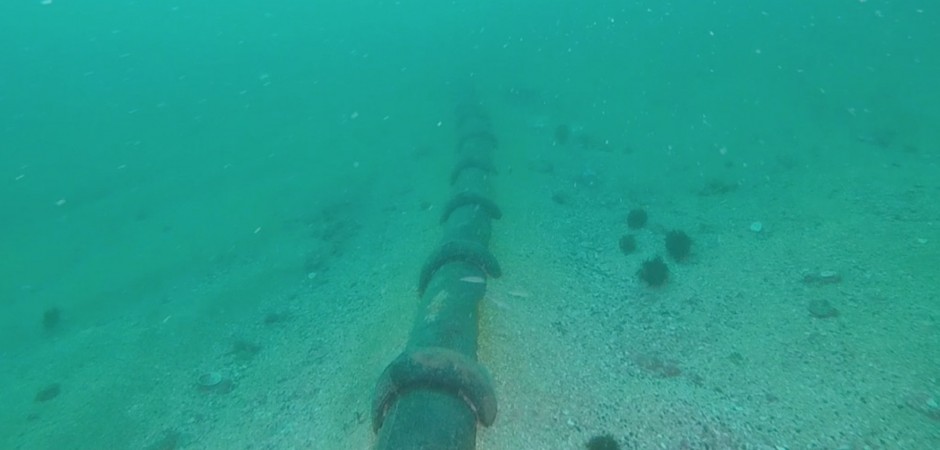
From SmartEnergy by Ami Daniel, CEO and co-founder of Windward,
Escalating risks against offshore energy infrastructure, such as undersea pipelines, and what practical actions can be taken in securing their protection.
Offshore energy infrastructure is the backbone of Europe’s power supply
Comprised of a web of pipelines, rigs, and subsea cables, these systems are a marvel of engineering and international cooperation
However, the EU is still heavily reliant on external sources for energy – a record 16.5 million metric tons of liquid natural gas imported from Russia traversed these pipelines in 2024 – and securing these pipelines against bad actors is critical.
Unfortunately, the risks are escalating, with recent incidents such as the Nord Stream pipeline sabotage and repeated undersea cable failures highlighting the danger to these critical global systems.
Threats to underwater energy infrastructure are not a new phenomenon
In 1944, the British military launched Operation Pluto, a project to construct an extensive network of undersea pipelines under the English Channel to avoid the risk of attacks on tankers by enemy forces
While the threats today have evolved significantly since WWII, the principle remains the same – offshore energy infrastructure is a critical asset that, if disrupted, can weaken economies and national security.
Whether malicious attacks or mere accidents, such incidents highlight the vulnerability of these assets
But given the difficulties in safeguarding them both from a physical and logistical perspective, what practical actions can be taken?
The emerging threat landscape
There are an average of over 100 undersea cable faults annually, many in high-risk regions
The Nord Stream explosions in 2022, for example, exposed the vulnerability of critical pipelines, while repeated cable disruptions in the Baltic Sea and near Taiwan show a rising trend of maritime incidents.
While not all of these incidents are confirmed to be malicious attacks, there has been a notable and concerning increase in “dark activity” near the sites of these incidents
A vessel that engages in dark activity – intentionally disabling its Automatic Identification System (AIS) signals to avoid detection – is effectively invisible to most global tracking systems and can undertake illegal activities virtually undetected
This tactic is frequently used by the “dark fleet”, a category of vessels, often operated by countries like Russia and China, that is involved in clandestine trade, sanctioned commodity transport, and other illicit maritime operations
According to Windward’s data, the dark fleet includes over 1,300 vessels.
While dark activity is commonly associated with illegal fishing or smuggling sanctioned commodities, the dark fleet’s growing presence near undersea energy infrastructure assets raises the concerning possibility that these ships are being used for sabotage or unauthorized interference
Unfortunately, enforcement is difficult in international waters
Jurisdiction is limited or complicated, and opaque vessel ownership makes accountability challenging
The result is that offshore infrastructure is exposed to intentional or accidental interference, such as the recent Ukrainian attack on an offshore gas platform used by Russian forces in the Black Sea.
Offshore energy infrastructure is the backbone of Europe’s power supply
Comprised of a web of pipelines, rigs, and subsea cables, these systems are a marvel of engineering and international cooperation
However, the EU is still heavily reliant on external sources for energy – a record 16.5 million metric tons of liquid natural gas imported from Russia traversed these pipelines in 2024 – and securing these pipelines against bad actors is critical.
Unfortunately, the risks are escalating, with recent incidents such as the Nord Stream pipeline sabotage and repeated undersea cable failures highlighting the danger to these critical global systems.
Threats to underwater energy infrastructure are not a new phenomenon
In 1944, the British military launched Operation Pluto, a project to construct an extensive network of undersea pipelines under the English Channel to avoid the risk of attacks on tankers by enemy forces
While the threats today have evolved significantly since WWII, the principle remains the same – offshore energy infrastructure is a critical asset that, if disrupted, can weaken economies and national security.
Whether malicious attacks or mere accidents, such incidents highlight the vulnerability of these assets
But given the difficulties in safeguarding them both from a physical and logistical perspective, what practical actions can be taken?
The emerging threat landscape
There are an average of over 100 undersea cable faults annually, many in high-risk regions
The Nord Stream explosions in 2022, for example, exposed the vulnerability of critical pipelines, while repeated cable disruptions in the Baltic Sea and near Taiwan show a rising trend of maritime incidents.
While not all of these incidents are confirmed to be malicious attacks, there has been a notable and concerning increase in “dark activity” near the sites of these incidents
A vessel that engages in dark activity – intentionally disabling its Automatic Identification System (AIS) signals to avoid detection – is effectively invisible to most global tracking systems and can undertake illegal activities virtually undetected
This tactic is frequently used by the “dark fleet”, a category of vessels, often operated by countries like Russia and China, that is involved in clandestine trade, sanctioned commodity transport, and other illicit maritime operations
According to Windward’s data, the dark fleet includes over 1,300 vessels.
While dark activity is commonly associated with illegal fishing or smuggling sanctioned commodities, the dark fleet’s growing presence near undersea energy infrastructure assets raises the concerning possibility that these ships are being used for sabotage or unauthorized interference
Unfortunately, enforcement is difficult in international waters
Jurisdiction is limited or complicated, and opaque vessel ownership makes accountability challenging
The result is that offshore infrastructure is exposed to intentional or accidental interference, such as the recent Ukrainian attack on an offshore gas platform used by Russian forces in the Black Sea.
Evolving tactics
Threat risks are highest in shallow waters, where the act of anchor dropping and dragging can cause severe damage to undersea cables and pipelines.
For instance, the Chinese-owned vessel Shunxing 39 was implicated in severing an undersea fiber-optic cable near the shores of Taiwan, raising concerns about intentional sabotage
Windward’s internal data has additionally revealed that this vessel was transmitting as many as three different false identities in order to obscure its relation to the incident.
Threat risks are highest in shallow waters, where the act of anchor dropping and dragging can cause severe damage to undersea cables and pipelines.
For instance, the Chinese-owned vessel Shunxing 39 was implicated in severing an undersea fiber-optic cable near the shores of Taiwan, raising concerns about intentional sabotage
Windward’s internal data has additionally revealed that this vessel was transmitting as many as three different false identities in order to obscure its relation to the incident.
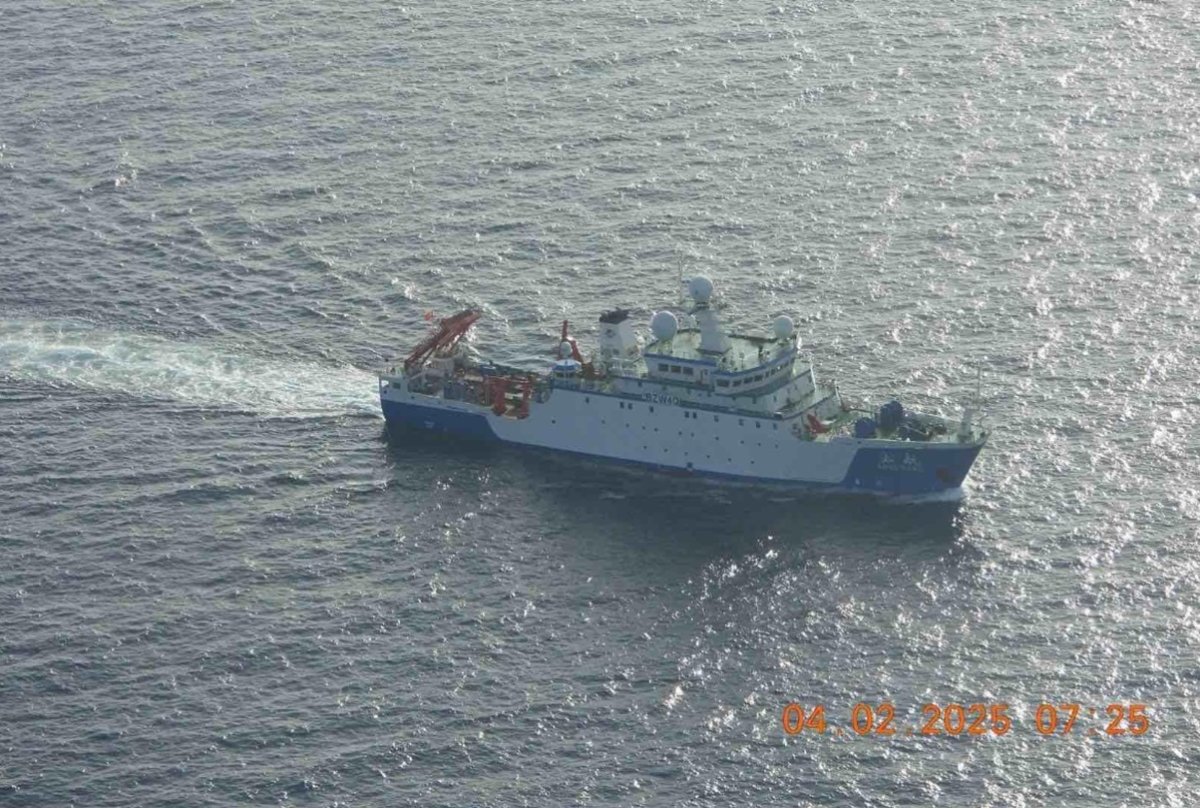
Chinese fisheries research ship the Song Hang operating in the Sulu Sea on April 2.
Windward, which tracks global vessel behavior using artificial intelligence, published an analysis of ship-tracking data highlighting an "unmistakable" difference between the Song Hang's movements and the "natural, erratic" ones of known fishing vessels.
The Song Hang's grid-like paths last month, consistent with survey activity, were concentrated directly over and adjacent to Pacific undersea cables east of Japan and east of the Philippines.
Windward also cited other "red flags" linked to the vessel, including "discrepancies between its transmitted and registered IMO, an unclear ownership trail, and a moderate illegal, unreported, and unregulated fishing risk score."
The Song Hang's grid-like paths last month, consistent with survey activity, were concentrated directly over and adjacent to Pacific undersea cables east of Japan and east of the Philippines.
Windward also cited other "red flags" linked to the vessel, including "discrepancies between its transmitted and registered IMO, an unclear ownership trail, and a moderate illegal, unreported, and unregulated fishing risk score."
photo : Philippine Coast Guard
This incident is just one example of the evolving tactics used by bad actors at sea as well as the challenging nature of monitoring and mitigating such incidents
Indeed, while all ships have anchors and therefore the potential to damage maritime infrastructure, recent reports reveal that Chinese engineers have filed patents for devices specifically designed to sever undersea cables.
The patent, filed in 2020 for a “dragging type submarine cable cutting device” by a team from China’s Lishui University, describes a method to quickly and cost-effectively cut submarine cables with a sharp, heavy device
The mere existence of patents for such devices indicates the potential threat of specialized tools capable of damaging critical undersea infrastructure
It’s an ominous development that exacerbates fears about the vulnerability of offshore energy assets, including oil and gas pipelines and rigs, to deliberate sabotage using advanced technologies.
Indeed, while all ships have anchors and therefore the potential to damage maritime infrastructure, recent reports reveal that Chinese engineers have filed patents for devices specifically designed to sever undersea cables.
The patent, filed in 2020 for a “dragging type submarine cable cutting device” by a team from China’s Lishui University, describes a method to quickly and cost-effectively cut submarine cables with a sharp, heavy device
The mere existence of patents for such devices indicates the potential threat of specialized tools capable of damaging critical undersea infrastructure
It’s an ominous development that exacerbates fears about the vulnerability of offshore energy assets, including oil and gas pipelines and rigs, to deliberate sabotage using advanced technologies.
The challenges of securing offshore infrastructure
Traditional security practices such as AIS monitoring, while relevant and useful, are insufficient on their own
Vessels can disable or manipulate signals and the surveillance capabilities they offer are reactive – rather than preventing incidents, they can only be investigated after the fact.
Another complication is that, while governments play a key role in maritime security, many maritime assets are privately owned, creating a gap in responsibility for which no single entity is fully accountable
This often leads to a “pass the buck” dynamic: governments expect private companies to handle security, companies look to governments for protection and enforcement, and the energy companies that manage this infrastructure face increasing pressure to invest heavily in security.
Many offshore facilities lie outside territorial waters, further obfuscating where enforcement responsibility falls
Consider that a significant portion of Europe’s offshore energy infrastructure is located beyond the territorial waters of any single country, often in Exclusive Economic Zones (EEZs) or international waters
While EEZs give countries certain rights over resource exploitation, they do not grant full sovereignty or law enforcement authority, making it difficult to take legal action against vessels suspected of interference or sabotage
No country has direct control in these areas, so security depends on voluntary cooperation between maritime stakeholders, which is often inconsistent and slow
Indeed, effective security for offshore energy assets requires collaboration between a slew of players including governments, international organizations, and private sector operators
However, coordination across these jurisdictions remains notoriously difficult due to differing geopolitical interests, regulatory standards, and enforcement capabilities.
Traditional security practices such as AIS monitoring, while relevant and useful, are insufficient on their own
Vessels can disable or manipulate signals and the surveillance capabilities they offer are reactive – rather than preventing incidents, they can only be investigated after the fact.
Another complication is that, while governments play a key role in maritime security, many maritime assets are privately owned, creating a gap in responsibility for which no single entity is fully accountable
This often leads to a “pass the buck” dynamic: governments expect private companies to handle security, companies look to governments for protection and enforcement, and the energy companies that manage this infrastructure face increasing pressure to invest heavily in security.
Many offshore facilities lie outside territorial waters, further obfuscating where enforcement responsibility falls
Consider that a significant portion of Europe’s offshore energy infrastructure is located beyond the territorial waters of any single country, often in Exclusive Economic Zones (EEZs) or international waters
While EEZs give countries certain rights over resource exploitation, they do not grant full sovereignty or law enforcement authority, making it difficult to take legal action against vessels suspected of interference or sabotage
No country has direct control in these areas, so security depends on voluntary cooperation between maritime stakeholders, which is often inconsistent and slow
Indeed, effective security for offshore energy assets requires collaboration between a slew of players including governments, international organizations, and private sector operators
However, coordination across these jurisdictions remains notoriously difficult due to differing geopolitical interests, regulatory standards, and enforcement capabilities.
Strengthening resilience
Any players with some level of responsibility for maritime security must implement robust monitoring mechanisms to track vessel activity around undersea pipelines and offshore platforms.
While government-led intelligence provides valuable insights into regional security risks, reliance on state authorities alone may leave energy operators exposed to blind spots in threat detection or enforcement
Accordingly, energy companies and other private stakeholders need to establish proactive security barriers to detect and respond to potential threats in real time.
The private sector is poised to help bolster security by investing in independent intelligence capabilities – proprietary maritime risk assessment tools, commercial satellite data, and private security partnerships
Their main challenge is transitioning from plain out vessel monitoring – which will create hundreds of alerts per day, to AI driven risk management which provides clear and reliable alerts based on well-defined risk profiles
Ultimately, a dual-layered approach that integrates both government and private intelligence is the most effective way to enhance situational awareness and provide a more comprehensive security framework
It is also likely that this approach will enable reinsurers to provide significant discounts to captive insurance policies with utility or energy companies.
Cross-border cooperation is also essential to tackle these growing maritime security challenges
Coordinated efforts are the best way to bridge jurisdictional gaps and facilitate rapid responses to security incidents
International organizations, including NATO and the European Maritime Safety Agency (EMSA), will play a key role in establishing standardized security protocols to protect vital infrastructure.
As infrastructure warfare becomes the next frontline of conflict, securing these critical assets must be a top priority.
Any players with some level of responsibility for maritime security must implement robust monitoring mechanisms to track vessel activity around undersea pipelines and offshore platforms.
While government-led intelligence provides valuable insights into regional security risks, reliance on state authorities alone may leave energy operators exposed to blind spots in threat detection or enforcement
Accordingly, energy companies and other private stakeholders need to establish proactive security barriers to detect and respond to potential threats in real time.
The private sector is poised to help bolster security by investing in independent intelligence capabilities – proprietary maritime risk assessment tools, commercial satellite data, and private security partnerships
Their main challenge is transitioning from plain out vessel monitoring – which will create hundreds of alerts per day, to AI driven risk management which provides clear and reliable alerts based on well-defined risk profiles
Ultimately, a dual-layered approach that integrates both government and private intelligence is the most effective way to enhance situational awareness and provide a more comprehensive security framework
It is also likely that this approach will enable reinsurers to provide significant discounts to captive insurance policies with utility or energy companies.
Cross-border cooperation is also essential to tackle these growing maritime security challenges
Coordinated efforts are the best way to bridge jurisdictional gaps and facilitate rapid responses to security incidents
International organizations, including NATO and the European Maritime Safety Agency (EMSA), will play a key role in establishing standardized security protocols to protect vital infrastructure.
As infrastructure warfare becomes the next frontline of conflict, securing these critical assets must be a top priority.
Proactive collaboration
More than ever before, offshore energy infrastructure is a strategic target.
As threats continue to evolve, European energy companies, utilities, and policymakers must recognize the scale of the risk, take a proactive approach, and bolster collaboration between utilities, energy firms, and national security agencies
Failing to act today could bring about tomorrow’s devastating disruptions.
Links :
No comments:
Post a Comment