76 Days Adrift—a profoundly immersive documentary that plunges you into the heart of one man's extraordinary survival story.
Steven Callahan, the author of the New York Times bestseller Adrift: 76 Days Lost at Sea, recounts the night of February 4, 1982, when a catastrophic collision with a whale left his boat sinking in the dead of night.
With the Atlantic Ocean surging into his vessel, Steven had only moments to grab what he could before launching himself into the dark, unforgiving sea in a life raft, clutching a basic emergency kit.
For an astonishing 76 days, that fragile inflatable raft became Steven's entire world as he drifted helplessly across the vast expanse of the Atlantic.
Forced to confront his deepest fears, limitations, and the raw power of nature, he discovered an inner strength he never knew he possessed.
Directed by Joe Wein and set to a haunting score by Fall Out Boy's Patrick Stump, 76 Days Adrift is more than just a survival story—it's a powerful meditation on human endurance, resilience, and the profound connection between man and nature.
From The Guardian by Steven Callahan
Ilove boats and I've spent all my life around them.
By my 20s I was designing and building them, one of which was a 6.5m sloop I named Napoleon Solo.
When I was 29, I sailed her alone across the Atlantic.
I'd been dreaming of doing it since I was 12, and the crossing was exhilarating.
On the return journey, the first week was calm, and when a gale started I wasn't too concerned: I knew the boat and I'd been through much worse.
Late that night, something – probably a whale or a large shark – smashed into the boat with a deafening bang, creating a hole in the hull.
I woke up in my bunk, water thundering over me.
Judging by the level it was coming in, I knew she was sinking fast.
I felt an odd mixture of sensations: fear, panic, even slight amusement at the fact that there was a camera attached to the back of the boat taking these dramatic shots of the storm, and my sinking boat, that no one would ever see.
Then I snapped into autopilot.
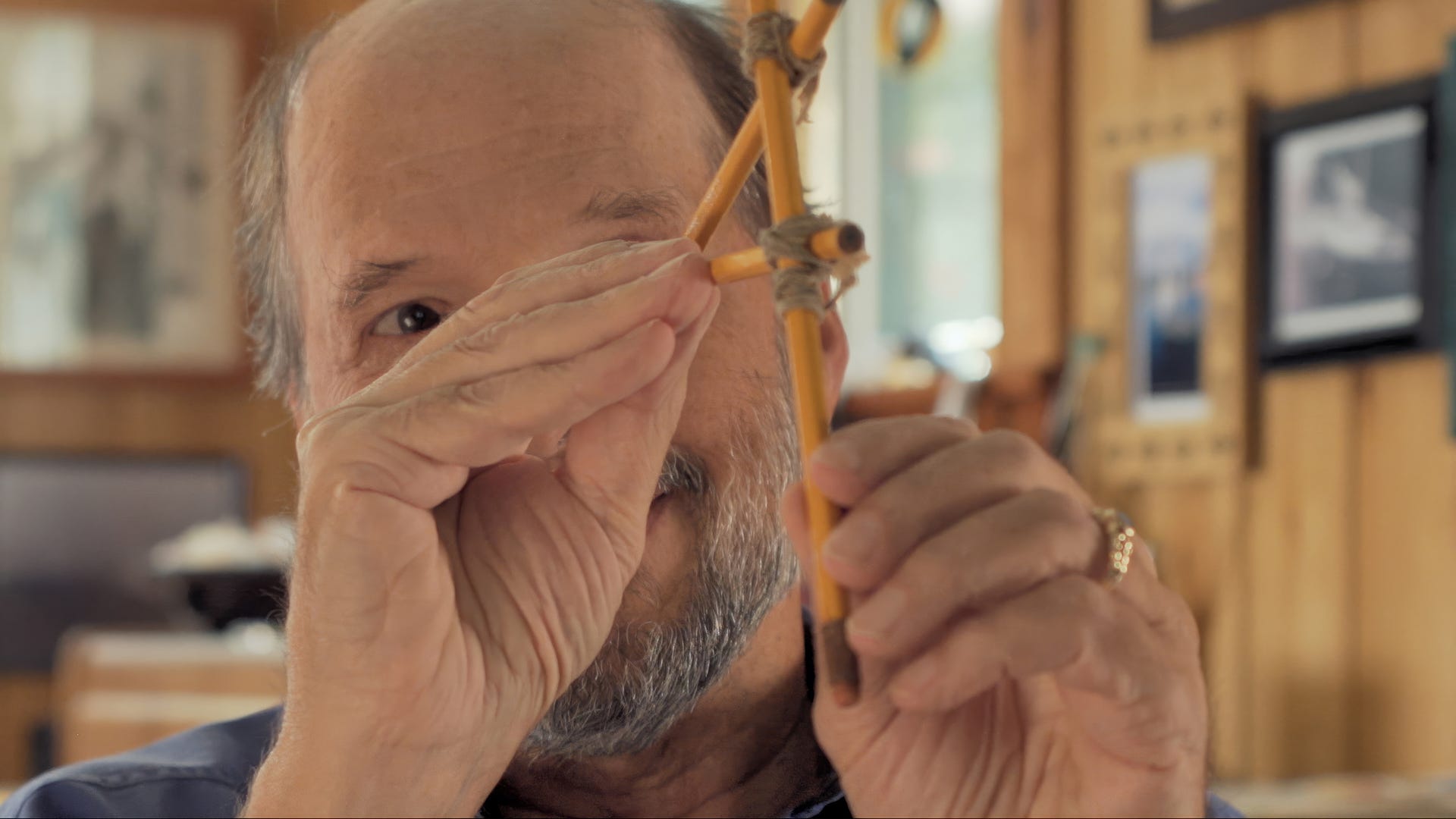
Steven Callahan shows how he used pencils to make a rough navigation tool that he used aboard his raft, after his boat sank, leaving him adrift for 76 days
Provided by Robert Sennott/ "76 days adrift"
Provided by Robert Sennott/ "76 days adrift"
I started to pack my life-raft but realised that I'd have to dive down into the cabin if I wanted to get essential survival items – water, food, flares, a spear gun and sleeping bag.
The boat was almost completely submerged, but I held my breath and went under again and again.
I remember the water below seemed so peaceful compared with the sea raging outside.
It felt like entering a watery tomb.
I clambered, exhausted, on to the inflatable rubber raft and attached it to the end of a rope that was tied to the boat – to me, it still felt like a lifeline.
That night, I huddled under the canopy of my 6ft circular raft with waves beating the sides, constantly baling out water with an old tin can.
Just before dawn, the rope came free from the boat and I knew I was totally alone.
I was now adrift in the middle of the Atlantic, 800 miles west of the Canaries but heading in the opposite direction.
All I had was a little food and enough water for a few days.
The boat was almost completely submerged, but I held my breath and went under again and again.
I remember the water below seemed so peaceful compared with the sea raging outside.
It felt like entering a watery tomb.
I clambered, exhausted, on to the inflatable rubber raft and attached it to the end of a rope that was tied to the boat – to me, it still felt like a lifeline.
That night, I huddled under the canopy of my 6ft circular raft with waves beating the sides, constantly baling out water with an old tin can.
Just before dawn, the rope came free from the boat and I knew I was totally alone.
I was now adrift in the middle of the Atlantic, 800 miles west of the Canaries but heading in the opposite direction.
All I had was a little food and enough water for a few days.
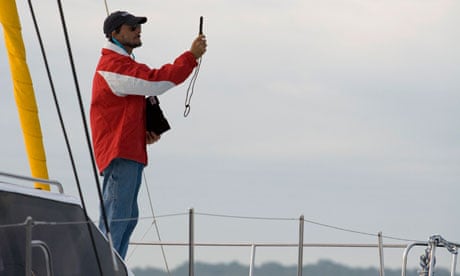
Steve
Callahan: 'I woke up in my bunk, water thundering over me.
Judging by the level it was coming in, I knew she was sinking fast.'
Judging by the level it was coming in, I knew she was sinking fast.'
Photograph: Billy Black
I desperately wanted to get through it so I could make a better job of my life.
I kept a log, fished with my spear gun and made water with a solar still, a contraption that took me days to get working properly, producing just over a pint a day.
Around day 14 I saw a ship, lit a flare and thought I'd been seen – but it just went right on by.
Every morning came with a bit of hope, but by each afternoon I was in despair.
I did see a handful of ships, but none of them saw me.
After a month at sea, I'd drifted right through the shipping lanes.
As I moved into tropical waters, it became hotter and the dehydration unbearable.
One of the worst parts of being adrift for so long was the physical discomfort, the salt-water sores on my skin, the hunger and constant thirst.
By day 50, I'd been struggling for 10 days to keep the raft afloat with a pump after part of it ripped.
I was at my lowest.
I broke down and gave up.
But then I got scared by the thought I would be dead in a few hours; I found a way to fix the raft and it felt like the biggest victory of my life.

The next phase was just hanging on to life, really, looking at my watch, watching the minutes drag by.
In the last few days, the solar stills packed up and I figured this must be the end.
I had three cans of water left.
My body and mind were shutting down; it was as if I could feel all the people who had ever been lost at sea around me.
I had no more to give.
Soon after, I was spotted by some fishermen off Guadeloupe after they'd seen birds hovering over the raft.
The fish guts that I had thrown back into the sea had attracted both seabirds and fish, and a whole eco-system had sprung up around my raft.
By the time the fishermen reached me, I had lost a third of my body weight, and it was six weeks before I could walk properly again.
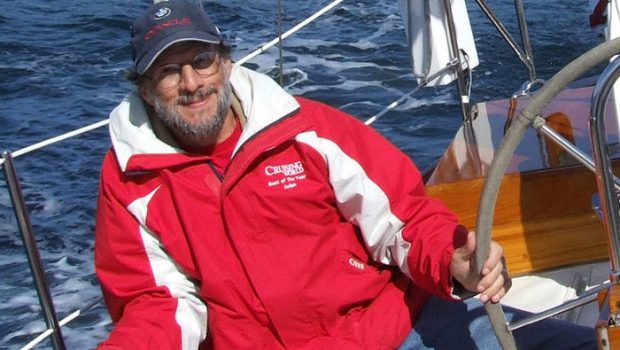
I still don't regret my 76 days alone in the raft.
To this day I feel enlightened by what I went through because it changed me for the better.
But would I want to be adrift in the ocean again?
To this day I feel enlightened by what I went through because it changed me for the better.
But would I want to be adrift in the ocean again?
No way.
Links :
- Cast Away : 76 days adrift
- Cruising World : Adrift: 40 Years Later
- Grunge : How Steve Callahan Survived Adrift At Sea For 76 Days
- Pop Mechanics : 9 Unbelievable True Stories About People Who Survived Being Lost at Sea
- GeoGarage blog : 'All Is Lost' movie: Robert Redford is our man / Lost at sea: remembering Thomas Tangvald / Lost at sea: the man who vanished for 14 months / How to survive 75 hours alone in the ocean / The true story of “Adrift” and Tami Oldham Ashcraft's ...
No comments:
Post a Comment