The oil tanker "Grinch", suspected of belonging to the Russian's
shadow fleet, is seen outside the coast of Martigues near the port of
Marseille-Fos on January 25, 2026, as it's surveilled by the French
Navy.
France on January 25, 2026 took into custody the Indian captain of
an oil tanker suspected of belonging to Russia's sanctions-busting
"shadow fleet" for the vessel failing to fly a flag, prosecutors said.
The 58-year-old captain was in charge of the tanker, the Grinch, which
was seized by the French navy in the Mediterranean on January 22, 2026
and is now moored, under guard, at a southern French port near
Marseille.
(Photo by Thibaud Moritz / AFP via Getty Images)
From Forbes By Jill Goldenziel, An illicit "shadow fleet," often linked to Russia and China, is actively sabotaging critical subsea cables and evading sanctions, imperiling global data and commerce.
These vessels exploit outdated international laws and enforcement gaps, employing tactics like AIS blackouts and false flags for plausible deniability.
Recent incidents in the Baltic Sea and near Taiwan highlight the escalating threat.
Law-abiding nations must establish shared legal frameworks, including boarding stateless vessels and implementing domestic safety zones.
A crucial step involves cutting insurance for these vessels, as most reinsurance relies on US and European markets, effectively denying them market access.
Protecting 99% of international data demands urgent, coordinated action and political will.The Strait of Hormuz reopened for a fleeting moment.
Meanwhile, a longer-term threat to maritime commerce is escalating.
The shadow fleet, aging tankers and cargo ships that break US sanctions and sabotage subsea cables with impunity, are increasingly disrupting global trade and data flows.
Russia and China use these vessels to cut cables with
plausible deniability, exploiting gaps in international law that hamstring the US and its allies.
Law-abiding states must agree on legal and technical frameworks to stop the shadow fleet and protect subsea cables and cross-border data flows.
What is the Shadow Fleet?The shadow fleet comprises old, opaquely owned, often falsely-flagged tankers that evade sanctions and engage in illicit activity.
Their operational hallmarks include automatic identification system blackouts, false position broadcasting, ship-to-ship transfers of goods, flags of convenience, and frequent reflagging and renaming.
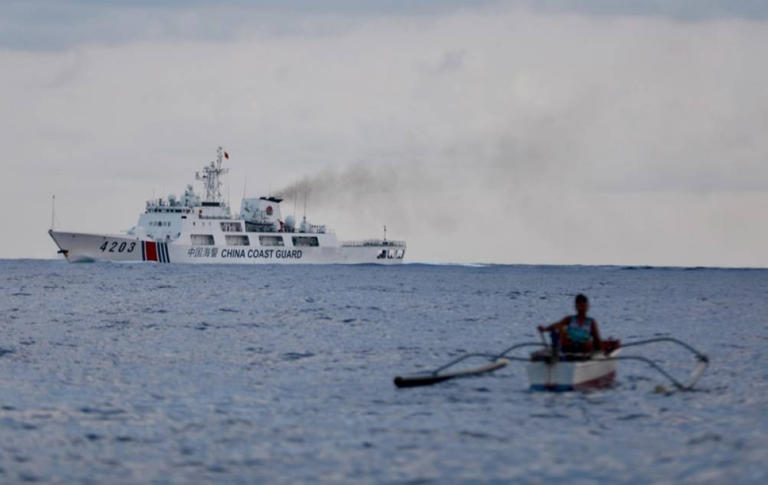
China also uses similar
tactics with
fishing vessels in state-owned fleets.
Shadow fleet vessels have been involved in or suspected of several recent subsea cable-cutting incidents in the Baltic Sea and near Taiwan.
In October 2023, the Newnew Polar Bear a Hong Kong-registered and Chinese-owned ship, dragged its anchor over 100 nautical miles and damaged the Balticconnector pipeline and cables before a port call in Russia; China claimed the incident was due to a storm accident.
In November 2024, the China-flagged bulk carrier Yi Peng 3 dragged its anchor and severed two Baltic Sea cables.
Its Russian captain allegedly
acted on Russian intelligence and a Russian corvette ran reconnaissance.
In early 2025, the Belize-flagged, Russian-operated
Vasili Shukshinloitered approximately four weeks near Taiwan.
Contemporaneously, the Cameroon-flagged, Chinese-crewed Shunxin-39 severed a cable off Taiwan.
Shunxin-39 had used as many as six AIS identities and two names.
Recently, France has seized at least five Russian shadow fleet vessels, but efforts to prosecute have been hindered by legal gaps.
How Russia and China Are Exploiting Gaps In International Law Using the Shadow FleetThe case of the Eagle S illustrates how gaps in international law are stopping NATO allies from countering the shadow fleet.
On Christmas Day 2024, this Cook Island-flagged ship linked to Russia’s shadow fleet cut an electricity cable connecting Finland and Estonia and damaged four data cables in Finland’s EEZ.
Estonia did not investigate or board, interpreting the UN Convention on the Law of the Sea to mean that a ship in international waters is excluded from investigation.
Finland invited the vessel into its territorial sea and boarded it.
A Finnish court later held that the boarding was improper because the cable cutting occurred outside Finland’s territorial waters.
The case is on appeal.
Russia and China are using lawfare—strategically and intentionally exploiting gaps in international law—to thwart law-abiding states’ attempts to stop the shadow fleet.
The core problem is a gap between where violations occur and where enforcement authority sits, which leaves victim states and cable owners with few tools to investigate or prosecute.
The international convention dealing with protection of submarine cables dates to 1884—well before the dawn of the Internet.
UNCLOS grants law enforcement jurisdiction to states to protect submarine cables only within their territorial waters.
Otherwise, authority to prosecute cutting of subsea cables lies with the vessel’s flag state.
Many states sell “flags of convenience” for ships to fly but lack the intention or capacity to prosecute crimes upon them.
To evade arrest, shadow fleet vessels use tactics like disabling their AIS after crossing cable sites and anchoring in international waters to prevent boarding.
Some use warship escorts.
UN mechanisms are structurally incapable of addressing the cable cutting threat because of Russia and China’s roles on the Security Council.
The legal framework surrounding subsea cables is also complicated by the private sector’s role.
Content providers and hyperscalers like Google and Meta own
approximately 60 of the world’s major subsea cables, and the law is murky on their liability for damage and their state’s responsibilities to protect them from damage by adversary actors.
How Law-Abiding States Can Counter the Shadow FleetLaw-abiding states should build shared legal frameworks to respond faster to shadow fleet provocations.
A first step would be to come to a shared understanding of international law involving boarding regimes.
If a state is manipulating its AIS or switching names or flags, that provides reasonable grounds to suspect the vessel is without nationality.
Under Article 110 of UNCLOS, stateless vessels belong to no nation, so any state’s warship may exercise the right of visit and board the vessel to check its papers.
The warship’s state must then make a final determination that the boarded vessel is stateless by verifying its flag with its claimed flag state.
If the vessel is found to be stateless, it may be subject to seizure, enabling lawful disposition of cargo to legitimate buyers.
To grant coast guards immediate law enforcement authority within exclusive economic zones, Denmark, Australia, and New Zealand have adopted cable safety zone legislation.
UNCLOS articles 56 and 60 permits such legislation only if it is narrowly tailored to protect a state’s sovereign rights in its EEZ and does not restrict freedom of navigation.
While safety-zone laws must be passed domestically by individual states, law-abiding nations should coordinate to avoid fragmentation of legal regimes and gaps in authority.
Some analysts fear that cable safety zone legislation would create risk that China could launch reciprocal measures against European-flagged ships in the South China Sea.
However, China already claims law enforcement jurisdiction over almost the entirety of the sea, so additional risk is unlikely.
Practically, states can adopt cooperation measures to curb the shadow fleet.
US Treasury Department’s January 2025 sanctions designation of 183 oil tankers, combined with UK and EU actions, reduced Baltic-terminal shadow fleet loadings drastically by March 2025, although Russia subsequently adapted.
States can also counter flag-of-convenience laundering by using financial intelligence to trace flag payments, reveal risks to insurers and financiers, and push rapid-deflagging for AIS-manipulating ships.
Diplomatically, states can push flag states to create online, verifiable flag registries.
The Guiding Principles for Underwater Infrastructure Defence Exchanges, a 17-nation initiative announced on the sidelines of the recent Shangri-La Dialogue, provides a framework to collaborate and secure cables.
How States Can Work With the Private Sector to Counter the Shadow FleetStates can work more closely with the private sector to track and counter the shadow fleet.
Cable operators and cloud giants already detect anomalies in their infrastructure.
Together, the public and private sectors can build the architecture to move that intelligence to those with the authority to act.
States and the private sector could pool satellite imagery and maritime domain awareness data that tracks shadow fleet behavior.
They could quantify violations and losses and create a public vessel database to empower the private sector and even individuals to name and shame shadow fleet vessels and the states behind them.
A mechanism can be created to place cleared security officers at every major cable consortium, a common suspicious-activity threshold, and a direct real-time feed into NATO’s operations Baltic Sentry and Nordic Warden which are designed to protect subsea cables.
Perhaps the strongest lawfare move for the US and its allies is to cut insurance to the shadow fleet.
Most Russian shadow fleet insurance runs through European markets.
Most of the world’s reinsurance touches either the US or Europe.
States can press the international group of P&I clubs for a unified, real-time blacklist of vessels with AIS-manipulation history or other legal violations, fed by NATO’s operations Baltic Sentry and Nordic Warden.
Cutting insurance coverage would sever market access for the shadow fleet.
The market will enforce what the law cannot.
Subsea cables carry
99% of international data, including Internet, financial transactions, and military communications.
China and Russia have been using the shadow fleet to exploit gaps in international law and sabotage that infrastructure.
Closing those gaps requires a shared understanding of what international law permits and the institutional courage to build accountability mechanisms that work.
Nothing less than the safety of global commerce is at stake.