Thursday, April 16, 2026

The broken system that keeps shipping crews stranded in the strait of Hormuz


A commercial ship anchored off the coast of the United Arab Emirates, in the Strait of Hormuz.
PHOTOGRAPH: GETTY IMAGES


From Wired by Ruchi Kumar

Vessels are increasingly being abandoned during the war on Iran, revealing a hidden failure in the global systems that keep goods—and people—moving.

WHEN CONFLICT DISRUPTS global shipping routes like the Strait of Hormuz, vessels don’t always leave.
Sometimes, they can’t.
Across key maritime corridors in the Gulf region, ships have become stranded—some due to escalating hostilities, others because of a less visible failure: a global shipping system where ownership, regulation, and responsibility often do not align.

For the people working on board, that failure can mean being unable to leave.

A seafarer from Kerala, India, PK Vijay had taken out a loan for what he believed would be stable work at sea.
His promised monthly salary was meant to support his family back home.
“I was told I would be working on a ship,” Vijay says.
“But when I got here, I was assigned to a scrap vessel.” He was told he would be transferred to another vessel.

Months passed.
The transfer he was promised never came.
According to Vijay, both the agent who facilitated his employment and the ship’s owner eventually stopped responding to his calls.
More than a year later, he says he has not been paid.

“I have finished my contract, but have not been paid a single rupee. It has been 14 months. And they won’t even let us leave,” he says.

The two-member crew of the Mahakal has not heard from the owner in over a year, nor have they been paid for their labor.
Without an official “sign-off” letter from the ship owner, Vijay says he cannot legally disembark or return home.

Caught in the System

Since the start of the conflict in the region, many civilian ships have found themselves in the crossfire.
This has been compounded by the closure of the Strait of Hormuz by Iran, essentially trapping ships in their positions and leaving them vulnerable to attack.

For crews on board, immobility carries risk.
“Thankfully, there have been no attacks or incidents close to us,” Vijay says.
“But we are living in fear.”


Since the start of joint US and Israeli attacks on Iran, around 1,900 commercial vessels have been stranded in the vicinity of the Strait of Hormuz, particularly in the Arabian Gulf. 
INFOGRAPHIC: GETTY IMAGES

According to the International Maritime Organization, at least 18 incidents involving attacks on ships were reported in the region up to March 24, with fatalities and injuries recorded.

For an estimated 20,000 seafarers and port workers operating across the region, the risks have increased.
For those already stranded on vessels, options are limited.
 
Around 15 to 20 ships head through the Strait of Hormuz in 36 hours as Iran’s new shipping corridor facilitates safe navigation for mostly Chinese, Pakistani, Russian, and Iranian vessels.
 
Built Across Borders

Modern shipping often spans multiple jurisdictions: A vessel can be owned in one country, registered in another, managed by a third party, and physically located elsewhere.

Under normal conditions, that complexity keeps global trade moving.
In times of crisis, it can leave workers in limbo—particularly on vessels that are poorly regulated or effectively abandoned.

In practice, cases like Vijay’s fall into a legal gray zone.
Ships can be owned, registered, and operated across different countries, leaving no single authority clearly responsible when something goes wrong.
Even when contracts end, seafarers often depend on ship owners to sign off their release.

If that cooperation disappears, so does any clear path home.
Labor organizations such as the International Transport Workers’ Federation (ITF) say intervention is possible but often depends on coordination across jurisdictions and cooperation from ship owners.

“When the war broke out, we put a Warlike Operations Area Committee in place to address the protection of seafarers in the region,” says John Canias, maritime operations coordinator at the ITF.

The organization has identified certain maritime routes in the region, including the Arabian Gulf, the Strait of Hormuz, and some parts of the Gulf of Oman as high-risk areas, encouraging ship owners to allow seafarers to terminate contracts if they choose not to operate in those zones, says Canias.

But such measures rely on cooperation from ship owners—something that becomes difficult in cases involving abandoned vessels.

The Rise of Abandoned Ships

Vijay’s vessel, Mahakal, has a documented history of labor issue allegations.
Maritime advocacy groups say that it is owned by a private individual and is not officially registered with the International Maritime Organization.
This is not an isolated case.

According to the ITF, 2025 saw the highest number of ship abandonments on record, with 409 vessels reported abandoned and more than 6,200 seafarers affected globally.
Over 150 of those cases occurred across the wider Middle East region.
Indian nationals made up the largest group of abandoned seafarers, followed by Filipinos and Syrians.

Since the escalation of conflict in the region, ITF officials say they have received dozens of distress calls daily from seafarers, particularly those on vessels where owners have ceased communication.

In some cases, ITF documented that the machinery of the ships was destroyed, leaving them without fuel and power.
“Just recently, we got a video from a seafarer that shows a missile exploding perhaps 10m away from the ship,” Canias shares.

“We’ve seen cases where ships were damaged, where crews had to abandon vessels after attacks and others where ships lost power entirely,” Canias says.
“It is very dangerous for them.”

Trapped Between Systems and Conflict

For seafarers on abandoned vessels, the risks are not only physical.
Isolation, uncertainty, and lack of mobility can take a significant psychological toll.

Vijay says he tries to reassure his family during phone calls, even as his situation remains unchanged.
“My family is worried about me, but I try to show them I am happy,” he says.
“But I am in a very depressing situation.”

He says he hopes to return home and rebuild his life.
“I used to be a very happy person,” he says.
“I know I can be a happy person again if I can go back to my family.”

Global shipping continues to function, even under strain, rerouting cargo, adjusting to risk, and maintaining the flow of goods across regions.
But for workers on vessels that fall outside those systems of accountability, movement is not guaranteed.

For seafarers like Vijay, the infrastructure that brought them there continues to operate, but without any clear way out.
 
Links : 

Wednesday, April 15, 2026

How geography powers Iran’s grip on the Strait of Hormuz, despite U.S. blockade


A small map showing the Strait and the surrounding countries.
The area’s terrain continues to give Iran control over who crosses — and at what risk — amid a tenuous ceasefire.


From WP by Júlia Ledur and Dylan Moriarty

Shipping traffic through the Strait of Hormuz remains constrained a week after the United States and Iran said they would facilitate vessel passage under a two-week ceasefire agreement.
Instead, tensions have escalated.
After Iran said ships must coordinate with its forces — and, in some cases, pay a toll — President Donald Trump called the demands “extortion” and announced Sunday that the United States would block ships entering or exiting Iranian ports, adding pressure to an already fragile truce.

But even as Washington seeks to squeeze Iran economically, Tehran retains a powerful advantage: geography.
Over six weeks of conflict, Iran has halted virtually all traffic in the strait by laying mines, according to its military forces, and exploiting the vulnerability created by its terrain.
Even under a U.S. blockade, these factors allow Iran to continue exerting influence over who crosses — and at what risk.

That risk, more than any formal closure, is what is keeping ships away.
According to data from Kpler, only nine vessels have crossed the strait daily on average since the ceasefire, compared with the prewar traffic of more than 130 ships.
“De facto, the ceasefire has done absolutely nothing to change the situation [in the strait].
None whatsoever,” said Lars Jensen of Vespucci Maritime, a container shipping consultancy based in Copenhagen.

Here’s what makes the Strait of Hormuz so critical, and how its geography continues to define the standoff.

Before the war, the Strait of Hormuz facilitated about 20 percent of global oil flows, roughly 20 million barrels of oil per day, and 20 percent of the global liquefied natural gas trade.
It is the only maritime exit from the Persian Gulf, making it a critical choke point.

Key oil refineries dot the coastline of the strait and the Persian Gulf.

Before the truce, President Donald Trump had threatened to strike Iran’s energy infrastructure and suggested seizing control of Kharg Island, which processes 90 percent of Iran’s oil exports.

The geography of the strait itself makes this energy pipeline vulnerable and easy to disrupt.

Even during peacetime, only a few ships could transit at a time, leading others to queue or anchor nearby, creating clusters of vulnerable targets.

Shallow waters in the strait force ships to be funneled through two narrow lanes (about two miles wide each).
This leaves vessels extremely vulnerable to missile and small-boat attacks.

Crews crossing the narrow strait also have to worry about sea mines, which can detonate upon contact or upon sensing movement.
“Mines are a psychological issue as much as they are a real issue,” said Frank Galgano, an associate professor of geography and the environment at Villanova University, adding that it would take several weeks to clear mines from the navigation lanes.


Iran’s Islamic Revolutionary Guard Corps said Thursday that vessels transiting the strait must divert around Larak Island, off the country’s coast, with the primary navigation lanes posing a risk because of sea mines.
The detour also allows Iran’s military to screen ships and collect tolls for passage.


A rugged coastline offers hiding spots for small attack ships.

The elevated terrain along Iran’s coast provides clear vantage points for surveillance and for launching anti-ship cruise missiles.

The small islands also can be used to launch missiles at ships passing by.

Bandar Abbas, a city at the mouth of the strait, allows Iran to deploy boats and missiles and to monitor or disrupt traffic within minutes.


An image of the Strait of Hormuz showing the depths of the sea, 
showing that the Omani side of the strait is deeper than the Iranian side.
 
 
“All in all, Hormuz’s geography amplifies Iran’s anti-access and area-denial leverage at low cost,” said Basil Germond, a professor of international security at Lancaster University.

These tactics, combined with the fact that the ships crossing the strait are usually massive and travel slowly, make the passage extremely dangerous.
Defense experts say the vessels have close to no ability to detect a threat.
“The Iranians are literally right on top.
So you’ve got an instant almost to react,” Galgano said.

Iran’s ability to threaten ships with low-cost drones and mines has proved a frustration for Trump, who acknowledged last month that such attacks would persist “no matter how badly defeated they are.”

Although no vessel attacks have been recorded since the ceasefire announcement, risk has become the defining force driving the standstill in traffic.
Experts say that even when all blockades are lifted, it will take time for traffic to return to prewar levels.
“This is very simple: Shipping companies will continue to avoid the strait as long as Tehran maintains its capability to credibly threaten commercial shipping in the strait and the Gulf,” Germond said.

After the U.S.announced its blockade, Iran said it would strike back if its ports were threatened, heightening tensions for shipping companies already hesitant to cross.
At the same time, Tehran’s toll system has introduced a new legal risk: Vessels that pay the Revolutionary Guard for safe passage could be seen as violating U.S. or European Union sanctions on Iran, further deterring operators.

With confusion surrounding the status of the strait, shipping operators remain in a wait-and-see mode.
According to Windward, more than 800 vessels were still trapped in the Gulf as of Tuesday.

A spokesperson for the shipping giant Hapag-Lloyd told The Washington Post in an email Tuesday that its vessels were still refraining from transiting the strait and would continue to do so until there were safety and security guarantees and clarification on potential fees for crossing.
“We believe that for the time being ships will continue to be stuck in the Persian Gulf,” Nils Haupt said.

For traffic to return to normal, analysts say, the shipping sector will need to be confident that the ceasefire will hold and that Iran will not attack in-transit vessels.
“If you move your ship and you’re halfway through the Hormuz channel and the ceasefire breaks down, well, your seafarers are then in a shooting gallery,” Jensen said.
“So you want to see a relatively solid ceasefire before you even trust going in there.”

But that confidence depends on a delicate balance.
It is in Iran’s interest to keep restricting passage in the strait, “one of their last remaining leverages in the war,” Germond said in an email.
“So long as Tehran is serious about the ceasefire, they must implement (or be seen as implementing) its Hormuz clause and, thus, allow more and more ships to transit.
If they still restrict traffic to keep some leverage, this actually risks collapsing the ceasefire altogether.
So, for them, this is a thin boundary to navigate.”

Links :

Tuesday, April 14, 2026

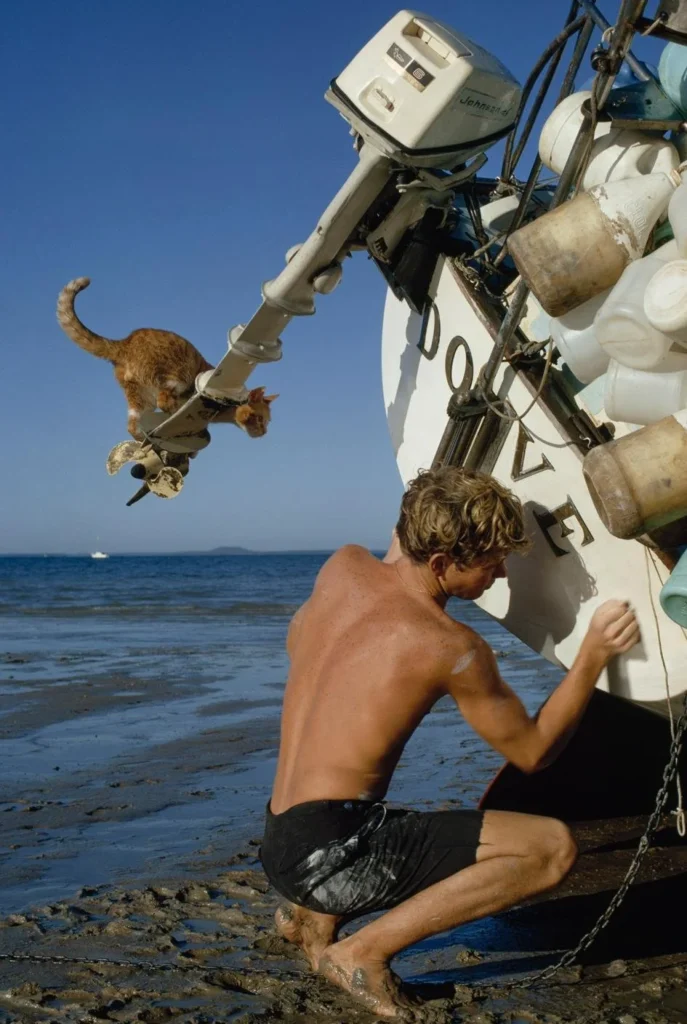
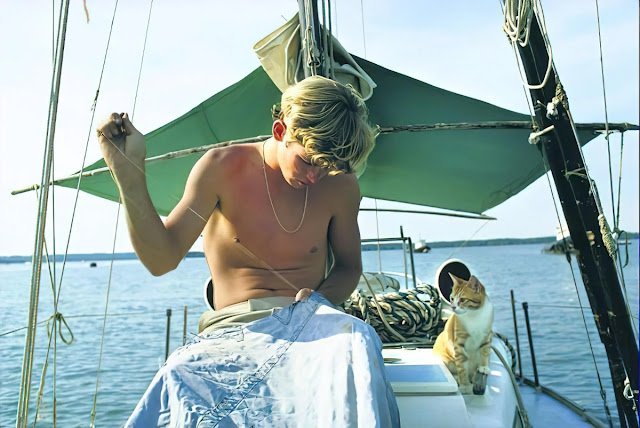
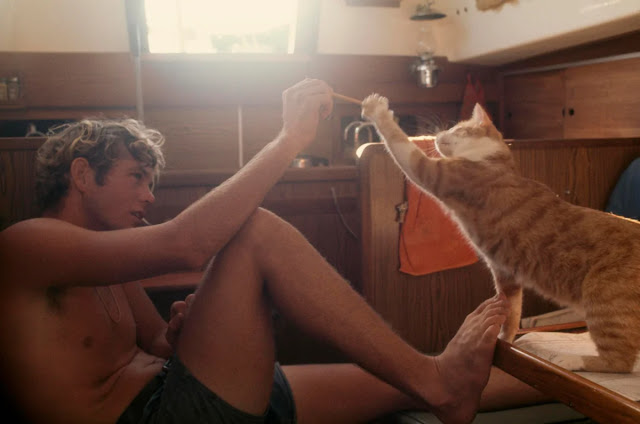
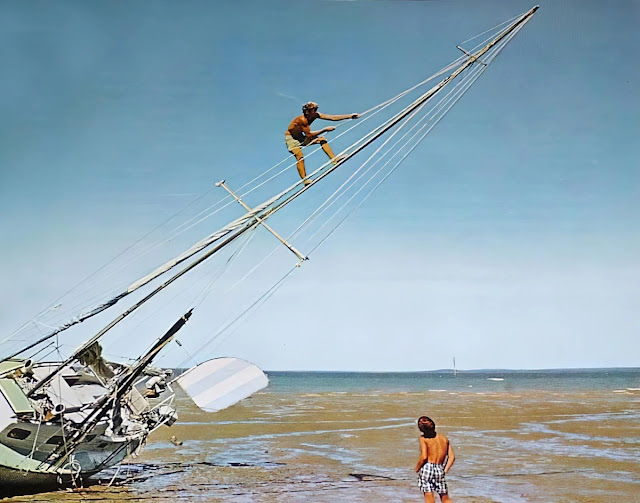
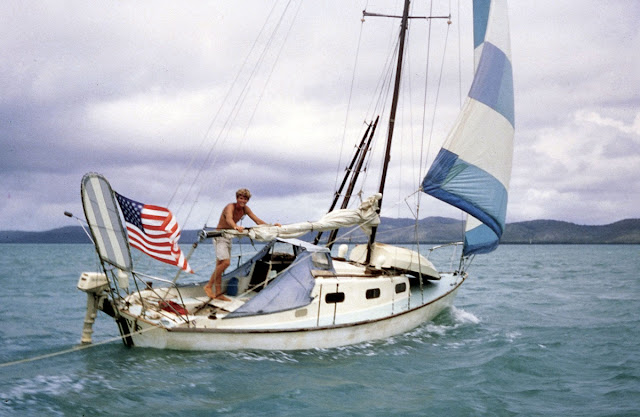
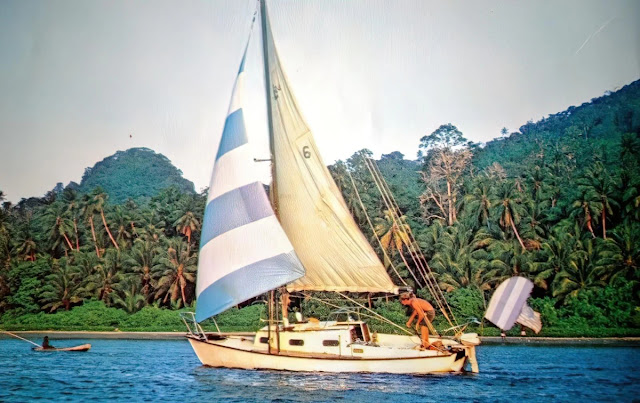
Robin Lee Graham sailed around the world with his cat


From History Defined by Carl Seaver

On March 5, 1949, Robin Lee Graham was born in California.
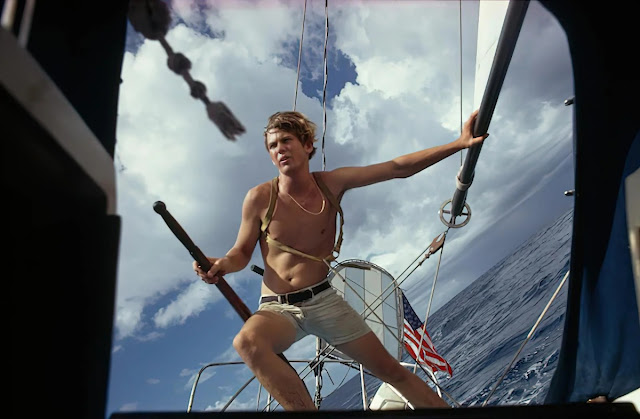
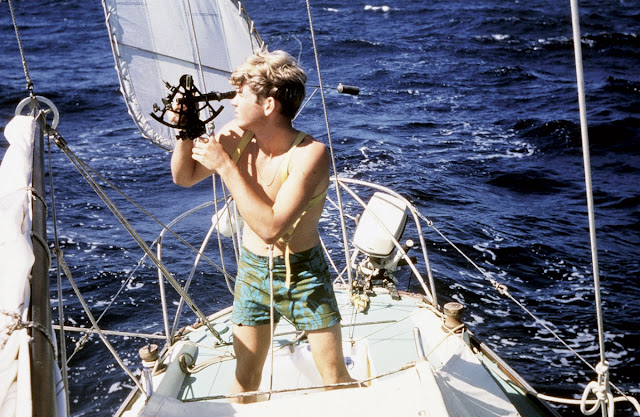
Though his childhood resembled most others, he took the world by surprise when, at age 16, he began a multi-year journey to circumnavigate the world in a 24-foot boat.
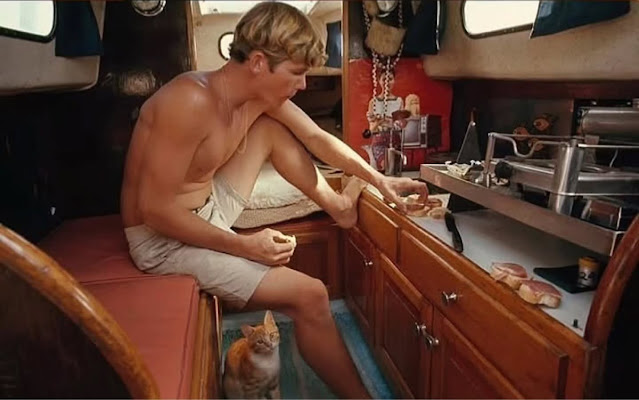
His age was not the only element of note; Robin also committed to sailing alone, save for the company of two cats.

Who was Robin Lee Graham?

Robin Lee Graham, by all accounts, was no conformist.
Struggling with the rigidity of school life and the expectations of what would come after, Graham sought freedom to forge his own path, even from an early age.
When his father purchased a sailboat for him in 1965, Graham saw his opportunity.

Why Circumnavigate, and How?

According to his own words, Graham simply sought freedom when he made the decision to depart.
He wanted to find himself and see what the world had to offer.
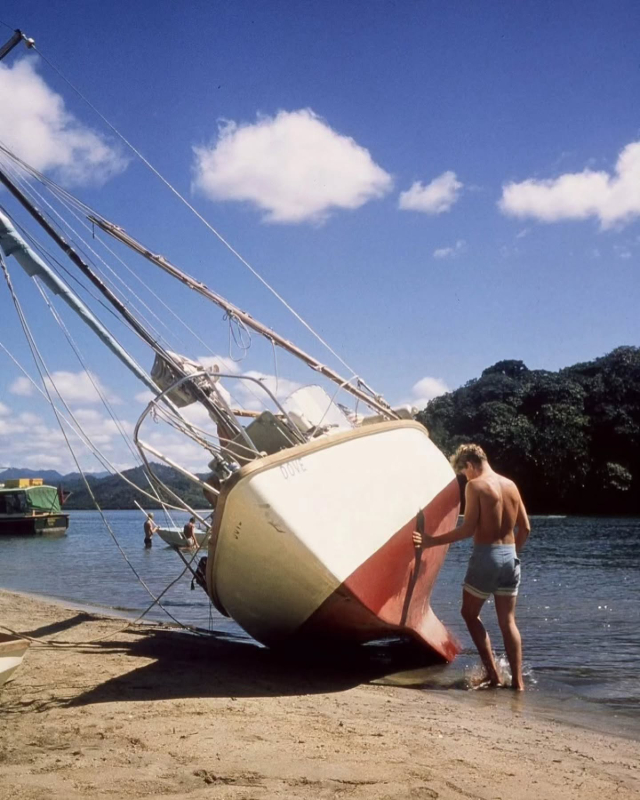
So, upon claiming the Dove, a 24-foot sailboat, he set out for his first stop: Hawaii.

This first westward leg of his journey was far from the longest he would face and served merely as a shakedown to test the performance of the boat, but he brought company: two cats named Joliette and Suzette.
They proved invaluable as he experienced the isolation of the sea for the first time.

Over the course of Graham’s journey around the world, he recruited many more cats as companions, and while the total number is not known, at least six named animals joined him on the trip at varying points.
Various accounts report other numbers, but never less than six.

His 24-foot ship, the Dove, faced minimal challenges on this first cruise given its short duration, and conditions remained largely favorable (or at least tolerable) until his approach on the Indian Ocean.
Then, the situation began to worsen quickly.

Challenges Along the Way

The reaches around Indonesia and Australia heading into the Indian Ocean are notorious for their rougher weather, and Graham was not excepted from such developments.
Graham turned southward for supplies rather than thread between North Australia and Indonesia. 


After suffering his first dismasting en route to Pago Pago in American Samoa, where the cat Suzette would choose to stay behind, the sailor was forced to jury rig the ship and proceed through storms until he could find a port to repair.

Using only the materials at his disposal, he crafted sufficient sail area and patched the ship enough to make progress toward Apia, the most viable nearby port.
During this time, Graham was also thrown overboard, barely climbing back onto his ship before it left him in the waves.


However, another, even more life-changing event took Graham by surprise during these months.
While briefly docked at Fiji, he met Patti Ratterree.
Like Graham, Ratterree had left home to explore the world in freedom and “live by her wits.”
The two took a liking to each other, spending a significant amount of time together, but Graham remained committed to his task and departed after five weeks despite his intense affection for Patti.
Unfortunately, Joliette the cat did not come with him.
Whether he sailed the next leg cat-less is not known.


Months later, having skirted past Indonesia and into the open Indian Ocean toward Madagascar, a brief and unexpected storm once again toppled the Dove’s mast.
For more than 2,000 nautical miles, Graham persisted with a hand-crafted emergency rig until he reached Mauritius for repairs.

When the Dove was once again ship-shape, Graham proceeded on course to conquer the Cape of Good Hope in South Africa.
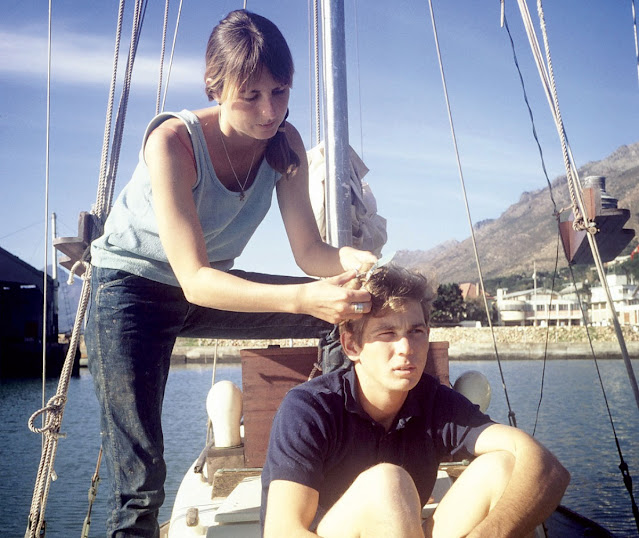
He stopped briefly at Durban, and to his delight, Patti reunited with him during his visits to the South African ports.

They married, and Graham proceeded on his journey, though with Ratterree’s full support.
She followed his course, flying when necessary, as he progressed.


The voyage across the Atlantic passed as largely uneventful, and when Graham made port in Paramaribo on the northeastern coast of South America, the Dove had seen enough.
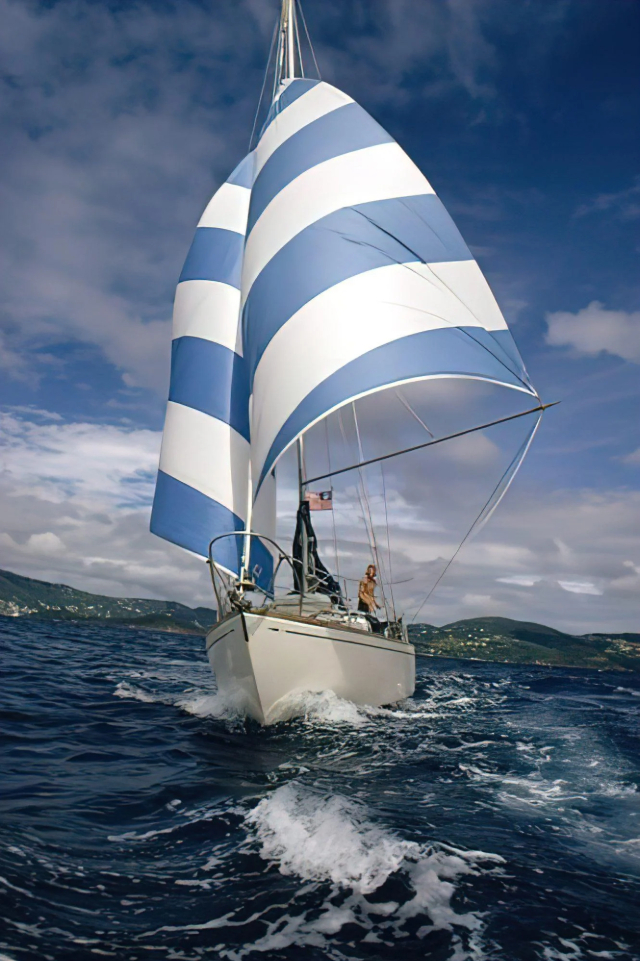
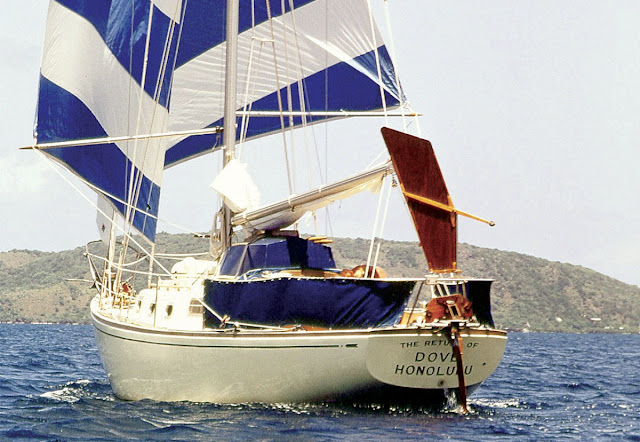
Her journey through intense conditions and multiple dismastings led Graham to sell her for the Return of Dove, a 33-foot sloop.
However, after Graham departed, the original Dove remained to sail the British Virgin Islands, finally succumbing to Hurricane Hugo in 1989.

Onward as the captain of Return of Dove, and now accompanied by Patti, Graham passed through the Panama Canal, homeward bound once again to California.
Joining him as he reached his final dock were the cats Kili, Pooh, and Piglet, welcomed aboard along the way.

Though reports vary on just how many cats came and went during the middle stages of his trip, Graham notes that he was rarely lacking in furry companions.


What Graham Is Doing Now
 
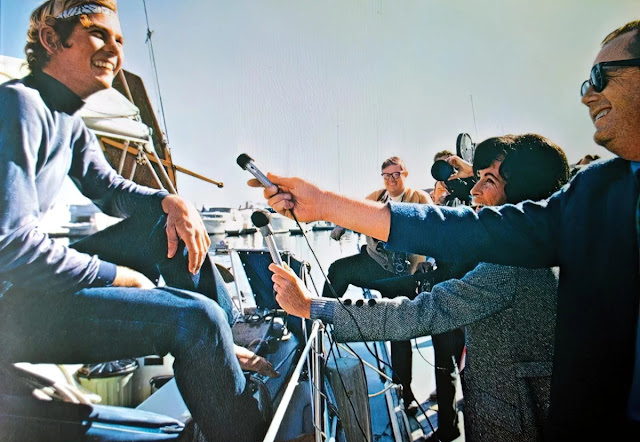
It did not take long for people to ask Graham’s opinion of his voyage.
He stated with certainty that he would never do such a thing again after discovering the intensity and sometimes near-insanity of isolation for such long stretches.
 
Choosing instead to live a calm life, Robin and his wife moved to a mountain home near Kalispell, Montana.
Two months after the voyage ended, the two welcomed their daughter, Quimby.


Graham’s quick learning under pressure during his voyage taught him essential skills, such as woodworking, that served him later.
He took up employment as a builder with a knack for making furniture, and after settling into this new life and line of work, the couple went on to have a son named Ben.

Graham later wrote numerous books about his experience.
Today, Robin and Patti continue to live a happy life together on the shore of a lake in the mountains.
As for the Return of Dove, she was restored in 2001, and though she was sold again three years later, it is believed that she has still found her home in Hawaii, the very port from which Graham’s circumnavigation began in earnest.


Links :

Monday, April 13, 2026

The possibility of an island : in the middle of the Antarctic researchers stumble across an island that is not on any map

Island in the Weddell Sea not yet recorded on nautical charts
(Photo: Alfred Wegener Institute / Christian Haas)
 
From AWI
 
An expedition team from the Alfred Wegener Institute has accidentally discovered a previously unknown island in the Antarctic Weddell Sea.
 
Weddell Sea in the GeoGarage platform (NGA nautical raster chart)
 
A 93-strong international expedition team has been exploring the northwestern Weddell Sea in the Antarctic on board the Alfred Wegener Institute's icebreaker Polarstern since 8 February 2026.
 
A 93–strong team on board the Alfred Wegener Institute's (AWI) icebreaker, Polarstern, made the discovery after rough weather conditions forced them to seek shelter next to Joinville Island

In this key region for global ocean currents, the focus has been on the outflow of ice and water from the Larsen Ice Shelf and the astonishing sea ice retreat of recent years.
 
Joinville island in the Antarctic Peninsula in the NW of Weddell Sea
 in the GeoGarage platform (NGA nautical raster chart)
 
When the research work had to be interrupted due to rough weather conditions in order to seek shelter in the lee of Joinville Island, the scientists and ship's crew were surprised by the sudden appearance of an island that had previously only been marked as a danger zone on the available nautical charts.

Another view of the new island.
Credit: Alfred Wegener Institute / Simon Dreutter
 
“On our route, the nautical chart showed an area with unexplored dangers to navigation, but it wasn’t clear what it was or where the information came from,” reports Simon Dreutter from the Bathymetry section at the Alfred Wegener Institute, Helmholtz Centre for Polar and Marine Research (AWI).
As a specialist in underwater mapping, this aroused his curiosity. 
 
“I scoured all the coastlines we had here in the bathymetry lab and went back to the bridge. Looking out of the window, we saw an ‘iceberg’ that looked kind of dirty. On closer inspection, we realised that it was probably rock. We then changed course and headed in that direction and it became increasingly clear that we had an island in front of us!”

Island in the Weddell Sea not yet recorded on nautical charts
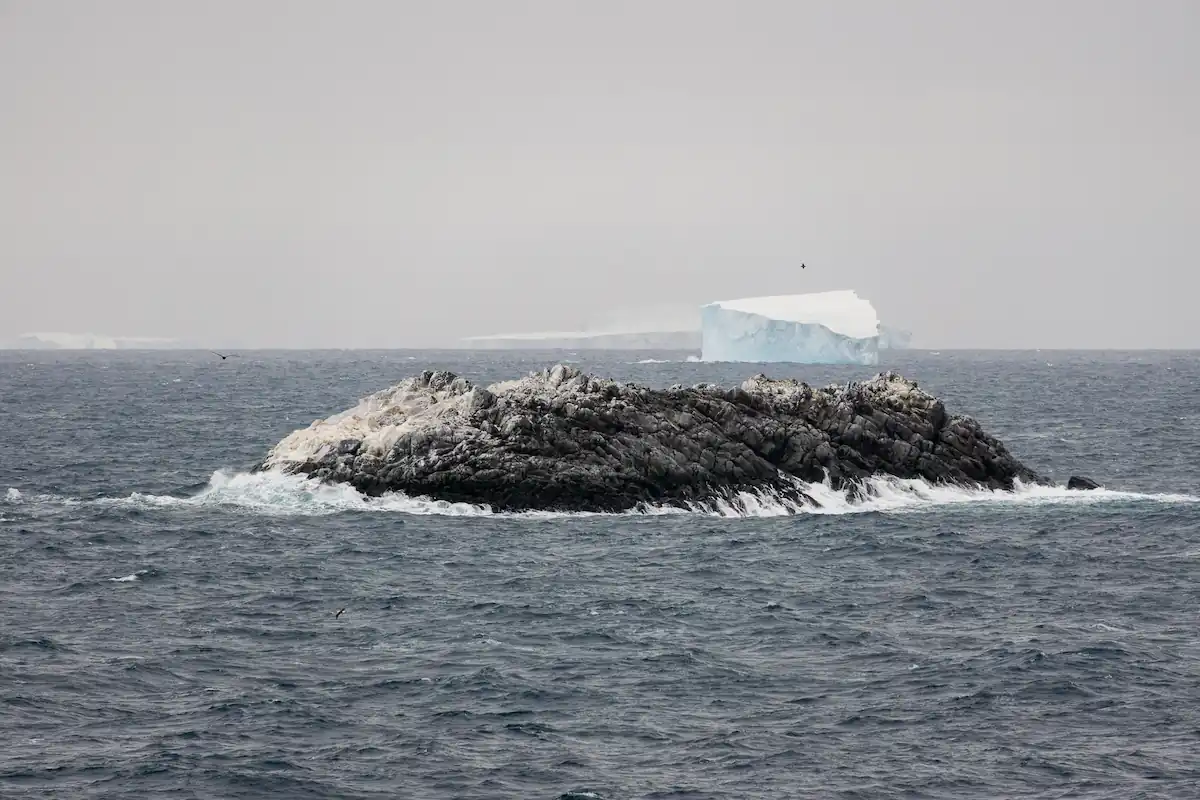
This unknown island is 130 meters long, 50 meters wide, and rises 16 meters above sea level. Its area is roughly the same as that of the White House in Washington. On old maps, its location was off by about 1.8 kilometers. 
(Photo: Alfred Wegener Institute / Christian Haas)

The navigators on the bridge drove the Polarstern carefully towards the island, always with at least 50 metres of water under the keel.
This allowed the icebreaker to approach it to within 150 metres, circumnavigate it and survey the seabed with the onboard multibeam echo sounder.
 
A drone was also used and the image data was analysed photogrammetrically to obtain an elevation model and a georeferenced aerial image to measure the coastline.
This was the first time the island had been systematically surveyed and recorded.
The result: the island is about 130 metres long, 50 metres wide (slightly longer than the Polarstern with its 118 metres and about twice as wide) and protrudes about 16 metres out of the water.

It is unclear to the experts why the island is marked as a danger zone on the nautical chart but not as a coastline in other data sets and why the position shown on the nautical chart is about one nautical mile off the actual position.
On the satellite images analysed, the island could hardly be distinguished from the numerous icebergs drifting around in the immediate vicinity due to its ice cover.

Detail view of the new island and its “inhabitants”. 
Credit: Alfred Wegener Institute / Simon Dreutter

As there is no official international registration of the island by name, the task now is to go through the naming process for such a discovery.
Dr Boris Dorschel-Herr, head of AWI bathymetry and also on board the Polarstern, already has experience with this: In 2014, he and his team had ensured that two underwater mountains were plotted on the nautical charts of the South Atlantic and the Weddell Sea.
 
The team will publish the exact position of the island once the naming process is complete and will also ensure that the information is added to international nautical charts and other important data sets.
Such information is essential for bathymetric sea floor maps such as IBCSO (International Bathymetric Chart of the Southern Ocean) in particular, as the thin coverage of measurement data and interpolation means that such unmapped objects are simply erased.

Island in the Weddell Sea not yet recorded on nautical charts
(Photo: Alfred Wegener Institute / Simon Dreutter)

The bathymetry team works closely with other research groups on board, for example with physical oceanography.
This enabled the scientists to track various water masses along several sections from the deep sea to the continental shelf and investigate the colonisation of the sea floor.
In doing so, they gained important insights into the decline of Antarctic deep water in comparison to the long-term data collection that the AWI has been conducting in the region via oceanographic measurements as part of the Hybrid Antarctic Float Observing System (HAFOS) since 2002.
In addition, the outflow paths of cold water from the Larsen Ice Shelf have been narrowed down.
These water masses have a significant influence on global ocean currents and the melting of sea ice, particularly on the continental shelf.

Unlike the sea ice in the Arctic, the Antarctic sea ice was considered relatively stable for a long time.
However, the summer sea ice extent in the north-western Weddell Sea has declined sharply since 2017, presumably as a result of warmer surface water. Prof Dr Christian Haas, head of the Polarstern expedition and AWI Sea Ice Physics, comments on the initial results of SWOS (Summer Weddell Sea Outflow Study): “The ice thickness showed great regional variability. On the western, shallow continental shelf in particular, the ice was up to four metres thick, which we can attribute to strong deformation caused by the tides and the proximity to the coast. The ice further east came from the large Ronne and Filchner ice shelves and was less deformed with thicknesses of around one and a half metres.”


Overall, the sea ice showed surprisingly strong surface melting, which mainly affected the snow cover and the uppermost ice layers and led to almost Arctic conditions, where the ice is covered with many melt ponds.
 
Christian Haas reports: “Although we only found very few melt ponds, the ice was often almost free of snow and had a bluish or greyish surface. Thanks to novel measurements of the water directly under the ice using turbulence and biological probes, we found larger quantities of sweet meltwater in and under the ice. This has a strong effect on the biological colonisation of the ice and the interactions with the seawater under the ice, because such freshwater lenses keep the heat from the ocean away from the sea ice.”

Future analyses and modelling will show what contribution the organisms living in and under the sea ice make to the carbon cycle in the Southern Ocean, for example.
However, the researchers will only carry these out after the expedition, which is scheduled to end on the Falkland Islands (Malvinas) on 9 April 2026.
From there, the Polarstern will start its transit across the Atlantic and is expected to return to its home port of Bremerhaven in mid-May.

More information about the expedition can be found in the Polarstern App.  
 
Links :

Sunday, April 12, 2026

Colossal coral in the Mariana Islands is largest of its kind


A NOAA researcher swims in front of the massive coral in the Mariana Trench Marine National Monument.
Credit: NOAA Fisheries.
 
From NOAA
 
 Researchers measure 14,500-square-foot coral structure in an underwater volcano 
 
In a time when coral bleaching, disease, and habitat loss are increasingly common, a hidden giant defies the odds. A majestic cathedral-like structure — built by colonies of Porites rus, a species of stony coral — rises from a submerged volcanic caldera in the Maug Islands in the Mariana archipelago.

“This coral was so big, we actually couldn’t easily measure it due to dive safety restrictions,” said Thomas Oliver, Ph.D., a chief scientist of NOAA’s National Coral Reef Monitoring Program.

While the coral’s existence was previously known to locals, NOAA scientists recently had the opportunity to take the first approximate measurements during the 2025 National Coral Reef Monitoring Program surveys.

Measurements suggest the colony covers roughly 14,500 square feet (1,347 square meters) — stretching more than 100 feet (31 meters) across the top and 200 feet (62 meters) at its base.
That’s wider than the length of two school buses at the top, and the length of four school buses at the bottom.


Approximate scale of the coral colony, measuring wider than the length of two school buses at the top and four school buses at the bottom. 
Credit: NOAA.

It is the largest Porites coral ever reported — measuring approximately 3.4 times larger than the massive Porites coral colony reported in 2020 in American Samoa. 
Size isn’t the only impressive thing about this Porites rus, so is its age.

“It is difficult to tell the true age of this coral because it doesn’t produce growth bands like other corals,” said Hannah Barkley, Ph.D., a chief scientist of NOAA’s National Coral Reef Monitoring Program. 
“We roughly estimate that Porites rusgrows outward about a centimeter per year, so one could imagine that a colony of that size is pretty old.”

At that rate, the coral could be more than 2,050 years old!


A top-down view of the coral’s wall (top), and a researcher swims over dome-shaped structures at the top of the coral structure (bottom). 
Credit: NOAA Fisheries. 

A unique underwater home

While this coral certainly is special, so is its home in the Maug caldera, which lies within the Mariana Trench Marine National Monument.
The Maug caldera has intrigued scientists trying to protect the ocean for decades — from sea floor mapping expeditions in 2003, in-depth ocean chemistry studies in 2014, as well as the coral reef monitoring program’s visits in 2017, 2022, and 2025.

The caldera is known as a “natural laboratory” because of its unique carbon dioxide vents.
In one area gas bubbles up from the vents and creates acidic oceanic conditions, allowing scientists to study how organisms, like coral, may respond to these conditions in the future.
Notably, the acidic conditions only impact habitats within a few meters of the vents, and do not impact the massive coral thriving just a few hundred meters away.

“It is remarkable to see both these extremes — a resilient and thriving mega coral, and a dead zone near the carbon dioxide vents — in the same area. Maug is truly such a special place,” said Barkley.


Chief Scientist Thomas Oliver prepares to recover an instrument that has been recording data at Maug’s carbon dioxide vent for 5 days, with visible carbon dioxide bubble trails (left), and floats by the massive coral with the recovered instrument (right). 
Credit: NOAA Fisheries.

The Mariana Trench Marine National Monument

The Mariana Trench Marine National Monument was established in 2009 and protects objects of scientific interest, including coral reef ecosystems, submerged volcanoes, and hydrothermal vents.
The Monument is managed by the U.S. Fish and Wildlife Service, in coordination with NOAA and the government of the Commonwealth of the Northern Mariana Islands.
The Monument’s Advisory Council is working to assign a culturally appropriate name to the coral that will honor Indigenous Chamorro and Carolinian local heritage, while advancing stewardship of the marine ecosystems that support productive fisheries.


Map of Mariana Trench Marine National Monument.
Credit: NOAA.

Coral reef ecosystems play a major role in ocean health — which we depend on for reliable weather patterns, food, coastal protection, and more.
For the U.S. economy alone, coral reef ecosystems are worth more than $3.4 billion.

The National Coral Reef Monitoring Program is led by the National Ocean Service’s Coral Reef Conservation Program